If you are scaling a solar company without the best CRM for solar businesses, you are leaking high-value leads every single day.
With customer acquisition costs topping $3,000 per install and over 70% of solar leads lost to poor follow-up according to Industry statistics, outdated systems are silently draining your growth.
You do not need a generic CRM, you need one built for solar: engineered for long sales cycles, complex installs, and customers who expect speed and precision.
Key Takeaways
- CRMs built for solar outperform generic ones by automating proposals, scheduling, and financing in one system.
- Salesforce, HubSpot, and JobNimbus lead the market, but each fits different stages of business growth.
- Without tight lead tracking, solar companies lose up to 70% of potential sales due to follow-up failure.
- The right CRM is not a tool but a revenue engine that slashes costs, boosts installs, and improves lifetime value.

15 Best CRM for Solar Businesses
The best CRM for solar businesses goes beyond contact management; it empowers teams to close more deals, manage projects, and deliver excellent customer service.
From solar sales CRM tools to all-in-one solar business CRM solutions, today’s platforms are built to support everything from lead capture to installation tracking.
Whether you are a growing installer or an established EPC firm, the right solar company CRM tool can transform how you sell, operate, and scale.
1. Salesforce
If you are running a large solar firm or scaling aggressively, Salesforce remains the most powerful and customisable CRM for solar companies.
While not built specifically for the solar sector out of the box, Salesforce’s ecosystem of integrations, automation capabilities, and custom modules allows solar EPCs and installers to design a system that aligns perfectly with their sales, installation, and service workflows.
Several top-tier solar business CRM solutions are actually built on Salesforce, a testament to its flexibility and depth.
Key Features
- Customisable pipelines for long solar sales cycles
- Integration with design tools, financing platforms, and ERPs
- AI-driven sales forecasting and lead scoring
- Powerful mobile access for field teams
- AppExchange integrations for solar-specific extensions
Pros
- Unmatched flexibility and scalability
- Enterprise-grade automation and analytics
- Excellent partner ecosystem
- Robust support for solar project management CRM needs
Cons
- Steep learning curve
- Expensive for smaller teams without technical support
- Setup requires time and expertise
Pricing
Salesforce CRM pricing varies significantly depending on the edition and features you choose:
- Free Suite- $0
- Starter Suite- $25
- Pro Suite- $100
Large enterprises or specialised deployments (e.g., AI‑enhanced tools) can incur higher costs with additional add‑ons, but these tiers provide a clear pricing ladder based on business needs.
Best For
Large-scale solar companies, EPCs, and solar contractors that need deep customisation and enterprise features across teams.
See Also: Top 50 AI SaaS Tools: The Ultimate Guide for Entrepreneurs and Businesses
2. HubSpot
For solar businesses seeking to combine ease of use with robust sales and marketing capabilities, HubSpot stands out as one of the most flexible solar CRM software options available on the market.
Its intuitive interface and modular approach make it ideal for solar companies that want to start with a foundational solar sales CRM and scale into a more comprehensive system as they grow.
Unlike many traditional CRMs, HubSpot allows you to start for free and expand into advanced automation, reporting, and customer service tools without switching platforms.
Key Features
- Free core CRM with contact management, deal tracking, and pipelines
- Paid tiers add automation, lead scoring, and advanced reporting
- Seamless integration with email, marketing, and service tools
- Intuitive dashboards that unify sales and marketing data
- Robust app ecosystem and integrations with tools like Slack and Gmail
Pricing
HubSpot offers a free CRM plan that supports unlimited users and up to 1 million contacts, perfect for small solar teams just getting started. HubSpot Paid plans are organised by “hubs” or suites:
- Free: $0/month
- Starter: $10
- Professional and Enterprise: $890
Pros
- Generous free plan ideal for startups and mid-size solar installers
- Easy to implement with minimal training required
- Strong integration between sales, marketing, and service data
- Scales with growth into an all-in-one solar business CRM solution
Cons
- Advanced features and deeper automation come at a higher price
- Can become expensive as your contact list and team grow
- Some functionality (like predictive analytics) reserved for top tiers
Best For
Small to mid-size solar firms and solar installers that need a user-friendly CRM with room to grow into more sophisticated sales and marketing workflows.
3. Zoho CRM
For solar companies seeking cost-effective solar CRM software that still packs serious capabilities, Zoho CRM is one of the most compelling choices.
It blends core CRM functionality with marketing automation, workflow management, and customisation features that can support both solar sales CRM and broader operational needs, making it a strong contender among solar business CRM solutions for teams at every growth stage.
Unlike some enterprise systems, Zoho’s modular ecosystem lets solar teams add tools like Zoho Projects or Zoho Desk as needed, helping bridge sales processes with field service coordination.
Key Features
- Lead and contact management with custom fields tailored to solar workflows
- Sales pipeline visualisation with scorecards and forecast dashboards
- Workflow automation and process blueprints for follow-ups and approvals
- Integration with email, calendars, and other Zoho apps (Projects, Desk)
- AI-powered sales assistant (Zia) for insights and anomaly detection
Pricing
Zoho CRM’s pricing structure is designed to be accessible while scaling with capability:
- Free Plan: Up to 3 users with basic CRM features
- Standard: $14/user/month
- Professional: $23/user/month
- Enterprise: $40/user/month
- Ultimate: $52/user/month
These tiers make Zoho one of the more affordable solar company CRM tools without forcing a trade-off between price and power.
Pros
- Strong value for money with feature-rich plans
- Easy to set up and customise for solar sales processes
- Scales from small teams to mid-size organisations
- Integrates naturally with other Zoho business apps
Cons
- Some advanced automation and analytics are limited below higher tiers
- Interface can feel less modern than competitors
- Add-ons and integrations may increase total cost
Best For
Small to mid-size solar firms and solar contractors that need a flexible, budget-friendly CRM with the ability to grow into more advanced workflows.

4. JobNimbus
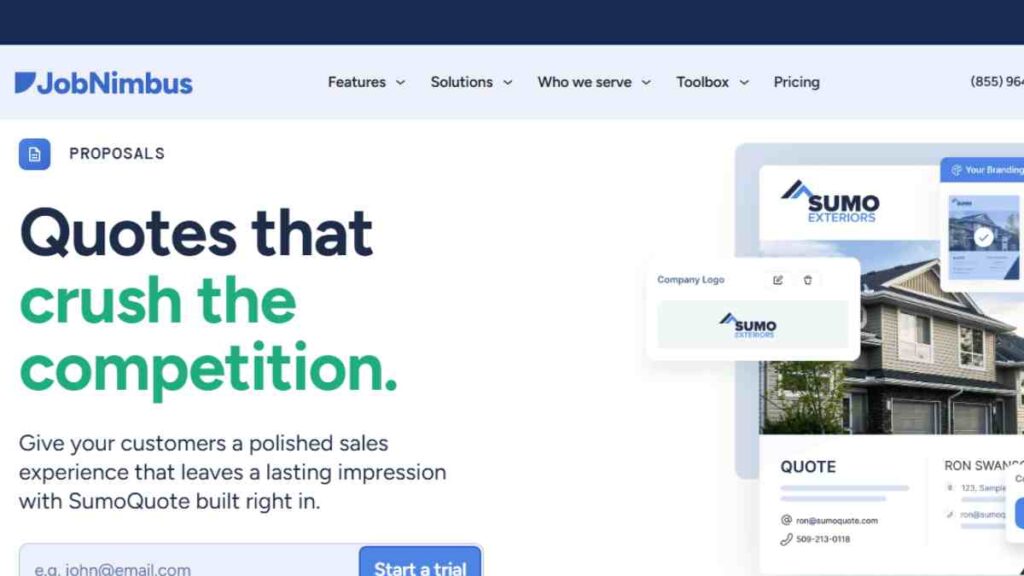
For solar companies that value simplicity and deep operational coordination, JobNimbus delivers a compelling blend of CRM, project management, and field service tools.
Built with contractors in mind, it is quickly becoming a favourite solar contractor CRM, especially for teams that juggle sales pipelines alongside installation schedules, warranties, and service calls.
Unlike generic CRM platforms, JobNimbus is designed to support both sales and execution. It helps solar teams track leads through proposal, convert them into projects, and then manage those projects through to completion.
Key Features
- Lead capture and contact management tailored to solar workflows
- Visual sales pipelines for solar sales teams
- Project boards and timeline tracking for installations
- Mobile app for field technicians with task lists and job details
- Document storage for contracts, permits, and warranties
- Integrations with QuickBooks, Zapier, and other tools
Pricing
JobNimbus offers tiered pricing based on features and team size:
- Growing: Custom Pricing
- Established: Custom pricing
Pros
- Unified CRM + project management, ideal for installers and field teams
- Strong mobile support for technicians on the ground
- Easy to use with minimal onboarding friction
- Built-in task tracking keeps sales and operations aligned
Cons
- Not as powerful for deep marketing automation as enterprise CRMs
- Fewer native integrations than large ecosystems like Salesforce or HubSpot
- Some advanced reporting features may require higher plans
Best For
Small to mid-size solar installers and teams that need a solar CRM software that handles both customer relationships and project execution without adding complexity.
5. Pipedrive
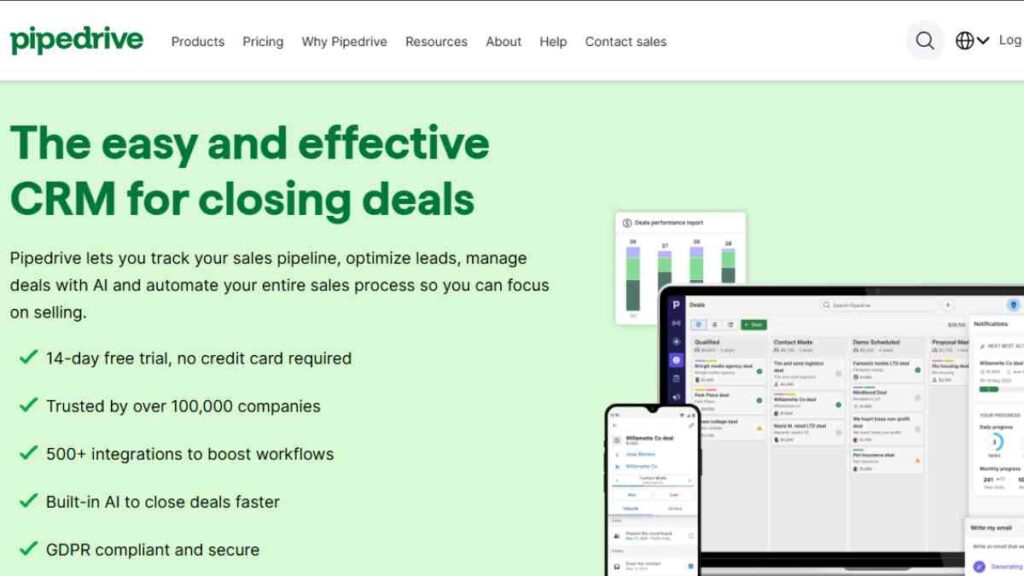
For solar firms laser-focused on closing deals and simplifying their solar sales CRM workflows, Pipedrive stands out as a practical and efficient choice.
Designed with sales teams in mind, it offers an intuitive pipeline visualisation that helps solar businesses prioritise leads, track activities, and close faster without unnecessary complexity.
Unlike some larger enterprise platforms, Pipedrive keeps things straightforward, letting your solar sales reps spend more time selling and less time wrestling with the CRM.
Key Features
- Visual, drag-and-drop pipelines ideal for complex solar sales cycles
- Activity scheduling and automation to keep follow-ups on track
- Custom fields and filters to match solar sales processes
- Email & call tracking integrated into contact records
- Mobile app for reps on the go
- Integrations with proposal tools, calendars, and marketing apps
Pricing
Pipedrive’s pricing is simple and scales with capability:
- Lite: $24
- Growth: $49
- Premium: $79
- Ultimate: $99
Pros
- Extremely user-friendly and quick to adopt
- Strong sales pipeline focus, ideal for solar installers, emphasising conversions
- Flexible automation even on mid-tier plans
- Good value for teams that prioritise sales execution
Cons
- Not as fully featured for service or project management as tools like JobNimbus
- Less robust marketing automation compared with HubSpot or Salesforce
- Some advanced analytics reserved for higher tiers
Best For
Solar sales teams and mid-size solar businesses that need a lean, solar company CRM tool focused on visibility into deals, activity management, and closing efficiency.
6. Solar CRM
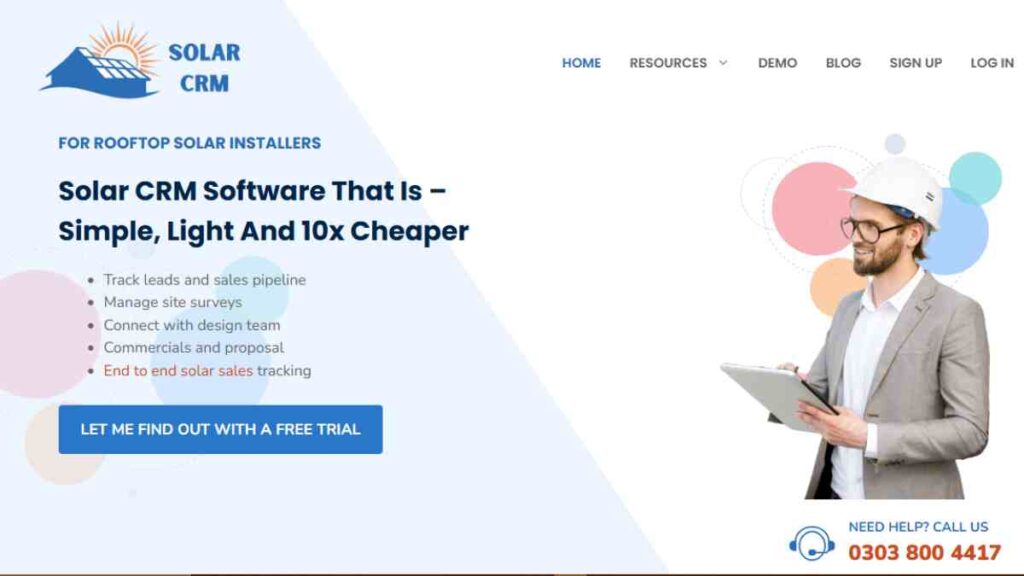
Solar CRM is a lightweight, industry-tailored tool built specifically for solar sales and pipeline tracking.
It helps installers and rooftop solar firms manage leads, conduct site surveys, generate proposals, and monitor sales progress, all from a central dashboard.
Key Features
- End-to-end solar sales pipeline tracking
- Site survey data capture and proposal creation
- Custom workflows specific to solar sales processes
- Real-time monitoring of leads and activities
Pricing
- Starter Plan: $45/month
- Pro Plan: $95/month
- Growth Plan: $195/month
Pros
- Designed specifically for solar selling
- Easier setup than generic CRMs
- Includes solar-specific workflows out of the box
Cons
- Limited advanced automation compared with enterprise tools
- Fewer integrations than large CRM ecosystems
Best For
Small to mid-size solar installers and rooftop solar businesses that want solar CRM software without complexity.
7. Enerflo
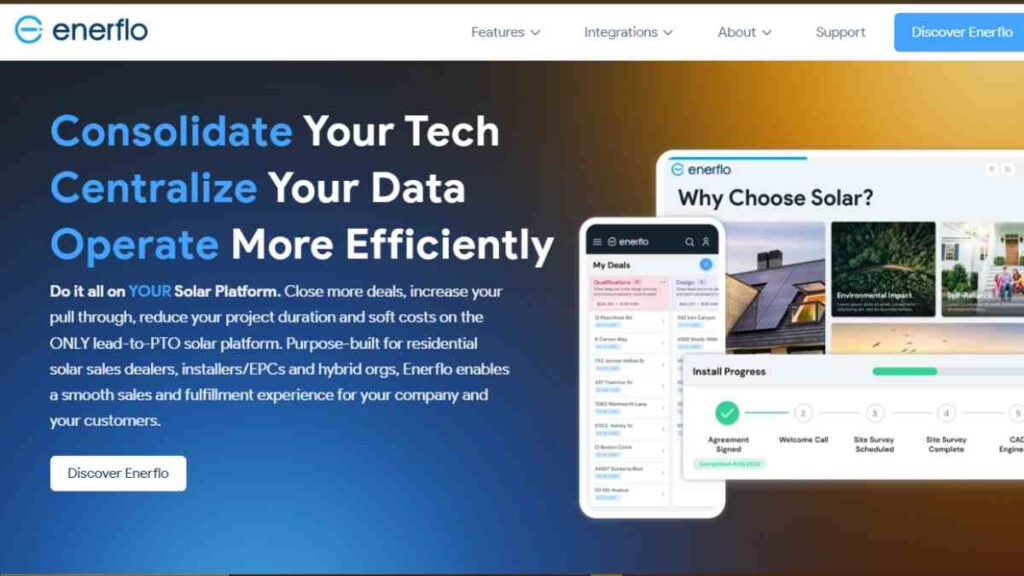
Enerflo positions itself as a comprehensive platform built specifically for solar dealers and installers, combining CRM capabilities with sales enablement, project transparency, and deep integrations.
Instead of bolting tools together, Enerflo aims to unify the entire workflow from lead capture through customer engagement and financing.
Key Features
- Lead and sales pipeline management tailored for solar
- Project tracking and install milestones
- Integrated customer portal and engagement tools
- Docflo for smart contract generation and signing
- Integrations with financing and sales tools
Pricing
Enerflo’s pricing is typically offered via custom quotes based on company size and needs. Most vendors in this niche prefer to tailor plans rather than list rigid price tiers publicly.
Pros
- Built for the solar lifecycle from lead to after-sales
- Supports financing and document workflows
- Flexible integrations with existing solar tools
Cons
- Pricing and packaging can be opaque
- More specialised than broad CRMs, which may not suit all budgets
Best For
Mid-size to larger solar firms looking for a solar company CRM tool that tightly integrates sales and operations.
8. Scoop
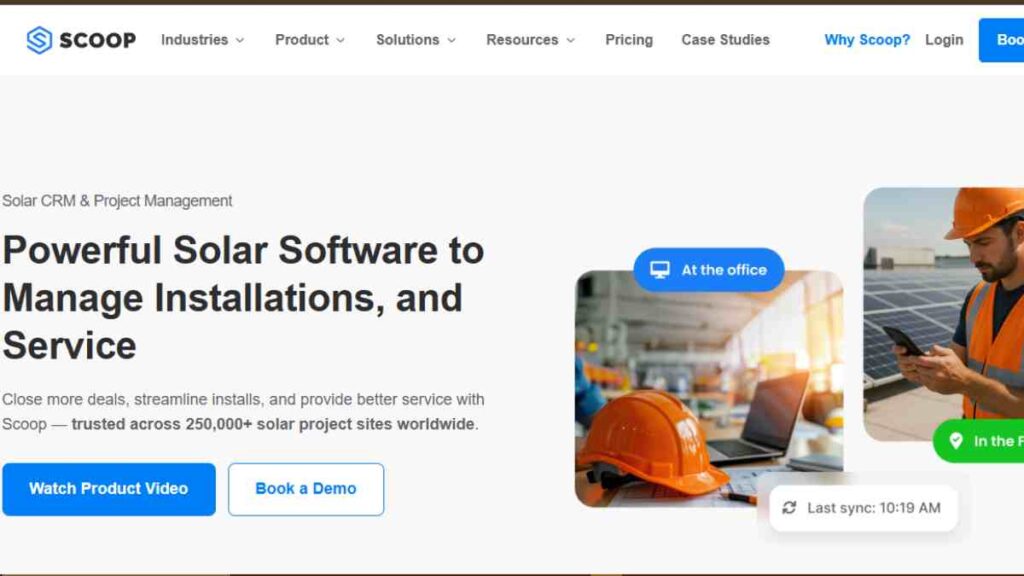
Scoop Solar CRM blends CRM functions with strong field execution and project tracking features.
Trusted across hundreds of thousands of installed sites worldwide, Scoop focuses on helping solar teams manage opportunities, field crews, and installation progress without synchronisation gaps between the office and the field.
Key Features
- CRM and project tracking in one platform
- Built-in field app for technicians and installers
- Real-time updates on permits, installs, and tasks
- Centralised dashboards for projects and sales
Pricing
Scoop does not list standard pricing and typically provides custom quotes that often include unlimited users and storage, valuable for larger teams or growing operations.
Pros
- Excellent for field-centric solar companies
- Mobile-ready for crews and techs
- Strong integration with project workflows
Cons
- CRM features are part of a broader operations suite, not a standalone CRM
- Not ideal if you only need basic sales tracking
Best For
Solar firms with significant field operations that need a solar contractor CRM that unifies sales and installation.
9. Sunbase
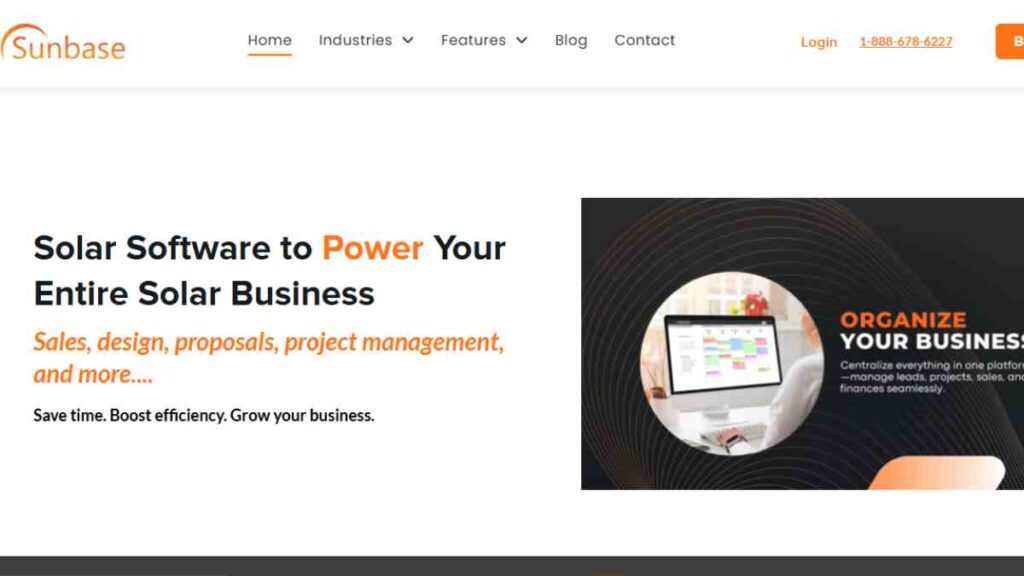
For solar companies that want a purpose-built platform rather than adapting a generic system, Sunbase offers one of the most comprehensive solar CRM software solutions available.
Built specifically for the solar industry, it combines lead management, sales tools, project tracking, proposals, and operational workflows into a unified system, making it a strong contender among solar business CRM solutions for teams of all sizes.
Sunbase is designed to give solar businesses a single, connected platform where sales, installation, and service teams can work without switching between multiple apps. It tracks leads, automates follow-ups, manages pipelines, and connects CRM data with project progress, all in one place.
Key Features
- Built-in CRM for solar companies that captures leads and manages interactions
- Centralised dashboards for sales performance and team activity
- Proposal generation with automation and digital signatures
- Project management tools to monitor installations and milestones
- Integrated scheduling, mobile access, and document storage
- Analytics and reporting for real-time insights across sales and operations
Pricing
Sunbase does not publish standard pricing on its website; most plans are provided through custom quotes based on business size, features needed, and team configuration.
Prospective customers typically need to book a demo or contact sales to get pricing specific to their needs.
Pros
- Designed specifically for solar industry needs with CRM, proposals, and project tracking in one tool
- Eliminates the need for multiple separate systems, reducing complexity
- Built-in automation and analytics help keep pipelines moving
- Helps unify sales, operations, and field teams under one platform
- Mobile and desktop access keeps teams aligned in real time
Cons
- Pricing is not transparent, you must request a quote
- May offer more features than very small solar teams need
- Niche support and feature set require careful evaluation against broad CRMs
Best For
Solar installers, EPCs, and mid-size to large solar firms that want a solar company CRM tool with deep integration between sales, projects, and operations.

10. CRMLeaf
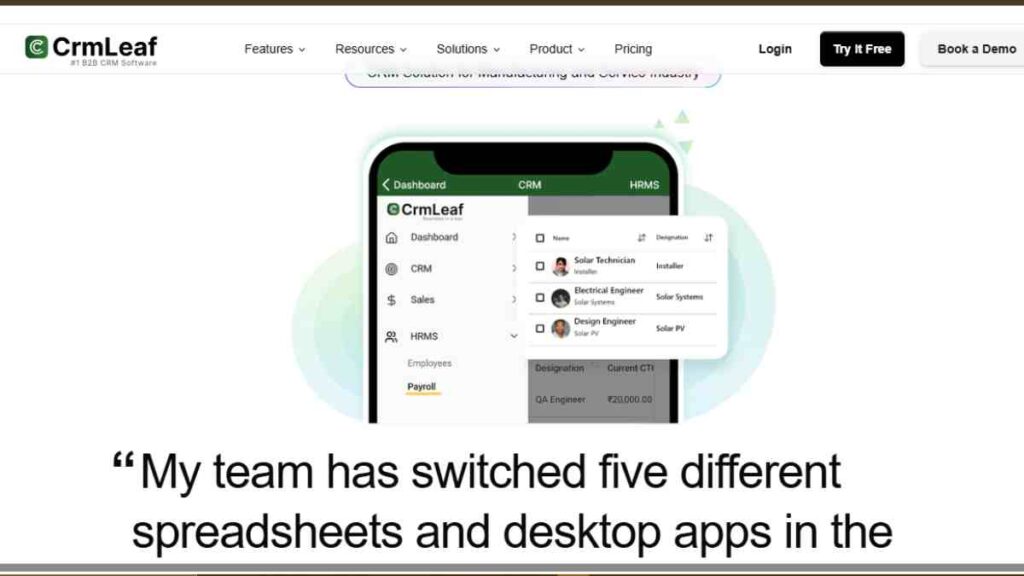
CRMLeaf is a versatile and user-friendly solar CRM software that gives solar companies a balanced mix of sales automation, project tracking, and team collaboration, without the complexity or high cost of enterprise systems.
It is designed to support both sales and operations, making it a strong choice among solar business CRM solutions for teams that need more than basic lead management but are not ready for heavyweight platforms like Salesforce.
With built-in workflows, custom dashboards, and mobile access, CRMLeaf helps solar installers and sales teams capture leads, manage follow-ups, track project progress, and stay aligned across departments.
Key Features
- Lead and opportunity management with automated follow-ups
- Customisable pipelines geared toward solar sales CRM workflows
- Project and task tracking to connect sales to execution
- Mobile app that keeps teams updated in the field
- Dashboards and reports for performance insights
- Integrations with email, calendar, and key solar tools
Pricing
CRMLeaf’s pricing is straightforward and designed for growing teams:
- Free Plan: $0
- Standard Plan: $5.99
- Professional: $7.99
- Premium plan: $12.99
Pros
- Affordable yet powerful, striking a balance between simplicity and depth
- Easy to set up with minimal training required
- Supports both sales and project tracking, valuable for solar installers
- Flexible pipelines and reporting dashboards
Cons
- Fewer native integrations than larger CRM ecosystems (e.g., HubSpot or Salesforce)
- Not tailored exclusively for solar and better fits companies that customise workflows
- Advanced features may require higher-tier plans
Best For
Small to mid-size solar companies, installers, and independent sales teams seeking a practical solar business CRM solution that blends sales, operations, and project visibility, without the steep learning curve of larger enterprise systems.
11. Shape
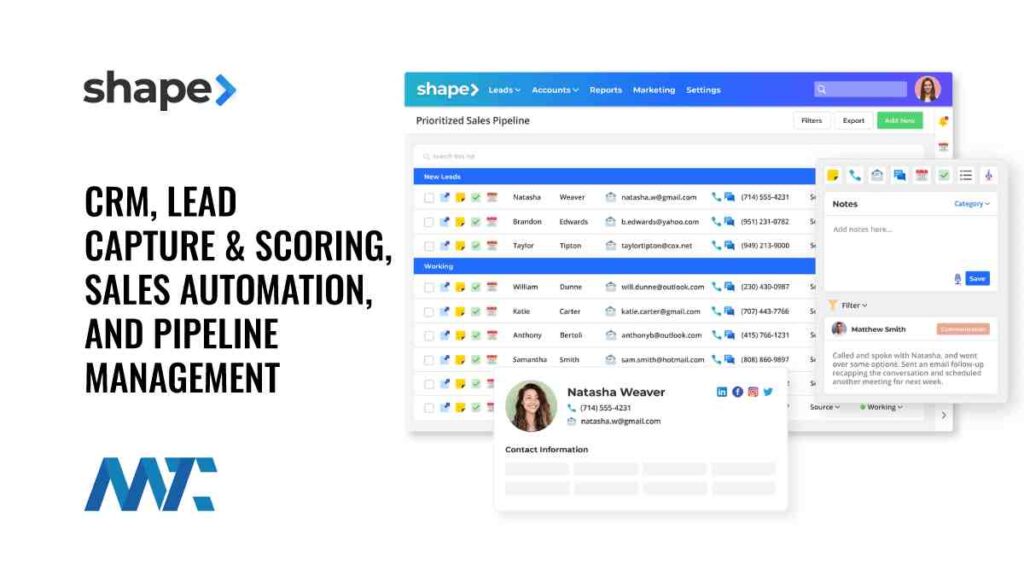
When it comes to solar-specific CRM software built to supercharge your sales and customer engagement, Shape stands out as a purpose-driven solar CRM platform.
Unlike general CRMs that require heavy customisation, Shape is designed to support solar businesses with features like built-in calling, SMS/MMS, automated lead distribution, and advanced pipeline tools, making it a smart option among the top CRM for solar industry solutions.
Shape’s focus on automating outreach and speeding up contact with prospects can be a game changer for teams that want their sales reps focused on closing deals instead of managing spreadsheets.
Key Features
- Automated lead distribution rules that route inbound leads instantly
- Built-in calling, texting (SMS/MMS) and email directly inside the platform
- Shared calendars with Google/Outlook sync for managing appointments and follow-ups
- Task and project management with team collaboration tools
- Pre-built templates and marketing automations for campaigns
- Customisable dashboards and reporting for visibility into sales performance
Pricing
Shape does not publish transparent pricing for all plans.
Pros
- Engineered for sales-centric solar workflows and communication
- Built-in voice, SMS, and email keeps all interactions in one system
- Automated routing and prioritisation help maximise lead engagement
- Shared calendars and collaboration tools streamline team efficiency
Cons
- Pricing can be higher compared to generic CRMs at similar feature levels
- Project-management depth is lighter than broader systems like JobNimbus
- Some advanced features may require add-ons or custom plans
Best For
Solar companies and solar installer teams that prioritise fast outreach, automated lead handling, and integrated communication across voice, SMS, and email, especially those with dedicated sales teams aiming to close more deals quickly.
12. OpenSolar
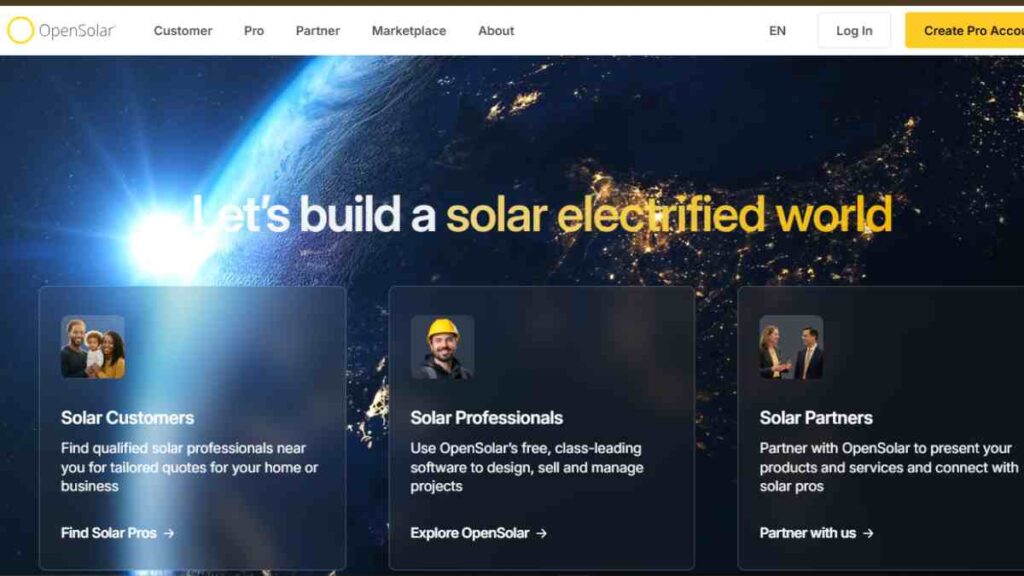
For solar businesses that want CRM for solar companies tightly woven into their design and project workflows, OpenSolar offers an appealing all-in-one platform.
Rather than treating CRM as a separate bolt-on system, OpenSolar embeds customer relationship management into its core solar sales, design, and operations environment, helping teams manage leads, communications, proposals, and execution from one unified dashboard.
This makes OpenSolar more than just a solar sales CRM, but part of a broader ecosystem that supports quoting, permits, payments, and post-sale customer interaction, which is why it is gaining traction among installers and EPC teams that value seamless workflows over disconnected tools.
Key Features
- Built-in CRM that captures leads, tracks contacts, and manages customer interactions
- Customisable pipelines and task stages for sales & installation workflows
- Integrated design tools and proposal generation linked directly with CRM records
- Scheduling, permitting, and e-signature workflows
- Document management and customer communication history all under one roof
Pricing
OpenSolar’s pricing model typically offers a freemium or freemium-to-paid tier structure, with basic CRM and design features available for free and more advanced capabilities unlocked through paid plans or partner services.
Pros
- CRM deeply integrated with solar design and sales execution
- One platform for leads, proposals, permits, and project management
- Eliminates the need for multiple disconnected systems
- Helpful for both residential and commercial solar processes
Cons
- CRM features are part of a larger suite and might be overkill if you only need basic CRM
- Customisation beyond bundled workflows may require setup time
- Pricing and feature tiers can be confusing without a demo
Best For
Solar installers and mid-size solar companies that want a solar company CRM tool that works seamlessly with design, quoting, and project execution, especially those who prioritise workflow continuity over standalone CRM simplicity.
13. Solargraf
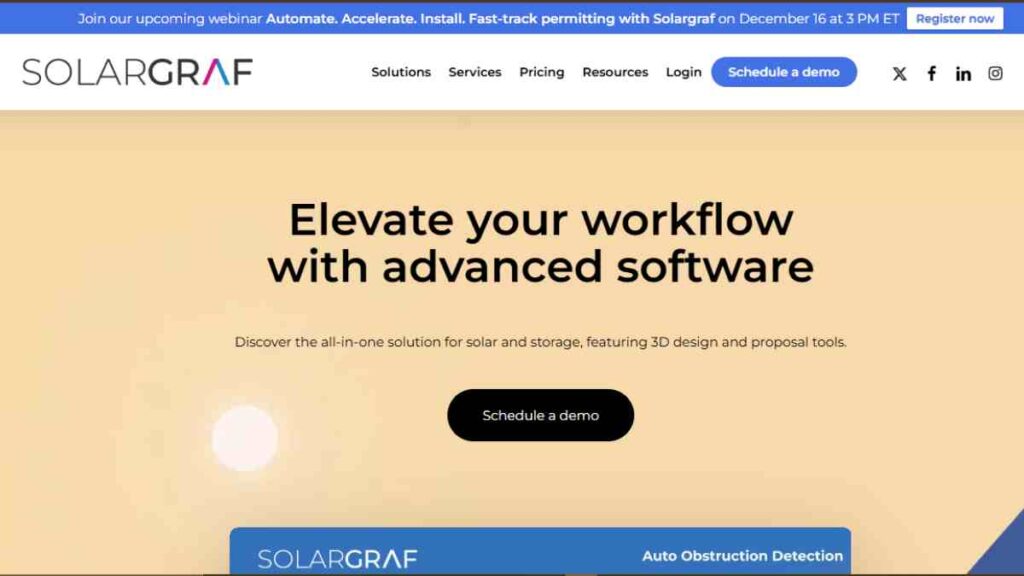
Solargraf is not a traditional CRM, but many solar companies use it as a central customer platform because it combines lead capture with design quoting and customer communications.
It IS particularly popular with residential installers who want a CRM-like experience tied directly into system design and quoting.
Key Features
- Lead management and tracking
- Integrated solar design and quoting tools
- Automated PDF proposals
- Client portal and communications history
- Integrations with payment tools and installers’ workflows
Pricing
Solargraf typically offers tiered plans based on feature access, and pricing often starts with an annual plan.
- Starter: $2,799/year
- Small Business: $4,799/year
- Teams: $6,399/year
- Enterprise: $12,999/year
Additional projects and users are charged separately, depending on plan.
Pros
- Combines CRM and quoting in one platform
- Very useful for installers who want seamless design-to-proposal workflows
- Good for visibility into client interactions
Cons
- Not a full CRM like Salesforce or HubSpot
- Limited project execution features compared with JobNimbus or OpenSolar
Best For
Solar installers who prioritise quick design-to-quote workflows and want a CRM-adjacent tool that helps manage leads and proposals together.
14. Dubsado
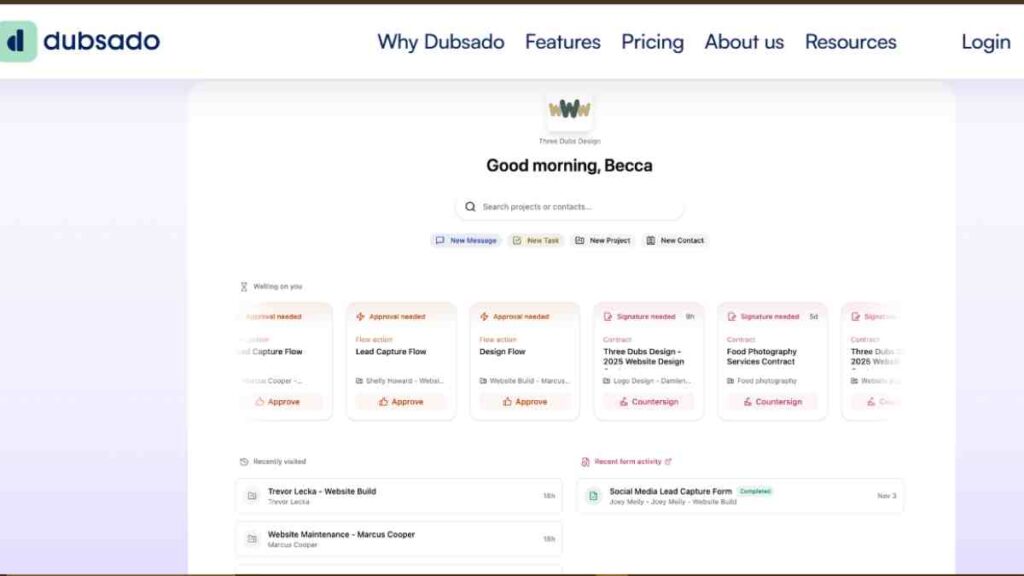
Dubsado is not a solar-only CRM, but it is one of the most flexible and workflow-centric platforms that solar companies, especially solar installers and boutique teams, use to manage leads, proposals, contracts, scheduling, and client communication all from one place.
Its highly customisable workflows make it valuable as a solar business CRM solution for firms that want smooth, automated processes without complex setup.
Dubsado shines where sales and operations intersect: from capturing a lead and sending a proposal to automating follow-ups and collecting payments.
Key Features
- Customisable clients, forms, and pipelines
- Automated workflows + triggers (e.g., send contract after lead enters pipeline)
- Proposal generation with e-signatures and payment collection
- Task and calendar automation for installation scheduling
- Robust client communication history and logs
- Templates for emails, forms, and contracts
Pricing
Dubsado offers straightforward plans:
- Starter: $35
- Premier:$55
Pros
- Highly customisable workflows that reduce manual effort
- Built-in proposal, forms, and payment tools
- Excellent for teams that want CRM + operations automation without complexity
- Great for small to mid-size solar businesses with repeat client touchpoints
Cons
- Not designed exclusively for solar, workflows must be configured
- Less advanced sales analytics than specialised solar pipelines
- Lacks some enterprise-grade features of Salesforce or HubSpot
Best For
Small to mid-size solar installers and boutique solar businesses that want a solar contractor CRM with strong automation across sales, operations, and client communication.
15. ClickPoint Software
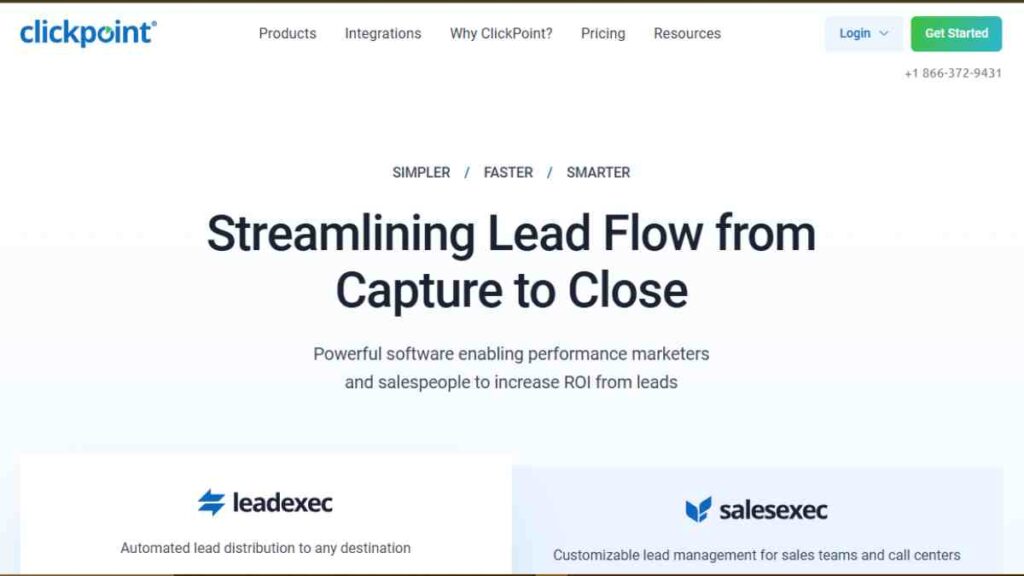
For solar companies that prioritise lead engagement, routing and sales acceleration, ClickPoint Software offers a powerful CRM-centric platform designed to optimise solar sales CRM workflows from first contact to closed deal.
Unlike general CRMs that require heavy customisation, ClickPoint’s tools focus on increasing conversion rates by automating lead prioritisation, outreach and sales execution, making it a compelling choice among solar business CRM solutions.
Key Features
- Solar-oriented lead management: Automated lead prioritisation and intelligent routing to ensure hot prospects reach the right sales reps quickly
- Built-in sales engagement tools: Outbound power dialing, SMS marketing, and automated follow-ups to capture interest and maintain momentum.
- Tracking and analytics: Record and analyse interactions across channels, helping teams understand what drives conversions.
- Custom workflows: Tailor your sales process to match your solar company’s pipeline stages and priorities.
Pricing
ClickPoint does not publish fixed pricing publicly; like many specialised solar CRM software tools, pricing is provided via custom quotes based on your team size and feature needs.
Pros
- Focused on solar sales CRM optimisation with automation to boost lead conversion.
- Strong built-in outreach tools (calling, SMS) to improve engagement.
- Helps solar companies streamline follow-ups and reduce lead leakage.
Cons
- Not a full CRM-plus-project management system, mainly built for sales engagement and lead handling.
- Pricing typically requires a sales conversation, which can slow evaluation.
Best For
Solar installers and sales-driven teams that want a CRM for solar companies focused on lead management, outreach automation and boosting conversion efficiency.

Key Features a Solar Software CRM Should Have
Not all CRMs are built for the realities of running a solar business.
The best CRM for solar businesses must support long sales cycles, proposal-heavy workflows, installer coordination, and post-installation customer management.
Whether you are evaluating a solar sales CRM, a solar project management CRM, or a full solar business CRM solution, these features separate generic tools from platforms that actually drive growth in the solar industry.
| Feature | Why It Matters for Solar Businesses |
|---|---|
| Lead & Contact Management | Captures, organises, and tracks leads from multiple sources, ensuring no enquiry is lost during long solar sales cycles. |
| Sales Pipeline & Deal Tracking | Visual pipelines help solar sales teams monitor deal stages, forecast revenue, and prioritise high-value opportunities. |
| Proposal & Quoting Tools | Enables fast, accurate proposal creation, critical for closing deals before competitors. |
| Workflow & Automation | Automates follow-ups, reminders, and task assignments, reducing manual work and lead leakage. |
| Project & Installation Tracking | Bridges sales and operations by tracking installs, permits, and milestones in one system. |
| Mobile & Field Access | Allows installers and field teams to access customer data, schedules, and documents on the go. |
| Integrations with Solar Tools | Connects with design, finance, accounting, and communication tools to eliminate data silos. |
| Customer Service & After-Sales Management | Tracks warranties, maintenance, and service requests to improve long-term customer satisfaction. |
| Reporting & Forecasting | Provides real-time insights into sales performance, conversion rates, and business growth. |
| Scalability & User Management | Supports growth from small installer teams to enterprise solar companies without system limitations. |
Conclusion
Choosing the best CRM for solar businesses comes down to how well the software supports your sales cycle, installation workflow, and long-term customer relationships.
The right solar CRM will not just organise leads, it will help you close faster, deliver projects smoothly, and scale with confidence.
We want to see you succeed, and that’s why we provide valuable business resources to help you every step of the way.
- Join over 23,000 entrepreneurs by signing up for our newsletter and receiving valuable business insights.
- Register your business today with Entrepreneurs.ng’s Business Registration Services.
- Tell Your Brand Story on Entrepreneurs.ng, let’s showcase your brand to our global audience.
- Need help with your marketing strategy? Get a Comprehensive Marketing and Sales Plan here.
- Sign up for our Entrepreneurs Success Blueprint Programme to learn how to start and scale your business in just 30 days.
- Book our one-on-one consulting and speak to an expert about structuring and growing your business.
- Visit our shop for business plan templates and other valuable resources to guide you.
- Get our Employee-Employer Super Bundle NDA templates to legally protect your business and workforce.
- Advertise your business to over a million entrepreneurs through our different advertising packages.

Frequently Asked Questions (FAQ)
What is the best CRM for solar businesses?
The best CRM for solar businesses depends on your size and workflow. Large solar firms often choose Salesforce or Sunbase, while growing installers prefer HubSpot, JobNimbus, or Solargraf for simplicity and speed.
Do solar companies really need a specialised CRM?
Yes. Solar businesses have long sales cycles, complex installations, and ongoing customer service needs. A solar-focused CRM handles proposals, project tracking, and post-installation follow-ups better than generic tools.
What features should a solar sales CRM have?
A solar sales CRM should include lead management, pipeline tracking, proposal automation, workflow automation, mobile access, and integrations with solar design and finance tools.
Can a CRM help manage solar installations and projects?
Yes. Many modern solar CRM platforms include project and installation tracking, allowing teams to manage permits, schedules, milestones, and field operations in one system.
Is there a CRM designed specifically for solar installers?
Yes. Tools like JobNimbus, Sunbase, Solargraf, OpenSolar, and Shape are built specifically for solar installers and contractors, combining sales, projects, and customer management.
How much does solar CRM software cost?
Solar CRM pricing varies widely. Some tools start with free or low-cost plans, while solar-specific platforms often charge annual fees ranging from a few thousand dollars to enterprise-level pricing.
Can a solar CRM integrate with design and financing tools?
Most modern solar CRM solutions integrate with design software, financing providers, accounting tools, and communication platforms to streamline the entire sales-to-installation process.