Choosing the right e-commerce platform can make or break your online business. This Shopify vs WooCommerce vs Wix comparison breaks down three leading online store platforms for entrepreneurs and small businesses.
With global e-commerce sales set to exceed $6.3 trillion according to Statista, choosing the right technology is a strategic business decision that shapes revenue, scalability, and long-term growth.
This guide is for founders, creators, and SMEs seeking the best e-commerce platform for small businesses, offering a clear, data-driven comparison.
Key Takeaways
- Shopify is the easiest all-in-one option for entrepreneurs who want speed, simplicity, and built-in scalability.
- WooCommerce offers the most flexibility and control for businesses that want full ownership and customisation.
- Wix is ideal for small stores and creatives prioritising design, ease of use, and low upfront costs.
- The best e-commerce platform for small businesses depends on your budget, technical skill level, and growth goals.

Overview of the Top E-commerce Platforms Compared
Before diving into features, pricing, and use cases, it is important to understand what sets these platforms apart at a high level.
This overview introduces three leading e-commerce solutions: Shopify, WooCommerce, and Wix, each built for different types of entrepreneurs, business models, and growth ambitions.
While all three enable you to sell online, they differ significantly in how they handle ease of use, flexibility, costs, and long-term scalability, which is why a clear comparison is important before choosing the right tool.
What Is Shopify?

Shopify is a fully hosted, all-in-one e-commerce platform designed to help individuals and businesses create, manage, and scale online stores with minimal technical effort.
Launched in 2006, Shopify has grown into one of the world’s most widely used e-commerce solutions, powering millions of online stores across more than 175 countries.
It handles hosting, security, software updates, and performance optimisation, allowing business owners to focus on selling products, marketing, and customer experience rather than technical maintenance.
How Shopify Works
Shopify operates as a subscription-based platform. Once you sign up, you can:
- Choose a professionally designed theme
- Add products (physical, digital, or services)
- Accept payments through multiple gateways
- Manage orders, inventory, and shipping from one dashboard
Because Shopify is cloud-based, everything runs in your browser. There is no need to install software, manage servers, or worry about site downtime during traffic spikes.
Key Shopify Features at a Glance
| Feature | What It Means for Your Business |
|---|---|
| Fully hosted platform | No need to buy hosting or manage servers |
| Built-in payment processing | Accept cards, transfers, and wallets easily |
| App marketplace | Extend functionality with thousands of apps |
| Mobile-friendly themes | Stores look good on all devices |
| Inventory & order management | Track stock and fulfil orders in one place |
| Security & compliance | SSL certificates and PCI compliance included |
Shopify’s Strengths for Online Businesses
One of Shopify’s biggest advantages is ease of use.
The interface is intuitive, even for users with no prior experience in building websites.
Product uploads, pricing changes, and order tracking are straightforward, which reduces the learning curve for first-time store owners. Shopify is also built with growth in mind. As sales increase, merchants can:
- Add advanced marketing tools
- Integrate third-party logistics and accounting software
- Sell across multiple channels such as social media and marketplaces
This scalability makes Shopify attractive not just to small businesses, but also to fast-growing brands.
Limitations to Be Aware Of
While Shopify is powerful, it is not without trade-offs.
Customisation is more controlled compared to open-source platforms, and many advanced features require paid apps.
In addition, transaction fees may apply if merchants do not use Shopify’s native payment system.
Who Is Shopify Best For?
Shopify is best suited for:
- Entrepreneurs launching their first online store
- Small businesses that want a low-maintenance solution
- Brands planning to scale without managing technical infrastructure
In the broader Shopify vs WooCommerce vs Wix comparison, Shopify stands out for simplicity, reliability, and scalability, making it a strong option for business owners who value speed and convenience over deep technical control.
See Also: Top 15 Powerful Shopify Alternatives for Growing Your E-Commerce Business
What Is WooCommerce?
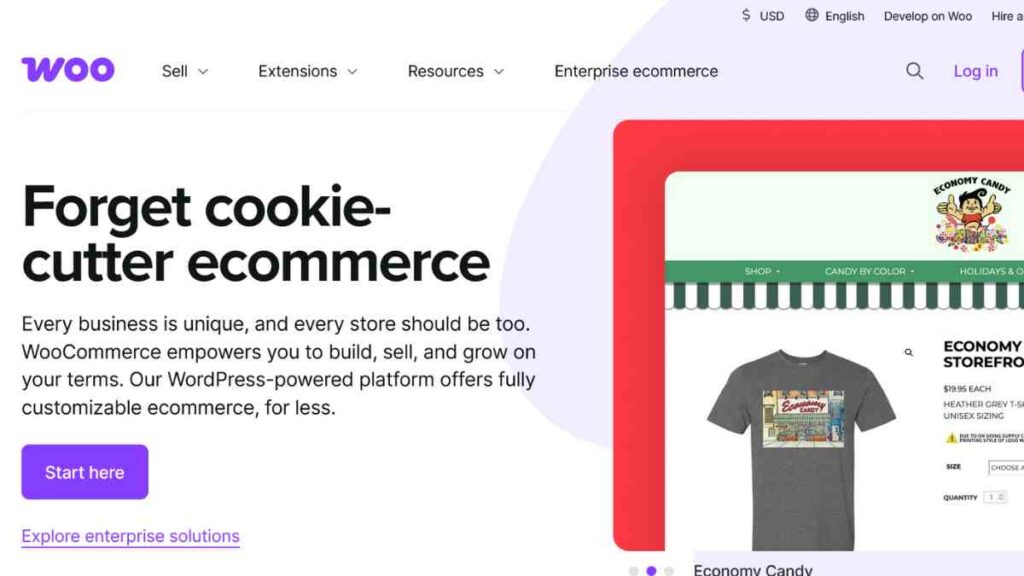
WooCommerce is an open-source e-commerce plugin built specifically for WordPress.
Unlike fully hosted platforms, WooCommerce turns an existing WordPress website into a powerful online store, giving business owners full control over design, functionality, and data ownership.
Launched in 2011, WooCommerce has grown into one of the most widely used e-commerce solutions globally, largely because it combines WordPress’s flexibility with robust selling features.
How WooCommerce Works
WooCommerce is not a standalone platform. To use it, you need:
- A WordPress website
- Web hosting
- A domain name
Once installed, WooCommerce adds e-commerce functionality to WordPress, allowing you to sell physical products, digital downloads, subscriptions, and even services.
Because it is self-hosted, you are responsible for hosting, security, updates, and performance optimisation, either directly or through your hosting provider.
Core WooCommerce Features
| Feature | What It Means for Your Business |
|---|---|
| Open-source platform | Full control over your store and data |
| WordPress integration | Seamless content + commerce experience |
| Flexible product types | Sell physical, digital, subscriptions, and more |
| Extensive plugin ecosystem | Add features through thousands of extensions |
| Customisable checkout | Optimise for conversions and user experience |
| No platform transaction fees | Pay only gateway processing fees |
Why Entrepreneurs Choose WooCommerce
WooCommerce’s biggest strength is flexibility. Because it is built on WordPress, nearly every aspect of the store, from design to checkout logic can be customised.
This makes it ideal for businesses with specific requirements that off-the-shelf platforms may not support easily.
It also integrates naturally with content marketing. Blogs, landing pages, SEO tools, and e-commerce all live in one ecosystem, which is especially valuable for businesses that rely on organic traffic and storytelling to drive sales.
Costs and Considerations
Although WooCommerce itself is free, running a WooCommerce store is not entirely cost-free. Typical expenses include:
- Hosting
- Premium themes
- Paid plugins for advanced features
- Maintenance and security
These costs vary widely depending on the size and complexity of the store.
While this flexibility can be cost-effective at scale, it also requires more decision-making and technical oversight.
Who Is WooCommerce Best For?
WooCommerce is best suited for:
- Entrepreneurs who want full ownership and control
- Content-driven businesses and bloggers
- Businesses with unique or complex store requirements
- Founders comfortable managing or outsourcing technical tasks
In the Shopify vs WooCommerce vs Wix comparison, WooCommerce stands out for customisation, ownership, and long-term flexibility, making it a strong choice for businesses that prioritise control over convenience.
What Is Wix?
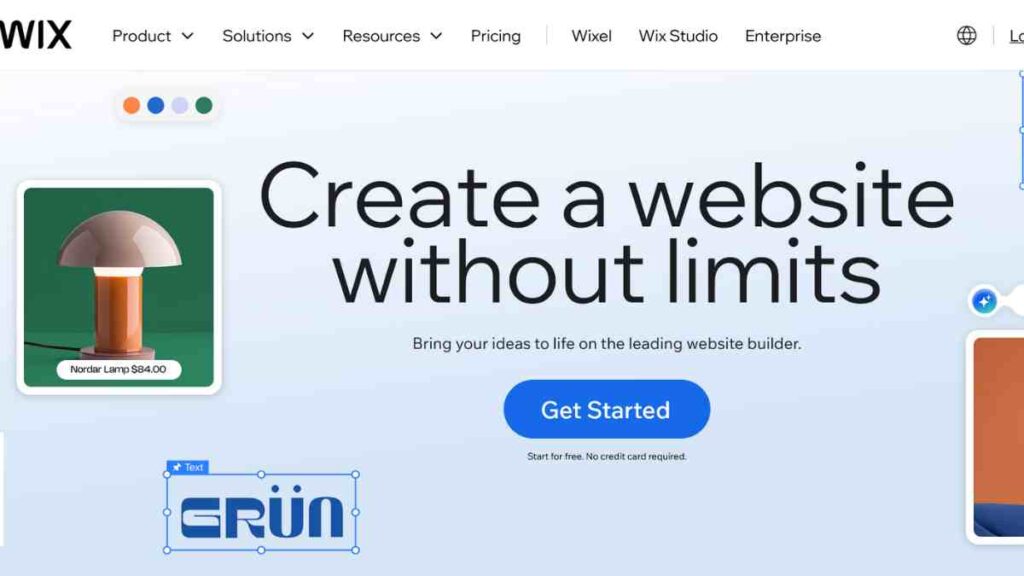
Wix is a website builder that combines drag-and-drop design tools with built-in e-commerce functionality.
Originally known for simple websites, Wix has evolved into a capable e-commerce solution aimed at small businesses, creatives, and entrepreneurs who want to get online quickly without technical complexity.
Wix E-commerce is fully hosted, meaning the platform handles hosting, security, updates, and performance behind the scenes. This makes it appealing to users who prioritise visual design, speed of setup, and ease of use over deep customisation.
How Wix Ecommerce Works
Wix uses a visual editor that allows you to build your online store by dragging and dropping elements such as product galleries, checkout sections, images, and text blocks.
Once your site design is complete, you can add products, set prices, configure payments, and start selling, all from a single dashboard.
Like Shopify, Wix is cloud-based. You do not need to manage hosting or install software, which reduces technical overhead significantly.
Core Wix Ecommerce Features
| Feature | What It Means for Your Business |
|---|---|
| Drag-and-drop editor | Design your store visually without coding |
| Fully hosted platform | Hosting, security, and updates included |
| Built-in payment options | Accept cards, wallets, and local payments |
| Mobile optimisation | Stores are automatically mobile-friendly |
| Product and order management | Manage sales from a central dashboard |
| Integrated marketing tools | Email marketing and basic SEO tools included |
Why Entrepreneurs Choose Wix
Wix’s biggest strength is simplicity. The platform is designed for users who want to build an online store quickly and focus on branding rather than technical setup.
Its visual editor offers more creative freedom out of the box compared to most hosted e-commerce platforms.
Wix also works well for smaller product catalogues and service-based businesses that want to combine content, bookings, and online sales within one website.
Limitations to Consider
While Wix is easy to use, it has limitations when it comes to scalability and advanced e-commerce functionality.
Large inventories, complex product variations, or highly customised checkout experiences may feel restrictive over time.
App integrations are also more limited compared to Shopify and WooCommerce.
Who Is Wix Best For?
Wix is best suited for:
- Small businesses and solo entrepreneurs
- Creatives and service-based businesses
- First-time store owners with limited technical skills
- Brands prioritising design and speed over advanced features
In the Shopify vs WooCommerce vs Wix comparison, Wix stands out for ease of use and visual flexibility, making it a strong entry-level option for entrepreneurs who want a simple, well-designed online store without technical hassle.

Shopify vs WooCommerce vs Wix: Feature-by-Feature Comparison
Now that you understand how each platform works individually, it is time to see how they stack up side by side.
This Shopify vs WooCommerce vs Wix comparison breaks down the most important factors: ease of use, flexibility, pricing, and scalability, to help you identify which platform best supports your business goals and stage of growth.
Ease of Use and Setup: Shopify vs WooCommerce vs Wix
For most entrepreneurs, especially first-time founders, ease of use is often the deciding factor when choosing an e-commerce platform.
This Shopify vs WooCommerce vs Wix breakdown focuses on how quickly you can set up a store, how intuitive the dashboard is, and how much technical knowledge is required to get started.
Quick Comparison: Ease of Use
| Platform | Setup Difficulty | Technical Skills Required | Beginner-Friendly |
|---|---|---|---|
| Shopify | Very easy | None to low | Yes |
| WooCommerce | Moderate | Medium | Partially |
| Wix | Very easy | None | Yes |
Shopify
Shopify is widely regarded as one of the simplest e-commerce platforms to use.
The setup process is guided step by step, from selecting a theme to adding products and configuring payments. Everything works out of the box, and hosting, security, and updates are handled automatically.
The dashboard is clean and purpose-built for selling online, which means users are not distracted by unnecessary features.
For entrepreneurs who want to launch quickly without touching code, Shopify offers one of the smoothest onboarding experiences available.
WooCommerce
WooCommerce offers flexibility, but ease of use depends heavily on your familiarity with WordPress.
Setting up WooCommerce involves choosing a hosting provider, installing WordPress, configuring themes, and managing plugins. While this process is not overly complex, it does require more decisions and technical involvement.
Once set up, WooCommerce is intuitive for users who already have a basic understanding of WordPress. However, beginners may find the initial configuration overwhelming compared to hosted platforms.
Wix
Wix excels in usability thanks to its drag-and-drop editor. You can design your online store visually, moving elements around the page without worrying about structure or code.
Product setup, payments, and basic store settings are straightforward and accessible from a single dashboard.
Because Wix combines website design and e-commerce in one interface, it feels less intimidating for non-technical users. However, this simplicity comes at the cost of advanced control.
Ease of Use Verdict
If ease of use is your top priority, Shopify and Wix clearly lead. Shopify is ideal for commerce-first businesses, while Wix suits design-led or smaller stores.
WooCommerce, although powerful, is better suited for users who are comfortable managing technical details or working with developers.
Pricing and Ongoing Costs: Shopify vs WooCommerce vs Wix
Pricing is often the deciding factor for entrepreneurs comparing Shopify vs WooCommerce vs Wix, especially in the early stages of building an online store.
While all three platforms allow you to sell online, they follow very different pricing models, which affects how much you pay upfront and over time.
Below is a clear overview of what each platform actually costs before we break them down individually.
Pricing Overview
| Platform | Entry-Level Cost | Typical Monthly Cost | High-End / Enterprise |
|---|---|---|---|
| Shopify | $29/month | $79/month | $299/month (Plus from $2,300/month) |
| WooCommerce | Free (plugin) | $30–$100/month | $200+ depending on setup |
| Wix | $29/month | $39/month | $159/month |
Shopify
Shopify uses a subscription-based pricing model, which makes costs predictable and easy to budget for. The Basic plan starts at $29 per month, suitable for new businesses that need core selling features.
As your store grows, many merchants move to the $79 per month plan, which offers better reporting and more staff accounts.
Larger businesses often choose the Advanced plan at $299 per month, while enterprise brands use Shopify Plus, which starts at around $2,300 per month.
All Shopify plans include hosting, SSL security, and unlimited products. However, many essential features, such as advanced marketing tools, subscriptions, and detailed analytics, often require paid apps.
WooCommerce
WooCommerce follows a very different pricing model. The plugin itself is free, which makes it appealing to entrepreneurs who want to start with minimal upfront costs.
However, WooCommerce is self-hosted, meaning you must pay separately for hosting, a domain name, themes, and plugins.
For most small businesses, reliable hosting typically costs between $20 and $50 per month.
Premium themes and plugins, used for features like advanced shipping, subscriptions, or security, can add another $10 to $50 per month when averaged annually. Larger or high-traffic stores may spend well over $100 per month, depending on their setup.
The advantage is flexibility. You only pay for what you need, and there are no platform-level transaction fees, aside from standard payment processor charges.
Wix
Wix offers bundled e-commerce plans that include hosting, security, and selling tools in one monthly fee. The Business Basic plan starts at $29 per month, which allows you to accept payments and sell online.
Many small businesses upgrade to the $39 per month plan for additional storage and features. For larger operations, Wix Business Elite costs $159 per month.
Because Wix bundles most features into its plans, there are fewer surprise costs compared to Shopify or WooCommerce.
However, Wix becomes less flexible and less cost-efficient as stores grow more complex or require advanced e-commerce features.
Pricing Verdict
In terms of pricing, WooCommerce leads for cost flexibility and long-term value, especially for businesses that want control and lower costs as they scale.
Wix comes next, offering the most affordable and predictable pricing for small stores with simple needs.
Shopify ranks last on price, as its fixed plans and reliance on paid apps make it the most expensive option over time, despite its convenience.
Design and Themes: Shopify vs WooCommerce vs Wix
Design plays a major role in how customers perceive your brand and trust your store.
In this Shopify vs WooCommerce vs Wix comparison, the key difference lies in how much creative freedom each platform gives you versus how easy it is to achieve a polished, professional look.
Design and Themes Overview
| Platform | Design Flexibility | Theme Quality | Customisation Level |
|---|---|---|---|
| Shopify | Medium | High (premium-focused) | Moderate |
| WooCommerce | Very high | Varies by theme | Very high |
| Wix | High (visual editor) | Good | Low to medium |
Shopify
Shopify offers a curated collection of professionally designed themes that are optimised for conversions, mobile responsiveness, and performance. While there are free themes available, many of the best designs are paid and can cost between $150 and $350 as a one-time fee.
Customisation within Shopify themes is controlled. You can adjust layouts, colours, fonts, and sections easily, but deep structural changes usually require knowledge of Shopify’s templating language or the use of apps.
This controlled flexibility ensures consistency and performance but limits creative freedom.
Shopify works best for brands that want a clean, modern storefront that follows e-commerce best practices without heavy design experimentation.
WooCommerce
WooCommerce offers the highest level of design flexibility because it is built on WordPress.
You can choose from thousands of free and premium themes or build a completely custom design from scratch. Page builders like Elementor or Gutenberg allow detailed layout control without writing code.
Because WooCommerce is open-source, there are virtually no design limits. However, this freedom comes with responsibility. Poor theme choices or excessive plugins can affect performance and user experience if not managed properly.
Wix
Wix stands out for its drag-and-drop editor, which allows users to design pages visually with minimal restrictions. You can move elements freely, adjust spacing, and build visually rich pages without touching code.
This level of visual control makes Wix appealing to creatives and small businesses that prioritise aesthetics. However, Wix themes are less flexible once chosen, and advanced ecommerce design customisation is limited compared to WooCommerce.
Wix delivers strong design results quickly but is best suited for simpler stores with smaller product catalogues.
Design Verdict
In design and themes, WooCommerce leads for flexibility and creative control, making it the best choice for custom or content-driven brands.
Wix follows closely for ease of visual design and speed, especially for non-technical users. Shopify ranks last in flexibility but excels in delivering clean, professional designs optimised for selling.
See Also: AliExpress vs Temu vs CJDropshipping – Which Platform Is Best for Global Dropshippers
Product Management and Inventory: Shopify vs WooCommerce vs Wix
Strong product and inventory management becomes critical as your store grows.
For this comparison, the difference lies in how well each platform handles product complexity, inventory tracking, and operational scale.
Product Management Overview
| Platform | Product Types Supported | Inventory Control | Scalability |
|---|---|---|---|
| Shopify | Physical, digital, variants | Advanced, built-in | High |
| WooCommerce | Unlimited (via plugins) | Highly customisable | Very high |
| Wix | Physical & digital | Basic to moderate | Low to medium |
Shopify
Shopify offers a robust, well-organised product management system designed for commerce-first businesses.
You can easily manage physical and digital products, product variants, SKUs, pricing, and stock levels from a central dashboard. Inventory updates automatically across sales channels, which helps prevent overselling.
Shopify performs especially well for businesses managing medium to large catalogues. Bulk imports, automated stock tracking, and integrations with fulfilment and logistics providers make it suitable for scaling operations without friction.
Shopify’s limitations appear when businesses require highly customised product logic, which often requires paid apps.
WooCommerce
WooCommerce provides the most flexible product management system of the three. Because it is open-source, you can create virtually any product type, from subscriptions and bookings to memberships and custom bundles, using plugins or custom development.
Inventory control is powerful but depends heavily on the tools you install. For experienced users or businesses with developers, WooCommerce can handle extremely complex catalogues and workflows.
However, this flexibility also means more responsibility for optimisation and maintenance.
WooCommerce is best suited for stores with unique product requirements or content-driven commerce models.
Wix
Wix offers straightforward product and inventory tools that are easy to use but limited in scope. You can manage basic products, track stock levels, and handle simple variants, which is sufficient for small stores or service-based businesses.
However, Wix struggles with larger inventories or complex product configurations. Advanced inventory rules, bulk operations, and custom product logic are limited compared to Shopify and WooCommerce.
Wix works best when simplicity matters more than operational depth.
Product Management Verdict
For product and inventory management, WooCommerce leads in flexibility and customisation, making it ideal for complex or unconventional stores.
Shopify follows closely, offering the best balance between power and ease of use for growing businesses. Wix ranks last, suitable only for small catalogues and simple selling needs.

SEO and Marketing Tools: Shopify vs WooCommerce vs Wix
SEO and marketing capabilities determine how easily customers can find your store and how effectively you can convert traffic into sales.
In this Shopify vs WooCommerce vs Wix comparison, the key difference is how much control each platform gives you over search optimisation and customer acquisition.
SEO and Marketing Overview
| Platform | SEO Control | Built-in Marketing Tools | Scalability for Growth |
|---|---|---|---|
| Shopify | Good | Strong | High |
| WooCommerce | Excellent | Depends on plugins | Very high |
| Wix | Moderate | Basic to good | Low to medium |
Shopify
Shopify offers solid SEO fundamentals out of the box. You can optimise product pages, meta titles, descriptions, URLs, and image alt text without technical effort.
While advanced technical SEO control is limited compared to WooCommerce, Shopify covers everything most small and medium-sized businesses need.
On the marketing side, Shopify performs very well. It includes abandoned cart recovery, discount codes, email marketing integrations, and multi-channel selling through social media and marketplaces.
Many advanced marketing features are accessible via apps, which makes Shopify powerful but also increases costs.
WooCommerce
WooCommerce leads clearly in SEO. Because it runs on WordPress, you have full control over site structure, URLs, schema markup, content optimisation, and technical SEO.
Plugins like Yoast or Rank Math allow deep optimisation that few hosted platforms can match.
Marketing flexibility is also strong, but largely plugin-driven. You can build advanced email funnels, content-driven sales strategies, and custom promotions.
The trade-off is setup complexity. Effective SEO and marketing on WooCommerce require more configuration and ongoing optimisation.
Wix
Wix has improved its SEO significantly in recent years and offers guided SEO setup, editable meta tags, and basic optimisation tools.
For small stores, these features are often sufficient. However, Wix provides less control over technical SEO elements, which can limit performance in competitive markets.
Marketing tools such as email campaigns, social integrations, and promotions are built in, but they are less advanced compared to Shopify and less flexible than WooCommerce.
As traffic and competition increase, these limitations become more noticeable.
SEO and Marketing Verdict
For SEO and marketing, WooCommerce leads due to its unmatched control and content-driven capabilities.
Shopify follows closely, offering the best balance of built-in marketing power and ease of use. Wix ranks last, suitable for basic SEO needs but limited for long-term, competitive growth.
Scalability and Performance: Shopify vs WooCommerce vs Wix
Scalability determines whether your e-commerce platform can grow with your business without breaking performance or increasing complexity.
In this Shopify vs WooCommerce vs Wix comparison, the real question is how well each platform handles traffic growth, larger product catalogues, and operational expansion.
Scalability and Performance Overview
| Platform | Traffic Handling | Store Growth Capability | Performance Management |
|---|---|---|---|
| Shopify | Excellent | High | Fully managed |
| WooCommerce | Depends on hosting | Very high | Self-managed |
| Wix | Limited | Low to medium | Platform-managed |
Shopify
Shopify is designed for scale. Because it is a fully hosted platform, Shopify automatically handles traffic spikes, server performance, security updates, and infrastructure optimisation.
Whether a store receives 100 visitors a day or 100,000, performance remains stable without additional effort from the business owner.
As businesses grow, Shopify supports expansion through advanced reporting, multi-location inventory, international selling, and integrations with enterprise tools. For large brands, Shopify Plus offers custom workflows and higher API limits.
WooCommerce
WooCommerce offers the highest scalability potential, but performance depends entirely on hosting quality and technical configuration.
With the right hosting provider, caching, and optimisation, WooCommerce can handle very large stores and high traffic volumes.
The advantage is control. Businesses can scale infrastructure exactly to their needs, customise workflows, and build complex systems.
The downside is responsibility. Poor hosting or misconfigured plugins can lead to slow performance as traffic grows.
Wix
Wix performs well for small to moderately sized stores, but it is not designed for heavy traffic or complex ecommerce operations.
As product catalogues grow or traffic increases, performance limitations and feature restrictions become more noticeable.
While Wix manages hosting and security automatically, its closed ecosystem limits optimisation options. This makes it difficult to scale beyond a certain point without migrating to another platform.
Scalability Verdict
For scalability and performance, WooCommerce leads in long-term potential due to its unlimited flexibility, provided the technical setup is strong.
Shopify follows closely, offering the best stress-free scaling experience for most businesses. Wix ranks last, suitable only for small stores with modest growth plans.

Security and Maintenance: Shopify vs WooCommerce vs Wix
Security and maintenance are often overlooked until something goes wrong.
In this Shopify vs WooCommerce vs Wix comparison, the key difference is who is responsible for protecting your store, keeping it updated, and ensuring it runs smoothly over time.
Security and Maintenance Overview
| Platform | Security Responsibility | Updates & Maintenance | Risk Level for Owners |
|---|---|---|---|
| Shopify | Fully managed | Automatic | Low |
| WooCommerce | Store owner | Manual or semi-automatic | Medium to high |
| Wix | Fully managed | Automatic | Low |
Shopify
Shopify handles all core security and maintenance tasks on behalf of store owners. This includes SSL certificates, PCI compliance, server security, software updates, and performance monitoring.
Merchants do not need to worry about installing patches or fixing vulnerabilities, as everything runs automatically in the background.
This managed approach significantly reduces risk, especially for non-technical business owners. Even during high traffic periods, Shopify maintains uptime and protects stores from common threats such as DDoS attacks.
WooCommerce
WooCommerce places security and maintenance responsibility squarely on the store owner.
Because it is self-hosted, you are responsible for choosing a secure hosting provider, installing SSL certificates, updating WordPress core files, themes, and plugins, and implementing backups and firewalls.
While this setup allows advanced security customisation, it also introduces risk. Outdated plugins, poor hosting, or misconfigurations can expose stores to vulnerabilities. Many businesses mitigate this by hiring developers or using managed WordPress hosting.
Wix
Wix, like Shopify, is a fully hosted platform. It automatically handles security updates, SSL certificates, backups, and platform maintenance.
Store owners do not need to manage technical details, which makes Wix appealing to small businesses and first-time entrepreneurs.
However, because Wix is a closed ecosystem, users have little control over advanced security configurations. While this is not an issue for most small stores, it may be limiting for businesses with specialised security needs.
Security and Maintenance Verdict
For security and maintenance, Shopify and Wix lead by offering fully managed, low-risk environments.
Shopify edges ahead for ecommerce-specific security and reliability at scale, while WooCommerce ranks last due to its reliance on owner-managed security, despite offering greater control for technically capable teams.
Final Verdict: Shopify vs WooCommerce vs Wix, Which Platform Should You Choose?
There is no single winner in the Shopify vs WooCommerce vs Wix comparison, each platform leads in a different area.
Shopify is the best choice for most entrepreneurs. It excels in ease of use, security, and hassle-free scalability, making it ideal for businesses that want to launch quickly and grow without technical distractions, even though costs rise over time.
WooCommerce is the strongest option for flexibility and control. It leads in SEO, customisation, and content-driven commerce, making it best suited for businesses with technical support or specific, long-term requirements.
Wix is best for small stores and beginners who value simplicity and visual design. It is easy to use and affordable at entry level but limited for complex or fast-growing ecommerce operations.
In short, choose Shopify for convenience and scale, WooCommerce for control and flexibility, and Wix for simplicity and speed. The right platform is the one that matches your business today and supports where you want it to go next.
Conclusion
Choosing between Shopify vs WooCommerce vs Wix comes down to your priorities as a business owner.
Shopify offers the smoothest path to launching and scaling an online store, WooCommerce provides unmatched flexibility and control for customised growth, and Wix delivers simplicity for small, design-focused businesses.
The best decision is the platform that fits your current needs while supporting your long-term vision for growth.
We want to see you succeed, and that’s why we provide valuable business resources to help you every step of the way.
- Join over 23,000 entrepreneurs by signing up for our newsletter and receiving valuable business insights.
- Register your business today with Entrepreneurs.ng’s Business Registration Services.
- Tell Your Brand Story on Entrepreneurs.ng, let’s showcase your brand to our global audience.
- Need help with your marketing strategy? Get a Comprehensive Marketing and Sales Plan here.
- Sign up for our Entrepreneurs Success Blueprint Programme to learn how to start and scale your business in just 30 days.
- Book our one-on-one consulting and speak to an expert about structuring and growing your business.
- Visit our shop for business plan templates and other valuable resources to guide you.
- Get our Employee-Employer Super Bundle NDA templates to legally protect your business and workforce.
- Advertise your business to over a million entrepreneurs through our different advertising packages.

Frequently Asked Questions (FAQs)
Is Shopify better than WooCommerce for beginners?
Yes. Shopify is generally better for beginners because it is fully hosted and easy to set up. WooCommerce has a steeper learning curve and requires managing hosting, updates, and plugins.
Which platform is cheaper: Shopify, WooCommerce, or Wix?
WooCommerce is usually the cheapest to start with, as the plugin is free. Wix offers affordable bundled plans for small stores, while Shopify tends to be the most expensive as you add apps and upgrade plans.
What is the best e-commerce platform for small businesses?
Shopify is often the best e-commerce platform for small businesses that want simplicity and scalability. WooCommerce is ideal for small businesses that want flexibility, while Wix suits very small or design-focused stores.
Can WooCommerce handle large online stores?
Yes. WooCommerce can support very large stores, but performance depends on hosting quality and technical optimisation. With the right setup, it can scale as much as needed.
Is Wix good for selling products online?
Wix is good for selling a small number of products or services. It is easy to use but not ideal for large inventories or complex e-commerce operations.
Which platform is best for SEO?
WooCommerce is the strongest platform for SEO because it runs on WordPress and offers full control over site structure, content, and technical optimisation.
Do I need coding skills to use these platforms?
No coding skills are required for Shopify or Wix. WooCommerce does not require coding either, but technical knowledge is helpful for advanced customisation and troubleshooting.
Can I switch platforms later if my business grows?
Yes. Many businesses start on Wix or Shopify and later migrate to WooCommerce or Shopify Plus as their needs change. However, migrations can be time-consuming and should be planned carefully.
Which platform is best for dropshipping?
Shopify is the most popular platform for dropshipping due to its integrations, automation tools, and ease of use. WooCommerce also supports dropshipping but requires more setup.
Which e-commerce platform is best for long-term growth?
For long-term growth, WooCommerce and Shopify are the strongest options. WooCommerce offers unlimited flexibility, while Shopify provides stress-free scalability with managed infrastructure.