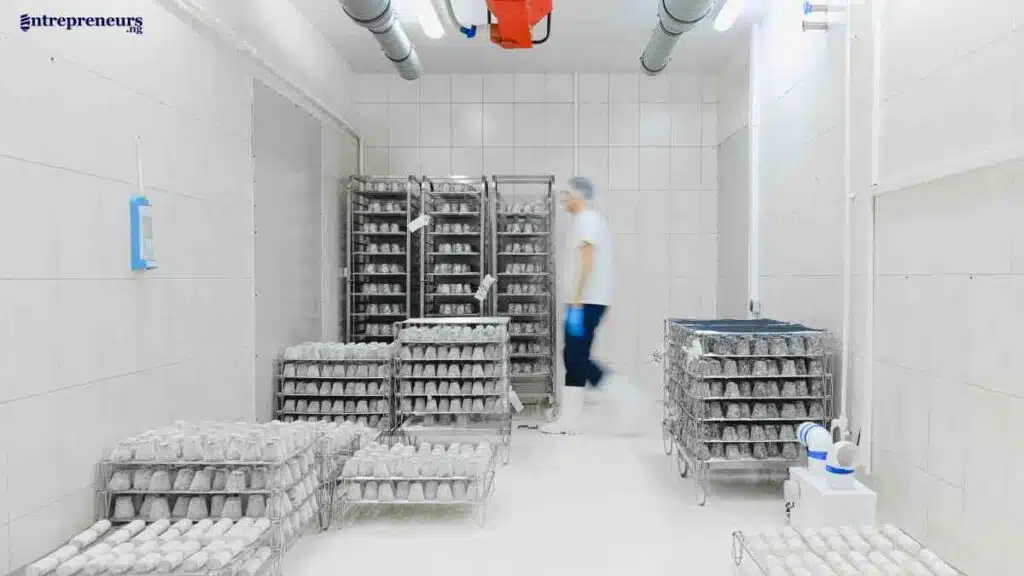
Cold Chain Logistics underpins modern food, pharmaceutical, and healthcare supply chains, keeping products safe through temperature-controlled logistics from origin to final delivery.
Its importance is rising fast as the FAO estimates that over 13% of global food is lost between harvest and retail, largely due to weak cold chain systems, losses that better cold chain practices can reduce.
In this guide, we break down the cold chain process, proven best practices, and essential compliance rules, helping entrepreneurs protect margins, build trust, and scale confidently.
Key Takeaways
- Cold chain logistics protects product quality, revenue, and brand trust across food, pharma, and agriculture.
- Effective cold chain logistics management depends on end-to-end temperature control, not just cold storage or transport.
- Best practices combine technology, trained people, and strict compliance to prevent costly losses.
- Businesses that invest early in cold chain systems gain stronger market access and long-term competitiveness.

What Is Cold Chain Logistics?
Cold chain logistics refers to the end-to-end management of temperature-sensitive products across the supply chain, from production and storage to transportation and final delivery.
It ensures goods such as fresh food, pharmaceuticals, vaccines, and certain chemicals remain within a specified temperature range to preserve quality, safety, and effectiveness.
In practice, cold chain logistics combines temperature-controlled storage, refrigerated transport, real-time monitoring, and strict handling procedures to prevent spoilage, contamination, or regulatory breaches.
Difference Between Standard Logistics and Cold Chain Logistics
While both standard logistics and cold chain logistics focus on moving goods from one point to another, the level of control, risk, and complexity involved is very different.
Standard logistics handles products that are not sensitive to temperature changes, whereas cold chain logistics is designed specifically for goods that can lose value, safety, or effectiveness if exposed to the wrong conditions, even for a short time.
| Aspect | Standard Logistics | Cold Chain Logistics |
|---|---|---|
| Temperature control | Not required | Strict, continuous temperature control |
| Types of products | Dry goods, electronics, furniture | Food, pharmaceuticals, vaccines, chemicals |
| Storage facilities | Regular warehouses | Refrigerated warehouses, cold rooms, freezers |
| Transportation | Conventional trucks and containers | Refrigerated trucks, cold containers, insulated packaging |
| Monitoring systems | Minimal or none | Real-time temperature and location monitoring |
| Risk level | Relatively low | High—small failures can cause total product loss |
| Compliance requirements | Basic transport regulations | Strict food safety and pharmaceutical regulations |
| Cost structure | Lower operating costs | Higher costs due to equipment, energy, and monitoring |
| Impact of failure | Delays or minor damage | Spoilage, recalls, health risks, regulatory penalties |
In short, standard logistics moves products, but cold chain logistics protects value, safety, and compliance throughout the entire supply chain.
How Cold Chain Logistics Works
Cold chain logistics works by maintaining a consistent, controlled temperature environment for sensitive products at every stage of the supply chain.
From the moment goods are produced or harvested, they are moved into cold storage, transported using refrigerated vehicles, monitored continuously in transit, and carefully handled at distribution and delivery points.
Each link in the chain from storage, transport, packaging, monitoring, to compliance, must work together seamlessly, because a single temperature breach can compromise the entire shipment.
Step-by-Step Flow of Cold Chain Logistics
1) Pre-cooling and Product Preparation
Cold chain logistics starts before anything moves.
Fresh produce may be pre-cooled after harvest to remove field heat, while pharmaceuticals are prepared under controlled conditions to match required temperature ranges.
At this stage, teams confirm the target temperature band, shelf-life limits, and handling rules so the rest of the chain follows one clear standard.
2) Temperature-Controlled Storage at Origin
Products move into the right facility, be it cold room, chiller, or freezer, based on their temperature requirements.
This is where good operators set the tone for the entire shipment: proper stacking for airflow, calibrated thermometers, recorded temperatures, and clear segregation to avoid cross-contamination or mix-ups.
3) Order Processing and Dispatch Planning
Before loading, logistics teams plan the route, timing, and risks.
They confirm:
- the right vehicle type (refrigerated truck, insulated van, reefer container)
- packaging and coolant needs (gel packs, dry ice, insulated liners)
- documentation for audits and compliance.
This step reduces “last-minute improvisation,” which is where many cold chain failures begin.
4) Cold Chain Packaging and Loading (The High-Risk Moment)
Loading is a common failure point because doors open, temperatures rise, and products sit on the dock.
Best operators minimise exposure by:
- staging products in a temperature-controlled area
- loading fast and in the right sequence
- using insulated packaging where needed.
Once loaded, the vehicle is sealed and the temperature is stabilised before departure.
5) Temperature-Controlled Transportation
During transit, the refrigeration system maintains the set range, while data loggers/IoT sensors track conditions inside the cargo area.
For long distances or cross-border routes, drivers and dispatch teams also monitor door openings, fuel levels (for reefer units), traffic delays and weather risks.
If temperature begins to drift, the goal is early intervention, not discovering the problem at delivery.
6) In-Transit Monitoring and Exception Management
Modern cold chains rely on alerts, not guesswork.
When sensors detect a temperature excursion, the response should be immediate to confirm whether it is a sensor error or real deviation, adjust refrigeration settings or airflow or reroute to the nearest cold facility if required.
This is where strong SOPs separate reliable cold chain operators from risky ones.
7) Distribution Centre Receiving and Cold Storage Holding
At the distribution hub, products are received into cold storage quickly.
Teams verify:
- temperature logs and sensor history
- seal integrity and delivery conditions
- product quality checks (where applicable)
Issues are documented immediately because this is the point where liability disputes often arise.
8) Picking, Packing, and Last-Mile Cold Delivery
For retail or healthcare delivery, the final stage often involves smaller shipments and more door openings.
The last mile uses:
- insulated boxes for short drops
- refrigerated vans for longer routes
- strict delivery windows to reduce exposure time.
This stage is crucial because even if everything was perfect earlier, last-mile delays can still ruin the product.
9) Proof of Delivery, Documentation, and Continuous Improvement
Cold chain does not end at drop-off. The final step includes:
- proof of delivery (POD)
- temperature records archived for audits
- feedback on delays, excursions, and handling issues.
The best operators treat every shipment as data for improving routes, packaging choices, staff training, and compliance readiness.

Key Components of Cold Chain Logistics
Cold chain logistics works only when multiple interconnected components function together without failure.
It is not enough to have a cold room or a refrigerated truck in isolation.
A reliable cold chain depends on the right infrastructure, transport systems, monitoring tools, processes, and people, all aligned to maintain product integrity from start to finish.
1) Cold Storage Infrastructure
Cold storage infrastructure is the foundation of any effective cold chain.
It provides the controlled environment needed to stabilise products before transport, during distribution, and sometimes at the final point of sale.
If storage fails due to poor design, power issues, or weak monitoring, the rest of the cold chain cannot recover from the damage.
What Cold Storage Infrastructure Includes
Cold storage facilities are designed based on temperature range, product type, and volume, not convenience.
Common infrastructure elements include:
| Storage Type | Typical Temperature Range | Common Use Cases |
|---|---|---|
| Chilled rooms | 0°C to 5°C | Fresh fruits, vegetables, dairy, beverages |
| Cold rooms | -2°C to 10°C | Meat, processed foods, pharmaceuticals |
| Freezers | -18°C and below | Frozen foods, vaccines, biological samples |
| Ultra-low freezers | -70°C and below | Specialised vaccines, research materials |
Key Features of Reliable Cold Storage
Well-managed cold storage facilities share a few non-negotiable features:
- Stable power supply, often with backup generators or alternative energy sources
- Insulated walls and flooring to prevent temperature leakage
- Proper airflow design to ensure uniform cooling across all stored products
- Calibrated temperature sensors with regular maintenance schedules
Importance of Cold Storage in the Cold Chain
Cold storage acts as the buffer zone of the cold chain.
It protects products during delays, consolidates shipments, and allows businesses to scale without rushing deliveries.
For entrepreneurs, investing in the right cold storage setup reduces spoilage, improves compliance readiness, and creates flexibility across the entire cold chain logistics system.
2) Temperature-Controlled Transportation
Temperature-controlled transportation is the moving link that keeps products within safe temperature limits as they travel between storage points.
It is often the most vulnerable part of the cold chain because goods are exposed to changing external conditions, long distances, traffic delays, and handling risks.
A single failure in transit can undo everything done right in storage.
What Temperature-Controlled Transportation Involves
Cold chain transport relies on specialised vehicles and containers designed to maintain specific temperature ranges throughout the journey.
| Transport Mode | Typical Use | Key Advantage |
|---|---|---|
| Refrigerated trucks (reefers) | Short to medium-distance road transport | Flexibility and direct delivery |
| Refrigerated vans | Urban and last-mile delivery | Speed and frequent drop-offs |
| Reefer containers (sea freight) | International and bulk shipments | Cost efficiency for long distances |
| Temperature-controlled air cargo | Pharmaceuticals, urgent perishables | Speed and reduced transit time |
Key Elements That Make Cold Transport Reliable
Effective temperature-controlled transportation depends on more than just refrigeration units:
- Pre-cooled vehicles before loading to avoid temperature shock
- Proper loading practices that allow airflow around products
- Well-maintained refrigeration systems with fuel and power redundancy
- Trained drivers and handlers who understand cold chain risks
Why Transportation Is a Critical Risk Point
Most temperature excursions happen during loading, transit, or unloading, not in storage.
This is why businesses that invest in reliable vehicles, clear SOPs, and route planning experience fewer losses.
In cold chain logistics, transportation does not just move products, it protects shelf life, safety, and compliance while products are on the move.
3) Cold Chain Packaging Solutions
Cold chain packaging acts as the first line of defence against temperature fluctuations, especially during loading, transit, and last-mile delivery.
Even with refrigerated transport, packaging plays a critical role in slowing heat transfer, protecting products during short exposures, and maintaining stability when external conditions change.
What Cold Chain Packaging Includes
Packaging solutions are selected based on product sensitivity, transit duration, and delivery method.
Common options include:
| Packaging Type | Primary Function | Typical Use Cases |
|---|---|---|
| Insulated boxes and liners | Reduce heat exchange | Fresh food, meal kits, short-haul deliveries |
| Gel packs | Maintain chilled temperatures | Dairy, pharmaceuticals, vaccines |
| Phase change materials (PCMs) | Hold precise temperature ranges | High-value medical products |
| Dry ice | Deep freezing | Frozen foods, biotech samples |
Key Factors in Choosing the Right Packaging
Effective cold chain packaging is not about overpacking, but precision.
Businesses must consider:
- required temperature range and tolerance
- transit time and expected delays
- ambient temperature along the route
- compatibility with transport and storage systems
Using the wrong packaging can either fail to protect products or inflate costs unnecessarily.
Why Packaging Is Critical in Cold Chain Logistics
Packaging protects products during the most exposed moments of the cold chain i.e. loading, unloading, customs checks, and last-mile delivery.
When used correctly, it reduces reliance on refrigeration alone and provides a safety buffer that prevents minor delays from turning into total product loss.
4) Monitoring, Data Logging, and Visibility Systems
Monitoring and data logging systems provide the visibility and control that make cold chain logistics reliable at scale.
Without accurate, continuous monitoring, businesses are effectively guessing whether temperature-sensitive goods stayed within safe limits.
In cold chain operations, what you cannot see, you cannot protect.
What Monitoring Systems Cover
These systems track conditions throughout storage and transportation, ensuring issues are detected early rather than discovered at delivery.
| Monitoring Tool | What It Tracks | Why It Matters |
|---|---|---|
| Temperature sensors | Internal cargo temperature | Confirms product safety |
| Data loggers | Temperature history over time | Supports audits and compliance |
| GPS tracking | Location and movement | Improves route control and accountability |
| Real-time alerts | Temperature deviations | Enables immediate corrective action |
How Monitoring Improves Cold Chain Performance
Modern cold chain logistics uses real-time visibility, not manual checks.
When systems are integrated, businesses can:
- detect temperature excursions early
- intervene before products are damaged
- document compliance for regulators and partners
- analyse patterns to improve future routes and handling
This shifts cold chain management from reactive firefighting to proactive control.
Why Visibility Is a Competitive Advantage
Monitoring systems protect more than products, they protect reputation and revenue.
In regulated industries like food and pharmaceuticals, accurate temperature records can be the difference between smooth distribution and costly recalls.
For entrepreneurs, investing in visibility builds trust with customers, regulators, and investors while reducing avoidable losses across the cold chain.
5) Processes, SOPs, and Trained Personnel
Processes and people are the control layer of cold chain logistics.
Even with the best cold storage, transport, and monitoring systems, the cold chain will fail without clear procedures and trained staff to execute them consistently.
Most cold chain breakdowns are not caused by equipment failure, but by human error and weak processes.
What Strong Cold Chain Processes Include
Standard Operating Procedures (SOPs) define how every task is performed, from handling and loading to emergency response.
| Process Area | Purpose | Business Impact |
|---|---|---|
| Handling procedures | Correct product movement and stacking | Prevents temperature shock and damage |
| Loading and unloading SOPs | Minimise exposure time | Reduces temperature excursions |
| Cleaning and sanitation protocols | Prevent contamination | Supports food and pharma compliance |
| Emergency response plans | Guide actions during failures | Limits losses and downtime |
| Documentation and record-keeping | Track compliance and performance | Protects against audits and disputes |
Role of Trained Personnel in Cold Chain Logistics
People operate the cold chain every day. Their decisions determine whether systems work as designed.
Trained personnel understand:
- why temperature limits matter, not just what they are
- how to respond to alarms and deviations
- the risks of shortcuts during loading and delivery
- their role in maintaining compliance and quality
Regular training ensures knowledge stays current as products, regulations, and technologies evolve.
Why Processes and People Are Non-Negotiable
Cold chain logistics is unforgiving.
A single mistake such as leaving a door open too long or ignoring an alert, can ruin an entire shipment.
Clear SOPs and trained teams turn cold chain operations from fragile systems into reliable, repeatable, and scalable processes that businesses can trust as they grow.
6) Compliance, Documentation, and Regulatory Controls
Compliance and documentation form the governance backbone of cold chain logistics.
They ensure that temperature-controlled operations meet legal, safety, and quality standards, especially in regulated industries like food, pharmaceuticals, and healthcare.
Without proper compliance controls, even a perfectly maintained cold chain can fail commercially due to rejected shipments, fines, or lost market access.
What Cold Chain Compliance Covers
Cold chain regulations focus on product safety, traceability, and accountability across the entire supply chain.
| Compliance Area | What It Requires | Importance |
|---|---|---|
| Temperature validation | Proof products stayed within limits | Prevents recalls and rejections |
| Record-keeping | Accurate logs and reports | Supports audits and inspections |
| Handling standards | Approved storage and transport methods | Protects public health |
| Traceability | Clear product movement history | Enables fast issue resolution |
| Audit readiness | Verifiable processes and data | Builds trust with regulators and partners |
Documentation That Supports Cold Chain Integrity
Strong cold chain operations maintain clear, accessible records such as:
- temperature logs and sensor data
- delivery and seal integrity records
- deviation reports and corrective actions
- equipment calibration certificates
- staff training records
These documents are not paperwork for its own sake, they are proof of control.
Why Compliance Is a Strategic Advantage
Many businesses see compliance as a burden. In reality, it is a market enabler.
Companies that meet cold chain regulations can access export markets, work with multinational partners, and scale faster with fewer disruptions.
For entrepreneurs, building compliance into cold chain operations from the start reduces risk, protects reputation, and positions the business for long-term growth rather than constant firefighting.
7) Power, Energy, and Infrastructure Reliability
Power and infrastructure reliability are the silent enablers of cold chain logistics.
No matter how advanced the storage, transport, or monitoring systems are, the cold chain collapses without consistent energy supply and supporting infrastructure.
This component is especially critical in regions where power instability is common.
What Infrastructure Reliability Covers
Cold chain operations depend on uninterrupted systems that support cooling, monitoring, and communication.
| Infrastructure Element | Role in Cold Chain | Risk if It Fails |
|---|---|---|
| Primary power supply | Runs cold rooms and freezers | Rapid temperature rise |
| Backup generators | Maintain cooling during outages | Product spoilage |
| Fuel availability | Powers reefer units and generators | Transport breakdown |
| Facility insulation | Reduces energy loss | Higher operating costs |
| Network connectivity | Supports monitoring and alerts | Loss of visibility |
Why Energy Planning Is Non-Negotiable
Temperature-sensitive products do not pause for power cuts.
Even short outages can cause irreversible damage, particularly for pharmaceuticals and frozen goods.
Businesses with reliable cold chain operations plan for:
- multiple layers of power backup
- fuel redundancy for generators and transport units
- preventive maintenance schedules
- energy-efficient systems to reduce long-term costs
Turning Infrastructure Into a Competitive Strength
Entrepreneurs who invest in reliable energy and infrastructure reduce risk and gain operational confidence.
Strong infrastructure allows cold chain systems to run predictably, supports compliance, and reassures partners that products will arrive safe regardless of external disruptions.
In cold chain logistics, reliability is not an operational detail, it is a business differentiator.
8) Integration, Coordination, and Partner Management
Integration and coordination tie the entire cold chain together.
Cold chain logistics rarely operates in isolation, it involves multiple partners, including suppliers, transport providers, warehouse operators, customs agents, and last-mile distributors.
If these parties are not aligned, temperature control breaks down even when each component works well individually.
What Cold Chain Integration Involves
Effective cold chains operate as one connected system, not fragmented handovers.
| Integration Area | What It Connects | Why It Matters |
|---|---|---|
| Systems integration | Storage, transport, monitoring platforms | Ensures consistent visibility |
| Partner coordination | Warehouses, carriers, distributors | Reduces handoff failures |
| Data sharing | Temperature logs, delivery status | Improves accountability |
| Scheduling alignment | Dispatch, delivery windows | Minimises exposure time |
| Responsibility mapping | Clear ownership at each stage | Prevents blame gaps |
Role of Partners in Cold Chain Success
Every partner in the cold chain must understand:
- the product’s temperature requirements
- handling and response procedures
- documentation and compliance expectations
- escalation steps during disruptions
Weak partners introduce risk, regardless of how strong internal systems are.
Why Integration Is Often the Missing Link
Many cold chain failures occur between organisations, not within them.
Delays at transfer points, miscommunication, or incompatible systems can cause temperature excursions without immediate detection.
Businesses that prioritise integration, shared standards, and clear accountability create cold chains that are resilient, predictable, and easier to scale.
9) Quality Assurance, Risk Control, and Continuous Improvement
Quality assurance and continuous improvement ensure that cold chain logistics remain consistent, compliant, and resilient over time.
Cold chain systems are not “set and forget.” They require ongoing checks, reviews, and adjustments to keep pace with operational changes, regulatory updates, and growing business volumes.
What Quality Assurance Covers in the Cold Chain
Quality assurance focuses on preventing repeat failures and strengthening weak points across the supply chain.
| QA Focus Area | What It Involves | Business Value |
|---|---|---|
| Temperature audits | Reviewing logs and sensor data | Confirms process integrity |
| Equipment calibration | Regular testing of sensors and units | Ensures accurate monitoring |
| Process reviews | Assessing SOP effectiveness | Reduces operational drift |
| Incident analysis | Investigating deviations and losses | Prevents repeat failures |
| Supplier performance checks | Evaluating partners and vendors | Protects end-to-end reliability |
Managing Risk in Cold Chain Operations
Cold chain risk management goes beyond reacting to problems. Strong operators:
- identify high-risk points such as loading bays and last-mile delivery
- define acceptable temperature tolerances and response timelines
- test emergency plans through simulations
- document corrective actions and lessons learned
This approach turns disruptions into learning opportunities rather than repeated losses.
Why Continuous Improvement Protects Profitability
Markets change, volumes grow, and regulations evolve. Businesses that regularly review cold chain performance adapt faster and lose less product over time.
Continuous improvement transforms cold chain logistics from a fragile, high-risk operation into a controlled system that improves efficiency, reduces waste, and supports long-term growth.
In cold chain logistics, consistency is not accidental; it is the result of disciplined quality control and deliberate improvement.
10) Cost Management, Financial Controls, and Performance Metrics
Cost management and financial controls ensure that cold chain logistics remains commercially sustainable, not just operationally sound.
Cold chain systems are capital- and energy-intensive, so without clear cost visibility and performance measurement, businesses can protect product quality yet quietly erode profit margins.
What Financial Control Looks Like in Cold Chain Logistics
Effective cold chain operators track costs at every stage to understand where value is created or lost.
| Cost Area | What It Includes | Importance |
|---|---|---|
| Energy consumption | Power for cold rooms and freezers | Major driver of operating costs |
| Transport costs | Fuel, maintenance, reefer units | Impacts delivery margins |
| Packaging spend | Insulated materials, coolants | Balances protection vs cost |
| Product loss | Spoilage, rejections, recalls | Direct hit to revenue |
| Compliance costs | Audits, documentation, training | Enables market access |
Key Performance Metrics to Track
Financially healthy cold chain operations monitor:
- temperature excursion rates
- product loss and rejection percentages
- energy cost per unit stored or transported
- on-time, in-full (OTIF) delivery rates
- cost per shipment or per kilogram
These metrics turn cold chain logistics into a measurable business system, not a black box.
Why Financial Discipline Completes the Cold Chain
Cold chain logistics succeeds only when quality control and cost control move together.
Businesses that understand their numbers can optimise routes, right-size storage, choose smarter packaging, and justify technology investments with real returns.
In the long run, financial discipline transforms cold chain logistics from a necessary expense into a scalable, profitable, competitive advantage.

Industries That Depend on Cold Chain Logistics
Cold chain logistics is essential for industries where temperature control directly affects product safety, quality, and value.
In these sectors, even brief exposure to the wrong temperature can lead to spoilage, regulatory failure, or serious health risks.
As consumer expectations and compliance standards rise, cold chain systems have become a non-negotiable part of daily operations.
| Industry | Temperature-Sensitive Products | Why Cold Chain Logistics Is Critical |
|---|---|---|
| Food and beverage | Fresh produce, meat, dairy, seafood, frozen foods | Prevents spoilage, extends shelf life, ensures food safety |
| Pharmaceuticals | Vaccines, biologics, insulin, injectable drugs | Maintains drug efficacy and regulatory compliance |
| Healthcare | Blood, organs, lab samples, medical supplies | Protects patient safety and clinical accuracy |
| Agriculture | Harvested fruits, vegetables, flowers, seeds | Reduces post-harvest losses and improves export quality |
| Biotechnology | Research samples, enzymes, reagents | Preserves scientific integrity and research outcomes |
| Chemicals | Temperature-sensitive compounds | Prevents degradation and safety incidents |
| Cosmetics and personal care | Creams, serums, organic formulations | Maintains product stability and brand quality |
For businesses operating in these industries, cold chain logistics is not just about transportation but a core operational system that protects revenue, compliance, and customer trust from the first mile to the last.
Cold Chain Compliance, Regulations, and Standards
Cold chain compliance, regulations, and standards exist to ensure that temperature-sensitive products remain safe, effective, and traceable throughout the supply chain.
For businesses handling food, pharmaceuticals, healthcare products, or export-grade goods, compliance is not optional, it determines whether products can be legally sold, transported, or exported.
Strong cold chain operations are built around recognised standards, documented procedures, and verifiable temperature control, all of which protect public health while safeguarding business credibility.
Global Cold Chain Standards
Global cold chain standards provide a common framework for safety, quality, and accountability in temperature-controlled logistics.
They help businesses operate consistently across borders, meet regulatory expectations, and prove that products have been handled correctly from origin to destination.
Adhering to these standards is especially important for companies involved in food exports, pharmaceuticals, healthcare, and international trade.
The most widely recognised global cold chain standards include:
Good Distribution Practice (GDP)
GDP guidelines, widely adopted in pharmaceuticals and healthcare, set strict requirements for temperature control, storage conditions, documentation, staff training, and traceability.
They ensure medicines remain safe and effective throughout distribution.
Hazard Analysis and Critical Control Points (HACCP)
HACCP is a preventive food safety system used globally. It identifies critical points in the cold chain where temperature control is essential and establishes monitoring and corrective actions to prevent food safety risks.
World Health Organisation (WHO) Cold Chain Guidelines
WHO standards focus heavily on vaccines, biologics, and essential medicines.
They define acceptable temperature ranges, storage practices, transport conditions, and monitoring requirements, particularly for public health supply chains.
International Organisation for Standardisation (ISO) Standards
Standards such as ISO 22000 (food safety management) and ISO 9001 (quality management systems) support cold chain operations by promoting structured processes, risk management, and continuous improvement.
Codex Alimentarius Commission Standards
Developed by FAO and WHO, Codex standards guide food handling, storage, and transport practices globally and are often referenced in international trade and food safety regulations.
For businesses, these global standards are more than regulatory checklists. They act as trust signals, enabling access to export markets, partnerships with multinational companies, and confidence from regulators and customers.
Building cold chain operations around recognised global standards reduces risk, simplifies audits, and positions businesses for sustainable growth in increasingly regulated markets.
Food Safety Regulations (Export and Import Requirements)
Food safety regulations govern how temperature-sensitive food products are stored, transported, and handled to protect public health.
For businesses involved in domestic distribution, exports, or imports, these rules define acceptable temperature ranges, hygiene standards, documentation, and traceability throughout the cold storage supply chain.
Export and import requirements typically demand proof that food products remained within safe temperature limits from origin to destination.
This often includes temperature logs, transport records, sanitation procedures, and compliance certificates recognised by the destination country.
Failure to meet these requirements can result in shipment rejection, border delays, fines, or permanent loss of export privileges.
Pharmaceutical Compliance Requirements
Pharmaceutical cold chains operate under some of the strictest regulatory controls because temperature deviations can render medicines ineffective or unsafe.
Compliance frameworks such as Good Distribution Practice (GDP) require businesses to demonstrate continuous temperature control, trained personnel, documented procedures, and full traceability across storage and transportation.
Regulators expect pharmaceutical products to be handled within validated temperature ranges at all times, with clear accountability at each handover point.
Any temperature excursion must be investigated, documented, and assessed for product impact before release. In practice, this means pharmaceutical cold chain logistics must be built around prevention, visibility, and rapid response, not assumptions or manual checks.
Storage Validation
Storage validation is a core requirement of pharmaceutical cold chain compliance.
It involves proving, through testing and documentation that cold rooms, freezers, and warehouses can consistently maintain required temperature conditions under real operating scenarios.
Validation typically includes:
- temperature mapping of storage areas
- stress testing during peak loads and power fluctuations
- calibration of sensors and monitoring devices
- documented evidence reviewed during audits
Storage validation turns cold chain storage from a claimed capability into a verifiable, regulator-approved system.
For pharmaceutical businesses, it protects patient safety, reduces recall risk, and ensures uninterrupted access to regulated markets.
Role of Technology in Cold Chain Logistics
Technology is what transforms cold chain logistics from a high-risk, manual operation into a controlled, data-driven system.
As supply chains grow longer and compliance standards become stricter, businesses can no longer rely on periodic checks or manual records.
Technology enables real-time visibility, faster decision-making, and stronger compliance, while also helping companies reduce losses and operate more efficiently.
| Technology | What It Does | Importance in Cold Chain Logistics |
|---|---|---|
| IoT temperature sensors | Continuously monitor temperature and humidity | Detects excursions early and protects product quality |
| Data loggers | Record temperature history throughout the journey | Provides proof of compliance during audits |
| GPS tracking systems | Track vehicle and shipment location | Improves route control and delivery accountability |
| Real-time alert systems | Send instant notifications when limits are breached | Enables immediate corrective action |
| Cloud-based platforms | Centralise cold chain data and reports | Improves visibility and collaboration across partners |
| Artificial intelligence (AI) | Predict risks and optimise routes | Reduces failures and operating costs |
| Blockchain technology | Creates tamper-proof records | Strengthens traceability and trust in regulated markets |
| Automation systems | Control cooling and warehouse operations | Minimises human error and improves efficiency |
When used strategically, technology does more than support cold chain operations, it shifts cold chain logistics from reactive damage control to proactive risk management.
For entrepreneurs, investing in the right technologies creates safer supply chains, smoother compliance, and a scalable foundation for long-term growth.

Cold Chain Logistics Best Practices for Businesses
Running a reliable cold chain requires discipline, visibility, and consistency, not guesswork.
Businesses that succeed with cold chain logistics treat it as a controlled system, where risks are anticipated and managed before they become losses.
The following best practices help businesses protect product quality, meet compliance requirements, and operate profitably at scale.
Map the Entire Cold Chain End to End
Effective cold chain management starts with understanding every point where temperature can change.
Mapping the full journey, from origin storage to final delivery helps businesses identify high-risk zones such as loading bays, transit handovers, and last-mile delivery.
This clarity allows teams to apply controls where they matter most.
Maintain Continuous Temperature Control
Cold chain logistics fails when temperature control is assumed rather than verified.
Businesses should ensure that products remain within approved temperature ranges at all times, including during loading, unloading, and short stops.
Continuous control, not periodic checks, is what protects product integrity.
Use Real-Time Monitoring and Alerts
Real-time monitoring systems reduce losses by detecting problems early.
Temperature sensors and alert systems allow teams to respond immediately to deviations, rather than discovering damage after delivery.
This shifts operations from reactive damage control to proactive risk prevention.
Standardise Processes with Clear SOPs
Standard Operating Procedures create consistency across teams, shifts, and locations.
Clear SOPs for handling, storage, transport, and emergency response reduce human error and ensure that cold chain standards are followed even under pressure.
Train Staff and Build Accountability
People make or break the cold chain. Regular training ensures staff understand why temperature control matters and how their actions affect product safety.
Assigning clear responsibility at each stage reduces confusion and prevents small mistakes from becoming costly failures.
Plan for Power and Equipment Failures
Cold chain systems must be designed for disruptions. Backup power, generator maintenance, fuel availability, and equipment redundancy protect products during outages and breakdowns.
Businesses that plan for failure experience fewer losses when disruptions occur.
Embed Compliance into Daily Operations
Compliance should be part of everyday workflows, not a last-minute exercise before audits.
Maintaining accurate temperature records, calibration logs, and incident reports ensures businesses remain audit-ready and trusted by regulators and partners.
Review Performance and Improve Continuously
The strongest cold chain operations learn from data. Regular reviews of temperature logs, losses, delays, and incidents help businesses refine routes, improve processes, and reduce costs over time.
Continuous improvement turns cold chain logistics into a long-term competitive advantage rather than a recurring risk.
When applied together, these best practices create cold chain systems that are reliable, compliant, and scalable, enabling businesses to grow without compromising quality or trust.
See Also: Inventory Adjustment for Businesses – Meaning, Process, and Examples
How Entrepreneurs Can Build or Invest in Cold Chain Logistics
Cold chain logistics is no longer reserved for large multinationals.
Today, entrepreneurs can build, integrate, or invest in cold chain systems at different scales, depending on capital, industry focus, and risk appetite.
The key is to approach cold chain logistics as a strategic business asset, not just an operational cost.
Start with Demand, Not Infrastructure
Successful cold chain businesses are built around clear demand.
Entrepreneurs should first identify where temperature-sensitive products already exist or are growing, such as fresh food distribution, pharmaceuticals, agribusiness exports, or healthcare supply chains.
Understanding who needs cold storage, transport, or monitoring services helps avoid overbuilding capacity that cannot be filled profitably.
Build Cold Chain Capabilities Gradually
Cold chain logistics does not require full-scale infrastructure from day one. Entrepreneurs can start small by:
- adding cold rooms to existing warehouses
- using leased or third-party refrigerated transport
- Investing in a modular cold storage unit
This phased approach reduces capital risk while allowing the business to scale alongside demand.
Integrate Cold Chain into Existing Businesses
Many entrepreneurs already operate in food processing, farming, retail, or distribution.
Integrating cold chain logistics into existing operations, rather than creating a separate business, can unlock immediate value.
Cold storage reduces spoilage, improves product quality, and opens access to premium markets without changing the core business model.
Partner Instead of Owning Everything
Cold chain logistics is capital-intensive. Smart entrepreneurs focus on partnerships, not ownership of every asset.
Collaborating with cold storage providers, transport operators, and technology vendors allows businesses to offer end-to-end cold chain services without carrying the full financial burden.
Strong contracts and clear service-level agreements protect quality and accountability.
Invest in Technology Early
Technology offers one of the highest returns in cold chain logistics.
Investing early in monitoring systems, data platforms, and alerts improves visibility, reduces losses, and supports compliance.
Technology also makes it easier to work with partners and meet regulatory requirements without heavy manual processes.
Build Compliance and Trust from Day One
Entrepreneurs entering cold chain logistics must treat compliance as a foundation, not an afterthought.
Clear SOPs, proper documentation, trained staff, and audit-ready systems build trust with customers, regulators, and investors.
In regulated industries, trust is often the biggest barrier to entry and the strongest competitive advantage once earned.
Focus on Reliability Before Rapid Expansion
Cold chain success depends on consistency, not speed.
Entrepreneurs who prioritise stable operations, reliable power, trained teams, and strong processes are better positioned to scale sustainably.
Rapid expansion without operational discipline increases risk and can damage reputation quickly.
Explore Investment Opportunities Across the Value Chain
For investors, cold chain logistics offers opportunities beyond operations. These include:
- cold storage facilities and hubs
- temperature-controlled transport fleets
- cold chain technology and monitoring platforms
- energy and infrastructure solutions supporting cold storage
Diversifying across the cold chain value chain spreads risk and captures growth from multiple angles.
When approached strategically, cold chain logistics offers entrepreneurs a chance to solve real problems, protect value, and build businesses with long-term relevance.
Future Trends in Cold Chain Logistics
Cold chain logistics is evolving rapidly as businesses respond to rising demand for fresh products, stricter regulations, and advancing technology.
Future-ready cold chains will focus on resilience, sustainability, and data-driven decision-making, enabling companies to protect value while scaling efficiently in a more complex global supply environment.
| Emerging Trend | What Is Changing | Why It Matters for Businesses |
|---|---|---|
| Expansion in emerging markets | Rapid growth in cold storage and refrigerated transport in Africa, Asia, and Latin America | Reduces post-harvest losses and opens new export opportunities |
| Sustainable cold chain solutions | Energy-efficient refrigeration, solar-powered cold storage, and low-emission refrigerants | Lowers operating costs and meets environmental regulations |
| Smarter cold chain technology | Wider adoption of IoT, AI, and predictive analytics | Improves visibility, reduces failures, and boosts efficiency |
| Last-mile cold delivery growth | Increase in refrigerated urban delivery for food and healthcare | Supports e-commerce and changing consumer expectations |
| Automation in cold storage | Automated picking, storage, and temperature control systems | Reduces human error and improves speed and accuracy |
| Stronger regulatory oversight | Tighter food safety and pharmaceutical compliance rules | Raises standards but increases trust and market access |
| Integrated cold chain ecosystems | Closer collaboration between storage, transport, and technology providers | Creates more resilient, end-to-end cold chains |
As these trends accelerate, cold chain logistics will shift from a supporting function to a strategic growth enabler.
Businesses that invest early in sustainable infrastructure, smart technology, and integrated operations will be best positioned to compete in an increasingly temperature-sensitive global economy.
Conclusion
Cold chain logistics is no longer a back-end operational concern; it is a business-critical system that protects product quality, compliance, and profitability.
As demand for fresh food, safe medicines, and reliable delivery continues to rise, businesses that invest in strong cold chain practices gain a clear competitive edge.
We want to see you succeed, and that’s why we provide valuable business resources to help you every step of the way.
- Join over 23,000 entrepreneurs by signing up for our newsletter and receiving valuable business insights.
- Register your business today with Entrepreneurs.ng’s Business Registration Services.
- Tell Your Brand Story on Entrepreneurs.ng, let’s showcase your brand to our global audience.
- Need help with your marketing strategy? Get a Comprehensive Marketing and Sales Plan here.
- Sign up for our Entrepreneurs Success Blueprint Programme to learn how to start and scale your business in just 30 days.
- Book our one-on-one consulting and speak to an expert about structuring and growing your business.
- Visit our shop for business plan templates and other valuable resources to guide you.
- Get our Employee-Employer Super Bundle NDA templates to legally protect your business and workforce.
- Advertise your business to over a million entrepreneurs through our different advertising packages.

Frequently Asked Questions (FAQs)FAQs
What is cold chain logistics?
Cold chain logistics is the management of temperature-sensitive products across storage, transportation, and distribution to keep them within safe temperature ranges from origin to final delivery.
How does cold chain logistics work?
It works by combining cold storage, refrigerated transport, insulated packaging, real-time monitoring, and strict handling procedures to prevent temperature fluctuations at every stage of the supply chain.
Which products require cold chain logistics?
Products such as fresh food, frozen items, pharmaceuticals, vaccines, blood, biologics, certain chemicals, and some cosmetics require cold chain logistics.
Why is cold chain logistics important for businesses?
It prevents spoilage, protects product quality, ensures regulatory compliance, reduces financial losses, and builds customer trust.
What temperature ranges are used in cold chain logistics?
Temperature ranges vary by product but commonly include chilled (0°C to 5°C), frozen (-18°C and below), and ultra-low temperatures (as low as -70°C for specialised pharmaceuticals).
What are the main components of cold chain logistics?
Key components include cold storage infrastructure, temperature-controlled transportation, specialised packaging, monitoring systems, trained personnel, and compliance processes.
What industries depend most on cold chain logistics?
Food and beverage, pharmaceuticals, healthcare, agriculture, biotechnology, chemicals, and cosmetics rely heavily on cold chain systems.
What are the biggest challenges in cold chain logistics?
Common challenges include temperature excursions, power outages, high operating costs, infrastructure gaps, human error, and regulatory compliance pressures.
How can businesses reduce cold chain losses?
Businesses can reduce losses by using real-time monitoring, training staff, standardising processes, maintaining equipment, and planning for power or transport disruptions.
What role does technology play in cold chain logistics?
Technology provides visibility and control through sensors, data loggers, GPS tracking, alerts, automation, and analytics that help prevent failures and support compliance.
What is cold chain compliance?
Cold chain compliance refers to meeting regulatory and industry standards for temperature control, documentation, traceability, and handling of sensitive products.
Are cold chain regulations the same worldwide?
No, regulations vary by country and industry, but many are based on global standards such as GDP, HACCP, WHO guidelines, and ISO frameworks.
Can small businesses invest in cold chain logistics?
Yes, small businesses can start by leasing cold storage, partnering with third-party providers, or integrating cold chain solutions into existing operations.
Is cold chain logistics expensive to run?
It is more costly than standard logistics due to energy use, equipment, and monitoring, but the cost is often lower than losses caused by spoilage or non-compliance.
What is the future of cold chain logistics?
The future includes growth in emerging markets, greater use of smart technology, sustainable refrigeration, stronger regulations, and expansion of last-mile cold delivery solutions.