
The best freelancing sites are no longer simple job boards. They directly shape your income, client quality, and career growth.
Freelancing itself has become a major force in the global economy. The World Economic Forum values the gig economy at over $450 billion, driven by cross-border hiring and flexible work.
This guide compares leading freelance platforms to help you find the best beginner-friendly, highest-paying, and long-term remote opportunities.
Key Takeaways
- No single platform fits all, choose based on your skill level and goals.
- Beginners need access; experts need premium clients and higher rates.
- Lower fees mean higher net income over time.
- Diversify platforms and build direct clients for long-term stability.

How We Evaluated the Best Freelancing Sites
Not all freelance platforms deliver the same value. To identify the best freelancing sites, we assessed each platform using practical criteria that directly impact income, stability, and long-term growth, not just popularity.
Below is the framework used in our evaluation.
Evaluation Criteria
| Criteria | What We Assessed | Importance |
|---|---|---|
| Fee Structure | Commission rates, hidden costs, subscription fees | Directly affects take-home income |
| Earning Potential | Typical rates, access to premium clients | Determines income ceiling |
| Competition Level | Market saturation, bidding intensity | Impacts pricing power |
| Entry Barrier | Approval process, screening requirements | Affects accessibility |
| Client Quality | Startup vs enterprise mix | Influences project size and stability |
| Payment Protection | Escrow systems, dispute handling | Reduces financial risk |
| Specialisation Focus | General vs niche marketplace | Impacts positioning advantage |
| Long-Term Viability | Platform growth, model sustainability | Ensures future relevance |
Bottom Line: A platform is not “best” because it is popular.
It is best when its fee structure, client quality, and competition level align with your skill, experience, and income goals.
15 Best Freelancing Sites For Freelancers
The freelance economy continues to expand, offering professionals more ways than ever to earn independently.
However, not all platforms deliver the same opportunities.
Below, we compare the 15 best freelancing sites based on fees, earning potential, competition, and long-term growth, so you can choose the one that aligns with your skills and income goals.
1. Upwork
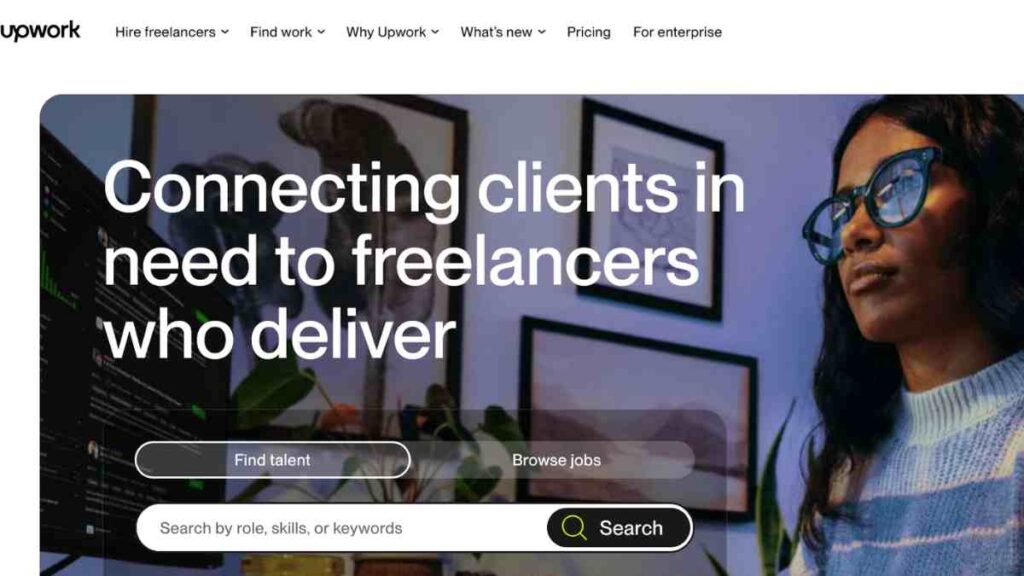
Upwork is one of the largest and most established freelance platforms globally.
It connects freelancers with startups, SMEs, and enterprise clients across writing, tech, design, marketing, and consulting.
It remains a top choice because of its client volume, structured payment protection, and long-term earning potential.
How It Works
Upwork operates on a proposal-based bidding system and fixed-price “Project Catalog” services.
| Feature | Details |
|---|---|
| Platform Type | Open marketplace + fixed projects |
| Skill Coverage | Tech, writing, marketing, admin, finance |
| Client Base | Startups to enterprise |
| Payment Protection | Escrow + hourly tracking |
Fee Structure
Upwork charges a sliding service fee per client relationship:
| Earnings with Client | Fee |
|---|---|
| First $500 | 20% |
| $500 – $10,000 | 10% |
| $10,000+ | 5% |
Freelancers also pay for proposal credits (“Connects”).
Key Point: Fees reduce significantly with long-term clients, making retention crucial.
Who It Is Best For
- Mid-level to experienced freelancers
- Specialists with clear positioning
- Professionals targeting international clients
- Freelancers seeking scalable contracts
Beginners can start here but must compete strategically.
Earning Potential
Rates vary widely by skill and positioning.
| Category | Typical Range |
|---|---|
| Writing | $20–$80+/hr |
| Design | $25–$100+/hr |
| Development | $40–$150+/hr |
| Consulting | $75–$250+/hr |
Niche experts and top-rated freelancers earn significantly more.
Pros and Cons
Pros
- Large global client base
- Enterprise opportunities
- Strong payment protection
- Lower fees over time
Cons
- High competition
- 20% entry fee
- Proposal writing takes time
Final Verdict
Upwork remains one of the best freelancing sites for freelancers who treat it as a long-term client acquisition channel.
It rewards expertise, consistency, and strategic positioning, not casual bidding.
2. Fiverr
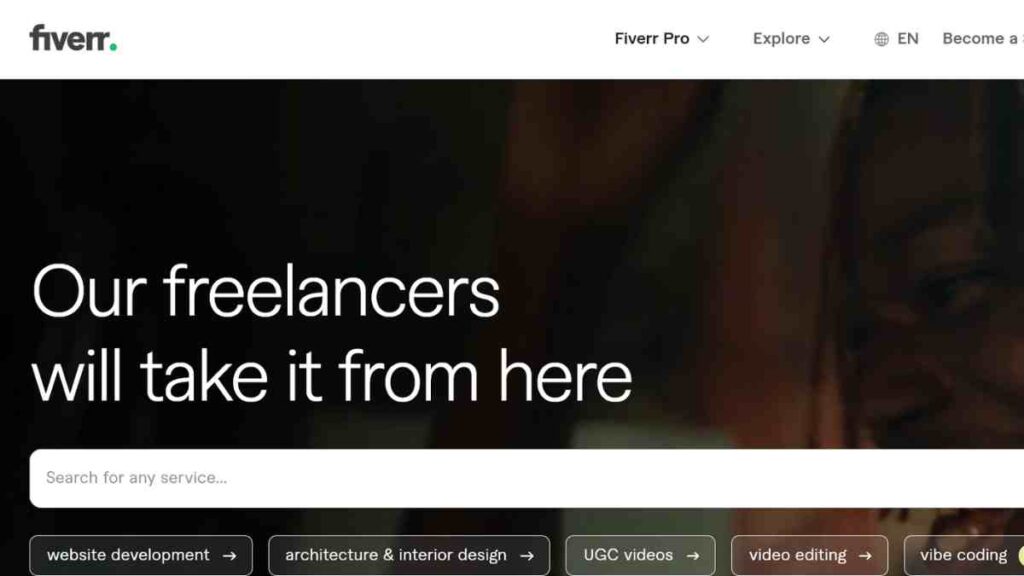
Fiverr is one of the most recognisable freelance platforms globally.
Unlike bidding marketplaces, it allows freelancers to package services into fixed-price “gigs,” making it especially attractive for beginners and creatives.
How It Works
Fiverr operates on a service-listing model.
Instead of applying for jobs, freelancers create gigs, and clients browse and purchase directly.
| Feature | Details |
|---|---|
| Platform Type | Gig-based marketplace |
| Skill Coverage | Writing, design, video, marketing, tech |
| Client Access | Clients search and buy directly |
| Pricing Model | Fixed packages (Basic, Standard, Premium) |
| Payment Protection | Escrow system |
Freelancers can also receive custom project requests.
Fee Structure
Fiverr charges a flat commission:
| Item | Fee |
|---|---|
| Service Fee | 20% of every order |
There are no proposal credits required.
Key Point: While the 20% fee is fixed, the ability to productise services allows freelancers to control pricing more strategically.
Who It Is Best For
- Beginners building initial traction
- Designers and creatives
- Freelancers offering clearly defined deliverables
- Professionals who prefer inbound leads over bidding
It works well for service packaging but less for complex consulting.
Earning Potential
Income depends heavily on positioning and reviews.
| Category | Typical Range |
|---|---|
| Logo Design | $50–$500+ per project |
| Writing | $30–$300+ per project |
| Video Editing | $100–$1,000+ per project |
| Marketing Services | $100–$2,000+ per project |
Top-rated sellers often command premium pricing.
Pros and Cons
Pros
- No bidding required
- Beginner-friendly
- Clear service packaging
- Strong global visibility
Cons
- 20% flat fee
- Competitive in saturated categories
- Price undercutting common at entry level
Final Verdict
Fiverr remains one of the best freelancing sites for freelancers who prefer selling defined services instead of competing through proposals.
Success depends on strong positioning, compelling gig presentation, and review-building.
3. Freelancer
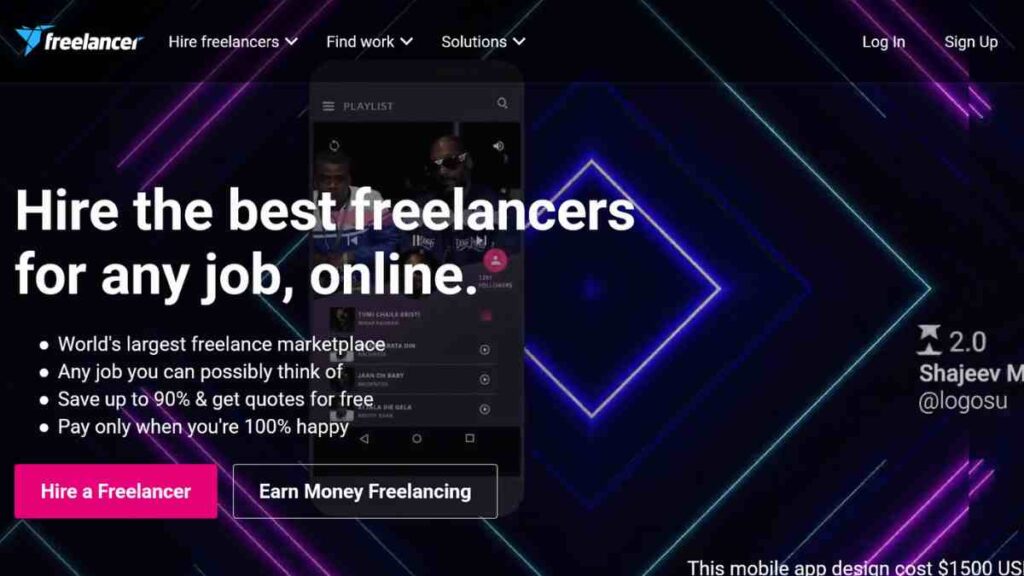
Freelancer is one of the oldest global freelance platforms.
It operates similarly to Upwork but with heavier competition and a wider range of project types, including contests.
How It Works
Freelancers bid on projects posted by clients.
The platform also offers contest-based work, where multiple freelancers submit work and only the winner gets paid.
| Feature | Details |
|---|---|
| Platform Type | Bidding marketplace + contests |
| Skill Coverage | Tech, writing, design, engineering, admin |
| Client Base | Small businesses to global companies |
| Payment Protection | Milestone escrow system |
Freelancers can also participate in skill certifications to improve visibility.
Fee Structure
Freelancer charges either a percentage or fixed fee, whichever is greater.
| Project Type | Fee |
|---|---|
| Fixed Projects | 10% or $5 minimum |
| Hourly Projects | 10% |
| Contests | 10% of prize |
Key Point: The 10% fee is competitive, but contest work carries risk since only one submission wins.
Who It Is Best For
- Freelancers comfortable with bidding
- Competitive professionals in tech and engineering
- Those willing to test contest-based opportunities
- Price-flexible beginners
It may not suit freelancers seeking premium clients immediately.
Earning Potential
Rates vary widely due to global competition.
| Category | Typical Range |
|---|---|
| Writing | $15–$60/hr |
| Design | $20–$100/hr |
| Development | $35–$120/hr |
| Engineering | $40–$150/hr |
Strong profiles and certifications improve rate positioning.
Pros and Cons
Pros
- Large global client base
- Lower base commission (10%)
- Contest opportunities
- Wide project variety
Cons
- Very high competition
- Price undercutting common
- Contest work can mean unpaid effort
Final Verdict
Freelancer is one of the best freelancing sites for those willing to compete aggressively and build momentum over time.
However, success requires strong bidding strategy and careful project selection to avoid low-value work.
4. PeoplePerHour
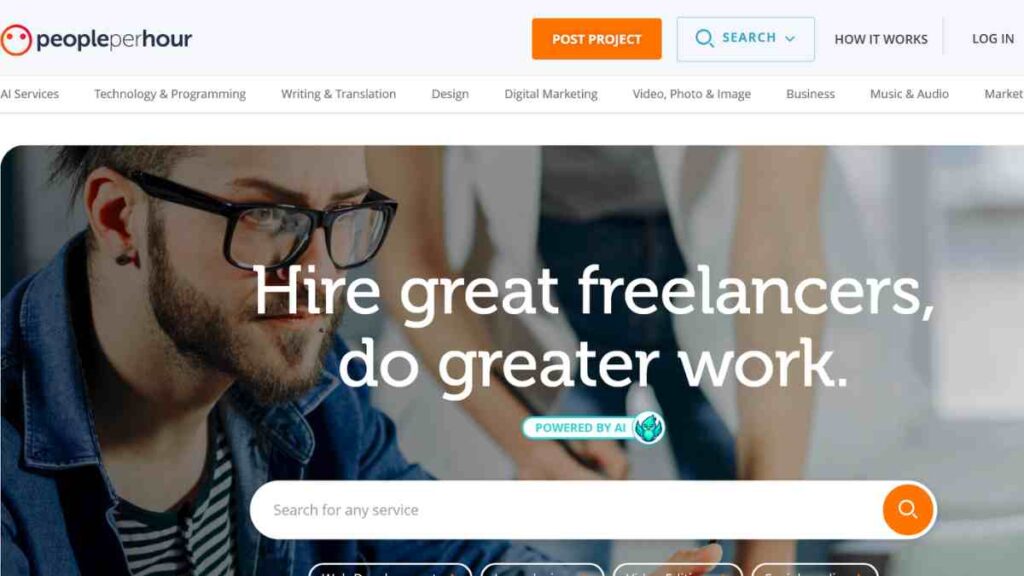
PeoplePerHour is a UK-based freelance platform that connects businesses with freelancers across Europe and beyond.
It combines bidding with pre-packaged services, offering flexibility in how freelancers secure work.
How It Works
Freelancers can submit proposals to posted jobs or create fixed-price “Offers” that clients can purchase directly.
| Feature | Details |
|---|---|
| Platform Type | Bidding + service offers |
| Core Market | UK & Europe |
| Skill Coverage | Writing, design, marketing, tech |
| Payment Protection | Escrow system |
The platform uses AI to match freelancers with relevant projects.
Fee Structure
PeoplePerHour operates on a tiered commission model based on lifetime earnings with a client.
| Lifetime Billings (Per Client) | Fee |
|---|---|
| First £250 | 20% |
| £250 – £5,000 | 7.5% |
| £5,000+ | 3.5% |
Key Point: Fees drop significantly with long-term client relationships.
Who It Is Best For
- Freelancers targeting UK or EU clients
- Mid-level professionals
- Service providers with clear, defined offers
- Freelancers seeking lower long-term fees
It may offer fewer total listings than larger global platforms.
Earning Potential
Rates depend on market positioning and location.
| Category | Typical Range |
|---|---|
| Writing | £20–£70/hr |
| Design | £25–£90/hr |
| Development | £40–£120/hr |
| Marketing | £30–£100/hr |
European-focused freelancers often benefit from reduced global price competition.
Pros and Cons
Pros
- Strong UK market presence
- Lower long-term commission
- Hybrid bidding + fixed offers
- AI project matching
Cons
- Smaller job volume than major platforms
- Entry-level competition still high
Final Verdict
PeoplePerHour is one of the best freelancing sites for professionals targeting UK and European clients.
Its declining fee structure rewards client retention, making it attractive for freelancers building long-term relationships.
5. Guru
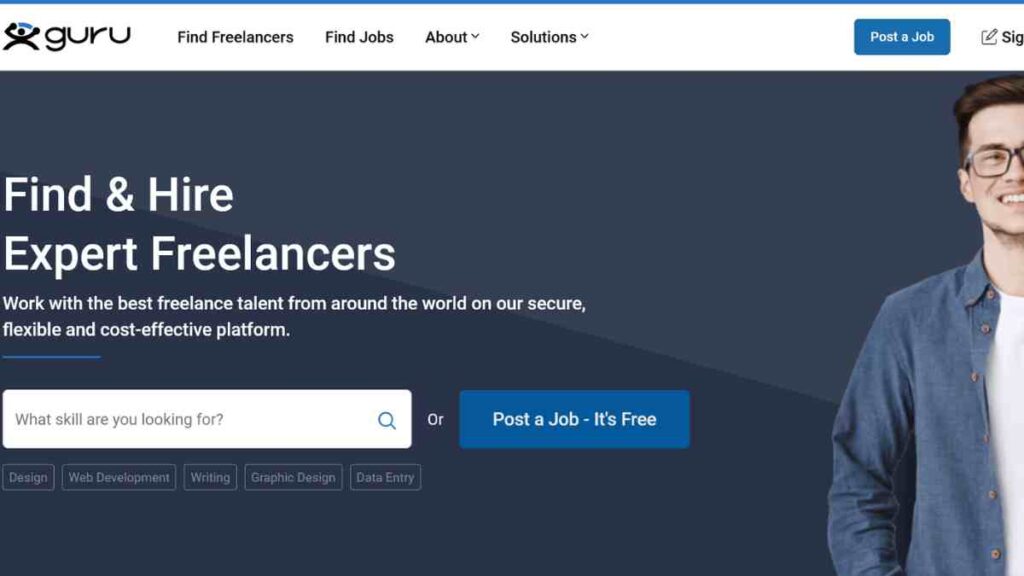
Guru is a long-standing freelance platform that offers structured work agreements and a relatively less saturated environment compared to larger marketplaces.
How It Works
Freelancers create profiles and bid on posted jobs.
Once hired, projects are managed through Guru’s “WorkRoom,” which organises communication, milestones, and payments.
| Feature | Details |
|---|---|
| Platform Type | Bidding marketplace |
| Skill Coverage | Tech, writing, design, admin, engineering |
| Work Management | Dedicated WorkRoom system |
| Payment Protection | Escrow-based SafePay |
Guru allows freelancers to build long-term agreements with recurring billing options.
Fee Structure
Guru offers multiple membership tiers with different commission rates.
| Membership Type | Fee Range |
|---|---|
| Basic (Free) | 9% |
| Paid Plans | As low as 5% |
Key Point: Lower commission compared to many competitors, especially for paid members.
Who It Is Best For
- Freelancers seeking lower platform fees
- Professionals interested in structured project management
- Mid-level freelancers building steady client relationships
- Those avoiding heavily saturated platforms
It may not offer the same job volume as larger marketplaces.
Earning Potential
Rates vary depending on expertise and competition level.
| Category | Typical Range |
|---|---|
| Writing | $20–$70/hr |
| Design | $25–$90/hr |
| Development | $40–$130/hr |
| Engineering | $45–$150/hr |
Less competition can help freelancers maintain stronger pricing.
Pros and Cons
Pros
- Lower commission options
- Organised WorkRoom system
- Stable long-term contract structure
- Less crowded than major platforms
Cons
- Smaller client pool
- Lower brand recognition
- Paid plans required for lowest fees
Final Verdict
Guru is one of the best freelancing sites for professionals prioritising lower fees and structured project management.
While it lacks the scale of larger platforms, it can offer more stable and less crowded earning opportunities.

6. Toptal

Toptal positions itself as a premium freelance network connecting top-tier professionals with high-end clients.
It focuses heavily on quality over quantity and claims to accept only a small percentage of applicants.
How It Works
Freelancers go through a rigorous screening process before being accepted.
Once approved, Toptal matches them directly with clients, there is no open bidding.
| Feature | Details |
|---|---|
| Platform Type | Curated talent network |
| Entry Process | Multi-stage screening |
| Client Base | Enterprises & funded startups |
| Project Model | Direct matching (no bidding) |
| Payment Protection | Managed contracts |
This structure reduces competition among accepted freelancers.
Fee Structure
Toptal does not publicly deduct commission from freelancers in a visible way.
Instead, it builds its margin into client pricing.
| Item | Details |
|---|---|
| Freelancer Commission | Built into client rate |
| Upfront Costs | None |
| Proposal Credits | Not required |
Key Point: Freelancers focus on agreed rates while Toptal handles pricing negotiations.
Who It Is Best For
- Senior developers and engineers
- Finance experts and consultants
- Product managers and designers
- Professionals with strong portfolios
It is not designed for beginners.
Earning Potential
Toptal is considered among the highest paying freelance websites.
| Role | Typical Range |
|---|---|
| Software Development | $60–$200+/hr |
| Finance & Consulting | $80–$250+/hr |
| Product Management | $70–$180+/hr |
Rates reflect the platform’s enterprise focus.
Pros and Cons
Pros
- Premium clients
- No bidding
- High earning potential
- Lower competition (post-approval)
Cons
- Difficult entry process
- Selective acceptance
- Limited to experienced professionals
Final Verdict
Toptal is one of the best freelancing sites for senior professionals seeking premium clients and higher rates.
However, its strict screening makes it suitable only for highly skilled, experienced freelancers ready to compete at the top level.
7. Contra
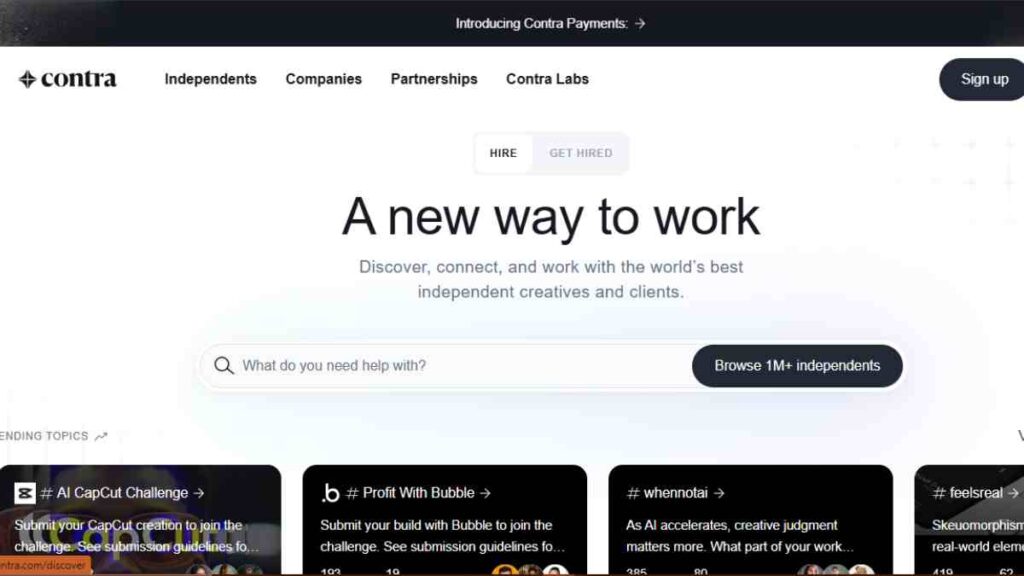
Contra is a fast-growing freelance platform built around one major promise: zero commission fees.
It focuses on independent professionals who want to keep 100% of what they earn while working directly with clients.
How It Works
Freelancers create profiles, showcase portfolios, and apply to curated opportunities.
Clients can also discover and hire talent directly.
There is no traditional bidding war model.
| Feature | Details |
|---|---|
| Platform Type | Commission-free marketplace |
| Entry Barrier | Open sign-up |
| Client Access | Direct hiring + curated jobs |
| Payment System | Integrated contracts & payments |
Contra emphasises portfolio visibility and personal branding.
Fee Structure
| Item | Fee |
|---|---|
| Platform Commission | 0% |
| Payment Processing | Standard third-party fees apply |
Key Point: Freelancers keep their full agreed rate, making pricing more transparent.
Who It Is Best For
- Designers and creatives
- Social media managers and marketers
- Developers with strong portfolios
- Freelancers building personal brands
It suits independent professionals comfortable marketing themselves.
Earning Potential
Rates depend entirely on freelancer positioning and client negotiation.
| Category | Typical Range |
|---|---|
| Design | $40–$120/hr |
| Marketing | $35–$110/hr |
| Development | $50–$150+/hr |
Without commission deductions, take-home pay is higher compared to many traditional freelance platforms.
Pros and Cons
Pros
- Zero commission
- Clean, modern interface
- Strong portfolio focus
- No proposal credit costs
Cons
- Smaller client pool
- Less job volume than major marketplaces
- Success depends heavily on self-promotion
Final Verdict
Contra is one of the best freelancing sites for professionals who prioritise keeping full earnings and building direct client relationships.
It works best for skilled freelancers who can attract clients without relying heavily on bidding volume.
8. Braintrust

Braintrust is a freelancer-owned talent marketplace built on a decentralised model.
Unlike traditional platforms, it positions itself as a community-driven network with significantly lower fees.
How It Works
Freelancers apply to join the network and, once accepted, can apply for curated client opportunities.
There is no open bidding marketplace.
| Feature | Details |
|---|---|
| Platform Type | Decentralised talent network |
| Entry Barrier | Application required |
| Client Base | Tech companies & enterprises |
| Hiring Model | Curated job matching |
| Governance | Community-driven model |
Braintrust integrates blockchain elements to support its decentralised structure.
Fee Structure
Braintrust operates on a much lower commission model compared to traditional freelance platforms.
| Item | Fee |
|---|---|
| Freelancer Fee | 0% |
| Client Fee | 10% (paid by client) |
Key Point: Freelancers keep 100% of their agreed rate, as fees are charged to clients instead.
Who It Is Best For
- Software developers
- Product managers
- Designers
- High-skilled tech professionals
It is not ideal for entry-level freelancers or general gig work.
Earning Potential
Braintrust is considered among the highest paying freelance websites for tech talent.
| Role | Typical Range |
|---|---|
| Software Engineering | $70–$200+/hr |
| Product Management | $80–$180+/hr |
| UX/UI Design | $60–$150+/hr |
Rates reflect its focus on funded startups and enterprise clients.
Pros and Cons
Pros
- Zero freelancer commission
- Premium tech-focused clients
- Reduced competition compared to open marketplaces
- Community governance model
Cons
- Selective entry
- Primarily tech-focused
- Smaller ecosystem than major platforms
Final Verdict
Braintrust is one of the best freelancing sites for experienced tech professionals who want premium clients without losing a percentage of their income to platform fees.
It rewards expertise and specialisation over volume.
9. Arc.dev
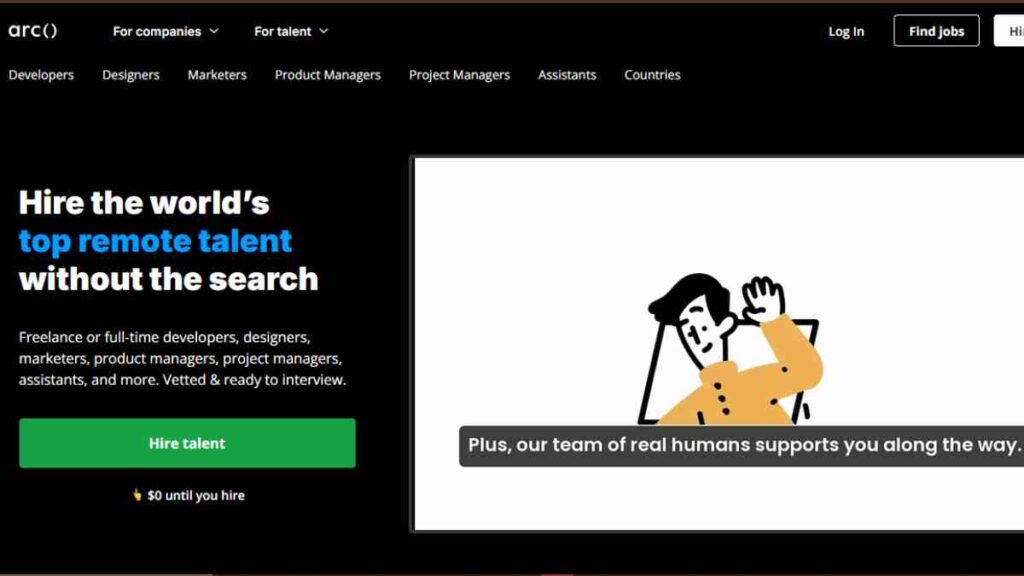
Arc.dev is a specialised freelance and remote hiring platform focused primarily on software developers. It connects vetted engineers with startups and tech companies seeking remote talent.
How It Works
Developers apply to join the platform and go through a screening process. Once approved, Arc matches them with companies looking for full-time remote roles or long-term contract work.
| Feature | Details |
|---|---|
| Platform Type | Curated developer network |
| Entry Barrier | Screening required |
| Client Base | Startups & tech companies |
| Hiring Model | Direct matching (no open bidding) |
| Focus Area | Software engineering |
There is no public bidding system, which reduces price competition.
Fee Structure
Arc does not publicly deduct visible commissions from freelancers. Instead, it builds its margin into client contracts.
| Item | Details |
|---|---|
| Freelancer Commission | Built into client pricing |
| Proposal Credits | Not required |
| Upfront Fees | None |
Key Point: Developers focus on negotiated rates without managing platform deductions directly.
Who It Is Best For
- Software engineers
- Full-stack developers
- Backend and frontend specialists
- Developers seeking remote-first roles
It is not suitable for non-technical freelancers.
Earning Potential
Arc is positioned among the highest paying freelance websites for developers.
| Role | Typical Range |
|---|---|
| Frontend Developer | $60–$120/hr |
| Backend Developer | $70–$150/hr |
| Full-Stack Developer | $70–$160+/hr |
Rates vary depending on experience and company size.
Pros and Cons
Pros
- Remote-focused opportunities
- Reduced bidding competition
- Tech-specialised client base
- Strong rate potential
Cons
- Developer-only focus
- Selective entry process
- Smaller job volume than open marketplaces
Final Verdict
Arc.dev is one of the best freelancing sites for experienced developers seeking remote contracts without the pressure of constant bidding.
It rewards technical depth and long-term availability.
10. 99designs
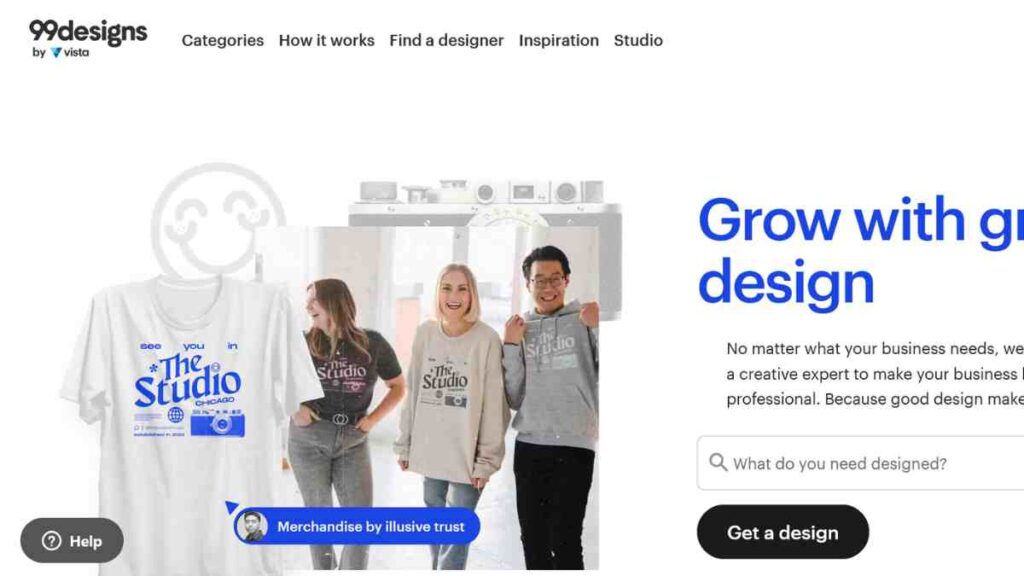
99designs is a niche freelance platform built specifically for designers. It is widely known for logo contests but also supports one-to-one project hiring.
How It Works
Designers can participate in contests where multiple creatives submit work and one winner is selected. Alternatively, clients can hire designers directly for private projects.
| Feature | Details |
|---|---|
| Platform Type | Design marketplace + contests |
| Focus Area | Logo, branding, web & packaging design |
| Hiring Model | Contests + direct projects |
| Payment Protection | Escrow system |
The contest model increases visibility but also competition.
Fee Structure
99designs charges different fees depending on project type and designer level.
| Project Type | Fee |
|---|---|
| Contest Prize | Platform deducts fee before payout |
| Direct Projects | 15% platform fee |
Higher-tier designers may access better rates and visibility.
Key Point: Contest participation carries risk since only the winning design is paid.
Who It Is Best For
- Logo and brand designers
- Visual identity specialists
- Designers building portfolio visibility
- Creatives comfortable with competition
It is not suitable for non-design freelancers.
Earning Potential
Earnings vary based on designer tier and contest level.
| Category | Typical Range |
|---|---|
| Logo Contest | $100–$1,000+ prize |
| Branding Package | $500–$3,000+ |
| Web Design | $800–$5,000+ |
Direct projects generally offer more predictable income than contests.
Pros and Cons
Pros
- Strong design-focused marketplace
- High visibility for logo designers
- Clear niche positioning
- Opportunity for premium branding work
Cons
- Contest model means unpaid submissions
- Competitive environment
- Platform fees on direct projects
Final Verdict
99designs is one of the best freelancing sites for designers specialising in branding and visual identity.
However, freelancers should balance contest participation with direct project work to ensure consistent income.

11. Dribbble Hiring
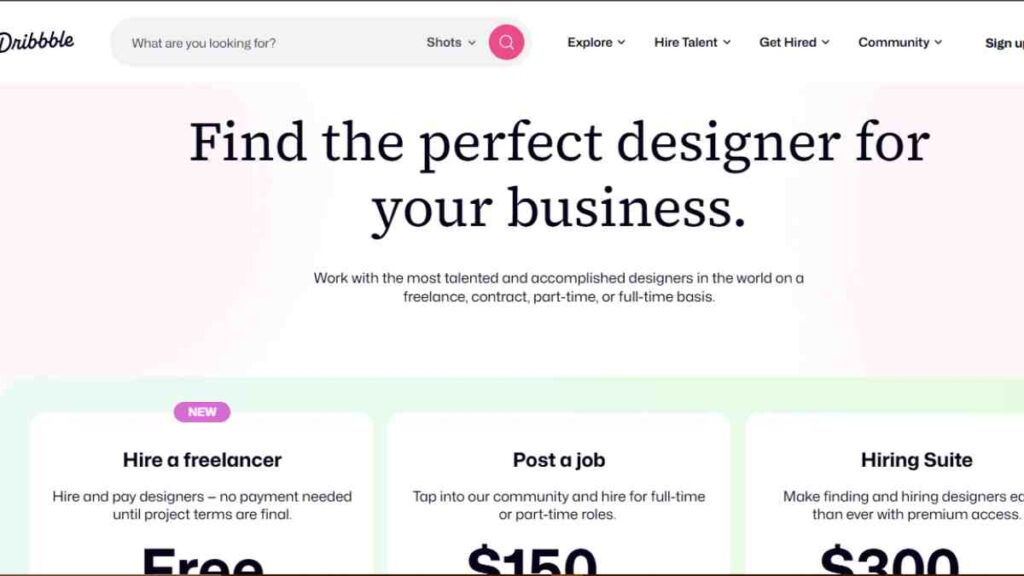
Dribbble began as a portfolio showcase platform for designers and has evolved into a hiring marketplace connecting creative professionals with companies worldwide.
How It Works
Freelancers build a strong visual portfolio on Dribbble.
Clients can either post jobs or reach out directly to designers whose work matches their needs.
| Feature | Details |
|---|---|
| Platform Type | Portfolio platform + job board |
| Focus Area | UI/UX, branding, illustration, product design |
| Hiring Model | Direct outreach + job listings |
| Entry Barrier | Portfolio-driven |
Unlike bidding-heavy platforms, visibility depends on portfolio quality.
Fee Structure
Dribbble does not typically deduct commission from freelance earnings. Instead, revenue comes from job postings and premium subscriptions.
| Item | Fee |
|---|---|
| Freelancer Commission | 0% |
| Premium Membership | Optional paid plan |
Key Point: Designers keep their full project rates when hired directly.
Who It Is Best For
- UI/UX designers
- Product designers
- Illustrators
- Creative professionals with strong portfolios
It is not designed for general freelance services.
Earning Potential
Income varies based on niche and visibility.
| Category | Typical Range |
|---|---|
| UI/UX Design | $50–$150/hr |
| Product Design | $60–$160/hr |
| Branding | $500–$5,000+ per project |
Top designers often secure long-term remote contracts.
Pros and Cons
Pros
- Zero commission
- Strong portfolio visibility
- Premium creative client base
- Reduced price competition
Cons
- Requires high-quality portfolio
- Limited to creative fields
- Success depends on visibility and branding
Final Verdict
Dribbble Hiring is one of the best freelancing sites for experienced designers who can leverage portfolio strength instead of competing on price.
It works best for creatives aiming to attract direct, higher-quality clients.
12. Behance Jobs
Behance, owned by Adobe, is primarily a portfolio platform for creatives.
Its Jobs section allows companies to hire designers and creative professionals directly based on showcased work.
How It Works
Freelancers build detailed project portfolios on Behance. Clients post job listings or contact creatives directly through the platform.
| Feature | Details |
|---|---|
| Platform Type | Portfolio platform + job board |
| Focus Area | Graphic design, illustration, motion, UX/UI |
| Hiring Model | Direct outreach + job listings |
| Entry Barrier | Portfolio strength |
There is no traditional bidding system, which reduces price-based competition.
Fee Structure
Behance does not deduct commissions from freelance earnings.
| Item | Fee |
|---|---|
| Freelancer Commission | 0% |
| Adobe Subscription | Optional (not required for hiring access) |
Key Point: Freelancers negotiate and retain their full project rate.
Who It Is Best For
- Graphic designers
- Illustrators
- Motion designers
- UX/UI professionals
- Creative freelancers building strong visual portfolios
It is not suitable for non-creative fields.
Earning Potential
Earnings depend on visibility, niche, and client quality.
| Category | Typical Range |
|---|---|
| Graphic Design | $40–$120/hr |
| Motion Design | $60–$150/hr |
| UX/UI Projects | $800–$6,000+ per project |
High-quality portfolios often attract premium brand clients.
Pros and Cons
Pros
- Zero commission
- Strong global creative community
- Portfolio-first exposure
- Reduced bidding competition
Cons
- Limited to creative roles
- No guaranteed job flow
- Requires strong visual presentation
Final Verdict
Behance Jobs is one of the best freelancing sites for creatives who want clients to approach them based on portfolio quality rather than price competition.
It rewards visual excellence and consistent project showcasing.
13. Turing
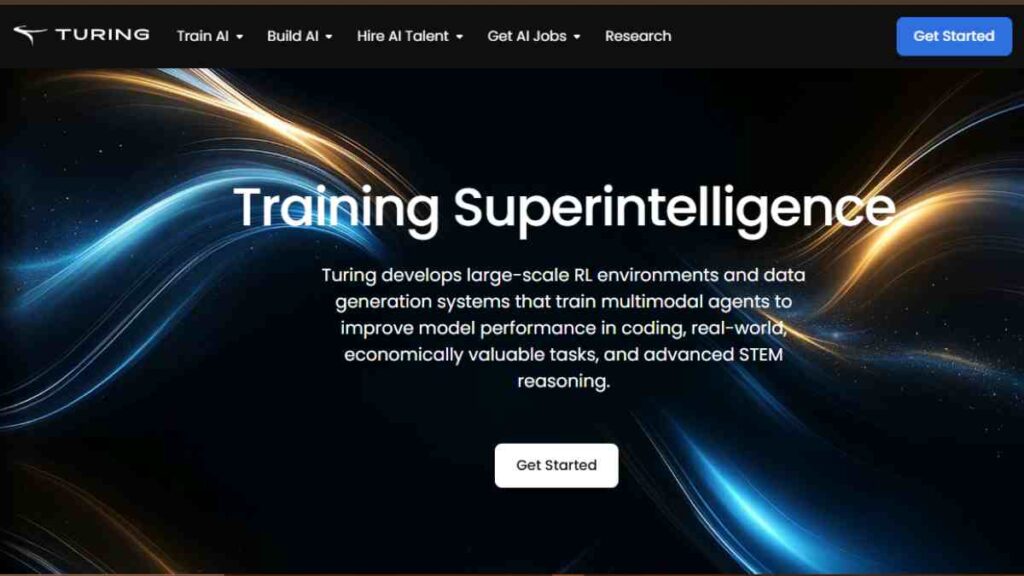
Turing is a specialised remote hiring platform that connects vetted software developers with global companies, particularly in the U.S.
It focuses on long-term remote roles rather than short-term gigs.
How It Works
Developers apply and go through technical screening. Once approved, Turing matches them with companies seeking remote engineers for full-time or extended contract roles.
| Feature | Details |
|---|---|
| Platform Type | Curated remote developer network |
| Entry Barrier | Technical screening required |
| Client Base | U.S. and global tech companies |
| Hiring Model | Direct matching |
| Focus Area | Software development |
There is no open bidding system.
Fee Structure
Turing does not publicly deduct visible commissions from freelancers. Its margin is built into client contracts.
| Item | Details |
|---|---|
| Freelancer Commission | Embedded in client rate |
| Proposal Credits | Not required |
| Upfront Fees | None |
Key Point: Developers negotiate rates within Turing’s structured contract system.
Who It Is Best For
- Experienced software engineers
- Developers seeking stable remote contracts
- Backend, frontend, and full-stack specialists
- Engineers targeting international companies
It is not suitable for non-technical freelancers.
Earning Potential
Turing is positioned among the highest paying freelance websites for developers.
| Role | Typical Range |
|---|---|
| Frontend Developer | $60–$120/hr |
| Backend Developer | $70–$150/hr |
| Full-Stack Developer | $70–$160+/hr |
Long-term contracts can offer a predictable monthly income.
Pros and Cons
Pros
- Long-term remote opportunities
- No bidding competition
- Strong U.S. client base
- Structured matching process
Cons
- Strict screening process
- Developer-only focus
- Limited flexibility compared to open marketplaces
Final Verdict
Turing is one of the best freelancing sites for experienced developers seeking stable remote contracts with international companies.
It rewards technical depth and consistency over volume-based gig work.
14. Gun.io
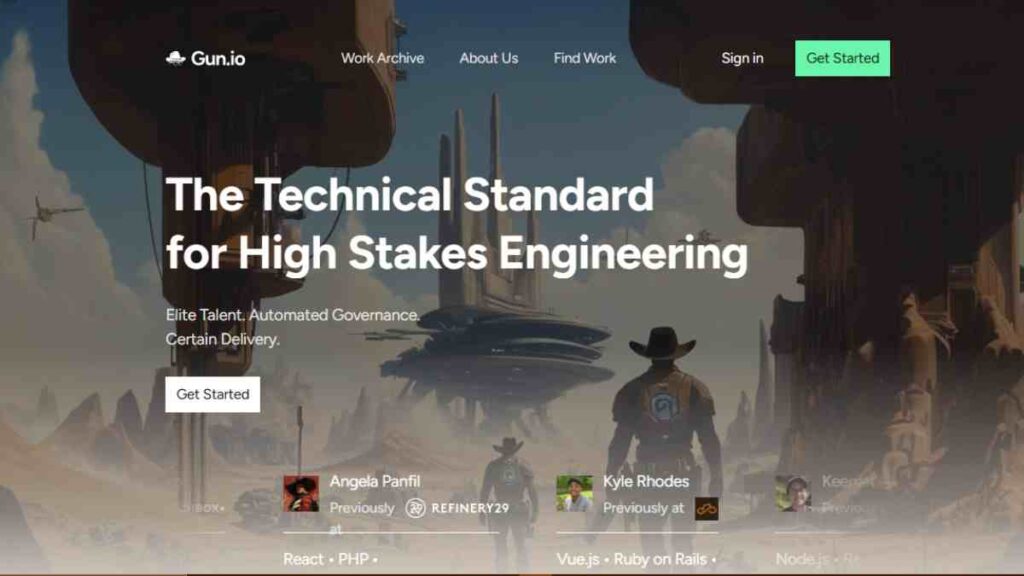
Gun.io is a curated freelance platform that connects senior software developers with vetted companies.
It focuses on quality matches and long-term technical contracts rather than open marketplace bidding.
How It Works
Developers apply and go through a screening process. Once approved, Gun.io’s team matches them directly with companies looking for experienced engineers.
| Feature | Details |
|---|---|
| Platform Type | Curated developer network |
| Entry Barrier | Application + technical vetting |
| Client Base | Startups & growth-stage tech firms |
| Hiring Model | Direct matching (no bidding) |
| Focus Area | Software engineering |
There is no public job board or bidding competition.
Fee Structure
Gun.io does not publicly deduct visible commission from freelancers. Its margin is built into the client contract.
| Item | Details |
|---|---|
| Freelancer Commission | Built into client rate |
| Proposal Credits | Not required |
| Upfront Fees | None |
Key Point: Developers negotiate rates while Gun.io handles client matching and contract structuring.
Who It Is Best For
- Senior backend and frontend engineers
- Full-stack developers
- DevOps specialists
- Experienced technical contractors
It is not suitable for beginners or non-technical freelancers.
Earning Potential
Gun.io is considered among the highest paying freelance websites for developers.
| Role | Typical Range |
|---|---|
| Backend Developer | $70–$150/hr |
| Full-Stack Developer | $80–$160+/hr |
| DevOps Engineer | $80–$170+/hr |
Contracts are often longer-term, offering income stability.
Pros and Cons
Pros
- Premium tech clients
- No bidding competition
- Strong rate potential
- Personalised matching process
Cons
- Strict vetting process
- Limited to software development
- Smaller talent pool
Final Verdict
Gun.io is one of the best freelancing sites for senior developers seeking premium, long-term technical contracts without the pressure of constant bidding.
It rewards experience, reliability, and technical depth.
15. FlexJobs

FlexJobs is not a traditional freelance marketplace. Instead, it is a curated remote job board featuring flexible, part-time, contract, and freelance opportunities across industries.
How It Works
Freelancers and remote professionals pay a subscription fee to access vetted job listings.
Companies post roles, and candidates apply directly.
| Feature | Details |
|---|---|
| Platform Type | Curated remote job board |
| Skill Coverage | Writing, tech, marketing, admin, finance |
| Hiring Model | Direct application (no bidding) |
| Entry Barrier | Paid subscription |
All listings are screened to reduce scams and low-quality postings.
Fee Structure
FlexJobs operates on a subscription model rather than commission.
| Item | Fee |
|---|---|
| Freelancer Commission | 0% |
| Subscription | Monthly or annual fee |
Key Point: You keep 100% of your earnings, but must pay upfront for access.
Who It Is Best For
- Professionals seeking remote contracts
- Freelancers wanting pre-screened job listings
- Those avoiding bidding platforms
- Career freelancers seeking stable engagements
It suits freelancers looking for structured remote roles rather than micro-gigs.
Earning Potential
Earnings depend on the role and company.
| Category | Typical Range |
|---|---|
| Content Writing | $25–$80/hr |
| Marketing | $35–$100/hr |
| Development | $50–$150+/hr |
| Virtual Support | $18–$40/hr |
Many roles resemble remote employment with steady monthly pay.
Pros and Cons
Pros
- No commission fees
- Scam-screened listings
- Wide industry coverage
- Suitable for long-term remote work
Cons
- Paid subscription required
- No built-in escrow protection
- Not exclusively freelance-focused
Final Verdict
FlexJobs is one of the best freelancing sites for professionals seeking vetted remote opportunities without bidding pressure.
It works best for freelancers who prefer applying for structured roles rather than competing in open marketplaces.

How to Choose the Best Freelancing Site for Your Skill Level
Choosing from the best freelancing sites becomes easier when you match the platform to your experience level, pricing confidence, and career goals.
Beginners need access and learning opportunities. Mid-level freelancers need better rates and steady clients. Experts need premium networks that protect pricing power.
Here is a simple framework to guide your decision.
Platform Selection by Skill Level
| Skill Level | What You Should Prioritise | Best Platform Types | Examples |
|---|---|---|---|
| Beginner | Easy entry, visibility, portfolio building | Open marketplaces & gig platforms | Fiverr, Upwork, Freelancer |
| Early Intermediate | Better rates, repeat clients, lower fees | Hybrid marketplaces | PeoplePerHour, Guru |
| Experienced | Premium clients, reduced competition | Curated talent networks | Toptal, Arc.dev, Gun.io |
| Specialist (Tech or Creative) | High-value contracts, niche positioning | Vetted or portfolio-based platforms | Braintrust, Turing, Dribbble |
| Remote-Focused Professional | Stable long-term roles | Curated remote job boards | FlexJobs |
Quick Guidance:
- If you are just starting, choose visibility over perfection.
- If you already have experience, choose platforms that protect your pricing.
- If you are highly specialised, avoid crowded bidding marketplaces.
- If stability matters most, consider remote-first platforms over gig sites.
The right platform should amplify your strengths, not force you into price wars.
Common Mistakes Freelancers Make on Freelancing Platforms
Even on the best freelancing sites, many freelancers struggle, not because of a lack of skill, but because of poor strategy.
Most mistakes are avoidable and often cost income, visibility, or long-term growth.
Below is a quick breakdown of the most common pitfalls and how to avoid them.
| Mistake | Why It Hurts | Smarter Approach |
|---|---|---|
| Competing on price alone | Attracts low-quality clients and burnout | Compete on value, niche, and results |
| Using generic proposals | Reduces response rates | Customise every proposal with specific insights |
| Ignoring profile optimisation | Low visibility in search | Optimise headline, portfolio, and keywords |
| Relying on one platform | Income becomes unstable | Diversify across 2–3 platforms |
| Chasing every job | Wastes time and energy | Apply selectively to aligned projects |
| Failing to build repeat clients | High acquisition effort | Focus on retention and long-term contracts |
| Not tracking fees | Reduced net earnings | Choose freelance websites with low fees strategically. |
Quick Reminder: Success on freelance platforms is rarely about volume. It is about positioning, pricing discipline, and client retention.
Conclusion
The best freelancing sites are not the same for everyone. The right platform depends on your skill level, income goals, and tolerance for competition and fees.
Beginners may benefit from high-visibility marketplaces, while experienced professionals often thrive in curated or niche networks with stronger pricing power.
Ultimately, success is less about the platform itself and more about how strategically you position your skills, retain clients, and diversify your income sources.
We want to see you succeed, and that’s why we provide valuable business resources to help you every step of the way.
- Join over 23,000 entrepreneurs by signing up for our newsletter and receiving valuable business insights.
- Register your business today with Entrepreneurs.ng’s Business Registration Services.
- Tell Your Brand Story on Entrepreneurs.ng, let’s showcase your brand to our global audience.
- Need help with your marketing strategy? Get a Comprehensive Marketing and Sales Plan here.
- Sign up for our Entrepreneurs Success Blueprint Programme to learn how to start and scale your business in just 30 days.
- Book our one-on-one consulting and speak to an expert about structuring and growing your business.
- Visit our shop for business plan templates and other valuable resources to guide you.
- Get our Employee-Employer Super Bundle NDA templates to legally protect your business and workforce.
- Advertise your business to over a million entrepreneurs through our different advertising packages.

Frequently Asked Questions (FAQs)
What are the best freelancing sites overall?
The best freelancing sites depend on your goals. Platforms like Upwork and Fiverr offer volume and accessibility, while curated networks like Toptal and Braintrust focus on premium clients and higher rates.
Which are the best freelancing sites for beginners?
Beginners often succeed on platforms with easier entry and strong visibility, such as Fiverr, Upwork, and Freelancer. These sites allow you to build reviews and portfolio credibility quickly.
What are the highest paying freelance websites?
Curated networks like Toptal, Braintrust, Gun.io, and Arc.dev typically offer higher hourly rates, especially for experienced developers, consultants, and designers.
Which freelance platforms have the lowest fees?
Platforms like Contra and Braintrust charge zero freelancer commission. Guru and PeoplePerHour also reduce fees significantly as client relationships grow.
Are freelance platforms oversaturated?
Some categories, such as general writing and virtual assistance, are highly competitive. However, specialists in niche or technical fields often face less price pressure.
Is Upwork still worth it?
Yes, but only with a strategy. Freelancers who specialise, retain clients long-term, and avoid low-paying gigs tend to succeed on Upwork.
Can you make a full-time income from freelancing sites?
Yes. Many freelancers earn full-time income by combining platform work with repeat clients and long-term contracts.
Do freelance websites take too much commission?
Some platforms charge up to 20% initially. However, long-term contracts or commission-free platforms can significantly increase net earnings.
Should I use more than one freelance platform?
Yes. Diversifying across two or three platforms reduces income risk and increases exposure to different types of clients.
What is better: bidding platforms or curated networks?
Bidding platforms offer easier entry and higher job volume. Curated networks offer less competition and better clients but require experience and screening.
How do I stand out on competitive freelance websites?
Clear niche positioning, strong portfolios, tailored proposals, and client retention strategies significantly improve visibility and earnings.
Are remote job boards better than freelance marketplaces?
Remote job boards like FlexJobs offer more stable roles but less flexibility. Marketplaces provide project-based income with greater control.
How long does it take to get your first freelance client?
It varies. Some freelancers secure projects within weeks, while others take longer depending on niche, pricing, and proposal quality.
Do I need certifications to join freelance platforms?
Most platforms do not require certifications, but strong portfolios and proof of experience greatly increase approval and success rates.
When should I move beyond freelance platforms?
Once you have stable clients and strong referrals, building direct relationships outside platforms can reduce fees and increase long-term income stability.