

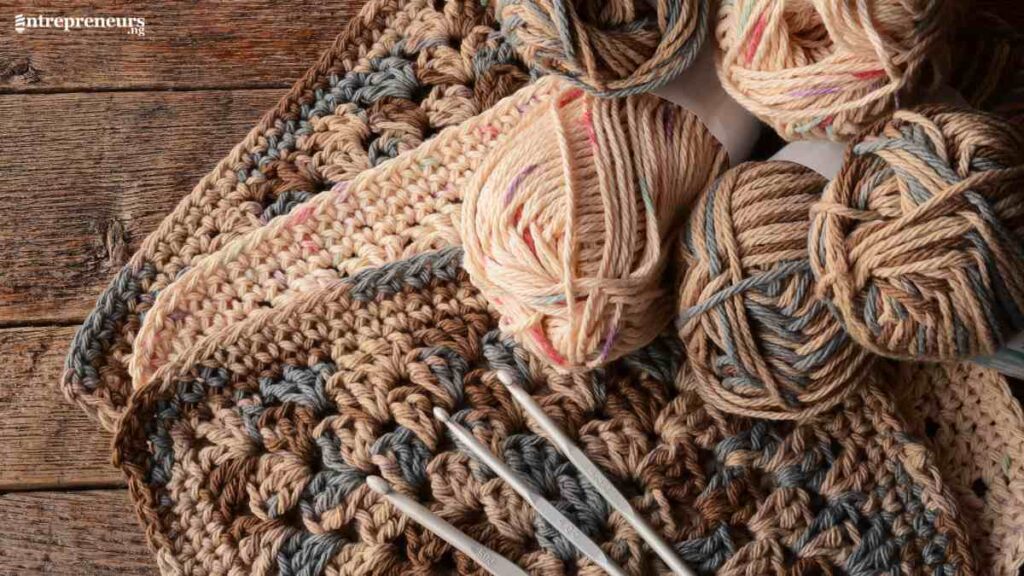
A crochet business is no longer just a creative outlet; it is a viable entry point into the fast-growing global handmade economy.
In fact, according to IMARC, the global handicrafts market is projected to surpass $1 trillion by 2030, driven by rising demand for personalised and sustainable products.
Whether you want to start a crochet business with no money, create a simple crochet business plan, or follow a clear step-by-step path, this guide shows you how to build a profitable handmade crochet business for long-term growth.
Key Takeaways
- Treat your crochet business like a real product-based startup, not just a hobby.
- Choose a profitable niche and price correctly to protect your margins.
- Validate demand early and follow a clear step-by-step crochet business plan.
- Build a strong brand and diversify income streams to scale sustainably.

How to Start a Crochet Business in 10 Steps – Step-by-Step Guide
Starting a crochet business is one of the most practical ways to turn a creative skill into consistent income.
However, success does not happen by accident. You need structure, pricing clarity, brand positioning, and a simple execution plan.
Here is a clear roadmap to help you move from hobbyist to profitable business owner.
| Step | Action | What It Achieves |
|---|---|---|
| 1 | Validate Your Market | Confirms people will pay for your products |
| 2 | Choose a Profitable Niche | Positions you for focused demand |
| 3 | Create a Simple Business Plan | Gives structure and direction |
| 4 | Calculate Costs & Pricing | Protects your profit margin |
| 5 | Register & Set Up Legally | Builds credibility and compliance |
| 6 | Develop Your Brand Identity | Makes your business memorable |
| 7 | Source Materials Strategically | Controls production costs |
| 8 | Set Up Sales Channels | Creates revenue pathways |
| 9 | Launch & Market Consistently | Drives visibility and sales |
| 10 | Optimise & Scale | Turns small income into sustainable growth |
Step 1: Validate Your Market
Before you produce large quantities, confirm that demand exists.
Research platforms like Etsy, Instagram, Pinterest, and local marketplaces. Look at what sells repeatedly, not just what looks beautiful. Pay attention to reviews, pricing ranges, and customer feedback.
Market validation prevents wasted time and ensures your crochet business starts with data, not assumptions.
Step 2: Choose a Profitable Niche
Avoid trying to sell everything. Focus instead on a niche such as baby items, home décor, wearable fashion, or amigurumi toys.
A clear niche allows you to speak directly to a specific customer group.
When your products solve a defined need, your marketing becomes easier and your brand becomes recognisable.
Step 3: Create a Simple Crochet Business Plan
You do not need a complicated document. A one-page crochet business plan outlining your target audience, product line, pricing structure, and sales channels is enough to start.
Planning clarifies your goals and prevents random decision-making. It also helps you calculate how many items you must sell monthly to reach your income target.
If you need help turning your idea into a clear, investor-ready plan, use our Business Plan Template to map your costs, pricing, and growth strategy with confidence.
Step 4: Calculate Costs and Price Correctly
Pricing is where many crochet businesses fail. Calculate the total cost of yarn, packaging, tools, overheads, and labour time. Then apply a margin that makes the business sustainable.
If you ignore labour or underprice to compete, you will work hard without real profit. Confidence in pricing signals value to customers.
Step 5: Register and Set Up Legally
Even small handmade businesses should operate legally. Register your business name according to your country’s regulations.
Understand your tax obligations and whether you need a sales permit.
Operating legally builds trust and allows you to grow without future complications.
Step 6: Develop Your Brand Identity
Your crochet business is more than products; it is a story. Choose a name that reflects your niche. Create a simple logo and consistent colour palette.
Decide how you want customers to feel when they interact with your brand.
Strong branding makes your work look professional and increases perceived value.
Step 7: Source Materials Strategically
Profit depends heavily on material costs. Compare suppliers and consider buying yarn in bulk once demand is proven.
Maintain consistent quality so customers receive exactly what they expect.
Efficient sourcing improves margins without increasing prices.
Step 8: Set Up Your Sales Channels
Decide where you will sell. Options include Etsy, Shopify, Instagram, craft fairs, or wholesale partnerships with boutiques. Start with one or two channels and master them before expanding.
A focused approach prevents overwhelm and allows you to build traction gradually.
Step 9: Launch and Market Consistently
A successful launch requires more than uploading photos. Share behind-the-scenes content, styling ideas, customer testimonials, and educational posts.
Use clear product descriptions and professional images. Consistency builds trust. Trust builds sales.
Step 10: Optimise and Scale
Once you start generating sales, analyse what works. Identify your best-selling items and prioritise them. Streamline production using batch methods.
Consider adding digital crochet patterns or kits to increase revenue without increasing labour hours.
Scaling transforms your crochet business from side hustle to sustainable income stream.

Is a Crochet Business Profitable?
Yes, a crochet business can be profitable, but only when it is run like a real business, not treated as a hobby.
Profitability depends on three main factors: pricing, production efficiency, and positioning.
If you price correctly, control material costs, and target a clear niche, a crochet business can generate consistent income, whether as a side hustle or full-time venture.
The Market Supports It
The global handicrafts market is projected to exceed $1 trillion by 2030, driven by demand for personalised and sustainable products.
Consumers increasingly value handmade goods over mass-produced alternatives. Platforms like Etsy have millions of active buyers searching specifically for unique, handcrafted items.
This demand creates opportunity. However, opportunity does not automatically equal profit.
What Determines Profit in a Crochet Business?
1. Pricing Strategy
Many crochet businesses fail because owners underprice. If you only charge for yarn and ignore your time, you eliminate profit.
Labour must be calculated as a real cost.
2. Production Speed
The faster and more efficiently you produce without compromising quality, the higher your earning potential. Batch production increases output and reduces wasted time.
3. Niche Selection
Certain items sell better and command higher prices. Baby outfits, statement fashion pieces, and home décor often outperform generic scarves or hats.
4. Brand Positioning
Customers pay more for brands they trust. A well-presented handmade crochet business can charge premium prices compared to hobby sellers.
Realistic Income Expectations
A beginner selling part-time might earn a few hundred pounds or dollars per month. With consistent marketing and refined pricing, intermediate sellers often earn between $1,000–$3,000 monthly.
Full-time crochet entrepreneurs who combine physical products with digital patterns, courses, or wholesale partnerships can earn significantly more.
However, income is rarely immediate. It grows as brand awareness, customer trust, and operational systems improve.
The Hard Truth
A crochet business is profitable when:
- You treat labour as a paid expense
- You target a defined customer group
- You focus on high-margin products
- You market consistently
It becomes unprofitable when:
- You underprice to compete
- You copy trends without differentiation
- You ignore costs
- You rely only on friends and family sales
Bottom Line
A crochet business is profitable for entrepreneurs who think strategically. The skill alone does not generate income. The business model does.
If you build it with structure, pricing discipline, and brand clarity, crochet can move from a relaxing hobby to a scalable income stream.
Cost to Start and Profitability Breakdown of a Crochet Business
Starting a crochet business requires relatively little capital compared to most product-based ventures.
However, real profitability depends on pricing discipline, cost control, and production efficiency, not just low startup expenses.
Below is a clear financial breakdown:
How Much Does It Cost to Start?
You can start lean from home with basic tools and limited inventory.
Lean Home-Based Setup
| Expense | Estimated Cost |
|---|---|
| Tools & hooks | $30 |
| Initial yarn stock | $150 |
| Packaging | $50 |
| Basic branding | $70 |
| Marketplace setup & misc. | $100 |
| Estimated Total | $400–$500 |
A more polished launch with professional branding and a website may cost between $1,500–$2,000, but it is not mandatory at the beginning.
The low entry barrier is one reason many entrepreneurs choose this model.
Ongoing Monthly Costs
Your recurring costs depend on production volume.
| Expense | Monthly Estimate |
|---|---|
| Yarn restocking | $200–$500 |
| Packaging & fees | $80–$200 |
| Marketing | $100–$300 |
| Utilities & overhead | $50–$150 |
| Total Range | $430–$1,150 |
Keeping material sourcing efficient protects your margin.
Profit Per Product Breakdown
Let us examine a realistic example.
Example: Crochet Cardigan
| Cost Component | Amount |
|---|---|
| Yarn | $20 |
| Packaging | $3 |
| Overhead | $7 |
| Labour (6 hrs @ $15/hr) | $90 |
| Total Cost | $120 |
If sold at $190, profit becomes:
| Selling Price | $190 |
|---|---|
| Production Cost | $120 |
| Gross Profit | $70 |
This represents a healthy margin. However, if priced at $130, profit drops to just $10, which is unsustainable.
Pricing determines profitability more than anything else.
Break-Even Point
To recover a $500 startup investment:
If your average profit per item is $50: 500 ÷ 50 = 10 products
You need to sell roughly 10 items to break even. That is achievable within the first few months if marketing is consistent.
Income Potential
Assuming:
- Average product price: $120
- Average profit margin: 40%
- Profit per item: $48
Monthly Sales Projection
| Items Sold | Revenue | Profit |
|---|---|---|
| 20 | $2,400 | $960 |
| 40 | $4,800 | $1,920 |
| 60 | $7,200 | $2,880 |
Introducing digital crochet patterns significantly increases profit margins because there is no repeated labour cost.
Final Perspective
A crochet business is inexpensive to start. However, it becomes profitable only when:
- Labour is calculated properly
- Products are priced above hobby-level rates
- Production time is managed efficiently
With disciplined pricing and consistent sales, it can generate between $1,000 and $3,000+ monthly. Without structure, it remains a low-paying hobby.
Profit is not determined by skill alone. It is determined by business strategy.
Best Crochet Items to Sell for Profit
Not all crochet products generate the same returns. Some items sell consistently because they solve a clear problem, follow seasonal demand, or command premium pricing.
If your goal is profit, not just creativity, you must focus on products with strong margins, repeat demand, and manageable production time.
Below are some of the most profitable crochet items based on demand patterns, pricing flexibility, and scalability.
High-Profit Crochet Products
| Product Category | Why It Sells | Price Range | Profit Potential |
|---|---|---|---|
| Baby Clothing & Blankets | Emotional buying decisions, gifting demand | $40–$150 | High (strong margins, repeat buyers) |
| Crochet Cardigans & Tops | Trend-driven, premium pricing | $80–$250 | Very High (fashion positioning allows markups) |
| Amigurumi Toys | Collectible and giftable | $25–$120 | High (small size, high perceived value) |
| Home Décor (Pillow Covers, Baskets) | Functional + aesthetic appeal | $30–$120 | Moderate to High |
| Wedding Accessories | Niche, premium buyers | $50–$300 | Very High (luxury positioning) |
| Seasonal Items (Christmas, Autumn wear) | Predictable annual demand | $20–$100 | High during peak season |
| Crochet Bags | Fashion accessory with trend appeal | $60–$200 | Very High (low material cost vs selling price) |
| DIY Crochet Kits | Appeals to beginners | $35–$90 | High (bundled pricing advantage) |
| Digital Crochet Patterns | No inventory cost | $5–$25 | Extremely High (80–90% margin) |
| Custom Pet Accessories | Growing pet market | $30–$120 | High (personalisation increases price) |
Strategic Insight
The most profitable crochet businesses often combine:
- Premium physical products (cardigans, bags, baby sets)
- Small fast-moving items (amigurumi, accessories)
- Digital products (patterns or tutorials)
This hybrid model increases cash flow while reducing labour dependency over time.
Choosing the right product mix is what transforms a crochet hobby into a sustainable business.

Where to Sell Your Crochet Products
Choosing the right sales channel can determine how quickly your crochet business grows.
Some platforms offer built-in traffic, while others give you full control over branding and profit margins.
The most successful crochet entrepreneurs often combine two or three channels to maximise reach and reduce dependency on a single platform.
Below is a structured overview of the best places to sell your crochet products.
| Sales Channel | Best For | Advantages | Considerations |
|---|---|---|---|
| Etsy | Beginners & handmade sellers | Built-in audience actively searching for handmade goods | Listing fees and competition |
| Shopify Website | Brand-focused sellers | Full control, higher margins, brand ownership | Requires marketing effort |
| Instagram & Facebook Shops | Visual products (fashion, baby items) | Direct customer engagement | Requires consistent content |
| Traffic generation | Strong for home décor & fashion | Works best as marketing support | |
| Local Craft Fairs | Community-based sellers | Immediate customer feedback | Seasonal and location-dependent |
| Wholesale to Boutiques | Scaling production | Larger order volumes | Lower per-unit margin |
| Amazon Handmade | Larger global reach | Trusted marketplace | Strict seller policies |
| TikTok Shop | Trend-driven items | High viral potential | Requires video marketing skills |
1. Online Marketplaces
Platforms like Etsy and Amazon Handmade provide immediate exposure to customers already searching for crochet items.
These are ideal if you want to start quickly without building a website.
However, competition is high, so product photography and pricing must be strong.
2. Your Own Website
Selling through Shopify or a personal website gives you full control over your crochet brand.
You avoid marketplace dependency and build a long-term asset.
While it requires marketing effort, profit margins are often higher because you control pricing and customer relationships.
3. Social Media Selling
Instagram, Facebook, and TikTok allow you to turn content into sales.
Crochet is visually appealing, which makes it ideal for social platforms.
Behind-the-scenes videos, styling ideas, and tutorials help build trust and attract buyers organically.
4. Offline Sales Channels
Craft fairs, pop-up markets, and local boutiques allow customers to feel and see your products in person.
This works especially well for premium handmade items where texture and craftsmanship matter.
Strategic Recommendation
Start with one primary platform and one supporting channel. For example:
- Etsy + Instagram
- Shopify + Pinterest
- Craft fairs + Instagram
Diversifying gradually reduces risk and increases income stability.
The right platform is not about popularity. It is about where your ideal customer already shops.
How to Price Your Crochet Products Correctly
Pricing is the difference between a profitable crochet business and an exhausting hobby.
Many crochet entrepreneurs undercharge because they compare themselves to mass-produced products or forget to include labour as a real cost.
However, handmade pricing must reflect time, skill, materials, and brand value.
Below is a structured, practical guide to pricing your crochet products properly.
1. Understand Your True Cost of Production
Before choosing a selling price, calculate the total cost per item. This includes more than just yarn.
Cost Breakdown Formula
| Cost Component | What to Include |
|---|---|
| Materials | Yarn, buttons, zippers, embellishments |
| Packaging | Boxes, tags, tissue paper, labels |
| Overheads | Electricity, tools wear-and-tear, platform fees |
| Labour | Time spent × hourly rate |
| Total Cost | Sum of all the above |
Example Calculation
| Item | Amount |
|---|---|
| Yarn | $18 |
| Packaging | $3 |
| Overheads | $5 |
| Labour (5 hrs @ $15/hr) | $75 |
| Total Cost | $101 |
This $101 is your baseline production cost. Selling below this means operating at a loss.
2. Decide on a Fair Hourly Rate
Many crochet businesses fail because labour is ignored. Your time must be valued.
A realistic beginner rate might start at $12–$15 per hour, while experienced makers or premium brands may charge $20–$30 per hour or more.
If you do not pay yourself, your business is not sustainable.
3. Apply a Sustainable Profit Margin
Once you know your total cost, apply a markup to ensure profit.
Retail Pricing Formula
Total Cost × 1.5 to 2.5 = Retail Price
Using the earlier example:
$101 × 2 = $202
This creates room for profit, marketing costs, and growth.
4. Wholesale Pricing (If Selling to Boutiques)
Wholesale buyers expect discounts because they resell your products.
Wholesale Formula
Retail Price ÷ 2 = Wholesale Price
If your retail price is $200, wholesale may be $100.
This means your original cost must allow room for both retail and wholesale margins.
If your numbers do not support wholesale, adjust your pricing or product strategy.
5. Consider Market Positioning
Price is not just math. It reflects positioning.
- Low price = hobby perception
- Mid-range price = standard handmade
- Premium price = luxury craftsmanship
Customers often associate higher prices with better quality. Underpricing can damage brand perception.
6. Avoid Common Pricing Mistakes
Underpricing is the most common error. Competing solely on price leads to burnout.
Another mistake is copying competitors without understanding their cost structure.
Finally, failing to review pricing as yarn costs rise can quietly erode profits.
Review your numbers quarterly to stay profitable.
7. Quick Pricing Comparison Example
| Scenario | Selling Price | Profit |
|---|---|---|
| Underpriced | $120 | $19 |
| Properly Priced | $200 | $99 |
| Premium Brand | $240 | $139 |
The difference is not skill; it is strategy.
Final Pricing Principle
Price based on value and sustainability, not emotion.
Your crochet products are handcrafted, time-intensive, and unique. When priced correctly, they generate income, not exhaustion.
A profitable crochet business begins with confident pricing.

How to Market Your Crochet Business Effectively
Marketing is what turns your crochet skill into steady sales.
Effective marketing is not about doing everything at once; it is about choosing the right platforms, showing up consistently, and building trust over time.
Below is a focused strategy to help you market your crochet business with clarity and results.
1. Build a Strong Visual Presence
Crochet is highly visual. Clear, well-lit photos immediately increase perceived value.
Invest time in:
- Natural lighting
- Clean backgrounds
- Lifestyle shots (someone wearing or using the product)
- Close-up texture details
Professional presentation allows you to charge higher prices.
Poor images silently reduce your profit potential.
2. Use Instagram as Your Visual Showroom
Instagram works exceptionally well for handmade brands.
It allows you to showcase new products, behind-the-scenes processes, and styling ideas.
Your content should include:
- Finished product photos
- Short reels showing your crochet process
- Customer testimonials
- Packaging videos
- Educational tips about yarn care
Consistency matters more than frequency.
Posting three quality pieces of content weekly is better than daily rushed posts.
3. Leverage Pinterest for Long-Term Traffic
Pinterest acts like a visual search engine. Many people search for crochet fashion, baby items, and home décor inspiration there.
Create pins linking to:
- Product listings
- Blog posts
- Seasonal collections
Unlike social media posts that disappear quickly, Pinterest content can drive traffic for months or even years.
4. Tell Your Brand Story
Customers buy handmade because they value authenticity.
Share why you started your crochet business. Show your workspace. Talk about your creative journey.
Story builds emotional connection. Emotional connection builds loyalty.
When customers feel connected to your brand, they are less price-sensitive.
5. Collect and Use Customer Reviews
Social proof increases trust. After each sale, politely request a review.
Display testimonials on your website and social pages.
Positive reviews reduce hesitation for new buyers and improve conversion rates significantly.
6. Use Email Marketing for Repeat Sales
Social platforms change algorithms. An email list gives you control.
Offer a small incentive such as:
- A discount code
- A free mini crochet pattern
- Early access to new launches
Email marketing keeps previous buyers engaged and increases lifetime customer value.
7. Collaborate with Influencers and Creators
Partnering with micro-influencers in fashion, parenting, or home décor can introduce your crochet brand to new audiences.
Choose creators whose audience matches your niche.
Authentic partnerships outperform paid celebrity promotions.
8. Run Limited Drops or Seasonal Collections
Scarcity increases demand.
Instead of always selling the same products, launch limited collections or seasonal pieces.
This approach creates urgency, encourages faster purchase decisions and prevents overproduction
It also keeps your content fresh and exciting.
9. Track What Works
Marketing without measurement wastes time. Monitor:
- Which posts generate inquiries
- Which products sell fastest
- Where your traffic comes from
- Which months are strongest
Double down on what works. Eliminate what does not.
Final Marketing Perspective
Effective marketing is not about going viral. It is about consistency, clarity, and connection.
When you combine strong visuals, storytelling, customer trust, and structured promotion, your crochet business moves from occasional sales to predictable revenue.
Skill makes the product. Marketing makes the income.
Common Mistakes to Avoid When Starting a Crochet Business
Starting a crochet business is exciting, but many beginners unknowingly make mistakes that limit growth and reduce profit.
Most failures are not due to lack of skill. They happen because of poor pricing, weak positioning, or lack of structure.
Understanding these common pitfalls and knowing how to avoid them can save you time, money, and frustration.
Below is a practical breakdown of the most common mistakes and how to correct them.
| Mistake | Why It Hurts Your Business | How to Avoid It |
|---|---|---|
| Underpricing Products | Leads to burnout and low profit margins | Calculate full production cost and apply a sustainable markup |
| Treating It Like a Hobby | Creates inconsistency and slow growth | Set income goals and follow a simple business plan |
| Ignoring Labour Costs | Eliminates real profit | Pay yourself an hourly rate and include it in pricing |
| Selling Too Many Product Types | Confuses customers and weakens branding | Choose a focused niche and specialise |
| Poor Product Photography | Reduces perceived value and trust | Use natural lighting and clean, professional images |
| Copying Trends Without Strategy | Creates price competition and no differentiation | Develop a unique brand identity and style |
| Not Validating Demand | Leads to unsold inventory | Research marketplaces before producing in bulk |
| Relying Only on Friends & Family Sales | Limits long-term scalability | Market beyond your immediate circle using online platforms |
| Ignoring Marketing | Results in low visibility | Post consistently and build an email list |
| Failing to Track Expenses | Makes profit impossible to measure | Record all costs and review monthly performance |
Strategic Insight
Most crochet businesses fail quietly because owners avoid the financial side.
Pricing emotionally, ignoring numbers, and avoiding marketing responsibility keep income unpredictable.
The solution is structure. When you treat your crochet business as a real enterprise, with clear pricing, focused branding, and consistent promotion, growth becomes measurable and repeatable.
Avoiding these mistakes does not guarantee overnight success. However, it significantly increases your chances of building a profitable and sustainable handmade brand.
Conclusion
Starting a crochet business is simple. Building a profitable one requires strategy.
When you price correctly, choose a focused niche, market consistently, and treat your craft like a real business, crochet can grow from a creative hobby into a sustainable income stream.
We want to see you succeed, and that’s why we provide valuable business resources to help you every step of the way.
- Join over 23,000 entrepreneurs by signing up for our newsletter and receiving valuable business insights.
- Register your business today with Entrepreneurs.ng’s Business Registration Services.
- Tell Your Brand Story on Entrepreneurs.ng, let’s showcase your brand to our global audience.
- Need help with your marketing strategy? Get a Comprehensive Marketing and Sales Plan here.
- Sign up for our Entrepreneurs Success Blueprint Programme to learn how to start and scale your business in just 30 days.
- Book our one-on-one consulting and speak to an expert about structuring and growing your business.
- Visit our shop for business plan templates and other valuable resources to guide you.
- Get our Employee-Employer Super Bundle NDA templates to legally protect your business and workforce.
- Advertise your business to over a million entrepreneurs through our different advertising packages.

Frequently Asked Questions (FAQs)
How much does it cost to start a crochet business?
You can start a small home-based crochet business with approximately $400–$500 for tools, yarn, packaging, and basic branding.
Is a crochet business profitable?
Yes, it can be profitable if you price correctly, calculate labour costs, and market consistently. Profit depends more on strategy than skill alone.
Can I start a crochet business with no money?
You can start with minimal investment by using tools you already own and taking pre-orders before buying large quantities of yarn.
How long does it take to become profitable?
Most beginners can recover startup costs within the first few months if they price properly and sell consistently.
What are the best crochet items to sell for profit?
High-margin items include baby products, crochet bags, fashion pieces, amigurumi toys, and digital crochet patterns.
Do I need to register my crochet business?
In most countries, yes. Even small businesses should register properly and understand tax obligations to operate legally.
How do I price handmade crochet products?
Calculate materials, packaging, overhead, and labour. Then apply a markup of 1.5–2.5 times your total cost to ensure profit.
Can I sell crochet products online without a website?
Yes. Platforms like Etsy, Instagram, and Facebook allow you to start selling without building your own website.
Is Etsy good for selling crochet items?
Etsy is ideal for beginners because it provides built-in traffic, but competition requires strong branding and quality photography.
How many items should I launch with?
Start with 5–10 strong, focused products in one niche rather than a wide range of unrelated items.
Should I focus on custom orders or ready-made products?
Custom orders reduce inventory risk, but ready-made products allow faster fulfilment and easier scaling.
How can I grow my crochet business faster?
Focus on one niche, improve product presentation, build an email list, and introduce digital products for additional income.
Do I need professional photos?
While not mandatory, high-quality images significantly increase perceived value and improve sales conversion rates.
Can I turn crochet into a full-time business?
Yes. Many entrepreneurs scale by combining physical products, digital patterns, workshops, and wholesale partnerships.
What is the biggest mistake crochet business owners make?
Underpricing their products and failing to treat the business as a structured, profit-driven enterprise.
Should I sell wholesale to boutiques?
Wholesale can increase volume sales, but ensure your pricing supports lower margins before offering wholesale rates.
How do I stand out in a competitive crochet market?
Develop a unique style, build a consistent brand identity, and focus on storytelling rather than competing on price alone.


