

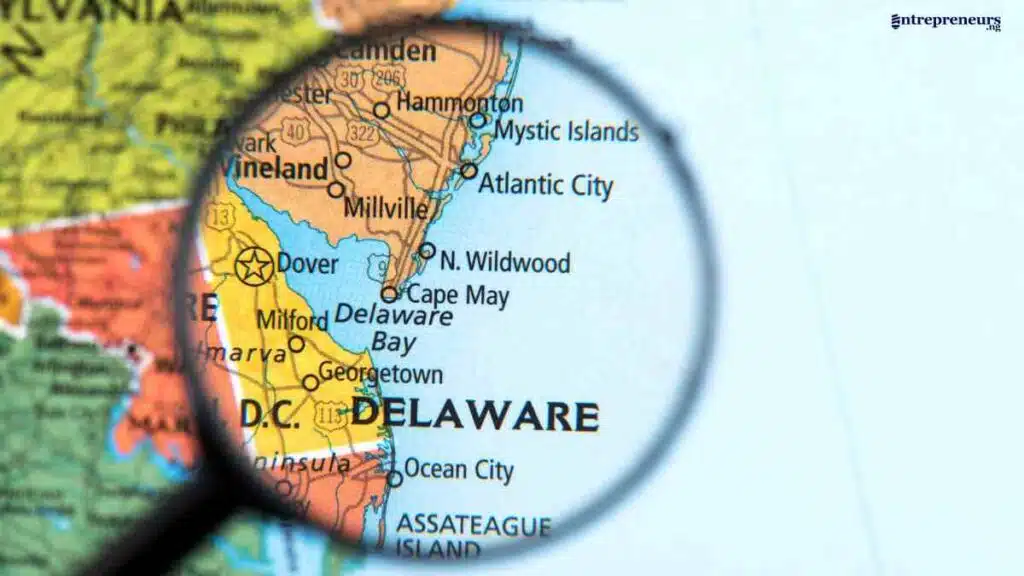
If you are researching how to start an LLC in Delaware, you are not alone. Entrepreneurs from around the world choose Delaware because of its business-friendly laws, tax advantages, and strong legal protections.
Delaware’s dominance is no accident. Over 66% of Fortune 500 companies are incorporated there, according to the Delaware Division of Corporations, reflecting its strong global appeal for business stability.
This guide breaks down how to form an LLC in Delaware and what to expect, including essential insights on Delaware LLC taxes.
Key Takeaways
- Delaware offers strong legal protection and investor appeal, making it ideal for scalable and venture-backed businesses.
- The cost to start an LLC in Delaware is relatively low upfront but includes ongoing annual fees like franchise tax.
- You can form a Delaware LLC quickly, often within a few days, by meeting simple registration requirements.
- Delaware LLC taxes are favourable for non-residents, but federal obligations still apply depending on your business activities.

What Is an LLC?
A Limited Liability Company (LLC) is a business structure that combines the simplicity of a sole proprietorship with the legal protection of a corporation.
In practical terms, it separates your personal assets, such as your home or savings, from your business liabilities, meaning you are not personally responsible for most business debts or lawsuits.
At the same time, an LLC offers flexibility in how the business is managed and taxed.
Unlike corporations, LLCs typically benefit from pass-through taxation, where profits are taxed only once at the owner’s level rather than at both corporate and personal levels.
Why Start an LLC in Delaware?
Delaware has built a global reputation as one of the most business-friendly jurisdictions in the world.
While many entrepreneurs consider it by default, understanding why Delaware stands out will help you decide if it aligns with your business strategy.
Business-Friendly Legal System
One of Delaware’s biggest advantages is its specialised Court of Chancery, which handles business disputes without juries.
This court relies on experienced judges who focus solely on corporate law, making decisions faster and more predictable.
As a result, businesses benefit from a well-established legal framework that reduces uncertainty, especially in complex situations like investor disputes or mergers.
Tax Advantages for Businesses
Delaware offers several tax benefits that attract entrepreneurs globally. For instance, if your LLC does not operate physically within Delaware, you may not be required to pay state income tax there.
Additionally, the state does not impose sales tax, which can reduce operational costs.
However, you must still understand federal tax obligations, as these apply regardless of where your LLC is formed.
Privacy and Asset Protection
Another reason entrepreneurs choose Delaware is the level of privacy it provides.
Unlike many states, Delaware does not require you to publicly disclose the names of LLC members or managers in formation documents.
This structure offers an extra layer of confidentiality, which can be valuable for investors, founders, and high-net-worth individuals who prefer to keep ownership details private.
Strong Appeal to Investors and Startups
Delaware is the preferred choice for venture capitalists and institutional investors. Many investors are familiar with Delaware’s corporate laws and feel more comfortable funding businesses registered there.
This makes it easier for startups to raise capital and scale quickly.
In fact, if you plan to seek external funding or eventually convert your LLC into a corporation, starting in Delaware can simplify that transition.
Delaware LLC Requirements
Before you begin the process of forming your company, it is important to understand the core Delaware LLC requirements.
While Delaware makes business formation relatively simple, there are still specific legal and administrative steps you must follow to ensure your LLC is valid and compliant.
Meeting these requirements from the start will save you time, reduce risks, and help your business operate smoothly.
| Requirement | Description |
|---|---|
| Unique Business Name | Your LLC must have a distinct name that is not already registered in Delaware and must include “LLC” or “Limited Liability Company.” |
| Registered Agent | You must appoint a registered agent with a physical address in Delaware to receive legal documents on behalf of your LLC. |
| Certificate of Formation | This is the official document you file with the Delaware Division of Corporations to legally create your LLC. |
| Operating Agreement | Although not required by law, it is strongly recommended to outline ownership, roles, and management structure. |
| Employer Identification Number (EIN) | Issued by the IRS, this number is required for tax purposes, hiring employees, and opening a business bank account. |
| Annual Franchise Tax | Delaware requires LLCs to pay a flat annual tax (currently $300), regardless of income. |
| Business Licences (if applicable) | Depending on your industry and where you operate, you may need additional licences or permits. |
Understanding these requirements early ensures that when you move forward with starting an LLC in Delaware, the process becomes straightforward and free of unnecessary delays.
See Also: How to Start an LLC in New Hampshire – 8 Easy Steps to Launch Your Business Today
Who Should Start an LLC in Delaware And Who Should Not?
Choosing Delaware for your LLC is not just a procedural decision; it is a strategic one.
While the state offers clear advantages, it is not the best fit for every entrepreneur.
Understanding whether your business aligns with Delaware’s strengths can save you unnecessary costs and complications down the line.
Who Should Start an LLC in Delaware?
Delaware is ideal for entrepreneurs who are building scalable, investment-ready businesses or operating beyond a single location.
If your long-term vision involves growth, funding, or cross-border operations, Delaware offers a solid foundation.
| Type of Entrepreneur | Why Delaware Works for Them |
|---|---|
| Startup Founders Seeking Investment | Investors and venture capitalists prefer Delaware entities due to familiar laws and legal protections. |
| Tech and SaaS Companies | These businesses often operate globally and benefit from Delaware’s flexible structure and tax advantages. |
| Non-US Entrepreneurs | Delaware allows foreigners to form LLCs easily without residency requirements, making it globally accessible. |
| Businesses Operating in Multiple States or Countries | Delaware simplifies multi-state operations and reduces legal complexity in scaling. |
| Companies Planning to Convert to Corporations | Delaware makes it easier to transition into a C-Corp if you plan to raise funding later. |
In these scenarios, Delaware is not just a registration choice; it becomes a strategic asset that supports growth, credibility, and investor confidence.
Who Should NOT Start an LLC in Delaware?
Despite its advantages, Delaware is not always the most practical option.
For many small or location-based businesses, forming an LLC in your home state is often simpler and more cost-effective.
| Type of Entrepreneur | Why Delaware May Not Be Ideal |
|---|---|
| Local Small Business Owners | If you operate in one state, you may still need to register there as a foreign LLC, creating double costs. |
| Freelancers and Solopreneurs | The added complexity and annual fees may not justify the benefits for smaller operations. |
| Businesses Looking to Minimise Costs | Delaware’s annual franchise tax and registered agent fees can add up over time. |
| Brick-and-Mortar Businesses | Physical businesses usually benefit more from registering in the state where they operate. |
| Entrepreneurs Without Growth or Funding Plans | If you do not plan to scale or attract investors, Delaware’s advantages may not apply to you. |
For these business types, choosing Delaware can actually create unnecessary administrative work, including extra filings and compliance requirements in multiple states.
Ultimately, the decision comes down to your business goals. If you are building for scale, funding, or global reach, Delaware is a strong contender.
However, if your focus is simplicity and local operations, forming your LLC closer to home is often the smarter move.

How to Start an LLC in Delaware Step-by-Step
Starting an LLC in Delaware is a straightforward process, but it requires careful attention to detail to ensure everything is set up correctly from the beginning.
Whether you are a first-time entrepreneur or an experienced founder, understanding how to start an LLC in Delaware step by step will help you avoid costly mistakes and delays.
In the following sections, you will learn exactly how to form an LLC in Delaware, from choosing a business name to filing the necessary documents and meeting ongoing compliance requirements.
Step 1: Choose a Unique Name for Your Delaware LLC
The first and most important step in learning how to start an LLC in Delaware is choosing a business name that is both unique and compliant with state rules.
Your LLC name is more than just branding; it is a legal identifier that must meet specific requirements set by the Delaware Division of Corporations.
Before you settle on a name, you need to ensure it is available and not already in use by another registered entity.
Key Naming Requirements
| Requirement | Explanation | Example |
|---|---|---|
| Must Be Unique | Your chosen name must be distinguishable from existing businesses registered in Delaware. | “Blue Ocean Ventures LLC” (if not already taken) |
| Include “LLC” | The name must include “Limited Liability Company” or an abbreviation like “LLC” or “L.L.C.” | “GreenTech Solutions LLC” |
| Avoid Restricted Words | Words like “Bank,” “Insurance,” or “University” may require special approval or licences. | “Secure Bank LLC” (may need approval) |
| No Misleading Terms | Your name should not imply a different type of business structure (e.g., corporation). | Avoid “Corp” or “Inc” in an LLC name |
How to Check Name Availability
To confirm your name is available, you can search the Delaware Division of Corporations database online. This quick check helps you avoid duplication and ensures your application is not rejected.
It is also wise to check domain name availability if you plan to build an online presence.
A matching website domain strengthens your brand and makes your business easier to find.
Step 2: Appoint a Registered Agent in Delaware
Once you have chosen your business name, the next step is to appoint a registered agent.
This is a mandatory requirement for all Delaware LLCs and plays a crucial role in keeping your business compliant.
A registered agent is a person or company authorised to receive legal documents, tax notices, and official correspondence on behalf of your LLC.
They must have a physical address in Delaware and be available during normal business hours.
Registered Agent Requirements
| Requirement | Explanation | Importance |
|---|---|---|
| Physical Address in Delaware | The agent must have a real street address in Delaware (not a P.O. Box). | Ensures legal documents can be delivered reliably. |
| Availability During Business Hours | The agent must be available to receive documents during standard working hours. | Prevents missed legal notices or compliance issues. |
| Consent to Act as Agent | The individual or company must agree to serve as your registered agent. | Ensures accountability and proper representation. |
Who Can Be a Registered Agent?
You have a few options when choosing a registered agent:
- A professional registered agent service
- A Delaware-based individual
- A business entity authorised to operate in Delaware
However, most entrepreneurs, especially non-residents, choose professional services.
This ensures reliability, privacy, and consistent compliance with state requirements.
Cost of a Registered Agent
The cost typically ranges from $50 to $300 per year, depending on the provider and additional services offered.
While it may seem like an extra expense, it is a necessary part of maintaining your Delaware LLC in good standing.
If you do not live in Delaware, hiring a professional registered agent is the most practical choice. It simplifies the process and ensures you meet all Delaware LLC requirements without stress.
See Also: How To Start an LLC in South Carolina – A Complete Guide to Registration, Costs & Requirements
Step 3: File the Certificate of Formation
The next step in how to start an LLC in Delaware is filing the Certificate of Formation.
This is the official document that legally creates your LLC and registers it with the Delaware Division of Corporations. Without this filing, your business does not legally exist.
Fortunately, Delaware keeps this process simple. Unlike many other states, you are not required to provide extensive details about your business or its owners.
This streamlined approach is one reason Delaware LLC formation is so popular among entrepreneurs worldwide.
Key Information Required
| Requirement | Explanation |
|---|---|
| LLC Name | The exact name of your business as registered and approved. |
| Registered Agent Details | Name and physical address of your registered agent in Delaware. |
| Authorised Person Signature | The person submitting the form must sign it. |
Filing Process
You can file the Certificate of Formation online, by mail, or through a registered agent service. Most entrepreneurs prefer online filing because it is faster and more convenient.
Once submitted, the state typically processes the application within a few business days, although expedited options are available for an additional fee.
Filing Cost and Timeline
The standard filing fee is approximately $90, making it one of the more affordable steps in the process.
In terms of timing, approval usually takes 1 to 3 business days, depending on processing speed and whether you choose expedited service.
Double-check all details before submitting your application. Even small errors, like a mismatch in your LLC name, can delay approval and slow down your progress.
Step 4: Create an Operating Agreement
Once your LLC is officially registered, the next step in how to start an LLC in Delaware is to create an Operating Agreement.
Although Delaware does not legally require this document, it is strongly recommended for every LLC, regardless of size.
An Operating Agreement outlines how your business will be managed, how decisions will be made, and how profits and responsibilities are shared among members.
In simple terms, it acts as the internal rulebook for your company.
What an Operating Agreement Covers
| Component | Description |
|---|---|
| Ownership Structure | Defines who owns the LLC and each member’s percentage. |
| Management Roles | Specifies whether the LLC is member-managed or manager-managed. |
| Profit Distribution | Explains how profits and losses are shared among members. |
| Voting Rights | Outlines how decisions are made and voting power of members. |
| Exit Strategy | Defines what happens if a member leaves or the business dissolves. |
Why It Is Important
Even though it is optional, having an Operating Agreement strengthens your LLC in several ways. It reinforces your limited liability protection by clearly separating personal and business affairs.
In addition, banks and investors often require it before opening accounts or providing funding.
For single-member LLCs, it still plays a crucial role. It proves that your business is a separate legal entity, which is essential for maintaining liability protection.
Step 5: Get an Employer Identification Number (EIN)
After setting up your Operating Agreement, the next step is obtaining an Employer Identification Number (EIN) from the IRS.
This is essentially your business’s tax identification number and is required for most financial and legal activities.
Even if you do not plan to hire employees immediately, an EIN is still necessary for running your LLC smoothly.
It allows you to separate your personal and business finances, which is critical for maintaining your liability protection.
What You Need an EIN For
| Purpose | Description |
|---|---|
| Tax Filing | The EIN is used by the IRS to identify your business for federal tax purposes. |
| Opening a Business Bank Account | Most banks require an EIN before you can open a business account. |
| Hiring Employees | Required if you plan to employ staff in the future. |
| Building Business Credibility | Acts as a formal identifier for your business. |
How to Apply for an EIN
You can apply for an EIN directly through the IRS website, and the process is free. For U.S. residents, approval is often immediate when applying online.
For non-U.S. residents, the process may take longer and may require submitting Form SS-4 via fax or mail.
However, it is still entirely possible to obtain an EIN without a Social Security Number.
Apply for your EIN as soon as your LLC is approved. Delaying this step can slow down other important processes like opening a bank account or setting up payment systems.
Step 6: Open a Business Bank Account
With your EIN secured, the next step is to open a dedicated business bank account.
This is a crucial step that separates your personal finances from your business transactions, helping you maintain proper financial records and protect your liability status.
A business bank account also makes your company appear more professional, especially when dealing with clients, partners, and financial institutions.
Requirements to Open a Business Bank Account
| Requirement | Description |
|---|---|
| Certificate of Formation | Proof that your LLC is legally registered in Delaware. |
| EIN (Employer Identification Number) | Issued by the IRS for tax identification. |
| Operating Agreement | Outlines ownership and management structure. |
| Valid Identification | Passport or government-issued ID of the owner(s). |
Choosing the Right Bank
You can choose between traditional banks and online financial platforms.
Traditional banks offer in-person support, while online banks often provide faster setup and fewer restrictions, especially useful for international founders.
However, non-U.S. residents may face additional requirements, such as needing a U.S. address or visiting a branch in person. In such cases, fintech solutions can offer more flexible alternatives.
Why This Step Is Important
Opening a business bank account is not just about convenience. It is essential for maintaining the legal separation between you and your LLC.
Mixing personal and business funds can weaken your liability protection and create complications during tax filing.
Choose a bank that aligns with your business needs, especially if you operate globally. Look for features like low fees, easy international transfers, and seamless integration with accounting tools.
Step 7: Stay Compliant with Delaware LLC Requirements
Forming your business is only the beginning. The final step in how to start an LLC in Delaware is ensuring your company remains compliant with state and federal obligations.
Failing to meet these requirements can lead to penalties, loss of good standing, or even dissolution of your LLC.
Delaware keeps compliance relatively simple compared to other states, but there are still key responsibilities you must meet consistently.
Ongoing Compliance Requirements
| Requirement | Description |
|---|---|
| Annual Franchise Tax | Delaware requires all LLCs to pay a flat annual tax of $300, due by June 1 each year. |
| Registered Agent Maintenance | You must maintain an active registered agent with a valid Delaware address. |
| Federal Tax Filing | Depending on your structure, you must file taxes with the IRS annually. |
| Business Licences (if applicable) | Some industries require ongoing licences or permits. |
| Accurate Record Keeping | Maintain financial records, agreements, and key documents. |
Why Compliance Matters
Staying compliant protects your business and preserves the benefits of your LLC structure. It ensures your limited liability protection remains intact and prevents unnecessary legal or financial issues.
Moreover, if you plan to raise funding, partner with investors, or expand internationally, maintaining good standing is essential.
Investors and financial institutions often verify compliance before engaging with your business.
Set reminders for key deadlines, especially the franchise tax payment. Many entrepreneurs overlook this requirement, which can lead to avoidable penalties.

Cost of Starting an LLC in Delaware
Understanding the cost to start an LLC in Delaware is essential before you begin the formation process.
While Delaware is known for being business-friendly, the total cost goes beyond just the initial filing fee. You need to account for both one-time and ongoing expenses to avoid surprises.
The good news is that Delaware keeps its fee structure relatively simple compared to many other states. However, depending on how you choose to set up your LLC, your total cost can vary.
Full Cost Breakdown
| Cost Category | Estimated Cost |
|---|---|
| Certificate of Formation Filing Fee | $90 (one-time) |
| Registered Agent Fee | $50 – $300/year |
| Annual Franchise Tax | $300/year |
| Operating Agreement | $0 – $500 (optional) |
| EIN (Employer Identification Number) | Free |
| Business Licences (if applicable) | Varies |
| Formation Service Fees (Optional) | $50 – $500+ |
Total Estimated Cost
- Minimum startup cost: $140 – $200
- Typical startup cost (with services): $200 – $600+
- Annual ongoing cost: At least $350+ (franchise tax + registered agent)
Hidden Costs to Consider
While the basic costs are clear, there are a few additional expenses many entrepreneurs overlook.
For example, if your business operates outside Delaware, you may need to register as a “foreign LLC” in another state, which comes with extra fees.
In addition, banking, accounting software, and compliance tools can increase your overall expenses as your business grows.
Pro Tip
If your goal is to minimise costs, you can handle most of the process yourself and only pay the mandatory fees.
However, if you want speed, convenience, and fewer risks, using a professional service may be worth the extra cost.
Delaware LLC Taxes
Understanding Delaware LLC taxes is crucial when deciding to start an LLC in Delaware. While the state offers attractive tax benefits, it does not mean your business is completely tax-free.
Your obligations will depend on where you operate, how your LLC is structured, and whether you are a U.S. resident or a foreign owner.
Delaware’s tax system is one of the key reasons entrepreneurs choose it, but it is important to understand both the advantages and the responsibilities that come with it.
Key Delaware LLC Tax Obligations
| Tax Type | Description | What It Means for You |
|---|---|---|
| State Income Tax | Delaware does not tax LLC income earned outside the state. | If your business operates outside Delaware, you may not owe state income tax there. |
| Franchise Tax | A flat annual fee of $300 for all Delaware LLCs. | Mandatory payment to keep your LLC active, regardless of income. |
| Sales Tax | Delaware does not charge state sales tax. | Reduces overall cost of doing business compared to many other states. |
| Federal Income Tax | LLC profits are taxed at the federal level based on your structure. | You must report income to the IRS, even if Delaware does not tax it. |
| Self-Employment Tax | Applies to LLC members who actively run the business. | Covers Social Security and Medicare contributions. |
How Delaware LLC Taxes Work
By default, an LLC is treated as a “pass-through entity.” This means the business itself does not pay federal income tax. Instead, profits pass through to the owners, who report them on their personal tax returns.
However, LLCs can choose to be taxed as an S Corporation or C Corporation if it is more beneficial.
This flexibility allows business owners to optimise their tax strategy as they grow.
Tax Considerations for Non-U.S. Residents
If you are a non-U.S. entrepreneur, Delaware can still be a strong option. However, your tax obligations depend on whether your income is considered “effectively connected” to the United States.
In simple terms, if you are doing business within the U.S., you may be required to pay federal taxes.
If not, your obligations may be limited, but compliance is still essential. This is an area where professional advice is highly recommended.
Common Misconceptions About Delaware LLC Taxes
Many entrepreneurs assume that forming an LLC in Delaware eliminates taxes entirely. This is not true. While Delaware offers tax advantages, you are still responsible for:
- Federal taxes
- Taxes in the state where you actually operate
- Annual franchise tax in Delaware
Think of Delaware as a tax-efficient structure, not a tax-free one. The real advantage lies in flexibility and reduced state-level burdens, not complete exemption from taxes.
By clearly understanding Delaware LLC taxes, you can make informed decisions, stay compliant, and optimise your business for long-term profitability.
How Long Does It Take to Start an LLC in Delaware?
One of the biggest advantages of starting an LLC in Delaware is the speed of the formation process.
Compared to many other jurisdictions, Delaware allows you to set up your LLC quickly, often within just a few days.
Typical Timeline for Delaware LLC Formation
| Process Stage | Estimated Time | What Happens |
|---|---|---|
| Name Reservation (Optional) | Same day | You confirm your business name is available. |
| Filing Certificate of Formation | 1–3 business days | The state processes and approves your LLC registration. |
| Expedited Processing (Optional) | Same day or 24 hours | Faster approval for an additional fee. |
| Getting EIN (IRS) | Immediate (online) or 1–2 weeks | Required for taxes and banking. |
| Opening a Bank Account | 1–10 days | Depends on the bank and your residency status. |
Overall Timeline
- Fastest scenario: 2–5 business days
- Typical timeline: 1–2 weeks
- For non-U.S. residents: 2–4 weeks (due to EIN and banking delays)
What Affects the Timeline?
Several factors can influence how long it takes to form your Delaware LLC. For example, choosing expedited filing can significantly speed up approval.
On the other hand, delays often occur when documents are incomplete or when non-residents apply for an EIN without a Social Security Number.
If speed matters, file online and use expedited services. Also, prepare all required documents in advance to avoid back-and-forth delays.

Common Mistakes to Avoid When Starting an LLC in Delaware
While the process of starting an LLC in Delaware is relatively simple, many entrepreneurs make avoidable mistakes that can lead to delays, extra costs, or compliance issues.
Being aware of these pitfalls and knowing how to avoid them can save you time and protect your business from unnecessary complications.
| Mistake | What It Means | How to Avoid It |
|---|---|---|
| Choosing Delaware Without a Clear Reason | Many founders select Delaware by default, even when their business operates locally. | Evaluate your business goals first. If you are not raising capital or operating across states, consider forming your LLC where you do business. |
| Ignoring Foreign Qualification Requirements | Registering in Delaware but operating in another state without registering there. | If you operate outside Delaware, register as a foreign LLC in that state to stay compliant. |
| Underestimating Ongoing Costs | Focusing only on the $90 filing fee and ignoring annual expenses. | Budget for the $300 franchise tax and registered agent fees from the start. |
| Skipping the Operating Agreement | Not creating a formal agreement because it is not legally required. | Draft an Operating Agreement early to define roles, ownership, and decision-making. |
| Choosing the Wrong Registered Agent | Selecting unreliable or cheap services that may miss important documents. | Use a reputable registered agent with strong reviews and consistent service. |
| Not Understanding Tax Obligations | Assuming Delaware LLCs are completely tax-free. | Learn about federal taxes and obligations in your operating state before forming your LLC. |
| Mixing Personal and Business Finances | Using personal accounts for business transactions. | Open a dedicated business bank account immediately after formation. |
Avoiding these common errors ensures your Delaware LLC formation is smooth and sustainable.
More importantly, it protects your limited liability status, keeps your business compliant, and positions you for long-term growth.
Taking the time to get things right from the beginning will make every other step in forming an LLC in Delaware much easier and more effective.
Pros and Cons of Starting an LLC in Delaware
Like any business decision, choosing Delaware comes with both advantages and drawbacks.
While the state is highly attractive for many entrepreneurs, it is important to weigh the benefits against the potential downsides before committing.
Pros and Cons of a Delaware LLC
| Pros | What It Means | Cons | What It Means |
|---|---|---|---|
| Business-Friendly Legal System | Delaware’s Court of Chancery offers fast and predictable rulings for business disputes. | Additional Costs | You must pay annual franchise tax and registered agent fees regardless of income. |
| No State Income Tax on Out-of-State Income | If your LLC operates outside Delaware, you may not pay state income tax there. | Foreign Qualification Requirements | You may need to register in another state if you operate there, leading to double filings. |
| No Sales Tax | Businesses benefit from lower operational costs compared to other states. | Not Ideal for Local Businesses | If you operate in one location, forming locally is often simpler and cheaper. |
| Privacy Protection | Member names are not publicly listed, offering greater confidentiality. | Complexity for Beginners | Understanding tax rules and compliance can be confusing for first-time entrepreneurs. |
| Investor-Friendly Environment | Preferred by venture capitalists and investors, making fundraising easier. | Banking Challenges for Non-Residents | Opening a U.S. business account can be difficult without a physical presence. |
| Fast Formation Process | You can register your LLC within a few days. | Federal Tax Obligations Still Apply | Delaware advantages do not eliminate federal tax responsibilities. |
Delaware is a powerful option if you are building a scalable, investment-ready business. However, if your goal is simplicity and cost-efficiency, especially for a local operation, it may not be the best choice.
Understanding both sides ensures your decision is informed, strategic, and aligned with your long-term business goals.
Conclusion
Starting an LLC in Delaware can be a smart move if you are building a business with growth, flexibility, and investment in mind.
From its business-friendly laws to its global reputation, Delaware offers clear advantages, but only when it aligns with your goals.
We want to see you succeed, and that’s why we provide valuable business resources to help you every step of the way.
- Join over 23,000 entrepreneurs by signing up for our newsletter and receiving valuable business insights.
- Register your business today with Entrepreneurs.ng’s Business Registration Services.
- Tell Your Brand Story on Entrepreneurs.ng, let’s showcase your brand to our global audience.
- Need help with your marketing strategy? Get a Comprehensive Marketing and Sales Plan here.
- Sign up for our Entrepreneurs Success Blueprint Programme to learn how to start and scale your business in just 30 days.
- Book our one-on-one consulting and speak to an expert about structuring and growing your business.
- Visit our shop for business plan templates and other valuable resources to guide you.
- Get our Employee-Employer Super Bundle NDA templates to legally protect your business and workforce.
- Advertise your business to over a million entrepreneurs through our different advertising packages.

Frequently Asked Questions (FAQs)
What is the fastest way to start an LLC in Delaware?
The fastest way is to file your Certificate of Formation online and opt for expedited processing, which can get your LLC approved within 24 hours.
How much does it cost to start an LLC in Delaware?
The minimum cost is around $90 for filing, but total startup costs typically range from $140 to $600 depending on additional services.
How long does it take to form an LLC in Delaware?
It usually takes 1–3 business days for standard processing, but expedited options can reduce this to the same day.
Do I need to live in Delaware to start an LLC there?
No, you do not need to be a resident of Delaware or even the United States to form an LLC in Delaware.
Can a foreigner start an LLC in Delaware?
Yes, non-U.S. residents can legally form and own a Delaware LLC without being physically present in the country.
What is a registered agent and do I need one?
A registered agent is required to receive legal documents on behalf of your LLC, and you must have one with a Delaware address.
Do Delaware LLCs pay taxes?
Delaware LLCs may not pay state income tax on out-of-state income, but they must pay federal taxes and an annual franchise tax.
What is the Delaware franchise tax?
It is a flat annual fee of $300 that all Delaware LLCs must pay to remain in good standing.
Do I need an Operating Agreement for my LLC?
It is not legally required in Delaware, but it is strongly recommended to define ownership and management structure.
Can I open a U.S. bank account for my Delaware LLC?
Yes, but requirements vary by bank. Non-residents may face additional verification steps or need fintech alternatives.
Is Delaware the best state to form an LLC?
It depends on your business goals. Delaware is ideal for startups and scalable businesses but may not suit local operations.
What are the disadvantages of a Delaware LLC?
Common drawbacks include ongoing costs, possible double registration, and added complexity for small businesses.
Do I need a business licence for a Delaware LLC?
It depends on your industry and where you operate. Some businesses require licences at the state or local level.
Can I run my Delaware LLC from another state or country?
Yes, but you may need to register as a foreign LLC in the state where you actually operate.
What happens if I do not pay the franchise tax?
Your LLC may lose good standing, face penalties, or eventually be dissolved by the state.
Can I convert my Delaware LLC into a corporation later?
Yes, Delaware makes it relatively easy to convert an LLC into a C Corporation if you plan to raise investment.
Do I need a lawyer to start an LLC in Delaware?
No, you can handle the process yourself, but professional help can reduce errors and save time.


