

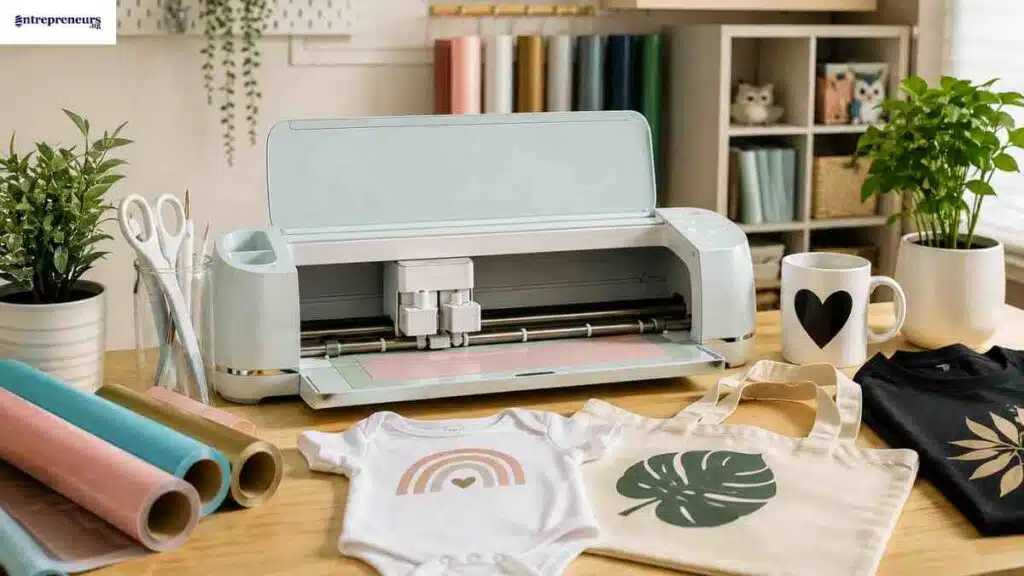
Starting a Cricut business has become one of the most accessible ways to turn creativity into real income.
From custom T-shirts and stickers to wedding décor and branded packaging, people are using Cricut machines to build profitable home-based brands with surprisingly low startup costs.
In fact, Etsy ended 2025 with 86.5 million active buyers searching for personalised and handmade products, proving that demand for unique items remains strong.
Key Takeaways
- Choose a profitable niche and focus on Cricut products people already buy consistently.
- Price your products for profit, not just to cover materials and supplies.
- Build a strong brand and market your Cricut business beyond Etsy alone.
- Start small, improve your skills, and scale with systems that save time.

What Is a Cricut Business?
A Cricut business is a small business that uses a Cricut cutting machine to create and sell customised products.
These products can include T-shirts, mugs, stickers, labels, wedding décor, greeting cards, tote bags, signs, party supplies, and many other personalised items people buy every day.
In recent years, the rise of e-commerce platforms like Etsy, Shopify, and social commerce platforms like TikTok Shop has made it easier for Cricut business owners to reach customers worldwide.
As a result, many people now use Cricut machines to build profitable side hustles and full-time handmade brands.
How a Cricut Machine Works
A Cricut machine is an electronic cutting machine designed to cut, draw, score, and sometimes engrave different materials with precision.
Users create designs in Cricut Design Space, upload ready-made templates, or purchase SVG files online. The machine then follows those digital instructions to produce the finished design.
Depending on the model, a Cricut machine can work with:
- Vinyl
- Cardstock
- Heat transfer vinyl (HTV)
- Fabric
- Sticker paper
- Leather
- Wood veneer
- Acrylic
- Foil materials
This versatility allows entrepreneurs to create products for several industries without investing in large manufacturing equipment.
Types of Cricut Businesses
Not every Cricut business looks the same. Some entrepreneurs focus on personalised gifts, while others build niche brands around weddings, events, or small business packaging.
The table below shows some of the most common Cricut business models:
| Cricut Business Type | Popular Products | Target Customers |
|---|---|---|
| Personalised Gifts | Mugs, tumblers, keychains | Everyday consumers |
| Apparel Business | T-shirts, hoodies, tote bags | Fashion buyers |
| Wedding Business | Invitations, signage, favours | Couples and event planners |
| Small Business Branding | Labels, stickers, packaging | SMEs and ecommerce sellers |
| Home Décor Brand | Wall art, decals, signs | Homeowners |
| Digital Product Store | SVG files, templates | Other Cricut users |
This flexibility is one reason many people consider Cricut one of the best handmade business ideas for beginners.
Why Cricut Businesses Have Become So Popular
The personalised products industry has grown rapidly because consumers now value unique items over mass-produced goods.
People want customised birthday gifts, branded packaging, personalised wedding décor, and products that feel personal.
At the same time, Cricut machines have reduced the barrier to entry for small creative businesses.
Instead of opening a factory or renting a retail store, entrepreneurs can start from a spare room with relatively low Cricut startup costs.
Is a Cricut Business a Hobby or a Real Business?
Many people start Cricut businesses as hobbies. However, successful sellers treat them like real businesses from the beginning.
That means:
- Choosing a profitable niche
- Creating a proper Cricut business plan
- Understanding how to price Cricut products
- Tracking expenses and profits
- Building a recognisable brand
- Developing long-term Cricut business marketing ideas
The difference between struggling hobby sellers and profitable business owners often comes down to strategy, consistency, and positioning.
How Cricut Businesses Make Money
A Cricut business can generate income in several ways. Most sellers begin with physical products, but many eventually expand into digital and business-to-business services.
Some of the most profitable revenue streams include:
| Revenue Stream | Example |
|---|---|
| Physical Products | T-shirts, mugs, signs |
| Event Products | Wedding décor, party favours |
| Business Branding | Packaging labels, stickers |
| Digital Downloads | SVG files, templates |
| Corporate Orders | Branded gifts and merchandise |
| Seasonal Collections | Christmas ornaments, holiday décor |
This variety gives entrepreneurs multiple opportunities to grow revenue throughout the year instead of relying on one product category alone.
What Makes a Cricut Business Different From Other Small Businesses?
Unlike many traditional businesses, a Cricut business has low startup barriers. You do not need expensive equipment, warehouse space, or a large team to begin.
However, the real advantage lies in personalisation. Customers are often willing to pay premium prices for products customised with names, colours, logos, quotes, or special dates.
That emotional value creates stronger profit margins compared to generic products. It also helps small businesses compete effectively against large retailers.

How to Start a Cricut Business in 12 Simple Steps
Starting a Cricut business can be one of the most affordable ways to turn creativity into income.
With the right niche, clear branding, quality products, and smart marketing, you can build a profitable business selling personalised items from home.
These 12 steps will help you start and grow a Cricut business that stands out in a competitive handmade market.
Step 1: Choose a Profitable Cricut Niche
The fastest way to struggle in a Cricut business is trying to sell everything. Instead, focus on a specific niche with strong demand and clear customers.
The best Cricut business ideas usually fall into categories people already spend money on, such as personalised gifts, wedding décor, small business branding, and custom apparel.
Below are some of the best-selling products:
| Profitable Niche | Popular Products |
|---|---|
| Weddings | Invitations, welcome signs |
| Apparel | T-shirts, hoodies |
| Small Business Branding | Labels, packaging stickers |
| Home Décor | Wall decals, signs |
| Party Supplies | Cake toppers, banners |
Before choosing a niche, research platforms like Etsy and Pinterest to see what sells consistently. Pay attention to pricing, reviews, product quality, and branding.
It is also smart to balance evergreen products that sell all year with seasonal items that peak during holidays and celebrations.
If you need guidance on validating your idea and building a solid strategy, our Entrepreneurs Success Blueprint Program (ESBP) can help you research your market, refine your business model, and launch with confidence.
Step 2: Research Your Market and Competitors
Once you choose a niche, study the market before creating products. This helps you understand what customers want and where you can stand out.
Start by searching for similar products on Etsy, TikTok, Pinterest, and Instagram. Look at shops with high sales and strong reviews.
Pay attention to:
- Product styles
- Pricing
- Packaging
- Customer complaints
- Best-selling designs
This research helps you spot gaps in the market.
For example, you may notice that many sellers offer cheap designs, but few focus on premium packaging or fast delivery.
| What to Analyse | What It Tells You |
|---|---|
| Reviews | Customer expectations and complaints |
| Pricing | Average market rates |
| Best Sellers | Products with strong demand |
| Branding | How competitors position themselves |
| Photos | Presentation quality |
Do not copy other sellers. Use competitor research to improve your own products and create a stronger brand identity.
Step 3: Create a Simple Cricut Business Plan
A Cricut business plan does not need to be complicated. It should clearly outline what you sell, who you sell to, how much you plan to charge, and how you intend to grow.
Start by defining your niche, target audience, startup budget, and sales goals. This gives your business direction from the beginning.
Your plan should also include estimated Cricut startup costs such as:
| Startup Expense | Examples |
|---|---|
| Equipment | Cricut machine, heat press |
| Materials | Vinyl, cardstock, blanks |
| Branding | Logo, packaging |
| Selling Fees | Etsy or Shopify costs |
| Marketing | Ads, product photography |
Keep your goals realistic at first. Focus on building consistent sales, improving product quality, and understanding your customers before expanding into more products or platforms.
You can get started with our Comprehensive Business Plan Template, designed to help entrepreneurs build structured, investor-ready plans with ease.
Step 4: Choose the Right Cricut Machine and Tools
The machine and tools you choose will affect the type of products you can create and how efficiently you work.
Beginners often start with basic equipment and upgrade as the business grows.
The three main Cricut machines serve different purposes.
| Cricut Machine | Best For |
|---|---|
| Cricut Joy | Small labels, cards, simple crafts |
| Cricut Explore | T-shirts, stickers, vinyl projects |
| Cricut Maker | Advanced and high-volume projects |
Besides the machine, you will also need materials and tools such as vinyl, transfer tape, cutting mats, weeding tools, blank products, and a heat press for apparel.
Avoid buying too many supplies at the beginning. Start with products related to your niche and expand gradually as demand grows.
Step 5: Learn Cricut Design and Production Skills
Owning a Cricut machine is not enough. To build a profitable Cricut business, you need to improve your design and production skills consistently.
Start by learning how to use Cricut Design Space properly. Understand how to upload SVG files, resize designs, layer colours, and prepare files for cutting or printing.
Focus on creating clean, professional products. Poor finishing, uneven vinyl application, and weak packaging can affect customer trust and repeat sales.
| Skill to Learn | Importance |
|---|---|
| Design Space Basics | Helps you create accurate designs |
| Vinyl Application | Improves product quality |
| Colour Matching | Makes products look professional |
| Product Finishing | Enhances customer experience |
| Packaging | Strengthens your brand image |
The better your products look, the easier it becomes to charge premium prices and stand out from competitors.
Step 6: Handle Legal and Business Requirements
Treat your Cricut business like a real business from the start. This helps you avoid legal problems and build customer trust.
Begin by choosing a business name and registering your business if required in your country. You should also separate personal and business finances as sales grow.
One of the most important areas to understand is copyright and trademark rules.
Many beginners make the mistake of selling designs linked to brands, movies, celebrities, or sports teams without permission.
| Legal Area | What to Know |
|---|---|
| Business Registration | May be required depending on your location |
| Copyright | Protects original artwork and designs |
| Trademarks | Protect brand names and logos |
| Taxes | Sales may be taxable in some countries |
Before selling any design, check Cricut’s Angel Policy and avoid using copyrighted images without proper licenses.
Our business registration service at Entrepreneurs.ng helps you set up legally and correctly from day one.

Step 7: Develop Products That Actually Sell
Not every Cricut product will make money. Focus on items with strong demand, simple production processes, and healthy profit margins.
Start with a few products instead of launching a large collection. This allows you to test what customers respond to before investing more money in supplies.
Some of the best Cricut crafts that sell include personalised T-shirts, stickers, tumblers, labels, tote bags, and wedding décor.
| Product Type | Demand Level |
|---|---|
| Stickers | High |
| T-shirts | High |
| Tumblers | High |
| Cake Toppers | Medium |
| Wall Decals | Medium |
Pay attention to customer feedback, sales trends, and seasonal demand. The products that perform best should become the foundation of your Cricut business.
Step 8: Price Your Products for Profit
Many Cricut business owners underprice their products at the beginning.
Pricing should cover more than just materials. You also need to account for labour, packaging, platform fees, and profit.
A product that looks cheap can also reduce the perceived value of your brand. Instead of competing only on low prices, focus on quality and presentation.
| Cost to Include | Examples |
|---|---|
| Materials | Vinyl, blanks, transfer tape |
| Labour | Time spent designing and producing |
| Packaging | Boxes, thank-you cards, labels |
| Selling Fees | Etsy, Shopify, payment processing |
| Profit Margin | Your actual earnings |
Research competitor pricing, but avoid copying it blindly. Your pricing should reflect the quality, uniqueness, and experience your products provide.
Step 9: Build Your Brand and Online Presence
A strong brand helps your Cricut business look professional and memorable. Customers are more likely to buy from businesses with clear branding, quality photos, and a consistent style.
Start with a business name, simple logo, brand colours, and product packaging that match your niche. Your branding should make your products instantly recognisable.
You should also create social media pages and an online store where customers can view your products easily.
| Platform | Purpose |
|---|---|
| Etsy | Marketplace for handmade products |
| Shopify | Independent online store |
| Product promotion and engagement | |
| TikTok | Short-form product videos |
| Traffic and product discovery |
Good branding makes your Cricut business look more trustworthy and helps customers remember you long after their first purchase.
Step 10: Start Selling Your Cricut Products
Once your products are ready, focus on selling through platforms where your target customers already shop.
Many beginners start with Etsy because it gives immediate access to buyers searching for handmade and personalised products.
As your business grows, you can expand into your own website and social media platforms to build a stronger brand.
| Selling Platform | Best Use |
|---|---|
| Etsy | Quick access to handmade buyers |
| Shopify | Building your own brand |
| TikTok Shop | Viral product exposure |
| Visual marketing and sales | |
| Local Markets | In-person customer interaction |
Use clear product photos, detailed descriptions, and accurate pricing on every platform. Strong presentation can make a major difference in sales, especially in a competitive Cricut market.
Step 11: Market Your Cricut Business
Even great products will struggle to sell without proper marketing. To grow your Cricut business, you need consistent visibility and content that attracts the right audience.
Social media platforms like TikTok, Instagram, and Pinterest work especially well for Cricut products because they are highly visual.
Short videos showing the creation process can quickly attract attention and drive sales.
| Marketing Channel | Best For |
|---|---|
| TikTok | Viral product videos |
| Product photos and reels | |
| Long-term traffic | |
| Email Marketing | Repeat customers |
| Etsy SEO | Search visibility |
Focus on posting consistently, using high-quality photos, and creating content around your products. Over time, strong marketing helps you build trust, attract repeat buyers, and grow brand awareness.
Step 12: Scale Your Cricut Business
As your sales increase, focus on improving efficiency instead of simply working longer hours.
Scaling your Cricut business means creating systems that help you handle more orders without reducing quality.
Start by identifying your best-selling products and producing them in batches. This saves time and reduces material waste.
| Scaling Strategy | Benefit |
|---|---|
| Batch Production | Faster order fulfilment |
| Product Standardisation | Consistent quality |
| Digital Products | Passive income opportunities |
| Outsourcing | Reduces workload |
| Multiple Sales Channels | More revenue streams |
You can also expand into digital products like SVG files and templates, which allow you to earn income without producing physical items every time.
Over time, these systems can help turn a small Cricut side hustle into a sustainable business.
How Much Does It Cost to Start a Cricut Business?
One of the biggest advantages of a Cricut business is its relatively low startup cost compared to many other businesses.
You do not need a warehouse, retail shop, or expensive manufacturing equipment to begin. Many successful sellers start from home with a basic setup and expand gradually as sales grow.
However, your actual startup cost depends on the type of products you want to sell, the Cricut machine you choose, and how professionally you want to launch the business.
Basic Cricut Business Startup Costs
For beginners, the biggest expense is usually the machine itself. Beyond that, you will need materials, tools, packaging, and a small marketing budget.
| Startup Item | Estimated Cost (USD) |
|---|---|
| Cricut Joy | $180–$250 |
| Cricut Explore Air 2 or Explore 3 | $250–$400 |
| Cricut Maker 3 | $400–$600 |
| Heat Press | $100–$300 |
| Cutting Mats and Tools | $40–$100 |
| Vinyl and Materials | $100–$300 |
| Blank Products | $100–$250 |
| Packaging Supplies | $50–$150 |
| Etsy or Shopify Setup | $0–$39 monthly |
| Branding and Logo | $50–$300 |
| Marketing Budget | $100–$500 |
Estimated Total Startup Budget
Your total startup cost can vary significantly depending on your approach.
| Business Level | Estimated Budget |
|---|---|
| Beginner Side Hustle | $500–$1,000 |
| Serious Small Business Setup | $1,500–$3,000 |
| Advanced Production Setup | $5,000+ |
A beginner selling stickers or vinyl decals may spend under $1,000 to get started.
Meanwhile, someone producing apparel, tumblers, and large custom signs may need a higher budget for equipment and inventory.
The Hidden Costs Many Beginners Ignore
Many new Cricut sellers only budget for the machine and materials. However, several hidden costs can affect profitability if ignored.
These include:
- Shipping supplies
- Product photography
- Platform fees
- Advertising costs
- Replacement materials
- Failed product tests
- Software subscriptions
- Electricity and maintenance
For example, Etsy charges listing fees and transaction fees, while Shopify requires a monthly subscription.
Over time, these costs add up and should be included in your pricing strategy.
How to Start on a Smaller Budget
You do not need a perfect setup immediately. Many successful Cricut businesses begin with a small product range and basic equipment.
To reduce startup costs:
- Start with one niche
- Buy materials in small quantities
- Use free marketing through TikTok and Pinterest
- Create products only after receiving orders
- Upgrade equipment gradually
This approach lowers risk and allows you to test demand before investing heavily.
The key is controlling costs while building a brand customers trust.

How Profitable Is a Cricut Business?
A Cricut business can be highly profitable because personalised products often have strong markup potential.
Many items cost relatively little to make but can sell for premium prices when combined with good design, branding, and packaging.
Unlike traditional retail businesses, you are not competing only on the product itself. Customers pay for customisation, creativity, convenience, and emotional value.
Average Profit Margins
Most Cricut businesses operate with moderate to high profit margins, especially for small personalised items.
| Product | Estimated Production Cost | Average Selling Price | Potential Profit |
|---|---|---|---|
| Vinyl Stickers | $1–$3 | $8–$15 | High |
| Custom T-Shirts | $8–$15 | $25–$40 | Medium to High |
| Personalised Tumblers | $10–$15 | $30–$45 | High |
| Cake Toppers | $2–$5 | $15–$30 | High |
| Wedding Signs | $15–$40 | $80–$200 | Very High |
Profit margins improve further when you buy materials in bulk or streamline production processes.
What Determines Profitability?
Not every Cricut business becomes profitable quickly. Success usually depends on a few important factors.
| Factor | Impact on Profit |
|---|---|
| Product Pricing | Higher margins increase earnings |
| Niche Selection | Popular niches generate more demand |
| Branding | Strong brands attract premium buyers |
| Marketing | Better visibility drives sales |
| Production Efficiency | Faster workflows reduce costs |
Many beginners struggle because they underprice products or spend too much time on low-profit items.
Can You Make Full-Time Income?
Yes, many Cricut business owners eventually turn their side hustle into a full-time business. However, this usually happens after building consistent demand and expanding beyond one sales channel.
Some sellers earn a few hundred dollars monthly for extra income, while established shops generate thousands in monthly revenue through Etsy, Shopify, TikTok Shop, wholesale orders, and digital products.
Businesses that combine physical products with digital downloads like SVG files often scale faster because digital products create passive income.
The Biggest Profitability Mistake
The biggest mistake new Cricut entrepreneurs make is focusing only on sales instead of profit.
A shop making $5,000 in monthly sales may still struggle if production costs, fees, shipping, and advertising consume most of the revenue.
A profitable Cricut business focuses on:
- Strong pricing
- Efficient production
- Quality branding
- Repeat customers
- High-margin products
In many cases, selling fewer premium products is more profitable than selling large quantities of cheap items.
Equipment Needed to Start a Cricut Business
Starting a Cricut business does not require a large workshop or expensive industrial machines.
However, having the right equipment makes production easier, improves product quality, and helps you work more efficiently.
The exact tools you need will depend on the products you plan to sell. For example, a sticker business requires different equipment from a tumbler or T-shirt business.
| Equipment | Purpose | Estimated Cost (USD) |
|---|---|---|
| Cricut Machine | Cutting and designing materials | $180–$600 |
| Heat Press | Applying designs to apparel and tumblers | $100–$300 |
| Cutting Mats | Holding materials during cutting | $10–$40 |
| Weeding Tools | Removing excess vinyl | $10–$30 |
| Vinyl and HTV | Main crafting materials | $50–$200 |
| Blank Products | T-shirts, mugs, tumblers, tote bags | $100–$300 |
| Printer | Printing stickers and transfers | $100–$400 |
| Packaging Supplies | Shipping and branding orders | $50–$150 |
| Laptop or Tablet | Running Cricut Design Space | $300+ |
Many beginners start with basic tools and upgrade gradually as their Cricut business grows.
It is better to invest in quality equipment slowly than overspend on supplies you may not use immediately.
Common Mistakes to Avoid When Starting a Cricut Business
Many Cricut businesses fail not because the products are bad, but because of poor pricing, weak branding, and lack of strategy.
Avoiding these mistakes early can save time, money, and frustration as your business grows.
| Mistake | How It Affects the Business | Better Approach |
|---|---|---|
| Trying to Sell Everything | Creates weak branding and confuses customers | Focus on one profitable niche first |
| Underpricing Products | Reduces profit and leads to burnout | Price based on materials, labour, and profit |
| Copying Trending Designs | Can lead to copyright issues and brand dilution | Create original designs and unique branding |
| Ignoring Product Quality | Causes poor reviews and low repeat sales | Invest in clean finishing and quality materials |
| Poor Product Photos | Makes products look unprofessional online | Use clear, well-lit images and mockups |
| Relying Only on Etsy | Limits growth and control over customers | Expand to Shopify, TikTok, and social media |
| Buying Too Much Inventory | Wastes money and storage space | Start small and scale with demand |
| Inconsistent Marketing | Reduces visibility and sales opportunities | Post regularly and build audience trust |
| Skipping Business Planning | Leads to poor financial decisions | Create a simple Cricut business plan |
| Ignoring Customer Feedback | Prevents product improvement | Use reviews to improve products and service |
Most successful Cricut businesses grow steadily because they focus on quality, consistency, branding, and customer experience instead of chasing every trend at once.
Conclusion
Starting a Cricut business can be a smart way to turn creativity into a profitable income stream.
With the right niche, quality products, strong branding, and consistent marketing, even a small home setup can grow into a successful business.
We want to see you succeed, and that’s why we provide valuable business resources to help you every step of the way.
- Join over 23,000 entrepreneurs by signing up for our newsletter and receiving valuable business insights.
- Register your business today with Entrepreneurs.ng’s Business Registration Services.
- Tell Your Brand Story on Entrepreneurs.ng, let’s showcase your brand to our global audience.
- Need help with your marketing strategy? Get a Comprehensive Marketing and Sales Plan here.
- Sign up for our Entrepreneurs Success Blueprint Programme to learn how to start and scale your business in just 30 days.
- Book our one-on-one consulting and speak to an expert about structuring and growing your business.
- Visit our shop for business plan templates and other valuable resources to guide you.
- Get our Employee-Employer Super Bundle NDA templates to legally protect your business and workforce.
- Advertise your business to over a million entrepreneurs through our different advertising packages.

Frequently Asked Questions (FAQs)
Is a Cricut business profitable?
Yes, a Cricut business can be highly profitable when you sell products with strong demand and healthy profit margins. Personalised items often sell at premium prices because customers value customisation.
How much money can you make with a Cricut business?
Income varies depending on your niche, pricing, marketing, and sales channels. Some sellers make a few hundred dollars monthly, while established businesses generate thousands in monthly revenue.
What Cricut products sell best?
Some of the best-selling Cricut products include custom T-shirts, stickers, tumblers, wedding décor, labels, tote bags, and cake toppers.
How much does it cost to start a Cricut business?
Most beginners spend between $500 and $3,000 depending on the machine, materials, and equipment they choose.
What is the best Cricut machine for a small business?
The Cricut Explore and Cricut Maker are popular choices for small businesses because they handle a wide range of materials and products.
Can I start a Cricut business from home?
Yes, many Cricut businesses operate successfully from home. You only need a small workspace, the right equipment, and a reliable internet connection to begin.
Do I need a business licence for a Cricut business?
This depends on your country or state. Some locations require business registration, permits, or tax documentation before selling products commercially.
Can I legally sell Cricut products?
Yes, you can sell products made with Cricut machines. However, you must avoid using copyrighted or trademarked designs without permission.
Can I sell Disney or branded Cricut designs?
No, selling copyrighted designs without a licence can lead to legal problems or account suspension on platforms like Etsy.
Where can I sell Cricut products?
You can sell through Etsy, Shopify, TikTok Shop, Instagram, Facebook Marketplace, Amazon Handmade, and local craft fairs.
Is Etsy too competitive for Cricut sellers?
Etsy is competitive, but strong branding, quality products, and niche positioning can help your business stand out.
How do I price Cricut products correctly?
Your pricing should include materials, labour, packaging, platform fees, and profit margin. Avoid pricing based only on material costs.
What are the easiest Cricut products for beginners?
Stickers, vinyl decals, labels, tote bags, and simple T-shirts are usually easier for beginners to produce and sell.
Do I need design experience to start a Cricut business?
No, but learning basic design skills and understanding Cricut Design Space will improve your product quality significantly.
How do Cricut businesses attract customers?
Most businesses attract customers through social media marketing, Etsy SEO, Pinterest, TikTok videos, influencer collaborations, and word-of-mouth referrals.
Can a Cricut business become full-time?
Yes, many entrepreneurs eventually turn their Cricut side hustle into a full-time business by expanding products, improving marketing, and building repeat customers.
What is the biggest mistake Cricut business owners make?
One of the biggest mistakes is underpricing products. Many sellers fail to account for labour, fees, and profit when setting prices.
Should I start with physical or digital Cricut products?
Physical products are easier for most beginners, while digital products like SVG files can become a profitable passive income stream later.
How long does it take to grow a Cricut business?
Growth depends on product quality, consistency, branding, and marketing. Some businesses gain traction within months, while others take longer to build a loyal customer base.
Do I need social media for a Cricut business?
Yes, social media helps increase visibility, build trust, and attract customers. Platforms like TikTok, Instagram, and Pinterest work especially well for Cricut products.


