Every successful business starts with clarity about its target market. Without it, marketing becomes guesswork, and growth remains uncertain.
I have worked with countless entrepreneurs who discovered that identifying their target market changed everything.
In this article, we will look at what a target market is, how it works, how to define yours, the different types, what market segments are and more.
Key Takeaways
- A target market is the specific group of people or organisations most likely to buy your product, and identifying them ensures every marketing effort delivers results.
- Understanding how your target market works helps you design products, pricing, and promotions that align with real customer needs.
- Defining and segmenting your target market through research and data leads to focused marketing, stronger customer loyalty, and higher profitability.
- Reaching your target market requires the right mix of messaging, channels, and consistency to convert interest into lasting relationships.
See also: How to Calculate TAM (Total Addressable Market): Formula and Examples

What Is a Target Market
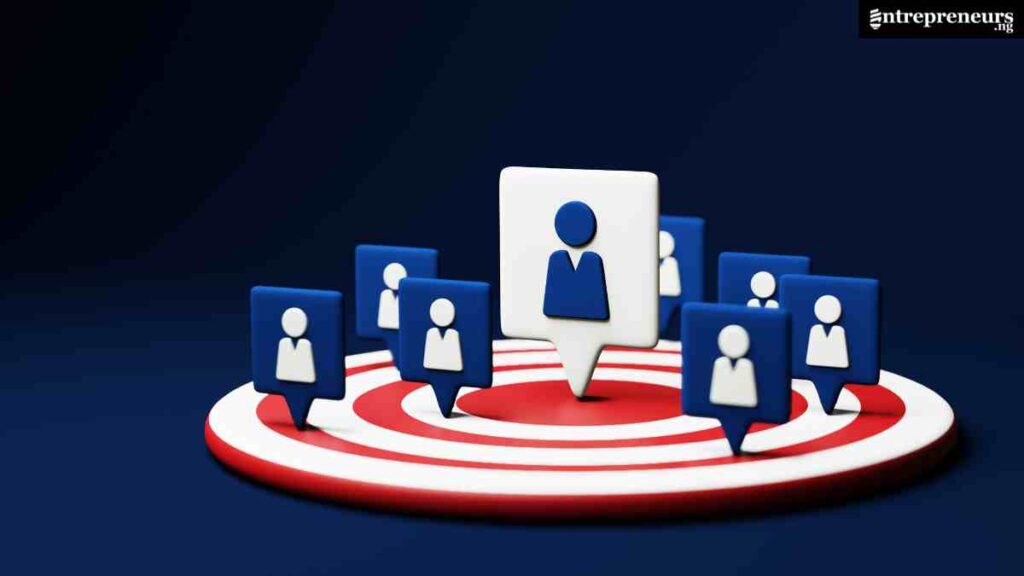
A target market is the specific group of people or organisations most likely to buy your product or service because it meets their particular needs or desires.
Understanding your target market is the foundation of every successful business strategy.
It helps you design the right products, craft messages that resonate, and choose marketing channels that reach your ideal customers effectively.
Knowing your target market helps you make smarter decisions and reduces wasted marketing spend.
Businesses that clearly define their target market achieve stronger customer engagement and higher returns.
The Key Components of a Target Market
Every target market is made up of defining characteristics that guide marketing decisions. These include demographic, geographic, psychographic, and behavioural factors.
| Component | Description | Example |
|---|---|---|
| Demographic | Age, gender, income, education, occupation | Working professionals aged 25–40 earning mid to high income |
| Geographic | Country, city, region, or climate | Urban residents in Accra, Nairobi, or Johannesburg |
| Psychographic | Values, interests, lifestyle, opinions | Eco-conscious consumers who prefer sustainable brands |
| Behavioural | Buying habits, usage, brand loyalty, benefits sought | Regular online shoppers seeking convenience and fast delivery |
Combining these components gives you a clear picture of who your ideal customer is and how to communicate with them effectively.
For example, understanding both demographic and psychographic traits allows you to tailor your marketing message so it feels personal and relevant.
Your target market shapes every aspect of your business, from product development to pricing and promotion.
For instance, a tech company developing productivity software for small businesses will market differently from one targeting large enterprises.
When your target market is well-defined, your marketing messages attract the right people and convert them into loyal customers.
If you are unsure how to identify or refine your target market, you can access one-on-one guidance through our Ask an Expert service at Entrepreneurs.ng/ask-an-expert. Our experts help entrepreneurs define their audience, position their brand, and design strategies that deliver measurable results.
How Target Market Works
A clearly defined target market directs your marketing strategy, product design, and overall business growth.
It ensures that every decision you make aligns with the needs and behaviours of your most profitable customers.
A target market operates through a simple but strategic process that involves segmentation, selection, positioning, and communication.
Each stage ensures your message reaches the right audience and generates the best possible return on investment.
| Stage | Description | Outcome |
|---|---|---|
| Market Segmentation | Dividing the broader market into smaller, similar groups based on shared traits | Identifies clear customer categories |
| Target Selection | Evaluating each segment to choose the most profitable and reachable group | Defines who your ideal customers are |
| Market Positioning | Crafting a unique value proposition that appeals directly to the chosen market | Differentiates your brand from competitors |
| Marketing Communication | Delivering tailored messages across suitable channels | Attracts, engages, and converts your audience |
When each step works together, you create a consistent experience that feels personalised to your customers while maximising your marketing efficiency.
Why Understanding How a Target Market Works Is Crucial
A clear understanding of your target market improves decision-making across all business areas. It helps you:
- Design products and services that solve real customer problems.
- Use your marketing budget more effectively.
- Build loyalty through relevant communication.
According to a report by Deloitte, customer-centric businesses are 60 percent more profitable than those that fail to understand or focus on their target markets.
This proves that businesses which take the time to understand how their target market functions enjoy long-term sustainability and growth.
Data plays a central role in understanding how your target market behaves. Analysing customer demographics, purchasing history, online engagement, and location helps you uncover patterns that guide product innovation and marketing decisions.
For example, using Google Analytics or customer relationship management (CRM) tools can reveal which customer segments generate the highest revenue and which channels perform best.

Steps to Define Your Product’s Target Market
Step 1: Understand Your Product and Its Value
Start by analysing what your product does and the specific problem it solves. Every successful product exists to meet a particular need or desire.
Ask yourself: What benefits does it offer? Who will find those benefits valuable?
For example, an affordable accounting software might appeal to small business owners who need to manage finances efficiently without hiring an accountant.
Step 2: Identify Potential Customer Groups
List out all possible customers who could benefit from your product. These could vary by age, location, lifestyle, or industry.
At this stage, keep your options broad; you will narrow them down as you gather more information.
Step 3: Segment the Market
Divide your potential customers into smaller, more defined groups using demographic, psychographic, geographic, and behavioural segmentation.
| Segmentation Type | Description | Example |
|---|---|---|
| Demographic | Age, gender, income, education, occupation | Female entrepreneurs aged 30–45 with mid-level income |
| Geographic | Country, city, region, climate | Business owners in major African cities like Lagos or Nairobi |
| Psychographic | Interests, values, attitudes, lifestyles | Entrepreneurs who value innovation and independence |
| Behavioural | Buying frequency, usage rate, loyalty, benefits sought | Customers who prefer digital tools for efficiency |
Segmenting helps you see patterns and pinpoint which groups are most aligned with your product’s strengths.
Step 4: Evaluate and Select the Most Viable Segment
Not all segments are equal. Evaluate each based on factors such as size, growth potential, competition, and accessibility.
| Evaluation Criteria | Description | Example |
|---|---|---|
| Market Size | How many potential buyers exist in the segment | 10,000 small business owners in your region |
| Growth Potential | Likelihood of the segment expanding over time | Growing number of startups adopting digital tools |
| Competition | How crowded the market is with similar offerings | Few direct competitors offering affordable pricing |
| Accessibility | How easily you can reach and serve this segment | Accessible via social media and email marketing |
Focus on the segment that offers strong demand and aligns best with your product and brand positioning.
Step 5: Create a Target Market Profile
Once you have chosen your segment, build a detailed profile that captures who they are, what they care about, and how they make purchasing decisions.
A clear profile keeps your marketing efforts focused and consistent.
| Category | Details |
|---|---|
| Age Range | 25–40 years |
| Occupation | Entrepreneurs and small business owners |
| Location | Urban centres with access to digital tools |
| Interests | Business growth, innovation, efficiency |
| Buying Motivation | Seeks tools that save time and money |
| Preferred Channels | LinkedIn, Instagram, YouTube |
This profile becomes your reference point for all marketing activities, from content creation to advertising.
Step 6: Validate Your Target Market
Before investing heavily in marketing, validate your assumptions. Use surveys, interviews, focus groups, or data analytics to test whether your defined target market truly resonates with your product.
For example, launching a small pilot campaign or testing your message through social media ads can reveal how well your audience responds.
Once you have defined and validated your target market, integrate your findings into your business strategy.
Your product features, pricing, and distribution should all align with the preferences of your defined market. The clearer your focus, the more efficient your growth.
Types of Target Market
Understanding the different types of target market helps you decide how best to position your product and connect with the right customers.
Each type focuses on distinct customer characteristics and purchasing behaviours. Knowing which one applies to your business ensures your marketing efforts are precise, relevant, and profitable.
Main Types of Target Market
There are four primary types of target markets, based on how customers are grouped and what influences their buying decisions.
| Type | Description | Example |
|---|---|---|
| Consumer Market | Targets individuals who buy products for personal use | Fashion brands selling directly to young adults |
| Business Market | Targets organisations that buy products for operational or resale purposes | Software companies selling to small businesses |
| Global Market | Targets customers in multiple countries with shared needs | Smartphone manufacturers selling worldwide |
| Niche Market | Focuses on a small, specific group with unique preferences | Vegan skincare brands catering to eco-conscious buyers |
Each of these target market types requires a different marketing approach, message, and channel strategy.
Demographic Target Market
This type focuses on factors like age, gender, income, education, and family size. It helps businesses design products and marketing campaigns that appeal to specific demographic profiles.
| Demographic Factor | Description | Example |
|---|---|---|
| Age | Determines product design and tone of marketing | Streaming services targeting Gen Z audiences |
| Gender | Influences product use and messaging | Skincare brands marketing separately to men and women |
| Income | Affects pricing and product positioning | Luxury car brands targeting high-income earners |
| Education | Shapes buying behaviour and information preference | Online courses targeting university graduates |
Geographic Target Market
This segmentation is based on customer location, climate, and regional culture. It allows businesses to adapt products and campaigns to local conditions.
| Region | Market Focus | Example |
|---|---|---|
| Urban | Tech-savvy, convenience-driven buyers | Food delivery apps in busy cities |
| Rural | Value-driven consumers focused on affordability | Agricultural equipment tailored to local needs |
| International | Products customised for multiple countries | Apparel brands adjusting sizing and style by region |
Psychographic Target Market
Psychographic targeting focuses on lifestyle, values, personality, and social class. It is one of the most effective methods for connecting emotionally with your audience.
| Category | Description | Example |
|---|---|---|
| Lifestyle | How people spend their time and what they value | Fitness enthusiasts who prioritise health and wellness |
| Personality | Traits that influence purchasing behaviour | Adventurous travellers seeking unique experiences |
| Social Class | Economic and cultural influence on preferences | Premium coffee targeting professionals and entrepreneurs |
Behavioural Target Market
This type looks at how customers interact with products, their buying habits, brand loyalty, and benefits sought. It helps businesses personalise marketing messages and reward repeat customers.
| Behavioural Factor | Description | Example |
|---|---|---|
| Usage Rate | How often customers use a product | Streaming platforms targeting frequent viewers |
| Loyalty | Brand commitment level | Airlines offering loyalty programmes |
| Benefit Sought | The core value customers look for | Toothpaste marketed for whitening or sensitivity relief |
Your business might focus on one type of target market or combine several.
For instance, a tech company could target both business and consumer markets by offering enterprise software and mobile apps.
What matters is that your targeting strategy matches your product’s purpose and your audience’s needs.
Research by Statista shows that brands using clear market segmentation achieve up to 60 percent higher campaign efficiency compared to those without defined market types.

What Are Market Segments
Market segments are the smaller, defined groups that make up your overall target market.
Each segment includes people or businesses with shared characteristics, needs, or buying behaviours.
Identifying and understanding these market segments helps you tailor your marketing messages, products, and pricing to appeal to specific customer groups effectively.
Segmenting your market ensures that your marketing resources are directed where they will have the most impact.
Types of Market Segments
There are four main types of market segments that help businesses understand their customers more deeply and craft more relevant offers.
| Type of Market Segment | Description | Example |
|---|---|---|
| Demographic Segmentation | Groups customers by measurable factors such as age, gender, income, education, and occupation | A financial services company targeting middle-income earners aged 30–45 |
| Geographic Segmentation | Divides customers based on their physical location, such as city, region, or country | A beverage brand offering tropical flavours in warmer regions |
| Psychographic Segmentation | Groups people based on personality, values, lifestyle, and interests | A fitness brand targeting individuals who value health and discipline |
| Behavioural Segmentation | Focuses on customer actions like buying frequency, product usage, and loyalty | An online retailer offering discounts to repeat customers |
How Market Segments Work in Practice
Each segment responds differently to marketing strategies. For example, a luxury skincare brand may identify its key market segments as:
- Urban professionals aged 25–40 who value self-care (demographic and psychographic).
- Consumers with high spending power seeking premium experiences (behavioural).
- Customers located in major cities like Lagos, Nairobi, and Johannesburg (geographic).
By combining insights from different segmentation types, you can create multi-dimensional profiles that guide more targeted campaigns.
| Combined Segmentation Example | Segment Description | Marketing Approach |
|---|---|---|
| Demographic + Psychographic | Women aged 30–45 who value organic products and sustainability | Run digital campaigns on wellness platforms with eco-friendly messaging |
| Geographic + Behavioural | Frequent online shoppers in urban areas | Promote limited-time offers via social media and email marketing |
| Psychographic + Behavioural | Ambitious entrepreneurs who value innovation | Share success stories through LinkedIn and entrepreneurship podcasts |
Market segmentation is not a one-time exercise. As customer preferences evolve, your market segments should too.
Collect data regularly from customer feedback, purchase trends, and analytics tools to refine your segmentation strategy.
Importance of Target Markets
Businesses that know who they are selling to achieve higher engagement, stronger brand loyalty, and better return on investment.
Influence Business Decisions
Your target market affects nearly every aspect of your business, from product design and pricing to distribution and promotion.
| Business Area | How Target Market Influences It | Example |
|---|---|---|
| Product Development | Determines product features, design, and packaging | A skincare brand creating products for sensitive skin based on customer feedback |
| Pricing Strategy | Helps set prices that match customer purchasing power | Affordable meal kits for students vs premium plans for professionals |
| Marketing Channels | Guides where to focus advertising and communication | Social media campaigns for young audiences, LinkedIn ads for professionals |
| Brand Positioning | Shapes how your brand is perceived in the market | Eco-friendly positioning for sustainability-focused consumers |
Understanding your target market gives you clarity on how to deliver value at every stage of your business.
Improve Customer Retention and Loyalty
When your marketing speaks directly to your ideal customers, they are more likely to trust your brand and remain loyal.
A report by Bain & Company revealed that increasing customer retention rates by 5 percent can raise profits by 25 to 95 percent.
This shows that serving a specific market effectively not only attracts customers but also keeps them coming back.
Better Resource Allocation and Marketing Efficiency
With a well-defined target market, you can allocate time and resources more effectively.
For instance, rather than spreading your marketing budget across multiple channels, you can focus on the platforms where your audience is most active.
This approach increases your campaign’s return on investment and strengthens your marketing impact.
| Resource | Without Defined Target Market | With Defined Target Market |
|---|---|---|
| Budget | Wasted on general ads and unfocused campaigns | Spent strategically on high-performing channels |
| Time | Scattered across unproductive efforts | Directed toward actions that yield measurable results |
| Marketing Message | Broad and inconsistent | Tailored and persuasive |
| Customer Engagement | Weak and irregular | Strong and consistent |
Competitive Advantage and Long-Term Growth
Businesses that understand their target markets gain a strong competitive advantage. They anticipate customer needs, adapt faster to market changes, and deliver value consistently.
This builds a loyal customer base that competitors find difficult to replicate.

The Eight-Step Target Market Framework
This proven framework breaks the process of defining and engaging your target market into eight practical steps.
| Step | Action | Objective |
|---|---|---|
| 1 | Clarify Your Product and Value Proposition | Understand what makes your product unique and how it benefits the customer |
| 2 | Conduct Market Research | Collect data about customer needs, industry trends, and competitors |
| 3 | Segment the Market | Divide potential customers into smaller, similar groups using demographic, geographic, psychographic, and behavioural factors |
| 4 | Evaluate Market Segments | Assess each segment’s size, profitability, growth potential, and accessibility |
| 5 | Select the Target Market | Choose the most viable and profitable segment to focus on |
| 6 | Build a Target Market Profile | Create a clear picture of who your ideal customer is and how they behave |
| 7 | Position Your Product | Craft messaging and branding that differentiates you from competitors |
| 8 | Implement and Review | Launch marketing campaigns and refine your strategy based on results |
Each step moves you closer to understanding who your best customers are and how to serve them effectively.
Step 1: Clarify Your Product and Value Proposition
Start with the basics: what problem does your product solve, and for whom? A clear value proposition is the foundation of your target market framework.
It helps you identify what sets your offering apart from competitors. For example, a productivity app may provide faster task tracking for freelancers who need simplicity over complexity.
Step 2: Conduct Market Research
Use a mix of primary and secondary research to understand your market environment.
Surveys, interviews, and customer feedback reveal real-world insights, while online tools like Google Trends and Statista data can highlight industry opportunities.
| Research Type | Description | Example |
|---|---|---|
| Primary Research | Collecting data directly from your potential customers | Online surveys about customer preferences |
| Secondary Research | Analysing existing data from reliable sources | Market reports on digital consumption trends |
| Observational Research | Studying customer behaviour | Monitoring how people interact with similar products |
Businesses that conduct detailed market research are 31 percent more likely to launch successful products, according to a Nielsen study.
Step 3: Segment the Market
Segment your potential customers using measurable and observable characteristics. Combining different segmentation types creates a more detailed understanding of who you should focus on.
For instance, targeting “young professionals in major cities who value convenience” merges demographic, geographic, and psychographic traits for precision.
Step 4: Evaluate and Select the Target Market
Evaluate each market segment using a scoring system. The goal is to select the most profitable, reachable, and sustainable segment.
| Evaluation Criteria | Rating Scale (1–5) | Importance |
|---|---|---|
| Market Size | 5 | Indicates potential demand |
| Growth Rate | 4 | Shows future expansion potential |
| Competition | 3 | Measures ease of market entry |
| Profitability | 5 | Reflects revenue opportunities |
| Accessibility | 4 | Determines how easily you can reach the market |
Select the segment with the best balance between opportunity and feasibility.
Step 5: Build a Target Market Profile
Once selected, build a detailed customer profile to guide product design, content creation, and marketing campaigns.
| Attribute | Example |
|---|---|
| Age Range | 25–40 years |
| Occupation | Entrepreneurs and freelancers |
| Values | Innovation, independence, time efficiency |
| Challenges | Limited time, need for automation |
| Motivation | Seeks affordable solutions that save time |
| Communication Channels | Email, social media, podcasts |
Step 6: Position Your Product
Positioning is about perception- how your target market views your brand. It involves defining your competitive advantage and communicating it consistently.
A good positioning statement should clearly state what you offer, who it’s for, and why it’s different.
For example: “We help small business owners simplify their marketing with easy-to-use tools designed for growth.”
Step 7: Implement the Strategy
Develop a marketing plan that aligns with your defined market. Choose channels where your audience spends their time, such as social media, email, or search engines.
Use storytelling and value-based content to connect emotionally and convert interest into sales.
Step 8: Review and Optimise
A successful target market strategy requires continuous improvement. Track metrics like customer acquisition cost, conversion rate, and lifetime value to measure effectiveness.
Adjust your segmentation or positioning when customer preferences change or new opportunities arise.
| Key Metric | What It Measures | Ideal Trend |
|---|---|---|
| Customer Acquisition Cost (CAC) | Cost of getting a new customer | Should decrease over time |
| Conversion Rate | Percentage of leads turned into customers | Should steadily increase |
| Customer Lifetime Value (CLV) | Total revenue per customer | Should grow with loyalty efforts |
Regular reviews ensure your framework evolves with your market.
Examples of Target Market
Seeing real examples of target markets in action helps you understand how different businesses apply these concepts to reach the right customers.
Consumer Target Market Examples
1. Fashion Retail Brand
A clothing brand focusing on young adults between 18 and 30 years who value style, affordability, and sustainability.
- Demographic: Age 18–30, students and early-career professionals.
- Psychographic: Environmentally conscious and trend-driven.
- Geographic: Urban areas with access to shopping malls and online retail.
- Behavioural: Frequent online shoppers who prefer fast delivery and flexible return policies.
| Factor | Description | Marketing Approach |
|---|---|---|
| Product | Affordable, eco-friendly fashion | Promote through influencer partnerships and Instagram ads |
| Message | “Style meets sustainability” | Highlight ethical sourcing and recycled materials |
| Channels | Instagram, TikTok, eCommerce website | Focus on digital-first engagement |
This brand’s target market aligns perfectly with current consumer trends, young buyers who want to look good while supporting ethical fashion.
2. Health and Fitness App
A mobile app designed for busy professionals who want to stay fit without going to the gym.
- Demographic: Age 25–45, mid-level professionals.
- Psychographic: Value convenience, wellness, and self-improvement.
- Behavioural: Prefer digital tools and short workout routines.
| Factor | Description | Marketing Approach |
|---|---|---|
| Product | Subscription-based fitness app | Offer free trials and premium tiers |
| Message | “Work out anytime, anywhere” | Use real success stories and social proof |
| Channels | YouTube, LinkedIn, App Store ads | Target through digital wellness communities |
This segment’s behaviour and lifestyle shape the product’s features- short, flexible workouts, minimal equipment, and virtual coaching.
Business-to-Business (B2B) Target Market Examples
1. SaaS Company Offering Accounting Software
A software provider targeting small businesses and startups needing affordable accounting solutions.
- Demographic: Small business owners and entrepreneurs.
- Geographic: Urban business hubs.
- Behavioural: Prefer automation tools to save time and reduce errors.
| Factor | Description | Marketing Approach |
|---|---|---|
| Product | Cloud-based accounting software | Free demo to showcase ease of use |
| Message | “Simplify accounting and focus on growth” | Position as affordable and time-saving |
| Channels | Google Ads, LinkedIn, Email campaigns | Focus on lead generation through educational content |
This clear focus allows the SaaS brand to compete effectively against larger players by specialising in small business needs.
2. Digital Marketing Agency
A marketing agency serving e-commerce brands that want to increase visibility and conversions.
- Demographic: E-commerce entrepreneurs and small brand owners.
- Psychographic: Ambitious, results-driven, and data-focused.
- Behavioural: Actively seek performance-driven marketing solutions.
| Factor | Description | Marketing Approach |
|---|---|---|
| Product | Full-service digital marketing solutions | Combine storytelling, SEO, and paid media |
| Message | “We help growth-driven brands dominate online” | Use case studies and testimonials |
| Channels | LinkedIn, Facebook Ads, Entrepreneur communities | Emphasise measurable ROI |
Entrepreneurs.ng provides a similar service through its Advertising Packages, which help growth-driven brands reach millions of entrepreneurs with SEO-driven storytelling and performance marketing. Learn more at Entrepreneurs.ng/advertise/.
Niche Target Market Example
1. Vegan Skincare Brand
A niche beauty brand catering to eco-conscious consumers who prioritise cruelty-free products.
- Demographic: Women aged 25–40 with mid to high income.
- Psychographic: Value sustainability and ethical sourcing.
- Behavioural: Loyal to green beauty products, share reviews on social media.
| Factor | Description | Marketing Approach |
|---|---|---|
| Product | Organic, cruelty-free skincare line | Highlight sustainability in every campaign |
| Message | “Pure skincare for a cleaner planet” | Focus on transparency and ingredient sourcing |
| Channels | Instagram, Pinterest, Influencer partnerships | Collaborate with eco-bloggers for credibility |
This niche approach allows the brand to command premium pricing while building a passionate and loyal customer base.
Difference Between Target Audience and Target Market
Many entrepreneurs use the terms target market and target audience interchangeably, but they mean different things.
What Is a Target Market?
A target market is the broad group of people or organisations most likely to buy your product or service.
It includes customers who share similar demographics, behaviours, and purchasing motivations. Your target market guides long-term business decisions such as product design, pricing, and distribution strategy.
For example, a company that produces organic baby food might have a target market of new parents aged 25–40 with mid to high income levels who prioritise health and sustainability.
What Is a Target Audience?
A target audience is a specific subset of your target market that you aim a particular campaign or message at.
It is more focused and campaign-driven. While your target market is strategic, your target audience is tactical.
For instance, within the same organic baby food company, a specific advertising campaign could target mothers aged 25–35 living in urban areas who actively follow parenting influencers.
The Key Differences Between Target Market and Target Audience
| Aspect | Target Market | Target Audience |
|---|---|---|
| Definition | The overall group of customers most likely to buy your product | A specific segment of the target market targeted for a campaign |
| Scope | Broad and long-term | Narrow and campaign-specific |
| Purpose | Guides overall business and marketing strategy | Shapes advertising and promotional activities |
| Example | Small business owners who need accounting software | Entrepreneurs attending a digital business webinar |
| Duration | Stable and strategic | Flexible and short-term |
| Use Case | Used for market research, product design, and pricing | Used for marketing communications and media buying |
This distinction helps you avoid common marketing mistakes—like sending generic messages to everyone or using the wrong advertising channels.
How to Use Both Concepts Together
To get the best results, use your target market as the foundation and your target audience as the execution layer.
Here is how they work together:
| Step | Action | Result |
|---|---|---|
| 1 | Define your target market based on demographics, psychographics, and behaviours | Understand the broad group that needs your product |
| 2 | Identify sub-groups within your target market for specific campaigns | Create personalised and impactful messages |
| 3 | Adjust your content, visuals, and tone to suit each target audience | Increase engagement and conversion rates |
Example in Practice
Let’s take a practical example. Suppose your target market is small business owners.
Within this market, your target audience for a specific campaign could be female entrepreneurs under 40 who want to automate their finances.
While both groups are connected, your campaign messaging would focus only on that audience’s specific goals and pain points.
Entrepreneurs.ng uses this same strategy through its Advertising Packages, helping growth-driven brands connect with specific audiences through targeted storytelling, SEO-driven content, and data-backed performance marketing. Learn more at Entrepreneurs.ng/advertise/.
How to Reach Your Target Market
Reaching your target market effectively requires strategy, consistency, and a clear understanding of customer behaviour.
1. Use the Right Marketing Channels
Your target market determines where and how you promote your business. Each channel attracts a unique audience, so it’s important to focus on the platforms where your ideal customers spend the most time.
| Marketing Channel | Best For | Example |
|---|---|---|
| Social Media | Brand awareness and engagement | Instagram for fashion brands, LinkedIn for B2B services |
| Search Engines (SEO/SEM) | Capturing intent-driven customers | Google Ads targeting keywords like “affordable accounting software” |
| Email Marketing | Building relationships and loyalty | Monthly newsletters for existing customers |
| Content Marketing | Educating and attracting through value | Blog posts and case studies addressing customer pain points |
| Influencer Marketing | Building trust quickly through endorsements | Fitness influencers promoting health apps |
2. Tailor Your Message to Your Target Market
The way you communicate your value must align with your audience’s needs and motivations.
Your message should answer one question for your customer: Why should I care? Use storytelling and relatable examples to make your marketing human and authentic.
| Market Type | Messaging Focus | Example |
|---|---|---|
| B2C (Consumers) | Emotions, lifestyle, and aspiration | “Look great, feel confident, and express your style.” |
| B2B (Businesses) | Efficiency, ROI, and results | “Save time and reduce costs with automated accounting software.” |
| Niche Market | Personalisation and shared values | “Sustainability meets beauty with cruelty-free skincare.” |
Personalisation drives engagement. Research by Epsilon shows that 80 percent of consumers are more likely to make a purchase from a brand that offers personalised experiences.
3. Build a Strong Online Presence
An optimised online presence ensures your target market can find and trust you. Your website, social media pages, and online listings should all communicate a consistent brand message.
- Optimise your website for search engines using keywords
- Maintain an active social media presence that shares valuable content, not just sales messages.
- Use customer reviews and testimonials to build credibility.
Entrepreneurs.ng supports brands with this through its Advertising Packages, which combine SEO-driven content, social amplification, and storytelling to connect you with millions of entrepreneurs. Learn more at Entrepreneurs.ng/advertise/.
4. Leverage Data and Analytics
Data helps you understand where your target market is, what they respond to, and how they behave.
Use analytics tools to monitor performance and adjust your campaigns accordingly.
| Tool | Function | Benefit |
|---|---|---|
| Google Analytics | Tracks website traffic and user behaviour | Helps you see which campaigns generate conversions |
| Facebook Ads Manager | Monitors ad performance by audience | Optimises targeting and ad spend |
| CRM Software | Manages customer relationships | Improves follow-up and retention |
| Email Marketing Analytics | Tracks open and click-through rates | Measures content effectiveness |
5. Engage Through Content Marketing
Valuable content builds trust and positions your brand as an authority. Create blogs, videos, podcasts, and guides that solve real problems for your target market.
6. Partner with Others Who Reach the Same Audience
Strategic partnerships and collaborations can help you reach your target market faster. Partner with complementary brands, influencers, or organisations that already serve your audience.
| Partnership Type | Purpose | Example |
|---|---|---|
| Brand Collaboration | Cross-promote to similar audiences | A tech startup partnering with a coworking space |
| Influencer Collaboration | Build trust and reach quickly | A fitness brand partnering with wellness coaches |
| Affiliate Marketing | Reward referrals from trusted sources | Bloggers promoting your software with affiliate links |
These partnerships extend your reach while maintaining audience relevance.
Your success in reaching your target market depends on alignment between strategy and execution. Review your marketing performance regularly, refine your channels, and listen to customer feedback to stay relevant.

Conclusion
Reaching and understanding your target market is the cornerstone of every successful business.
When you know exactly who your customers are, how they think, and where to find them, your marketing becomes sharper, your sales increase, and your brand grows stronger.
Keep listening to your audience, studying data, and adjusting your approach to stay relevant and competitive. Businesses that continuously refine their target market strategies remain ahead of the curve.
We want to see you succeed, and that’s why we provide valuable business resources to help you every step of the way.
- Join over 23,000 entrepreneurs by signing up for our newsletter and receiving valuable business insights.
- Register your business today with Entrepreneurs.ng’s Business Registration Services.
- Tell Your Brand Story on Entrepreneurs.ng, let’s showcase your brand to our global audience.
- Need help with your marketing strategy? Get a Comprehensive Marketing and Sales Plan here.
- Sign up for our Entrepreneurs Success Blueprint Programme to learn how to start and scale your business in just 30 days.
- Book our one-on-one consulting and speak to an expert about structuring and growing your business.
- Visit our shop for business plan templates and other valuable resources to guide you.
- Get our Employee-Employer Super Bundle NDA templates to legally protect your business and workforce.
- Advertise your business to over a million entrepreneurs through our different advertising packages.
Frequently Asked Questions (FAQs)
What is a target market
A target market is the specific group of people or organisations most likely to buy your product or service.
These customers share similar traits, such as age, interests, income level, or buying habits, making them the ideal audience for your marketing and sales efforts.
Clearly defining your target market helps you tailor your product, pricing, and messaging for maximum impact.
How does a target market work
A target market works by guiding every major business decision from product development to advertising strategy.
Once identified, it helps you allocate your resources efficiently and design campaigns that speak directly to the people who matter most.
Businesses that use a well-defined target market achieve higher conversion rates and stronger brand loyalty because they focus on the right customers.
How do I define my product’s target market?
To define your product’s target market, start by understanding your product’s purpose and the specific problem it solves.
Then, research and segment potential customers using demographic, geographic, psychographic, and behavioural factors.
Evaluate which segments are the most profitable and accessible, and build a detailed customer profile for each. This process ensures your marketing is focused on people who truly need what you offer.
What are the types of target market
The main types of target market include:
- Consumer Market: Individuals buying products for personal use.
- Business Market: Organisations purchasing goods or services for operational purposes.
- Global Market: Customers in different countries with shared needs.
- Niche Market: Small, specialised customer groups with unique interests or preferences.
Each type requires a different marketing approach, depending on the audience’s behaviour and expectations.
What are market segments?
Market segments are smaller, defined groups within a larger market that share common characteristics. They can be based on factors like age, location, lifestyle, income, or behaviour.
Identifying market segments allows businesses to create more targeted and relevant marketing campaigns that address specific customer needs.
What is the difference between a target audience and a target market
A target market refers to your overall ideal customers- the people or organisations most likely to buy your product.
A target audience is a specific group within that market you focus on for a particular marketing campaign.
The target market shapes long-term strategy, while the target audience shapes short-term promotions and communication.
| Aspect | Target Market | Target Audience |
|---|---|---|
| Purpose | Guides overall business and marketing strategy | Directs specific campaigns and ads |
| Scope | Broad and long-term | Narrow and short-term |
| Example | Small business owners | Female entrepreneurs attending a business event |
How do I reach my target market
You can reach your target market by using the right combination of marketing channels and strategies. Focus on where your audience spends their time: social media, search engines, or offline events.
Tailor your message to reflect their needs and values. Use analytics tools to monitor performance and refine your campaigns for better results.
Consistency across all channels helps strengthen trust and brand recognition.
Why is understanding a target market important
Understanding your target market ensures you invest your time and resources in the right places. It allows you to develop products people genuinely want, craft persuasive messages, and choose the most effective distribution methods.
Businesses that understand their target market are more profitable and sustainable because they build meaningful relationships with their ideal customers.
Can a business have more than one target market?
Yes. Many businesses serve multiple target markets, especially if they offer different products or services.
For instance, a software company might target both freelancers and small business owners with distinct versions of its product. Each target market should have its own tailored message, pricing, and marketing strategy.
How often should I review my target market?
Your target market should be reviewed regularly, ideally every six to twelve months. Customer needs and market conditions change over time, and regular reviews help you stay aligned with new trends.
Analysing data and customer feedback ensures your marketing remains relevant and effective.