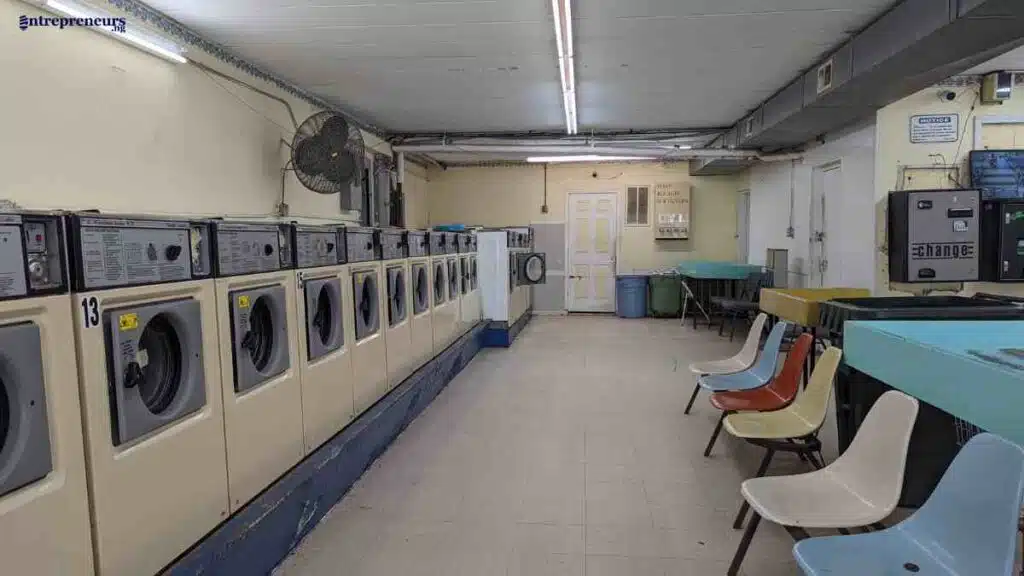
The laundromat business has quietly remained one of the most resilient service ventures in the small-business world. No matter how technology evolves or economic cycles shift, people will always need clean clothes.
According to IBISWorld, the laundromat industry in the United States alone generates about $7.1 billion in annual revenue, underscoring the sector’s scale and steady demand.
Despite strong demand, many new owners overlook key factors such as utility requirements, machine efficiency, and the true cost of starting a laundromat. This guide explains how to validate demand, estimate startup costs, choose the right equipment, and build a profitable operation.
Key Takeaways
- Choose the right laundromat business model and location, as demand and accessibility determine long-term profitability.
- Understand laundromat startup costs and financing options before investing in equipment and renovations.
- Invest in efficient machines, modern payment systems, and strong operations to maximise revenue and reduce downtime.
- Grow the business by adding services like wash-and-fold, delivery, and commercial laundry contracts.

What Is a Laundromat?
A laundromat is a self-service laundry facility where customers pay to use commercial washing machines and dryers to clean their clothes.
Unlike traditional laundry services, where staff handle washing, ironing, and folding, most laundromats allow customers to operate the machines themselves, typically paying through coins, cards, or mobile payment systems.
The modern laundromat business often goes beyond simple self-service. Many operators now combine a self-service laundromat with additional services such as wash-and-fold, pickup and delivery, or commercial laundry for businesses like hotels, gyms, and restaurants.
Types of Laundromat Business Models
Before launching a laundromat business, it is important to understand the different models available.
While the traditional self-service laundromat remains the most common format, many modern operators combine multiple services to increase revenue and attract a broader customer base.
Choosing the right model will influence your laundromat startup costs, staffing needs, equipment requirements, and overall profitability.
Below are the most common laundromat business models entrepreneurs consider when learning how to start a laundromat business.
| Laundromat Business Model | Description | Best For |
|---|---|---|
| Self-Service Laundromat | Customers operate the washers and dryers themselves and pay per use using coins, cards, or mobile payment systems. | Entrepreneurs seeking a lower-labour, straightforward laundromat setup. |
| Wash-and-Fold Service | Customers drop off laundry and staff wash, dry, and fold the clothes for a service fee. | Locations with busy professionals or families who prefer convenience. |
| Pickup and Delivery Laundry Service | Laundry is collected from customers’ homes or offices, cleaned at the facility, and delivered back. | Urban areas where convenience services are in high demand. |
| Commercial Laundry Service | The laundromat handles large volumes of laundry for businesses such as hotels, salons, restaurants, gyms, and clinics. | Entrepreneurs looking for stable business-to-business contracts. |
| Hybrid Laundromat Model | Combines self-service machines with wash-and-fold, delivery services, and commercial clients. | Operators who want multiple revenue streams and higher earning potential. |
How to Start a Laundromat Business Step-by-Step
Starting a laundromat business requires careful planning, from researching demand to choosing the right location and equipment.
The process is straightforward when broken into clear steps that guide you from idea to launch.
| Step | Action |
|---|---|
| 1 | Conduct market research to understand demand and competition in your area. |
| 2 | Choose the right laundromat business model (self-service, wash-and-fold, or hybrid). |
| 3 | Write a detailed laundromat business plan with costs and revenue projections. |
| 4 | Estimate laundromat startup costs, including equipment, rent, and utilities. |
| 5 | Secure funding through savings, loans, partners, or equipment financing. |
| 6 | Choose the best location for a laundromat based on population density and accessibility. |
| 7 | Register your business and obtain the necessary licences and permits. |
| 8 | Purchase commercial washers, dryers, and other essential equipment. |
| 9 | Design an efficient laundromat layout that improves customer flow and usability. |
| 10 | Install payment systems such as coin, card, or mobile payments. |
| 11 | Hire staff if you plan to offer attended services like wash-and-fold. |
| 12 | Launch and market your laundromat using local marketing and online visibility. |
Step 1: Conduct Market Research
The first step in learning how to start a laundromat business is understanding whether there is real demand in your target area.
Many new owners make the mistake of choosing a location based purely on visibility or low rent without analysing local demographics or competition.
Effective market research helps you determine whether the area can support a new self-service laundromat, what services customers expect, and how much they are willing to pay.
Below are key elements to analyse during your research.
| Market Research Factor | What to Evaluate |
|---|---|
| Local Demographics | Population density, renter population, student housing, and household income levels. |
| Competition | Number of existing laundromats, pricing, machine quality, and customer reviews. |
| Customer Demand | Frequency of laundry use and demand for services like wash-and-fold or delivery. |
| Neighbourhood Accessibility | Parking availability, public transport access, and overall visibility. |
| Market Gaps | Opportunities to offer better machines, longer operating hours, or additional services. |
Step 2: Choose Your Laundromat Business Model
Once you confirm there is sufficient demand, the next step in how to start a laundromat business is choosing the right operating model.
Your business model determines how the laundromat will generate revenue, the number of staff required, and how much you will spend on equipment and operations.
Many entrepreneurs begin with a self-service laundromat because it requires fewer employees and is easier to manage. However, adding services such as wash-and-fold or laundry pickup and delivery can significantly increase revenue and attract customers who value convenience.
The right choice often depends on your target market, available capital, and long-term growth strategy.
Step 3: Write a Laundromat Business Plan
A solid business plan is essential when starting a laundromat business.
It helps you clarify your strategy, estimate laundromat startup costs, and determine how profitable the business could be before you invest significant money.
A well-prepared plan is also crucial if you intend to seek funding from banks, investors, or business partners.
Your laundromat business plan should outline your target market, pricing strategy, location analysis, and expected operating expenses.
It should also include financial projections that show how the business will generate revenue over time.
| Business Plan Section | What It Should Include |
|---|---|
| Executive Summary | Overview of your laundromat concept, location, and goals. |
| Market Analysis | Research on local demand, target customers, and competitors. |
| Business Model | The services you will offer, such as self-service, wash-and-fold, or delivery. |
| Startup Costs | Estimated expenses for equipment, rent, utilities, and renovations. |
| Revenue Strategy | Pricing structure and expected income from washers, dryers, and services. |
| Financial Projections | Revenue forecasts, operating expenses, and profit estimates. |
If you need help turning your idea into a clear, investor-ready plan, use our Business Plan Template to map your costs, pricing, and growth strategy with confidence.
Step 4: Estimate Laundromat Startup Costs
Understanding laundromat startup costs is one of the most important steps when planning a laundromat business.
The total investment can vary widely depending on factors such as location, store size, number of machines, and whether you are building a new facility or renovating an existing space.
Accurately estimating these costs helps you avoid financial surprises and ensures you secure enough funding before launching.
Startup costs typically include expenses for leasing or purchasing a location, renovating the space, installing plumbing and electrical systems, and buying commercial washers and dryers.
Additional costs such as payment systems, insurance, licences, and initial working capital should also be considered when calculating how much it will cost to start a laundromat.

Step 5: Secure Funding
After estimating laundromat startup costs, the next step in starting a laundromat business is securing the capital required to launch and operate the facility.
Because laundromats require commercial machines, plumbing installations, and utility upgrades, the initial investment can be significant.
Having a clear funding strategy ensures you can cover equipment purchases, renovations, and operating expenses until the business becomes profitable.
| Funding Option | Description |
|---|---|
| Personal Savings | Using personal funds to finance startup costs and maintain full ownership. |
| Bank or Small Business Loans | Traditional loans that provide capital for equipment, renovations, and operations. |
| Equipment Financing | Loans specifically designed to purchase commercial washers and dryers. |
| Business Partnerships | Partnering with investors who contribute capital in exchange for a share of the business. |
| Buying an Existing Laundromat | Purchasing an established laundromat to reduce setup costs and start with an existing customer base. |
Step 6: Choose the Right Location
Choosing the best location for a laundromat is one of the most critical decisions when starting a laundromat business.
Even the best equipment and services cannot compensate for a poor location with limited demand.
Successful laundromats are typically located in areas with high population density, a large number of renters, and limited access to in-home laundry facilities.
A thorough location analysis helps ensure your business attracts steady customers and generates reliable revenue.
| Location Factor | What to Look For |
|---|---|
| Population Density | Areas with a large population and frequent foot traffic. |
| Renter Demographics | Neighbourhoods with many apartments or student housing. |
| Visibility | Locations on busy streets where the laundromat is easy to notice. |
| Accessibility | Convenient parking and access to public transport. |
| Competition | Limited nearby laundromats or opportunities to offer better services. |
Step 7: Register Your Business and Obtain Licences
Before opening your doors to customers, you must legally register your laundromat business and obtain the necessary licences and permits required in your location.
These requirements vary by country, state, or city, but ensuring compliance early helps you avoid fines, delays, or operational disruptions.
Registering your business also allows you to open a business bank account, apply for funding, and operate professionally.
In addition to basic registration, laundromats often require permits related to water usage, waste disposal, and fire safety due to the equipment and utilities involved.
| Requirement | What It Involves |
|---|---|
| Business Registration | Register your laundromat as a legal business entity such as a sole proprietorship, partnership, or limited company. |
| Local Business Licence | A permit from your city or municipality allowing you to operate a laundromat. |
| Zoning Approval | Ensures your location is legally approved for a laundry service business. |
| Health and Safety Compliance | Meeting standards related to sanitation, ventilation, and workplace safety. |
| Insurance Coverage | Protection for property damage, equipment breakdown, and liability claims. |
Our business registration service at Entrepreneurs.ng helps you set up legally and correctly from day one.
Step 8: Purchase Laundromat Equipment
The equipment you choose will directly influence the efficiency, capacity, and profitability of your laundromat business.
Commercial washers and dryers are designed to handle heavy daily usage and large loads, making them far more durable and efficient than residential machines.
Investing in reliable equipment from reputable manufacturers helps reduce breakdowns, maintenance costs, and customer dissatisfaction.
| Equipment | Purpose |
|---|---|
| Commercial Washing Machines | Heavy-duty machines designed for frequent use and larger laundry loads. |
| Commercial Dryers | High-capacity dryers that dry clothes quickly and efficiently. |
| Payment Systems | Coin, card, or mobile payment machines that allow customers to pay for laundry cycles. |
| Folding Tables | Surfaces where customers can fold clothes after washing and drying. |
| Laundry Carts | Rolling carts that help customers move laundry between machines. |
| Security Systems | Cameras and monitoring systems that improve safety and prevent theft. |
Step 9: Design Your Laundromat Layout
A well-planned layout can significantly improve the efficiency and customer experience of your laundromat business.
The goal is to create a space that allows customers to move easily between washing, drying, and folding areas while ensuring machines are arranged for maximum capacity and convenience.
When designing the layout of a self-service laundromat, consider factors such as ventilation, plumbing access, safety, and customer comfort.
Proper spacing between machines, clear walkways, and designated folding areas help prevent congestion and make the facility easier to use.
Step 10: Install Payment Systems
Modern payment systems play a key role in the success of a laundromat business.
While traditional coin-operated machines are still common, many laundromats now offer card and mobile payment options to improve convenience and attract more customers.
Providing multiple payment options can increase machine usage and make your self-service laundromat more appealing to customers who rarely carry cash.
When choosing a payment system, consider ease of use, reliability, and integration with your machines.
Some systems also provide management tools that allow owners to monitor machine usage, track revenue, and manage operations remotely.
Step 11: Hire Staff (If Needed)
While many self-service laundromats operate with minimal staff, hiring employees can improve customer service and expand your range of services.
Staff members are especially important if you plan to offer wash-and-fold services, pickup and delivery, or operate during extended hours.
Having reliable attendants also helps maintain cleanliness, assist customers, and monitor machines to prevent downtime.
When staffing a laundromat business, the number of employees required will depend on the size of the facility and the services you provide.
Step 12: Launch and Market Your Laundromat
Once everything is in place, the final step in starting a laundromat business is launching your facility and attracting customers. Even the best-equipped laundromat will struggle without effective marketing.
A strong launch strategy helps create awareness in your community and establishes your laundromat as the go-to place for convenient and reliable laundry services.
Focus on local marketing channels and online visibility to reach nearby residents.
| Marketing Strategy | Purpose |
|---|---|
| Google Business Profile | Helps customers find your laundromat through local search results and maps. |
| Grand Opening Promotions | Offer discounts or free wash cycles to attract initial customers. |
| Social Media Marketing | Promote services, offers, and updates to local audiences. |
| Community Partnerships | Collaborate with nearby apartments, gyms, or student housing. |
| Customer Loyalty Programs | Encourage repeat visits through discounts or rewards. |
If you want extra structure and support at this stage, our Entrepreneurs Success Blueprint Programme (ESBP) helps you move from launch to traction with clear systems, compliance guidance, and practical execution frameworks.

How Much Does It Cost to Start a Laundromat?
Understanding how much it costs to start a laundromat is one of the most important considerations for any entrepreneur entering the industry.
Unlike many small businesses that can launch with minimal capital, a laundromat business requires a substantial upfront investment due to specialised equipment, plumbing infrastructure, ventilation systems, and commercial property requirements.
Startup costs vary widely depending on whether you are building a laundromat from scratch, converting an existing retail space, or purchasing an already operating laundromat.
Understanding these cost categories helps entrepreneurs budget realistically and secure adequate funding before launching.
Complete Laundromat Startup Cost Breakdown
This table reflects realistic early-stage costs for launching a modern self-service laundromat with commercial-grade equipment and compliant utilities.
| Startup Cost Item | Estimated Cost (USD) |
|---|---|
| Market research & feasibility analysis | $1,000 – $5,000 |
| Business registration & legal setup | $500 – $2,500 |
| Licences, permits & regulatory approvals | $1,000 – $5,000 |
| Lease deposit or property acquisition | $10,000 – $50,000 |
| Renovation, plumbing & electrical build-out | $50,000 – $200,000 |
| Commercial washers (10–30 machines) | $50,000 – $250,000 |
| Commercial dryers (10–30 machines) | $30,000 – $150,000 |
| Water heaters, boilers & utility systems | $10,000 – $40,000 |
| Payment systems (coin, card or mobile) | $5,000 – $20,000 |
| Interior setup (folding tables, carts, seating) | $3,000 – $15,000 |
| Security systems & surveillance | $1,500 – $6,000 |
| Website & local marketing launch | $2,000 – $10,000 |
| Initial supplies & operating cash reserve | $10,000 – $40,000 |
| Contingency fund (10–15%) | $20,000 – $60,000 |
Estimated Total Startup Cost: $194,000 – $853,500
For most entrepreneurs launching a mid-sized self-service laundromat, a practical planning range is $300,000 – $500,000, depending on equipment scale and renovation requirements.
Ongoing Monthly Operating Costs
After launch, ongoing expenses determine whether your laundromat business remains profitable.
Utilities, rent, and machine maintenance typically represent the largest recurring costs because washers and dryers consume significant amounts of water, electricity, and gas.
Below is a realistic estimate of the monthly operating costs for a small to medium laundromat.
| Ongoing Cost Item | Monthly Cost (USD) |
|---|---|
| Rent or property lease | $3,000 – $12,000 |
| Utilities (water, gas, electricity) | $2,000 – $8,000 |
| Equipment maintenance & repairs | $500 – $2,000 |
| Cleaning supplies & consumables | $200 – $800 |
| Staff wages (if attended) | $2,000 – $8,000 |
| Insurance | $200 – $700 |
| Marketing & promotions | $500 – $2,000 |
| Software, payment systems & admin | $200 – $800 |
Estimated Monthly Operating Cost: $8,600 – $34,300
Key Factors That Affect Laundromat Startup Costs
Several variables can significantly influence the total investment required to launch a laundromat.
1. Size of the Laundromat
A small neighbourhood laundromat with 10–15 machines costs far less than a large facility with 40+ machines.
2. Location and Real Estate Prices
Rent and renovation costs vary dramatically between cities, suburbs, and rural areas.
3. Utility Infrastructure
Installing water lines, drainage systems, gas connections, and ventilation can dramatically increase construction expenses.
4. Equipment Quality and Efficiency
Energy-efficient commercial washers cost more upfront but can reduce water and electricity costs over time.
5. New vs Existing Laundromat
Buying an existing laundromat can sometimes reduce startup costs if the equipment and utilities are already installed.
This cost breakdown provides entrepreneurs with a realistic financial picture of what it takes to start a laundromat business, helping them plan funding, avoid undercapitalisation, and build a sustainable operation from the beginning.
How Much Money Can a Laundromat Make?
The earning potential of a laundromat business depends on several factors, including location, number of machines, pricing, operating hours, and additional services offered.
While laundromats are often considered a stable cash-flow business, profitability largely depends on how efficiently the facility is managed and how often machines are used each day.
However, revenue alone does not determine profitability. Operating costs such as rent, utilities, maintenance, and staffing must also be considered when evaluating how much a laundromat can realistically earn.
Average Laundromat Revenue Breakdown
The revenue generated by a laundromat typically comes from washers, dryers, and additional services such as wash-and-fold or vending sales.
| Revenue Source | Average Monthly Revenue |
|---|---|
| Washing machines | $8,000 – $18,000 |
| Dryers | $4,000 – $10,000 |
| Wash-and-fold services | $2,000 – $8,000 |
| Vending machines (detergent/snacks) | $300 – $1,200 |
| Pickup and delivery services | $1,000 – $5,000 |
Estimated Total Monthly Revenue: $15,300 – $42,200
Revenue Per Machine
Another common way to estimate laundromat income is by calculating the revenue generated per machine.
Commercial washers typically generate $150 to $300 per machine per month, depending on usage rates and pricing.
A laundromat with 20 washers could therefore generate between $3,000 and $6,000 monthly from washers alone, with dryers contributing additional revenue.
| Machine Type | Average Monthly Revenue Per Machine |
|---|---|
| Washing machines | $150 – $300 |
| Dryers | $100 – $250 |
Understanding “Turns Per Day”
In the laundromat industry, profitability is often measured using a metric called “turns per day” (TPD). This refers to how many times each machine is used in a single day.
| Turns Per Day | Revenue Impact |
|---|---|
| 2 turns per day | Low demand location |
| 3–4 turns per day | Average laundromat performance |
| 5–7 turns per day | High-performing laundromat |
A laundromat with 20 washers averaging 4 turns per day can generate significant revenue depending on the price charged per wash cycle.
Estimated Annual Revenue
Based on typical industry averages:
| Laundromat Size | Estimated Annual Revenue |
|---|---|
| Small laundromat | $180,000 – $250,000 |
| Medium laundromat | $250,000 – $500,000 |
| Large laundromat | $500,000 – $1,000,000+ |
Average Laundromat Profit Margins
After accounting for expenses such as rent, utilities, maintenance, and staff wages, laundromats often operate with profit margins between 20% and 35%.
| Revenue | Estimated Profit (20–35%) |
|---|---|
| $200,000 annual revenue | $40,000 – $70,000 profit |
| $400,000 annual revenue | $80,000 – $140,000 profit |
| $700,000 annual revenue | $140,000 – $245,000 profit |
Factors That Affect Laundromat Profitability
Several variables determine how much a laundromat can make:
1. Location
The best location for a laundromat, particularly near apartments or student housing, typically generates higher machine usage.
2. Number of Machines
More machines increase capacity and potential revenue.
3. Pricing Strategy
Setting competitive but profitable wash and dry cycle prices is essential.
4. Utility Efficiency
Energy-efficient machines can significantly reduce operating costs.
5. Additional Services
Services like wash-and-fold, delivery, and commercial laundry contracts can dramatically increase revenue.
In summary, a successful laundromat business can generate strong and consistent cash flow when located in the right area and managed efficiently.
While earnings vary widely, a well-positioned laundromat with steady customer demand can become a profitable long-term investment.
How to Choose the Best Location for a Laundromat
Choosing the best location for a laundromat is one of the most important decisions when starting a laundromat business.
Even with modern machines and competitive pricing, a poorly chosen location can limit customer traffic and reduce profitability. Successful laundromats are typically located in areas with strong demand, high visibility, and easy access for customers.
By carefully analysing these factors, you can choose a location that supports steady demand for a self-service laundromat.
Key Demographic Indicators to Analyse
Understanding the local population helps determine whether the area can support a laundromat. Certain demographic characteristics strongly influence demand for laundry services.
| Demographic Factor | Importance |
|---|---|
| High Renter Population | Renters are less likely to have personal washing machines. |
| Population Density | Densely populated areas create higher customer traffic. |
| Student Housing | Students often rely on laundromats due to limited in-home facilities. |
| Apartment Complexes | Multi-family housing increases the need for shared laundry services. |
| Moderate Income Levels | Middle-income neighbourhoods often rely more on laundromats. |
Evaluate Competition in the Area
Competition analysis helps you determine whether the market is already saturated or if there is room for another laundromat.
Visiting nearby laundromats can reveal valuable insights about pricing, machine availability, and customer experience.
| Competition Factor | What to Observe |
|---|---|
| Number of Nearby Laundromats | Too many nearby laundromats may reduce your customer base. |
| Machine Availability | Frequent machine shortages indicate strong demand. |
| Pricing Structure | Understanding competitors’ prices helps you position your services. |
| Cleanliness and Maintenance | Poorly maintained laundromats present an opportunity to offer better service. |
| Customer Traffic | Observe peak hours to gauge how busy competitors are. |
Accessibility and Visibility
A laundromat should be easy for customers to find and access. Convenience is a major factor that determines whether people choose one laundromat over another.
| Location Feature | Importance |
|---|---|
| Street Visibility | Locations on busy streets attract more walk-in customers. |
| Parking Availability | Customers carrying heavy laundry need convenient parking. |
| Public Transport Access | Locations near bus or train stops increase accessibility. |
| Safety of the Area | Well-lit and secure areas encourage customers to visit regularly. |
| Nearby Businesses | Grocery stores, cafés, and retail shops increase foot traffic. |
Infrastructure and Utility Requirements
A laundromat requires specialised infrastructure, so not every retail space is suitable. Before signing a lease, ensure the property can support the utilities needed for washers and dryers.
| Infrastructure Requirement | Why It Matters |
|---|---|
| Water Supply | Washers require a high-capacity water connection. |
| Drainage Systems | Proper drainage is essential for handling wastewater. |
| Gas and Electrical Capacity | Dryers and heating systems require strong utility connections. |
| Ventilation Systems | Proper airflow prevents heat and moisture buildup. |
| Floor Strength | Commercial machines are heavy and require reinforced flooring. |
Ideal Locations for a Laundromat
Some environments naturally generate stronger demand for laundry services.
| Ideal Location Type | Reason |
|---|---|
| Apartment-heavy neighbourhoods | Residents often lack private laundry machines. |
| College or university areas | Students frequently use laundromats. |
| Urban residential districts | High population density increases customer volume. |
| Tourist areas | Travellers may need laundry services during extended stays. |
| Mixed-use neighbourhoods | Retail areas with residential housing nearby increase foot traffic. |
Choosing the best location for a laundromat can significantly influence how successful the business becomes.
By analysing demographics, evaluating competition, ensuring accessibility, and verifying infrastructure requirements, entrepreneurs can identify locations that generate steady customer demand and support long-term profitability.

Licences, Permits, and Regulations for Laundromats
Before opening a laundromat business, it is essential to obtain the necessary licences, permits, and regulatory approvals required by your local authorities.
Because laundromats involve water usage, electrical systems, gas dryers, and public access facilities, they are subject to several business, safety, and environmental regulations. Ensuring compliance from the beginning helps prevent fines, operational delays, or legal issues.
While specific requirements vary by country, state, or city, most laundromats must secure business registration, zoning approval, safety permits, and proper insurance coverage before operating.
| Licence or Permit | Purpose |
|---|---|
| Business Registration | Legally establishes your laundromat as a registered business entity. |
| Local Business Licence | Authorises you to operate a laundromat within a specific city or municipality. |
| Zoning Permit | Confirms that your location is approved for commercial laundry operations. |
| Building and Construction Permits | Required for renovations, plumbing installations, and electrical upgrades. |
| Health and Safety Compliance | Ensures the facility meets sanitation, ventilation, and workplace safety standards. |
| Environmental or Wastewater Permits | Regulates water discharge and wastewater management from laundry machines. |
| Fire Safety Certification | Verifies that dryers, ventilation systems, and fire prevention measures meet safety standards. |
| Business Insurance | Provides protection against property damage, liability claims, and equipment breakdown. |
Strategies to Increase Revenue in a Laundromat Business
Running a successful laundromat business goes beyond installing washers and dryers.
The most profitable laundromats actively look for ways to increase customer spending, improve machine usage, and introduce additional services that generate new income streams.
By diversifying your offerings and improving customer convenience, you can significantly increase the profitability of your self-service laundromat.
Below are some of the most effective strategies laundromat owners use to grow revenue.
| Revenue Strategy | How It Increases Income |
|---|---|
| Introduce Wash-and-Fold Services | Charge a premium for washing, drying, and folding customers’ laundry, attracting busy professionals and families. |
| Offer Pickup and Delivery Laundry | Expands your service area and provides convenience for customers who prefer home collection. |
| Partner With Local Businesses | Secure contracts with hotels, gyms, salons, and restaurants for consistent commercial laundry work. |
| Install Vending Machines | Sell detergents, fabric softeners, snacks, and drinks for additional passive income. |
| Create Loyalty Programs | Reward repeat customers with discounts or bonus washes to encourage frequent visits. |
| Add Larger Capacity Machines | High-capacity washers allow customers to wash bigger loads at higher prices. |
| Extend Operating Hours | Longer hours or 24/7 operations increase machine usage throughout the day. |
| Offer Premium Services | Services such as ironing, garment care, or express laundry can generate higher margins. |
Implementing a combination of these strategies allows laundromat owners to maximise machine usage, attract new customers, and create multiple revenue streams beyond basic wash-and-dry services.
Future Trends in the Laundromat Industry
The laundromat business is evolving as technology, sustainability concerns, and customer expectations reshape how laundry services are delivered.
Modern laundromats are no longer just rooms filled with coin-operated machines.
Today’s successful operators are embracing innovation, automation, and convenience to stay competitive and attract a wider customer base.
Smart Laundromats and Connected Machines
Many modern laundromats are adopting smart technology that allows machines to connect to digital monitoring systems.
These systems enable owners to track machine usage, monitor revenue, and receive maintenance alerts remotely.
Smart laundromats also allow customers to check machine availability or start cycles through mobile apps, improving convenience and reducing waiting time.
Cashless and Mobile Payment Systems
Traditional coin-operated machines are gradually being replaced by cashless payment options.
Many laundromats now offer card readers, digital wallets, and mobile payment apps that allow customers to pay quickly without carrying coins.
Cashless systems also help owners track transactions more accurately and reduce the need for physical cash handling.
Eco-Friendly and Energy-Efficient Equipment
Sustainability is becoming an important factor in the laundry industry. New commercial washers and dryers are designed to use less water and energy while delivering better cleaning performance.
Many laundromat owners are investing in energy-efficient machines and eco-friendly detergents to reduce operating costs and appeal to environmentally conscious customers.
Pickup and Delivery Laundry Services
Convenience-driven services are rapidly expanding in the laundry industry. Many laundromats now offer pickup and delivery options where customers schedule laundry collection from their homes or offices.
This trend allows laundromats to reach customers beyond their immediate neighbourhood and create additional revenue streams.
Premium Customer Experience
Modern laundromats are increasingly focusing on customer comfort and experience. New facilities often include amenities such as free Wi-Fi, comfortable seating areas, charging stations, and improved interior design.
These upgrades transform laundromats into cleaner, more welcoming spaces that encourage repeat visits and longer customer retention.
Common Mistakes to Avoid When Starting a Laundromat Business
Starting a laundromat business can be profitable, but many new owners make avoidable mistakes that increase costs or reduce revenue.
Poor planning, weak location analysis, and underestimating operating expenses are some of the most common reasons laundromats struggle in their early years.
Understanding these pitfalls can help entrepreneurs make better decisions and build a more sustainable business from the beginning.
| Common Mistake | Why It is a Problem | How to Avoid It |
|---|---|---|
| Choosing the Wrong Location | Low customer traffic and limited demand can severely reduce revenue. | Conduct proper market research and prioritise areas with high renter populations and strong foot traffic. |
| Underestimating Startup Costs | Many owners overlook renovation, plumbing, and equipment installation costs. | Prepare a detailed financial plan and include a contingency budget of at least 10–15%. |
| Buying Low-Quality Equipment | Cheap machines break down frequently, leading to customer dissatisfaction and repair costs. | Invest in reliable commercial washers and dryers from reputable manufacturers. |
| Ignoring Maintenance | Poorly maintained machines can cause downtime and loss of revenue. | Create a regular maintenance schedule to keep equipment running efficiently. |
| Poor Customer Experience | Dirty or poorly managed laundromats discourage repeat customers. | Maintain high cleanliness standards and ensure machines are always functional. |
| Lack of Marketing | Even a well-located laundromat may struggle without visibility. | Use local SEO, online listings, and community promotions to attract customers. |
| Relying on Only Basic Wash-and-Dry Services | Limited services restrict revenue potential. | Offer additional services such as wash-and-fold, pickup and delivery, or vending machines. |
Avoiding these common mistakes allows entrepreneurs to build a laundromat business that is efficient, customer-friendly, and capable of generating consistent long-term income.
Conclusion
Starting a laundromat business can be a rewarding opportunity for entrepreneurs seeking a stable, service-based venture with consistent demand.
By understanding laundromat startup costs, choosing the best location for a laundromat, investing in reliable equipment, and implementing smart operational strategies, you can build a profitable self-service laundromat that serves your community and generates steady long-term income.
We want to see you succeed, and that’s why we provide valuable business resources to help you every step of the way.
- Join over 23,000 entrepreneurs by signing up for our newsletter and receiving valuable business insights.
- Register your business today with Entrepreneurs.ng’s Business Registration Services.
- Tell Your Brand Story on Entrepreneurs.ng, let’s showcase your brand to our global audience.
- Need help with your marketing strategy? Get a Comprehensive Marketing and Sales Plan here.
- Sign up for our Entrepreneurs Success Blueprint Programme to learn how to start and scale your business in just 30 days.
- Book our one-on-one consulting and speak to an expert about structuring and growing your business.
- Visit our shop for business plan templates and other valuable resources to guide you.
- Get our Employee-Employer Super Bundle NDA templates to legally protect your business and workforce.
- Advertise your business to over a million entrepreneurs through our different advertising packages.

Frequently Asked Questions (FAQS)
How much does it cost to start a laundromat business?
Starting a laundromat business typically costs between $200,000 and $500,000 depending on location, renovation requirements, and the number of machines installed. Larger facilities with premium equipment can exceed $1 million in startup costs.
Is owning a laundromat profitable?
Yes, a well-located laundromat can be profitable because laundry is an essential service. Many laundromats generate steady monthly revenue, with profit margins often ranging between 20% and 35% when operating efficiently.
How much money can a laundromat make per month?
A typical laundromat can generate $15,000 to $30,000 in monthly revenue, although larger facilities or those offering additional services like wash-and-fold may earn significantly more.
What is the best location for a laundromat?
The best location for a laundromat is usually in densely populated areas with a high number of renters, apartment complexes, or student housing where residents may not have access to personal laundry machines.
How many machines does a laundromat need?
Small laundromats may operate with 10 to 15 washers and dryers, while medium-sized laundromats often install 20 to 40 machines to accommodate higher customer demand.
Do laundromats require employees?
Many self-service laundromats operate with minimal staff, but attendants may be required for cleaning, maintenance, or providing services such as wash-and-fold or laundry pickup and delivery.
What equipment is needed to start a laundromat?
Essential equipment includes commercial washing machines, dryers, water heaters, payment systems, folding tables, laundry carts, and security systems.
How long does it take to start a laundromat business?
Launching a laundromat can take six months to one year, depending on factors such as securing a location, completing renovations, installing equipment, and obtaining licences.
Can I buy an existing laundromat instead of starting one?
Yes, purchasing an existing laundromat can reduce setup time and construction costs since the plumbing, machines, and customer base may already be established.
What licences are required to open a laundromat?
Requirements vary by location but typically include business registration, local operating licences, zoning approval, building permits, and insurance coverage.
How do laundromats make money?
Laundromats generate income through washer and dryer usage fees, wash-and-fold services, pickup and delivery services, vending machines, and commercial laundry contracts.
What are the biggest expenses for laundromats?
The largest expenses usually include rent, utilities (water, gas, electricity), equipment maintenance, and staff wages if the laundromat is staffed.
Are laundromats a passive income business?
Some laundromats can operate with minimal daily involvement, especially self-service locations with modern payment systems. However, owners still need to manage maintenance, finances, and customer service.
What services can increase laundromat revenue?
Additional services such as wash-and-fold, pickup and delivery laundry, commercial laundry contracts, and vending machines can significantly increase revenue.
What are the biggest challenges in running a laundromat?
Common challenges include managing utility costs, maintaining equipment, ensuring consistent customer traffic, and competing with nearby laundromats. Proper planning and strong operations can help overcome these challenges.