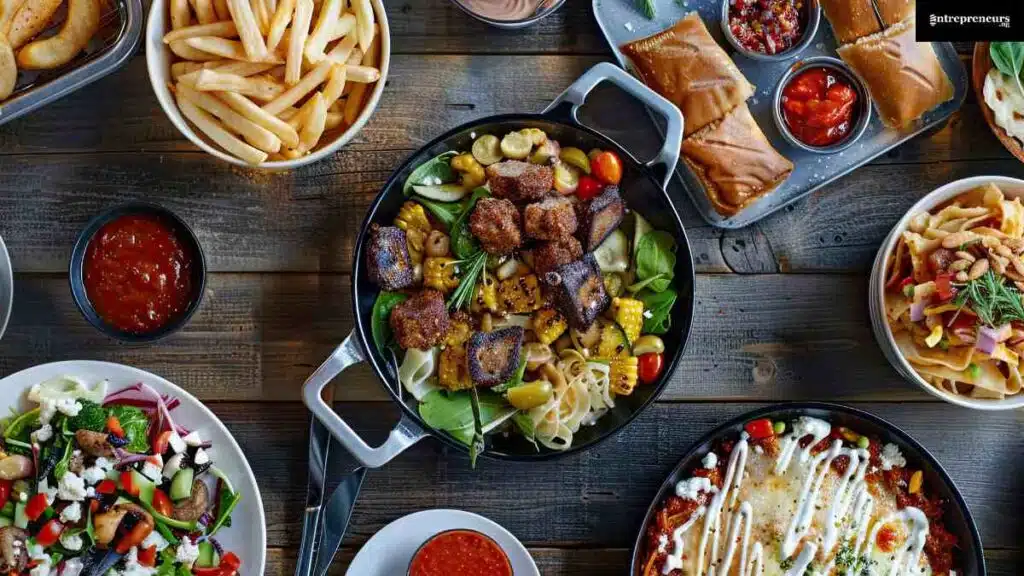
People no longer discover a food business by walking past a storefront. They find it on TikTok, through Instagram reels, food delivery apps, and recommendations.
That shift has created massive opportunities for entrepreneurs who know how to start a food business and build a brand that keeps customers coming back.
And, with the global food service market projected to surpass $4 trillion by 2033, there has never been a better time to launch.
So, if you are exploring food business ideas or learning how to start a small food business, this guide will show you how to launch and grow profitably.
Key Takeaways
- Choose a food business model that matches your budget, skills, and market demand.
- Build a strong food business plan before investing heavily in equipment or inventory.
- Focus on legal compliance, food safety, and customer trust from the beginning.
- Use digital marketing and social media to grow your food business faster and cheaper.

What Is a Food Business?
A food business is any venture that prepares, sells, packages, delivers, or serves food and drinks to customers for profit.
It can range from a home-based baking business or food truck to a restaurant, catering company, cloud kitchen, or packaged food brand.
Today, the food industry offers more opportunities than ever because consumers increasingly value convenience, quality, healthy options, and fast delivery.
Types of Food Business You Can Start
One of the biggest advantages of the food industry is its flexibility. You do not need to own a large restaurant to build a profitable food business.
In fact, many successful entrepreneurs start small with simple food business ideas and expand gradually as demand grows.
The right option depends on your budget, skills, target market, and long-term goals.
| Type of Food Business | What It Involves | Best For |
|---|---|---|
| Restaurant Business | Operating a dine-in food establishment | Experienced entrepreneurs with larger capital |
| Food Truck Business | Selling food from a mobile kitchen or truck | Entrepreneurs who want mobility and lower overhead |
| Catering Business | Providing food services for events and corporate functions | People with strong cooking and event management skills |
| Home-Based Food Business | Preparing and selling food from home | Beginners starting with limited capital |
| Bakery Business | Selling bread, cakes, pastries, or desserts | Bakers and dessert-focused entrepreneurs |
| Meal Prep Business | Preparing healthy or customised ready-to-eat meals | Health-conscious markets and busy professionals |
| Cloud Kitchen/Ghost Kitchen | Delivery-only kitchen without dine-in space | Entrepreneurs focused on online food delivery |
| Packaged Food Business | Producing bottled, canned, or packaged food products | Entrepreneurs interested in retail distribution |
| Online Food Business | Selling food products through websites or social media | Digital-first entrepreneurs |
| Coffee or Beverage Business | Selling coffee, smoothies, juices, or speciality drinks | Entrepreneurs targeting lifestyle consumers |
See Also: Meal Prep Business Guide – Costs, Licences, and Profit Tips
Why Is Starting a Food Business a Smart Opportunity Today?
The food industry continues to attract entrepreneurs because people will always need convenient, affordable, and enjoyable meals.
However, the modern food business goes beyond traditional restaurants.
Technology, delivery apps, social media, and changing consumer habits have created new opportunities for entrepreneurs to start small and scale quickly with lower overhead costs.
Consumer Demand for Convenience Is Growing
Busy lifestyles have increased demand for ready-to-eat meals, food delivery, meal prep services, and grab-and-go options.
Consumers now prioritise convenience as much as quality, creating opportunities for food businesses that can deliver speed, consistency, and accessibility.
You Can Start Small With Lower Capital
Unlike many industries that require heavy investment upfront, some food businesses can begin from home with minimal equipment and a small budget.
Home bakeries, catering services, online snack brands, and meal prep businesses are popular examples of low-cost entry points.
Social Media Makes Marketing Easier
Platforms like Instagram, TikTok, and YouTube have changed how food brands attract customers. A single viral video can generate massive visibility and sales.
As a result, entrepreneurs can now build strong food brands without spending heavily on traditional advertising.
Food Delivery Platforms Have Expanded Opportunities
Apps like Uber Eats, DoorDash, and Deliveroo allow food entrepreneurs to reach customers without opening physical restaurants.
This has led to the rapid growth of cloud kitchens and delivery-only food businesses across global markets.
Consumers Are Exploring New Food Trends
Demand for healthy meals, vegan options, organic products, speciality drinks, and sustainable packaging continues to grow.
Entrepreneurs who identify emerging trends early can position themselves ahead of competitors and build loyal customer bases.
The Food Industry Offers Multiple Income Streams
A food business can generate revenue in several ways beyond direct sales.
Entrepreneurs can expand into catering, packaged products, subscriptions, cooking classes, franchising, or online content creation, increasing profitability and long-term growth opportunities

How to Start a Food Business Step-by-Step
Starting a food business can be exciting, profitable, and creatively rewarding, but success requires more than passion for cooking.
You need a clear strategy, market demand, proper licensing, strong branding, and a business model that can grow sustainably.
Whether you want to launch a home-based food business, a cloud kitchen, a catering service, or a restaurant, the following steps will guide you through how to start a food business successfully.
Step 1: Choose Your Food Business Model
Your business model shapes everything from startup costs and equipment to marketing and daily operations.
Before spending money, decide what type of food business fits your skills, budget, lifestyle, and target market.
Popular Food Business Models
| Food Business Model | Description | Startup Cost | Difficulty Level |
|---|---|---|---|
| Home-Based Food Business | Selling food from home kitchens | Low | Easy |
| Catering Business | Food services for events and offices | Medium | Moderate |
| Restaurant | Full dine-in food service | High | High |
| Food Truck | Mobile food operation | Medium | Moderate |
| Bakery Business | Cakes, pastries, bread, desserts | Medium | Moderate |
| Meal Prep Business | Ready-made healthy meals | Low to Medium | Easy |
| Cloud Kitchen | Delivery-only food business | Medium | Moderate |
| Packaged Food Brand | Bottled or packaged food products | Medium to High | Moderate |
Choose Based on Your Strengths
| If You Enjoy | Suitable Food Business |
|---|---|
| Baking and desserts | Bakery business |
| Cooking in bulk | Catering or meal prep |
| Fast service and mobility | Food truck |
| Online selling | Cloud kitchen or packaged food |
| Customer interaction | Restaurant or café |
| Flexible work from home | Home-based food business |
Key Things to Consider Before Choosing
- Startup budget
- Local food demand
- Available kitchen space
- Licensing requirements
- Delivery logistics
- Competition in your area
- Profit margins
- Time commitment
Many successful food entrepreneurs start with a small menu, limited inventory, and online orders before expanding.
This reduces risk, lowers waste, and helps you understand customer preferences before investing heavily in equipment or a physical location.
Step 2: Research the Market and Validate Demand
A good recipe is not enough to build a successful food business. You need proof that people are willing to buy what you plan to sell.
Market research helps you understand customer preferences, pricing expectations, food trends, and gaps competitors are not filling.
Identify Your Target Customers
Start by defining who your ideal customers are and what they value most.
| Customer Type | What They Usually Want |
|---|---|
| Busy professionals | Fast delivery and convenience |
| Families | Affordable meals and larger portions |
| Fitness-conscious consumers | Healthy and calorie-controlled meals |
| Students | Budget-friendly food options |
| Corporate clients | Reliable catering services |
| Premium consumers | Quality ingredients and presentation |
Study Competitors Carefully
Research local restaurants, food creators, delivery brands, and online food businesses. Pay attention to:
| What to Analyse | What to Look For |
|---|---|
| Pricing | Average meal costs |
| Menu | Best-selling items |
| Branding | Packaging and online presence |
| Customer reviews | Complaints and strengths |
| Delivery options | Speed and service quality |
Validate Demand Before Launching
Testing your idea early reduces financial risk and helps you improve your offer before scaling.
| Validation Method | Purpose |
|---|---|
| Small food tasting events | Gather direct feedback |
| Social media polls | Measure customer interest |
| Pre-orders | Test buying intent |
| Limited menu launch | Identify popular items |
| Farmers markets or pop-ups | Build visibility and collect reviews |
Follow Current Food Trends
Consumer preferences change quickly, especially online. Businesses that adapt early often grow faster.
Some growing trends include:
- healthy meal prep
- plant-based foods
- speciality coffee
- sustainable packaging
- high-protein snacks
- creator-led food brands
- delivery-only kitchens
The strongest food businesses usually solve a clear problem. Some offer affordable meals, while others focus on speed, convenience, healthier ingredients, or unique flavours.
The clearer your positioning, the easier it becomes to attract loyal customers.
And, if you need guidance on validating your idea and building a solid strategy, our Entrepreneurs Success Blueprint Program (ESBP) can help you research your market, refine your business model, and launch with confidence
Step 3: Create a Food Business Plan
A food business plan gives your idea structure and direction. It helps you calculate costs, define your target market, organise operations, and prepare for growth.
Even if you are starting small, a simple plan can help you avoid poor financial decisions and unnecessary expenses.
Key Sections of a Food Business Plan
| Section | What to Include |
|---|---|
| Business Overview | Business name, concept, and goals |
| Target Market | Ideal customers and buying behaviour |
| Menu or Product Line | Food items you plan to sell |
| Market Analysis | Competitors and industry trends |
| Marketing Strategy | Promotion and customer acquisition plans |
| Operations Plan | Kitchen setup, suppliers, staffing, and delivery |
| Financial Plan | Startup costs, pricing, and revenue projections |
Your first business plan does not need to be complicated. Focus on clarity, realistic numbers, and achievable goals.
As your food business grows, you can expand and refine the plan based on customer feedback and sales performance.
You can get started with our Comprehensive Business Plan Template, designed to help entrepreneurs build structured, investor-ready plans with ease.
Step 4: Register Your Food Business and Get Licences
Starting legally protects your business, builds customer trust, and helps you avoid fines or shutdowns.
The exact requirements depend on your country, state, or city, but most food businesses need registration, permits, and health approvals before operating.
Register Your Business
Choose a business structure that matches your goals and scale.
| Business Structure | Best For |
|---|---|
| Sole Proprietorship | Small home-based food businesses |
| Partnership | Businesses with co-founders |
| Limited Liability Company (LLC) | Growing businesses needing legal protection |
| Corporation | Large-scale food companies |
Common Food Business Licences and Permits
| Licence or Permit | Purpose |
|---|---|
| Business licence | Legal permission to operate |
| Food service licence | Approval to prepare or sell food |
| Health permit | Confirms hygiene compliance |
| Food handler certification | Basic food safety training |
| Fire safety permit | Safety inspection for kitchens |
| Seller’s permit or tax permit | Required for collecting taxes |
Check Local Food Safety Regulations
Most food businesses must meet health and sanitation standards before opening.
| Area Inspected | What Authorities Check |
|---|---|
| Kitchen cleanliness | Hygiene and sanitation |
| Food storage | Proper temperature control |
| Equipment | Safe and approved tools |
| Waste disposal | Clean waste management systems |
| Staff hygiene | Food handling practices |
If you are starting from home, check local cottage food laws or home food regulations. Some locations limit the type of food you can sell, annual sales volume, interstate shipping and commercial kitchen usage.
Protect Your Business With Insurance
Insurance helps reduce financial risk from accidents, lawsuits, or property damage.
| Insurance Type | Coverage |
|---|---|
| General liability insurance | Customer injuries and accidents |
| Product liability insurance | Food-related claims |
| Property insurance | Equipment and kitchen damage |
| Workers’ compensation | Employee-related injuries |
Store all licences, inspections, supplier invoices, and tax records properly.
As your business grows, organised documentation will make renewals, audits, and expansion much easier.
Our business registration service at Entrepreneurs.ng helps you set up legally and correctly from day one.
Step 5: Calculate Startup Costs and Secure Funding
Understanding your startup costs helps you avoid financial pressure in the early stages.
Many food businesses fail because owners underestimate expenses, overspend on equipment, or run out of working capital too quickly.
Common Food Business Startup Costs
| Expense | Estimated Cost Level |
|---|---|
| Kitchen equipment | High |
| Licences and permits | Medium |
| Ingredients and inventory | Medium |
| Packaging | Medium |
| Branding and logo design | Low to Medium |
| Website and online setup | Low |
| Marketing and advertising | Medium |
| Rent and utilities | High |
| Delivery setup | Medium |
Hidden Costs Many Entrepreneurs Ignore
| Hidden Expense | Impact on Business |
|---|---|
| Food waste | Reduces profit margins |
| Delivery app commissions | Increases operating costs |
| Equipment maintenance | Unexpected repair expenses |
| Utility bills | Rising monthly costs |
| Staff training | Time and financial investment |
| Packaging upgrades | Higher branding expenses |
Explore Funding Options
| Funding Option | Best For |
|---|---|
| Personal savings | Small startups |
| Family and friends | Early-stage funding |
| Small business loans | Expanding operations |
| Grants | Food innovation or local businesses |
| Angel investors | Scalable food startups |
| Crowdfunding | Strong community-driven brands |
Avoid buying expensive equipment too early. Start with a smaller menu, test demand, and upgrade gradually as sales grow.
Many successful food businesses begin with limited inventory and simple operations before scaling into larger brands.

Step 6: Develop Your Menu or Product Line
Your menu or product line directly affects profitability, operations, and customer experience.
A strong food menu should be simple, easy to execute consistently, and designed around customer demand rather than personal preference alone.
Start With a Focused Menu
Many new food entrepreneurs try to sell too many items too early. A smaller menu is easier to manage and usually reduces waste.
Build Around High-Margin Products
Some food items generate better profits than others. Focus on products with strong demand and manageable ingredient costs.
| High-Margin Food Categories | Examples |
|---|---|
| Beverages | Coffee, smoothies, speciality drinks |
| Baked goods | Cookies, cakes, pastries |
| Fast casual meals | Rice bowls, wraps, sandwiches |
| Snacks | Granola, chips, protein snacks |
| Meal prep | Subscription-based healthy meals |
Price Your Products Carefully
Pricing should balance profitability and customer expectations.
| Pricing Factor | Consideration |
|---|---|
| Ingredient costs | Raw materials and supplies |
| Labour | Preparation time and staffing |
| Packaging | Containers and branding |
| Delivery costs | Third-party app fees |
| Market pricing | Competitor price ranges |
Focus on Consistency
Customers expect the same quality every time they order. Standardise recipes, portion sizes, and preparation methods to maintain consistency across all orders.
Pay Attention to Packaging
Packaging affects presentation, food quality, and customer perception.
| Good Packaging Should | Benefit |
|---|---|
| Preserve food temperature | Better customer experience |
| Prevent spills and damage | Fewer complaints |
| Reflect your branding | Stronger brand recognition |
| Be easy to carry | Improved convenience |
Introduce new items gradually based on customer feedback and sales performance.
The best-performing food businesses improve their menus continuously instead of changing everything at once.
See Also: 50 Best Food Business Ideas to Make Money Today- A Global Guide
Step 7: Build Your Brand and Online Presence
A strong brand helps your food business stand out in a crowded market.
Customers often buy based on appearance, trust, and online visibility before they even taste the food.
Your branding should communicate quality, consistency, and the experience people can expect from your business.
Choose a Memorable Brand Identity
| Branding Element | Purpose |
|---|---|
| Business name | Creates recognition |
| Logo | Builds visual identity |
| Brand colours | Improves consistency |
| Packaging | Enhances customer experience |
| Brand voice | Shapes communication style |
Create a Professional Online Presence
Most customers search online before placing an order.
Your digital presence should make it easy for people to discover, trust, and buy from your business.
| Platform | Use |
|---|---|
| Website | Menu, pricing, and ordering |
| Food photos and customer engagement | |
| TikTok | Viral food videos and reach |
| Google Business Profile | Local visibility and reviews |
| Promotions and community building |
Invest in Quality Food Photography
Food is highly visual, especially online. Clear and attractive images increase engagement and improve sales.
| Good Food Photos Should | Result |
|---|---|
| Use natural lighting | Better image quality |
| Show texture and detail | Makes food look appealing |
| Maintain brand consistency | Professional appearance |
| Highlight packaging | Improves brand recognition |
Use Social Media Consistently
You do not need millions of followers to grow a food business. Consistent content and customer interaction matter more.
Focus on:
- behind-the-scenes videos
- customer reviews
- food preparation clips
- limited-time offers
- trending food content
Encourage Customer Reviews
Positive reviews increase trust and influence buying decisions. Ask satisfied customers to leave reviews on Google, delivery apps, or social media platforms.
Build Trust Through Consistency
Your branding, packaging, pricing, customer service, and online communication should feel connected across every platform.
Consistency makes your food business easier to remember and more likely to attract repeat customers.
Step 8: Set Up Operations and Supply Chains
Efficient operations keep your food business organised, profitable, and consistent.
Poor inventory management, unreliable suppliers, or slow delivery systems can quickly damage customer trust and reduce profits.
Find Reliable Suppliers
Choose suppliers that can provide consistent quality, stable pricing, and timely deliveries.
| Supplier Type | What They Provide |
|---|---|
| Wholesale food suppliers | Ingredients in bulk |
| Local farmers | Fresh produce and organic items |
| Packaging suppliers | Food containers and branding materials |
| Beverage distributors | Drinks and speciality products |
Organise Your Inventory Properly
| Inventory Practice | Benefit |
|---|---|
| Track ingredient usage | Reduces waste |
| Buy based on demand | Prevents overstocking |
| Rotate stock regularly | Maintains freshness |
| Monitor expiry dates | Improves food safety |
Set Up Efficient Kitchen Operations
Your kitchen setup should support speed, cleanliness, and consistency.
| Key Area | Focus |
|---|---|
| Food preparation | Smooth workflow |
| Storage | Safe temperature control |
| Cleaning stations | Hygiene compliance |
| Equipment placement | Faster service |
Use Technology to Simplify Operations
| Tool | Purpose |
|---|---|
| POS systems | Track sales and payments |
| Inventory software | Monitor stock levels |
| Delivery apps | Manage online orders |
| Accounting software | Track expenses and profits |
Build a Reliable Delivery Process
Fast and accurate delivery has become essential for modern food businesses.
Focus on:
- secure packaging
- accurate order handling
- realistic delivery times
- customer communication
- quality control before dispatch
Train Staff Consistently
Even small food businesses benefit from clear processes and staff training. Employees should understand:
- food safety standards
- customer service expectations
- portion control
- hygiene practices
- delivery procedures
Reduce Waste and Improve Efficiency
Food waste affects profitability more than many entrepreneurs realise.
Simplify your menu, monitor inventory closely, and use customer demand data to improve purchasing decisions over time.
Step 9: Launch and Market Your Food Business
Launching your food business requires more than simply opening for sales. You need visibility, customer attention, and a marketing strategy that keeps orders coming consistently.
A strong launch can help you build momentum quickly and attract repeat customers early.
Start With a Soft Launch
A soft launch allows you to test operations before expanding fully.
| Soft Launch Benefit | Result |
|---|---|
| Test food quality | Identify improvements early |
| Evaluate delivery systems | Reduce operational mistakes |
| Gather customer feedback | Improve customer experience |
| Train staff | Build confidence before scaling |
Create Awareness Before Launch
Building anticipation before opening helps generate early sales and visibility.
| Marketing Method | Purpose |
|---|---|
| Social media teasers | Build curiosity |
| Countdown campaigns | Increase anticipation |
| Free tasting events | Attract first customers |
| Influencer collaborations | Expand reach |
| Pre-orders | Generate early revenue |
Use Digital Marketing Consistently
Modern food businesses grow faster with strong online visibility.
Focus on:
- Instagram Reels and TikTok videos
- Google Business Profile optimisation
- customer reviews
- email marketing
- location-based ads
- user-generated content
Encourage Repeat Customers
Returning customers are often more profitable than constantly finding new ones.
| Retention Strategy | Benefit |
|---|---|
| Loyalty programmes | Encourages repeat orders |
| Referral discounts | Attracts new customers |
| Email promotions | Maintains customer engagement |
| Personalised offers | Strengthens customer loyalty |
Monitor Customer Feedback
Pay close attention to customer reviews, complaints, and suggestions during the early stages.
Fast responses and quick improvements help build trust and improve your reputation.
Focus on Consistency Over Hype
A successful launch is important, but long-term growth depends on consistency.
Reliable food quality, good customer service, and strong communication will help your food business grow steadily beyond the initial excitement.
Step 10: Scale Your Food Business Profitably
Once your food business gains consistent customers and stable revenue, the next step is scaling strategically.
Growth should improve profitability and efficiency, not create operational chaos or unnecessary expenses.
Track Your Business Performance
Monitor key numbers regularly to understand what is working and where improvements are needed.
| Metric | What It Measures |
|---|---|
| Daily sales | Revenue performance |
| Food cost percentage | Ingredient spending |
| Profit margins | Overall profitability |
| Customer retention | Repeat purchase rate |
| Average order value | Customer spending behaviour |
Expand Gradually
Scaling too quickly can reduce quality and increase operational problems.
| Growth Strategy | Benefit |
|---|---|
| Add new menu items slowly | Maintains consistency |
| Expand delivery zones carefully | Improves service control |
| Introduce catering services | Creates extra revenue |
| Launch packaged products | Diversifies income streams |
Strengthen Your Systems
As orders increase, systems become more important than manual processes.
Focus on:
- standard operating procedures
- inventory tracking
- staff training
- automated accounting
- customer management systems
Use Technology to Improve Efficiency
| Technology Tool | Purpose |
|---|---|
| Inventory software | Reduce waste and shortages |
| CRM systems | Manage customer relationships |
| Delivery management tools | Improve logistics |
| Analytics platforms | Track sales trends |
Build a Strong Team
Scaling successfully requires dependable staff and clear responsibilities. Invest in training, communication, and operational structure early to avoid confusion as the business grows.
Explore Multiple Revenue Streams
Many successful food brands expand beyond direct food sales.
| Additional Revenue Stream | Example |
|---|---|
| Catering | Corporate and private events |
| Subscription services | Weekly meal plans |
| Franchising | Expanding into new markets |
| Online products | Sauces, snacks, or recipe kits |
| Cooking classes | Digital or in-person experiences |
Growth should never reduce food quality or customer experience.
Customers return because of consistency, trust, and reliability. Maintain the standards that helped your food business succeed in the first place.
How Much Does It Cost to Start a Food Business?
The cost of starting a food business varies widely depending on the model you choose, the location, and how large you want to begin.
A home-based meal business may require less than $10,000 to launch, while a small restaurant can easily exceed $150,000 before opening day.
However, most successful food entrepreneurs do not start at full scale. They begin with a lean setup, test demand, build a customer base, and expand gradually as revenue grows.
That approach reduces financial pressure and lowers the risk of failure.
Average Startup Costs by Food Business Type
| Food Business Type | Estimated Startup Cost |
|---|---|
| Home-based food business | $2,000 – $15,000 |
| Meal prep business | $5,000 – $25,000 |
| Bakery business | $10,000 – $50,000 |
| Cloud kitchen | $20,000 – $80,000 |
| Food truck business | $50,000 – $150,000 |
| Small café | $80,000 – $250,000 |
| Full-service restaurant | $100,000 – $500,000+ |
Your biggest expenses will usually include kitchen equipment, licences, rent, inventory, packaging, branding, staffing, and marketing.
Delivery-focused businesses often spend less on physical space but more on packaging, logistics, and app commissions.
Example Budget for a Small Home-Based Food Business
Many entrepreneurs start from home because the costs are more manageable and operations are easier to control early on.
| Expense | Estimated Cost |
|---|---|
| Business registration and permits | $800 |
| Basic kitchen equipment | $2,500 |
| Ingredients and inventory | $1,500 |
| Packaging and labels | $700 |
| Branding and logo design | $500 |
| Website and online setup | $700 |
| Marketing and social media ads | $1,300 |
| Emergency working capital | $2,000 |
| Estimated Total Investment | $10,000 |
Example Budget for a Small Restaurant
Opening a restaurant requires significantly more capital because of rent, renovations, staffing, and equipment costs.
| Expense | Estimated Cost |
|---|---|
| Lease and renovations | $45,000 |
| Kitchen equipment | $65,000 |
| Furniture and décor | $20,000 |
| Licences and inspections | $5,000 |
| Initial food inventory | $8,000 |
| POS systems and technology | $6,000 |
| Staff hiring and training | $12,000 |
| Marketing and launch campaign | $9,000 |
| Working capital reserve | $30,000 |
| Estimated Total Investment | $200,000 |
One of the biggest mistakes new entrepreneurs make is spending too much too early. Expensive interiors, oversized menus, and unnecessary equipment can drain capital quickly.
In many cases, starting with a smaller menu, delivery-first model, or shared kitchen space is a smarter and more profitable way to enter the food industry.
See Also: How to Start a Frozen Food Business – Licensing, Packaging, and Distribution Tips

Is a Food Business Profitable?
A food business can be highly profitable, but margins depend on your pricing, operating costs, food waste, and customer volume.
Businesses with lower overhead costs, simple menus, and strong repeat customers usually become profitable faster than businesses carrying high rent and staffing expenses.
Most successful food businesses focus heavily on controlling food costs, improving operational efficiency, and increasing repeat sales rather than simply chasing higher revenue.
Average Profit Margins by Food Business Type
| Food Business Type | Average Net Profit Margin |
|---|---|
| Home-based food business | 15% – 35% |
| Meal prep business | 10% – 25% |
| Bakery business | 8% – 20% |
| Coffee shop | 10% – 18% |
| Cloud kitchen | 15% – 30% |
| Food truck | 6% – 15% |
| Full-service restaurant | 3% – 10% |
Example Monthly Profitability Breakdown for a Small Meal Prep Business
| Monthly Revenue and Expenses | Estimated Amount |
|---|---|
| Monthly sales revenue | $12,000 |
| Ingredients and packaging | $3,500 |
| Kitchen rent and utilities | $1,500 |
| Delivery and logistics | $1,200 |
| Marketing | $800 |
| Staff costs | $2,000 |
| Miscellaneous expenses | $500 |
| Estimated Monthly Profit | $2,500 |
Example Monthly Profitability Breakdown for a Small Restaurant
| Monthly Revenue and Expenses | Estimated Amount |
|---|---|
| Monthly sales revenue | $60,000 |
| Food and beverage costs | $18,000 |
| Rent and utilities | $10,000 |
| Staff salaries | $15,000 |
| Marketing | $2,500 |
| Maintenance and supplies | $3,500 |
| Miscellaneous expenses | $2,000 |
| Estimated Monthly Profit | $9,000 |
Estimated Break-Even Period
The break-even period is the time it takes for your business to recover its initial investment and begin generating actual profit.
| Food Business Type | Average Startup Cost | Estimated Monthly Profit | Estimated Break-Even Period |
|---|---|---|---|
| Home-based food business | $10,000 | $2,000 – $3,000 | 4 – 8 months |
| Meal prep business | $20,000 | $3,000 – $5,000 | 6 – 12 months |
| Bakery business | $40,000 | $4,000 – $6,000 | 8 – 18 months |
| Cloud kitchen | $50,000 | $5,000 – $8,000 | 10 – 18 months |
| Food truck | $100,000 | $6,000 – $10,000 | 12 – 24 months |
| Small café | $180,000 | $8,000 – $15,000 | 18 – 30 months |
| Full-service restaurant | $300,000+ | $10,000 – $25,000 | 24 – 48 months |
What Increases Profitability Faster
| Strategy | Impact |
|---|---|
| Smaller focused menu | Reduces waste and inventory costs |
| Delivery-first operations | Lowers rent and staffing expenses |
| High-margin products | Increases overall profitability |
| Repeat customers | Improves long-term revenue stability |
| Strong social media marketing | Reduces advertising costs |
| Inventory control | Protects profit margins |
Many food businesses fail because revenue grows faster than operational control.
Profitability comes from efficiency, consistency, and disciplined cost management, not just high sales numbers.
Food Business Licences and Certifications You Need
Before selling food legally, you must register your business and obtain the required licences, permits, and food safety certifications.
The exact requirements vary by country and city, but most food businesses need approval from health authorities, tax agencies, and local regulators before operating.
Getting the right licences early helps you avoid fines, failed inspections, or business shutdowns later.
| Licence or Certification | Purpose | Where to Get It |
|---|---|---|
| Business Registration Certificate | Legally registers your business name and structure | Government business registration agency or corporate affairs office |
| General Business Licence | Permission to operate within your city or state | Local government or municipal office |
| Food Service Licence | Approval to prepare and sell food | Local health department or food safety authority |
| Food Handler Certification | Basic food safety and hygiene training | Accredited food safety training providers or health departments |
| Health Permit | Confirms your kitchen meets sanitation standards | Public health department |
| Fire Safety Permit | Confirms compliance with fire safety regulations | Local fire department |
| Seller’s Permit or Sales Tax Permit | Allows collection of sales tax where applicable | State or national tax authority |
| Commercial Kitchen Permit | Approval to use a commercial kitchen facility | Health department or local food authority |
| Home Kitchen/Cottage Food Permit | Required for home-based food businesses in some regions | Local agriculture or health department |
| Employer Identification Number (EIN) or Tax ID | Business tax identification | National tax authority or revenue service |
| Alcohol Licence | Required if selling alcoholic beverages | Alcohol control board or licensing authority |
| Food Packaging and Labelling Approval | Compliance for packaged food products | Food regulatory authority |
Common Food Safety Certifications
| Certification | Best For | Issued By |
|---|---|---|
| HACCP Certification | Restaurants, manufacturers, packaged food brands | Accredited food safety organisations |
| ServSafe Certification | Restaurants and catering businesses | ServSafe or approved providers |
| ISO 22000 | Large food production businesses | Accredited certification bodies |
Estimated Licensing and Certification Costs
| Requirement | Estimated Cost |
|---|---|
| Business registration | $50 – $500 |
| Food service licence | $100 – $1,000 |
| Health permit | $100 – $500 |
| Food handler certification | $15 – $200 per person |
| Fire safety permit | $50 – $300 |
| HACCP certification | $500 – $5,000 |
| Commercial kitchen permit | $200 – $1,500 |
Many entrepreneurs delay licensing to save money, but operating without approvals can create serious legal and financial problems.
It is often cheaper and safer to become fully compliant from the beginning.
Food Business Trends Shaping the Future
The food industry is evolving rapidly as technology, consumer behaviour, and sustainability continue to influence how people buy and consume food.
Modern food businesses are no longer competing on taste alone. Convenience, digital experience, health consciousness, and operational efficiency now play a major role in long-term success.
Entrepreneurs who understand these trends early can position their businesses ahead of competitors and adapt faster to changing customer expectations.
| Food Business Trend | What It Means for Entrepreneurs |
|---|---|
| Cloud Kitchens and Ghost Kitchens | Delivery-only kitchens reduce rent and operating costs while increasing flexibility |
| Health and Wellness Foods | Consumers increasingly prefer healthier, organic, high-protein, and low-calorie options |
| Plant-Based Products | Demand for vegan and plant-based meals continues to grow globally |
| Sustainable Packaging | Customers are paying more attention to eco-friendly packaging and waste reduction |
| AI and Automation | Businesses now use AI for inventory management, customer service, and sales forecasting |
| Social Commerce | TikTok and Instagram are becoming major sales channels for food brands |
| Subscription Meal Services | Weekly meal subscriptions create predictable recurring revenue |
| Hyperlocal Delivery | Faster local delivery is becoming a competitive advantage |
| Personalised Nutrition | Consumers want meals tailored to dietary goals and preferences |
| Creator-Led Food Brands | Influencers and content creators are launching successful food products online |
Emerging Consumer Preferences
| Consumer Preference | Growing Demand |
|---|---|
| Convenience | Ready-to-eat and fast delivery meals |
| Transparency | Ingredient sourcing and nutritional information |
| Experience | Visually appealing food and packaging |
| Speed | Faster ordering and delivery systems |
| Authenticity | Unique flavours and cultural food experiences |
Technology Trends Reshaping Food Businesses
| Technology | Impact |
|---|---|
| Online ordering platforms | Increases accessibility and sales |
| POS and analytics systems | Improves operational tracking |
| QR code menus | Faster and contactless ordering |
| Automated kitchens | Reduces labour dependency |
| Customer data tools | Improves retention and marketing |
Food businesses that adapt to these changes early often grow faster because they align more closely with modern consumer habits.
Flexibility, innovation, and digital visibility are becoming just as important as food quality itself.
Conclusion
Starting a food business can be both financially rewarding and creatively fulfilling, but success requires more than passion for food.
From choosing the right business model and securing licences to managing costs, building a strong brand, and adapting to industry trends, every step plays a role in long-term growth.
We want to see you succeed, and that’s why we provide valuable business resources to help you every step of the way.
- Join over 23,000 entrepreneurs by signing up for our newsletter and receiving valuable business insights.
- Register your business today with Entrepreneurs.ng’s Business Registration Services.
- Tell Your Brand Story on Entrepreneurs.ng, let’s showcase your brand to our global audience.
- Need help with your marketing strategy? Get a Comprehensive Marketing and Sales Plan here.
- Sign up for our Entrepreneurs Success Blueprint Programme to learn how to start and scale your business in just 30 days.
- Book our one-on-one consulting and speak to an expert about structuring and growing your business.
- Visit our shop for business plan templates and other valuable resources to guide you.
- Get our Employee-Employer Super Bundle NDA templates to legally protect your business and workforce.
- Advertise your business to over a million entrepreneurs through our different advertising packages.

Frequently Asked Questions (FAQs)
How do I start a food business with little money?
You can start small by running a home-based food business, offering meal prep services, or selling through social media before investing in a physical location. Many entrepreneurs begin with limited menus and pre-orders to reduce costs.
How much does it cost to start a food business?
Startup costs vary depending on the business model. A small home-based food business may cost between $2,000 and $15,000, while a restaurant can require over $100,000.
Do I need a licence to sell food?
Yes. Most countries require food businesses to obtain licences, permits, and health approvals before operating legally.
Can I start a food business from home?
Yes. Many food entrepreneurs successfully operate from home kitchens. However, you must check local cottage food laws and health regulations in your area.
What is the most profitable food business?
Cloud kitchens, meal prep businesses, beverage brands, and home-based bakeries often have higher profit margins because of lower operating costs.
How long does it take for a food business to become profitable?
Many small food businesses reach profitability within 6 to 18 months, depending on startup costs, customer demand, and operational efficiency.
What licences do I need for a food business?
Common requirements include business registration, food service licences, health permits, food handler certifications, and tax permits.
How do I create a food business plan?
A food business plan should include your business concept, target market, pricing strategy, operational plan, marketing strategy, and financial projections.
What are the biggest mistakes new food entrepreneurs make?
Common mistakes include overspending early, poor pricing, weak branding, inconsistent food quality, and ignoring customer feedback.
How can I market my food business successfully?
Use social media platforms, customer reviews, influencer collaborations, local partnerships, email marketing, and delivery apps to build visibility and attract customers.
Is a food truck business profitable?
Yes. Food trucks can be profitable because they generally have lower overhead costs than traditional restaurants and can move to high-traffic locations.
What food business can I start from home?
Popular home-based food business ideas include baking, catering, meal prep, snack brands, sauces, and dessert businesses.
How do food delivery apps affect profits?
Delivery apps increase visibility and sales opportunities, but their commission fees can reduce profit margins if pricing is not managed carefully.
What certifications are important for food businesses?
Food handler certifications, HACCP certification, and food safety training are commonly required or recommended depending on your business type.
How do I price food products correctly?
Calculate ingredient costs, packaging, labour, delivery fees, and operating expenses before adding your desired profit margin.
What food trends are growing fastest right now?
Plant-based foods, healthy meal prep, sustainable packaging, cloud kitchens, and creator-led food brands are growing rapidly across global markets.
Can I run a food business online only?
Yes. Many entrepreneurs operate online-only food businesses using social media, websites, and delivery platforms without opening physical stores.
How can I reduce food waste in my business?
Use inventory tracking systems, smaller menus, proper storage methods, and demand forecasting to minimise waste and protect profitability.
What makes customers return to a food business?
Consistent food quality, excellent customer service, fast delivery, good packaging, and strong branding encourage repeat purchases and customer loyalty.