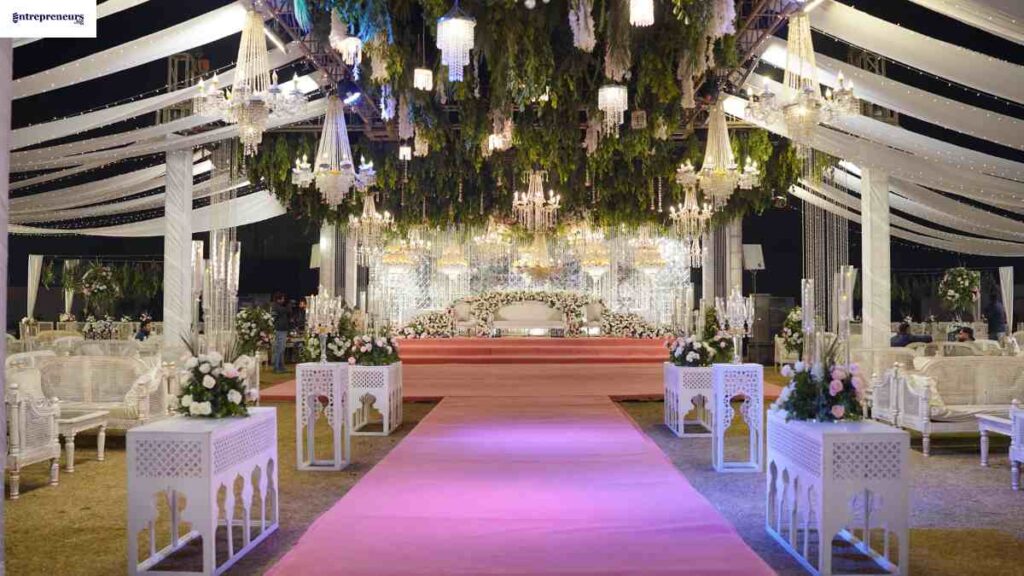
The modern wedding venue business is no longer driven by location alone. Couples now choose venues that deliver unforgettable experiences, stunning visuals, and seamless hospitality.
According to The Knot Worldwide’s Real Weddings Study, couples spent an average of $34,000 on weddings in 2025, with venues remaining one of the largest expenses.
So, if you want to launch a luxury destination venue or a modern event space, this guide shows you how to build a venue couples will pay premium prices for.
Key Takeaways
- A successful wedding venue business sells memorable experiences, not just event spaces.
- Strong branding, location, and customer experience determine long-term profitability.
- Understanding licensing, startup costs, and operations is essential before launching.
- Smart marketing and multiple revenue streams help wedding venues grow sustainably.

What Is a Wedding Venue Business?
A wedding venue business provides couples with a dedicated space to host wedding ceremonies, receptions, and related celebrations.
However, modern wedding venues offer far more than just a location. They create complete experiences through ambience, décor, hospitality, coordination, and personalised services that make weddings memorable.
A wedding venue business can operate in many forms, including luxury estates, beachfront resorts, rustic barns, hotels, gardens, rooftop spaces, vineyards, and intimate indoor venues.
Why Is the Wedding Venue Business Booming?
The wedding venue business is growing rapidly because modern couples want more than a traditional ceremony.
They want meaningful experiences, visually stunning locations, personalised celebrations, and unforgettable memories they can share online.
This shift has transformed wedding venues from simple event spaces into highly profitable hospitality and lifestyle businesses.
Couples Are Spending More on Experiences
Today’s couples prioritise experiences over material things. Instead of focusing only on decorations or expensive gifts, many are investing heavily in venues that create a unique atmosphere and emotional connection.
A beautiful venue now shapes the entire wedding experience.
From scenic outdoor gardens to luxury estates and beachfront resorts, couples are willing to pay premium prices for spaces that reflect their personalities and lifestyles.
This trend has created enormous opportunities for entrepreneurs entering the wedding venue business.
Social Media Has Changed the Industry
Platforms like Instagram, TikTok, and Pinterest have completely transformed how couples choose wedding venues.
Weddings are now highly visual events, and venues often become the centrepiece of wedding content shared online.
Couples actively search for:
- Instagram-worthy backdrops
- Elegant architecture
- Natural lighting for photography
- Scenic outdoor spaces
- Unique interior aesthetics
As a result, visually appealing venues attract more attention, more bookings, and stronger word-of-mouth marketing.
Destination Weddings Continue to Rise
The popularity of destination weddings has opened new opportunities for venue owners around the world. Many couples now prefer intimate celebrations in scenic locations instead of traditional hometown weddings.
Beach resorts, vineyards, mountain retreats, countryside estates, and tropical locations are seeing increased demand from international clients seeking memorable wedding experiences.
This has made the destination wedding venue business one of the fastest-growing segments in the industry.
The Industry Offers Multiple Revenue Streams
One major reason the business is booming is its earning potential beyond weddings alone. Smart venue owners diversify their income by hosting:
- Corporate events
- Birthday celebrations
- Engagement parties
- Fashion shoots
- Retreats
- Conferences
- Content creation sessions
Some venues also earn through catering, accommodation, décor rentals, event planning, and vendor partnerships.
This ability to generate revenue from multiple sources makes the business more stable and profitable throughout the year.
Micro Weddings and Intimate Events Are Growing
Not every couple wants a massive wedding anymore. Smaller weddings with carefully curated guest lists are becoming increasingly popular, especially among younger couples seeking luxury and intimacy.
This trend has created demand for:
- Boutique venues
- Garden spaces
- Rooftop venues
- Private estates
- Small luxury halls
Entrepreneurs no longer need enormous properties to build successful wedding venue businesses.
Weddings Remain Emotionally Important
Even during economic uncertainty, weddings remain one of life’s biggest milestones.
Couples may reduce guest numbers or simplify certain aspects of the celebration, but they rarely compromise on the venue experience itself.
People will always celebrate love, family, and important life moments. That emotional demand gives the wedding venue business long-term resilience compared to many other industries.
Technology Is Making Venue Businesses More Scalable
Modern technology has also made it easier to run and grow a wedding venue business. Venue owners now use:
- Online booking systems
- Virtual venue tours
- Automated client management tools
- AI-powered marketing
- Social media advertising
- Digital payment systems
These tools help businesses reach more clients globally while improving customer experience and operational efficiency.
The Shift Towards Personalised Weddings
Modern weddings are no longer one-size-fits-all events. Couples want venues that allow them to customise themes, layouts, menus, lighting, and guest experiences.
This demand for personalisation has created opportunities for venues that offer flexibility, creativity, and premium service instead of rigid wedding packages.
Venue owners who understand this shift are positioning themselves as experience creators rather than simple space providers.
See Also: How to Make Money in the Wedding Industry: 30 Profitable Wedding Business Ideas

How to Start a Wedding Venue Business in 8 Easy Steps
Starting a wedding venue business requires more than finding a beautiful property and accepting bookings.
It involves careful planning, market research, legal compliance, branding, customer experience, and strong operational management.
The following steps will guide you through everything you need to know to launch and grow a successful wedding venue business.
Step 1: Choose Your Wedding Venue Business Model
The first step in starting a wedding venue business is deciding what type of venue you want to build.
Your business model will influence your startup costs, target audience, branding, pricing strategy, location, and long-term profitability.
Many new venue owners make the mistake of copying competitors without understanding the market they truly want to serve.
Popular Wedding Venue Business Models
| Venue Type | Best For | Startup Cost Range | Client Type |
|---|---|---|---|
| Rustic Barn Venue | Countryside locations | Medium | Outdoor and boho weddings |
| Luxury Estate Venue | Premium markets | High | High-income couples |
| Beach or Destination Venue | Tourist areas | High | International clients |
| Urban Micro Venue | Cities and small spaces | Low to Medium | Intimate weddings |
| Garden Venue | Scenic outdoor spaces | Medium | Romantic outdoor weddings |
| Boutique Indoor Venue | Small-scale startups | Low | Modern minimalist weddings |
Understand the Experience You Want to Sell
Modern couples do not simply book spaces. They book feelings, aesthetics, convenience, and memorable experiences.
This is why your venue concept should feel intentional from the beginning.
For example, a countryside barn venue may focus on:
- nature-inspired décor
- outdoor ceremonies
- warm lighting
- relaxed luxury
Meanwhile, a luxury venue may prioritise:
- exclusivity
- fine dining
- premium accommodation
- concierge services
Your concept should shape every part of the business, from interior design to pricing and marketing.
Consider Your Location Carefully
Your location plays a major role in the type of venue business you can successfully operate.
Large estates may perform better outside crowded cities, while urban areas often favour boutique venues and rooftop spaces.
You should also study:
- local wedding demand
- tourism activity
- accessibility
- weather conditions
- nearby competitors
In many regions, destination wedding venues perform well because couples are willing to travel for unique experiences.
Match the Model to Your Budget
Your ideal business model should align with your available capital. Starting with a smaller boutique venue is often smarter than overspending on a luxury property you cannot sustain.
The table below shows how different venue models compare financially.
| Business Model | Estimated Investment Level | Operational Complexity |
|---|---|---|
| Small Indoor Venue | Low | Moderate |
| Garden Venue | Medium | Moderate |
| Rustic Barn Venue | Medium to High | High |
| Destination Resort Venue | High | Very High |
| Luxury Estate Venue | Very High | Very High |
The goal at this stage is not to build the biggest venue possible. It is to choose a model you can realistically manage, market, and grow successfully over time.
Step 2: Research the Market and Validate Demand
Before investing in property, décor, or renovations, you need to confirm there is enough demand in your target market.
A beautiful venue alone does not guarantee bookings. Successful wedding venue businesses understand their audience, competitors, pricing trends, and local wedding culture before launching.
Start by researching the types of weddings popular in your area. Some regions favour luxury indoor weddings, while others prefer outdoor garden ceremonies, beach weddings, or intimate celebrations.
Study Your Competitors
Visit existing wedding venues in your target location and analyse:
- pricing
- guest capacity
- amenities
- customer reviews
- social media presence
- booking availability
Pay attention to gaps in the market. For example, you may notice there are many luxury venues but very few affordable boutique spaces for intimate weddings.
Identify Your Ideal Clients
Your target audience will shape your branding, pricing, and services.
Younger couples may prefer modern, Instagram-friendly venues, while high-end clients often prioritise exclusivity, privacy, and premium hospitality.
The clearer your target market, the easier it becomes to position your venue effectively.
| Target Market | Preferred Venue Style | Typical Spending Level |
|---|---|---|
| Luxury Couples | Estates and resorts | High |
| Budget-Conscious Couples | Small indoor venues | Low to Medium |
| Destination Couples | Beach and scenic venues | High |
| Modern Couples | Rooftops and boutique venues | Medium to High |
Understand Seasonal Demand
Wedding demand changes throughout the year in many locations. Outdoor venues may perform better during warmer seasons, while indoor venues often remain active year-round.
Understanding peak seasons helps with:
- pricing strategy
- staffing
- marketing campaigns
- revenue forecasting
The goal is to ensure your wedding venue business fits a real market need instead of entering an overcrowded space without a clear advantage.
Step 3: Create a Wedding Venue Business Plan
A strong wedding venue business plan gives your business direction and helps you avoid costly mistakes.
It should clearly explain your concept, target market, startup costs, pricing strategy, operational structure, and revenue goals.
Your business plan does not need to be overly complicated, but it should answer one important question: how will the venue make consistent profit?
Define Your Revenue Streams
Most successful venues earn money from more than venue rentals alone. Additional services can significantly increase profit margins and improve customer experience.
Common revenue sources include:
- venue hire fees
- catering partnerships
- décor rentals
- accommodation
- event planning
- photography partnerships
- bar services
Estimate Your Startup Costs
Your startup costs will depend on your venue type, location, and scale.
A small boutique venue may require far less capital than a luxury estate or destination resort.
| Expense | Estimated Cost Range |
|---|---|
| Property or lease | High |
| Renovation and design | Medium to High |
| Licences and permits | Low to Medium |
| Furniture and décor | Medium |
| Marketing and branding | Medium |
| Insurance | Medium |
Set Your Pricing Strategy
Your pricing should reflect:
- location
- venue capacity
- customer experience
- included services
- competitor pricing
Many venues use seasonal pricing, charging premium rates during peak wedding periods and lower rates during off-peak months.
Plan for Long-Term Growth
Think beyond your launch phase. Consider how the business can expand over time through:
- additional event services
- premium wedding packages
- destination wedding partnerships
- corporate event bookings
- multiple venue locations
A clear business plan helps you stay financially organised while building a wedding venue business that can grow sustainably.
Step 4: Secure the Right Location
Location can determine whether a wedding venue business succeeds or struggles. Couples are not only paying for a space; they are paying for convenience, atmosphere, scenery, and accessibility.
A well-positioned venue naturally attracts more bookings and stronger word-of-mouth referrals.
When choosing a property, focus on the overall guest experience. The venue should feel easy to access, visually appealing, and suitable for weddings throughout the year.
Consider Accessibility
Guests should be able to reach the venue comfortably. Poor roads, limited parking, or difficult navigation can quickly discourage potential clients.
Look for locations with:
- good road access
- sufficient parking
- nearby accommodation
- reliable electricity and water supply
- safe surroundings
Match the Location to Your Business Model
Different venue concepts perform better in different environments.
| Venue Type | Ideal Location |
|---|---|
| Rustic Barn Venue | Countryside or farmland |
| Luxury Estate Venue | Exclusive suburban or scenic areas |
| Beach Venue | Coastal destinations |
| Rooftop Venue | Major cities |
| Garden Venue | Quiet outdoor locations |
Think About Space and Layout
A functional wedding venue should comfortably accommodate ceremonies, receptions, dining areas, bridal preparation rooms, vendor access, and photography areas.
Outdoor venues should also have backup indoor options in case of bad weather.
Check Legal and Zoning Restrictions
Before buying or leasing a property, confirm that local laws allow it to operate as an event venue.
Some locations have strict rules regarding noise levels, parking, alcohol service, crowd capacity, and event operating hours.
Ignoring these regulations can lead to fines, lawsuits, or forced closure later on.
The right location should support both the customer experience and the long-term growth of your wedding venue business.
See Also: Wedding Planning Business Guide – How To Start and Grow Successfully

Step 5: Handle Licences, Legal Requirements and Insurance
Running a wedding venue business involves more than hosting beautiful events.
You must also meet legal, safety, and operational requirements to protect both your business and your clients.
The exact regulations will vary by country and region, so it is important to research local laws before launching.
Register Your Business Properly
Choose a legal business structure that fits your goals and protects your finances. Many venue owners operate as limited liability companies or registered corporations to reduce personal risk.
You may also need:
- tax registration
- employer identification numbers
- health and safety approvals
- fire inspections
Understand Wedding Venue Licensing Requirements
Some venues require special permits depending on the services offered.
For example, venues serving alcohol or hosting large outdoor events may need additional approvals.
| Requirement | Purpose |
|---|---|
| Business licence | Legal operation |
| Event permit | Approval for gatherings |
| Alcohol licence | Serving alcoholic drinks |
| Fire safety permit | Emergency compliance |
| Music licence | Playing copyrighted music |
Protect the Business With Insurance
Insurance is essential in the event industry because weddings involve large crowds, expensive equipment, and high customer expectations.
Most wedding venue businesses consider:
- public liability insurance
- property insurance
- event cancellation coverage
- employee insurance
- liquor liability insurance
Use Strong Contracts
Every booking should include a detailed contract outlining payment terms, cancellation policies,venue rules, damage responsibilities, event timing, and liability clauses.
Clear agreements help prevent misunderstandings and protect your business from costly disputes.
Taking care of legal and licensing requirements early creates a stronger foundation for long-term growth and professional credibility.
Step 6: Design an Unforgettable Wedding Experience
A successful wedding venue business is built on experience, not just aesthetics. Couples want venues that feel emotional, personal, comfortable, and visually memorable.
The design of your venue should make guests feel immersed from the moment they arrive.
Every detail matters, from lighting and seating arrangements to photography spaces and guest flow.
Focus on the Overall Atmosphere
Your venue should reflect a clear identity and mood. Some venues create a luxury experience with elegant interiors and premium finishes, while others focus on rustic charm or modern minimalism.
| Venue Style | Design Focus |
|---|---|
| Luxury Estate | Elegance, exclusivity, fine finishes |
| Rustic Barn | Warm lighting, wood textures, nature |
| Beach Venue | Open spaces, scenic views, relaxed atmosphere |
| Boutique Venue | Stylish interiors, intimacy, modern décor |
| Garden Venue | Flowers, greenery, outdoor ambience |
Prioritise Photography-Friendly Spaces
Modern weddings are heavily influenced by social media. Couples actively choose venues that look stunning in photos and videos.
Your venue should include:
- natural lighting
- scenic backdrops
- stylish entrances
- attractive ceremony areas
- visually appealing dining spaces
Well-designed photography spots often become free marketing when guests share images online.
Make Guests Comfortable
Beautiful design means little if the venue feels uncomfortable or poorly organised.
Guest experience should remain a priority throughout the venue layout.
| Important Feature | Purpose |
|---|---|
| Adequate seating | Guest comfort |
| Climate control | Indoor comfort |
| Clean restrooms | Better guest experience |
| Bridal preparation rooms | Convenience for couples |
| Accessible walkways | Easier movement |
| Backup indoor space | Weather protection |
Create Flexible Event Spaces
Couples increasingly want personalised weddings instead of standard packages. Flexible layouts allow clients to customise ceremonies, receptions, décor, and entertainment more easily.
This flexibility makes your venue more attractive to different wedding styles and budgets.
Add Memorable Touches
Small details often leave the biggest impression.
Features like signature lighting, scenic gardens, water features, rooftop views, or customised décor areas can make your venue stand out in a competitive market.
The goal is to create a space couples emotionally connect with, not just a hall they rent for a few hours.
Step 7: Build Your Brand and Market Your Venue
Even the most beautiful wedding venue can struggle without strong branding and marketing.
Couples often discover venues online before ever visiting them physically, which means your digital presence plays a major role in attracting bookings.
Your brand should communicate the type of experience couples can expect from the moment they see your website or social media pages.
Create a Memorable Brand Identity
Your venue name, logo, colours, photography style, and messaging should reflect your target market and venue experience.
| Venue Type | Branding Style |
|---|---|
| Luxury Venue | Elegant and premium |
| Rustic Venue | Warm and natural |
| Modern Venue | Clean and minimalist |
| Beach Venue | Relaxed and scenic |
| Boutique Venue | Stylish and intimate |
Consistency across your website, social media, brochures, and advertisements helps build trust and recognition.
Invest in a Strong Online Presence
Most couples begin venue research online, so your website should look professional, mobile-friendly, and easy to navigate.
Your website should clearly display:
- venue photos
- pricing information
- guest capacity
- contact details
- testimonials
- booking enquiry forms
High-quality visuals are especially important because weddings are highly visual experiences.
Use Social Media Strategically
Platforms like Instagram, Pinterest, TikTok, and Facebook are powerful marketing tools for wedding venues.
Short videos, wedding highlights, behind-the-scenes content, and professional photography help attract attention and increase engagement.
| Platform | Best Use |
|---|---|
| Venue visuals and wedding highlights | |
| Wedding inspiration searches | |
| TikTok | Short-form venue content |
| Ads and local visibility |
Build Vendor Partnerships
Strong relationships with photographers, caterers, decorators, wedding planners, and DJs can increase referrals and improve client experience.
Many successful wedding venues grow through trusted vendor networks rather than advertising alone.
Encourage Reviews and Testimonials
Positive reviews build credibility and influence booking decisions. After each event, encourage couples to leave reviews on:
- wedding directories
- social media platforms
Strong reviews often become one of the most effective forms of long-term marketing for a wedding venue business.
Step 8: Launch, Operate and Scale the Business
Once your venue is ready, the focus shifts from setup to daily operations, customer experience, and long-term growth.
A successful launch requires organisation, consistency, and the ability to manage high client expectations under pressure.
Your first few weddings are especially important because they shape your reputation, reviews, and referrals.
Build an Efficient Operational System
Running a wedding venue involves managing schedules, vendors, staff, clients, and event logistics at the same time.
Strong systems help reduce mistakes and improve customer satisfaction.
| Operational Area | Focus |
|---|---|
| Booking management | Scheduling and payments |
| Staff coordination | Event-day responsibilities |
| Vendor management | Communication and setup |
| Customer support | Client experience |
| Maintenance | Venue cleanliness and repairs |
Using venue management software can simplify bookings, contracts, invoices, and customer communication.
Deliver Excellent Customer Experience
Weddings are emotional events, and clients expect professionalism throughout the process.
Fast communication, attention to detail, and problem-solving skills can set your venue apart from competitors.
Couples often remember:
- how smoothly the event was managed
- staff attitude
- responsiveness
- organisation
- overall atmosphere
A positive experience increases referrals and repeat bookings for other events.
Diversify Your Revenue
Many profitable venue owners avoid depending only on weekend weddings. Expanding into other event categories helps generate more consistent income throughout the year.
| Additional Revenue Source | Income Opportunity |
|---|---|
| Corporate events | Weekday bookings |
| Birthday parties | Off-season revenue |
| Photoshoots | Short-term rentals |
| Retreats and workshops | Daytime venue use |
| Accommodation | Overnight income |
Monitor Business Performance
Track important business metrics regularly to understand how the venue is performing.
This includes:
- monthly bookings
- occupancy rates
- customer reviews
- marketing performance
- profit margins
- seasonal trends
Understanding these numbers helps you make better pricing, marketing, and expansion decisions.
Plan for Long-Term Growth
As your reputation grows, you may expand through premium wedding packages, destination wedding partnerships, additional event services, and multiple venue locations.
The goal is to build a wedding venue business that remains profitable, adaptable, and competitive as customer preferences continue to evolve.

How Much Does It Cost to Start a Wedding Venue Business?
The cost of starting a wedding venue business depends on your location, property size, venue concept, renovation needs, and service model.
A small indoor venue may require a modest investment, while a luxury estate or destination wedding venue can cost millions to launch properly.
The biggest mistake new owners make is budgeting only for the property. In reality, the venue itself is just one part of the cost.
You also need money for permits, insurance, furniture, landscaping, staff, marketing, technology, maintenance, and emergency reserves.
Typical Startup Cost Range
| Venue Type | Estimated Startup Cost |
|---|---|
| Small indoor venue | $20,000–$100,000 |
| Garden or outdoor venue | $50,000–$250,000 |
| Rustic barn venue | $100,000–$500,000 |
| Luxury estate venue | $500,000–$5 million+ |
| Destination wedding venue | $1 million–$10 million+ |
These figures vary widely by country. In expensive cities or tourism-heavy destinations, property and compliance costs can rise sharply.
Major Cost Areas to Budget For
| Cost Area | Estimated Range |
|---|---|
| Property purchase or lease | $10,000–$5 million+ |
| Renovation and construction | $20,000–$1 million+ |
| Furniture and décor | $10,000–$200,000 |
| Landscaping | $5,000–$300,000 |
| Licences and permits | $1,000–$50,000 |
| Insurance | $2,000–$30,000 yearly |
| Marketing and branding | $3,000–$100,000 |
| Technology | $1,000–$25,000 |
| Staffing | $5,000–$100,000+ |
| Working capital | 3–12 months of expenses |
Property and Renovation Costs
Property is usually the largest expense. If you already own land or a building, your startup costs may be much lower. However, if you need to buy or lease a property, the cost can quickly become the biggest barrier.
Renovation is also expensive because wedding venues must look beautiful and function well.
You may need to upgrade restrooms, install proper lighting, improve parking, build a kitchen, create a bridal suite, add backup power, and meet safety standards.
A venue should not only look good in photos. It must also handle real wedding-day pressure.
Licensing, Insurance and Compliance Costs
Legal and safety costs should never be treated as optional.
Depending on your location, you may need event permits, alcohol licences, fire safety approvals, zoning clearance, music licences, health permits, and accessibility compliance.
Insurance is also essential because weddings involve guests, vendors, equipment, alcohol, vehicles, and expensive décor. One accident or dispute can create serious financial risk.
| Requirement | Possible Cost Impact |
|---|---|
| Basic business registration | Low |
| Fire and safety inspections | Low to Medium |
| Alcohol licence | Medium to High |
| Zoning approval | Medium |
| Public liability insurance | Medium |
| Property insurance | Medium to High |
| Employee insurance | Medium |
Furniture, Décor and Guest Experience Costs
A wedding venue must feel complete before clients can trust it. Couples want to imagine their wedding from the first tour.
You may need to invest in tables, chairs, ceremony arches, lighting, sound systems, restrooms, signage, tableware, lounge furniture, and décor pieces. These items affect both pricing and customer perception.
A low-budget venue can start with simple, durable furniture and upgrade over time. A luxury venue, however, must invest heavily from the beginning because premium clients expect a polished experience.
Marketing and Launch Costs
Many new venue owners underestimate marketing. A beautiful venue will not sell itself if couples cannot find it online.
Your launch budget should include a professional website, search engine optimisation, Google Business Profile setup, social media content, high-quality photography, wedding directory listings, and paid ads.
You should also budget for a styled shoot before launch. This helps you create professional images that show couples what the venue can become on a wedding day.
Working Capital and Emergency Fund
Do not spend your entire budget on construction and décor. A wedding venue business needs cash reserves before the first profitable season.
You may have months with few bookings, delayed payments, repairs, staff costs, utility bills, and marketing expenses.
A good rule is to keep at least three to six months of operating expenses aside. For larger venues, twelve months may be safer.
Low, Mid-Range and Luxury Budget Examples
| Budget Level | What It Might Look Like |
|---|---|
| Low Budget | Leased indoor space, basic décor, limited renovations, small guest capacity |
| Mid-Range | Garden or barn venue, improved landscaping, branded website, strong vendor network |
| Luxury | Estate property, premium interiors, accommodation, concierge service, high-end marketing |
So, how much does it cost to start a wedding venue business? A lean venue may start with less than $100,000 if you lease an existing space and keep services simple.
A polished mid-range venue can cost several hundred thousand dollars. A luxury or destination wedding venue can require millions.
The smartest approach is to start with a model your budget can support, then improve the venue as bookings and revenue grow.
Is Owning a Wedding Venue Profitable?
Yes, owning a wedding venue can be highly profitable when the business is positioned correctly and managed efficiently.
Wedding venues operate in an industry driven by emotion, experience, and premium spending, which allows successful venues to charge high prices and generate multiple streams of income.
However, profitability depends on more than bookings alone. Factors such as location, pricing strategy, customer experience, operating costs, seasonality, and marketing all affect how much money a venue actually keeps.
How Wedding Venues Make Money
Most wedding venue businesses generate income from several sources instead of relying only on venue rental fees.
| Revenue Source | Income Potential |
|---|---|
| Venue rental fees | High |
| Catering partnerships | Medium to High |
| Décor rentals | Medium |
| Bar services | Medium to High |
| Accommodation | High |
| Event planning services | Medium |
| Corporate events | Medium |
| Photoshoots and content sessions | Low to Medium |
The more services a venue offers, the higher its earning potential.
Average Wedding Venue Pricing
Wedding venue pricing varies based on:
- location
- guest capacity
- service quality
- included amenities
- season
- market demand
Luxury venues in popular destinations can charge tens of thousands of dollars per wedding, while smaller venues may charge more affordable rates to maintain higher booking volume.
| Venue Type | Average Booking Fee |
|---|---|
| Small indoor venue | $2,000–$8,000 |
| Garden venue | $5,000–$15,000 |
| Rustic barn venue | $8,000–$25,000 |
| Luxury estate venue | $20,000–$100,000+ |
| Destination wedding venue | $30,000–$250,000+ |
Wedding Venue Profitability Breakdown
The profitability of a wedding venue business depends on balancing revenue against operating expenses.
Below is a simplified example of a mid-range venue hosting six weddings monthly.
| Monthly Revenue Example | Estimated Amount |
|---|---|
| 6 weddings at $12,000 each | $72,000 |
| Décor and rental upgrades | $8,000 |
| Bar and catering commissions | $5,000 |
| Photoshoots and extra events | $3,000 |
| Total Monthly Revenue | $88,000 |
Now compare this with estimated monthly expenses.
| Monthly Expense Example | Estimated Amount |
|---|---|
| Staff salaries | $12,000 |
| Utilities and maintenance | $6,000 |
| Loan or lease payments | $15,000 |
| Marketing and advertising | $5,000 |
| Insurance and permits | $3,000 |
| Cleaning and repairs | $4,000 |
| Miscellaneous operating costs | $5,000 |
| Total Monthly Expenses | $50,000 |
Estimated Monthly Profit
| Financial Summary | Amount |
|---|---|
| Total monthly revenue | $88,000 |
| Total monthly expenses | $50,000 |
| Estimated monthly profit | $38,000 |
This example shows how profitable a well-managed venue can become once bookings stabilise.
Profit Margins in the Wedding Venue Industry
Profit margins vary widely depending on the business model and operational efficiency.
| Venue Type | Typical Profit Margin |
|---|---|
| Small boutique venue | 10%–25% |
| Mid-range venue | 20%–40% |
| Luxury venue | 30%–50%+ |
| Destination venue | 35%–60%+ |
Venues with accommodation, premium packages, and multiple event services often achieve the highest margins.
Factors That Affect Profitability
A venue can look busy and still lose money if costs are poorly managed. Long-term profitability usually depends on:
- strong pricing strategy
- efficient operations
- consistent bookings
- low maintenance issues
- good customer reviews
- smart marketing
- multiple income streams
Venues that depend only on seasonal weddings often struggle more than venues that host corporate events, retreats, and private celebrations throughout the year.
How Long Does It Take to Become Profitable?
Some small venues become profitable within the first year if startup costs are low and demand is strong.
Larger venues with major construction costs may take several years to recover their investment.
| Venue Size | Estimated Profitability Timeline |
|---|---|
| Small venue | 6 months–2 years |
| Mid-range venue | 2–4 years |
| Luxury or destination venue | 4–10 years |
The timeline often depends on debt levels, occupancy rates, and marketing effectiveness.
The Real Profit Opportunity
The real wealth in the wedding venue business is not always in single wedding bookings. It comes from building a recognised hospitality brand that can:
- charge premium prices
- attract referrals consistently
- expand into multiple locations
- host different event categories
- create long-term customer loyalty
The most profitable venues do not compete on price alone. They compete on experience, exclusivity, convenience, and emotional value.
Wedding Venue Licences and Permits
Before opening a wedding venue business, you must secure the necessary licences and permits required in your country or region.
Weddings involve large gatherings, entertainment, food, alcohol, parking, and safety regulations, which means operating without proper approval can lead to fines, lawsuits, or business closure.
The exact requirements vary by location, but most wedding venues need legal registration, safety approvals, and event-related permits before accepting bookings.
| Licence or Permit | Purpose |
|---|---|
| Business Registration Licence | Legally establishes the business |
| Zoning Permit | Confirms the property can operate as an event venue |
| Building and Safety Permit | Ensures the venue meets structural and safety standards |
| Fire Safety Approval | Confirms emergency and fire protection compliance |
| Health Permit | Required if food or catering services are offered |
| Alcohol Licence | Allows legal sale or service of alcohol |
| Music Licence | Permits the use of copyrighted music during events |
| Parking Permit | Required in some areas for large guest parking capacity |
| Noise Permit | Allows amplified music and late-night events where applicable |
| Insurance Coverage | Protects against accidents, property damage, and liability claims |
Some countries may also require environmental approvals, accessibility compliance, or temporary event permits depending on the venue type and location.
Before leasing or buying a property, it is important to confirm that local authorities allow the space to operate as a wedding or event venue. This can save you from expensive legal issues later.
Technology Trends Changing the Wedding Venue Industry
Technology is transforming how wedding venues attract clients, manage bookings, market services, and deliver guest experiences.
Modern couples now expect convenience, digital communication, visually immersive experiences, and personalised services throughout the planning process.
As competition increases, venue owners are using technology not only to improve operations but also to create more memorable and premium wedding experiences.
| Technology Trend | How It Is Changing Wedding Venues |
|---|---|
| Virtual Venue Tours | Allows couples to explore venues remotely before booking |
| AI Wedding Planning Tools | Helps personalise wedding recommendations and planning |
| Online Booking Systems | Simplifies reservations, payments, and scheduling |
| CRM Software | Improves customer communication and lead management |
| Drone Photography and Videography | Creates cinematic wedding content and venue marketing visuals |
| Smart Lighting Systems | Enhances ambience and customised event experiences |
| Social Media Marketing Tools | Expands online visibility and targeted advertising |
| Digital Invitation Integration | Connects guests directly to venue details and event schedules |
| Live Streaming Technology | Allows virtual attendance for international guests |
| Automated Payment Systems | Makes deposits and balance payments easier and faster |
Many wedding venue businesses are also investing in data-driven marketing tools to track customer behaviour, booking trends, and advertising performance.
This helps venue owners make smarter pricing and promotional decisions.
Technology is no longer just an added feature in the wedding industry. It is becoming a major factor in customer experience, operational efficiency, and long-term business growth.
Conclusion
Starting a wedding venue business can be both financially rewarding and creatively fulfilling when approached with the right strategy.
From choosing the right business model and location to understanding licensing requirements, marketing, customer experience, and profitability, every decision plays a role in long-term success.
We want to see you succeed, and that’s why we provide valuable business resources to help you every step of the way.
- Join over 23,000 entrepreneurs by signing up for our newsletter and receiving valuable business insights.
- Register your business today with Entrepreneurs.ng’s Business Registration Services.
- Tell Your Brand Story on Entrepreneurs.ng, let’s showcase your brand to our global audience.
- Need help with your marketing strategy? Get a Comprehensive Marketing and Sales Plan here.
- Sign up for our Entrepreneurs Success Blueprint Programme to learn how to start and scale your business in just 30 days.
- Book our one-on-one consulting and speak to an expert about structuring and growing your business.
- Visit our shop for business plan templates and other valuable resources to guide you.
- Get our Employee-Employer Super Bundle NDA templates to legally protect your business and workforce.
- Advertise your business to over a million entrepreneurs through our different advertising packages.

Frequently Asked Questions (FAQs)
Is owning a wedding venue profitable?
Yes, owning a wedding venue can be highly profitable when the business is well-managed and consistently booked. Many successful venues generate income through weddings, corporate events, accommodation, catering partnerships, and décor services.
How much does it cost to start a wedding venue business?
Startup costs vary depending on the venue type, location, and scale. A small indoor venue may cost under $100,000 to launch, while luxury estates and destination venues can require millions in investment.
What licences do I need for a wedding venue business?
Most wedding venues require business registration, zoning approval, fire safety permits, public liability insurance, and event permits. Additional licences may be needed for alcohol service, music, and catering.
How do wedding venues make money?
Wedding venues make money through venue rental fees, catering commissions, décor rentals, accommodation, bar services, event planning, and additional event bookings such as conferences and parties.
Can I start a wedding venue business on a small budget?
Yes, many entrepreneurs start with small indoor venues, garden spaces, or leased properties before expanding into larger or luxury venues over time.
What makes a wedding venue successful?
Successful wedding venues combine strong branding, excellent customer service, attractive design, good location, efficient operations, and effective marketing strategies.
How long does it take for a wedding venue to become profitable?
Smaller venues may become profitable within one to two years, while luxury or destination venues can take several years to recover startup investments.
What is the best location for a wedding venue business?
The best location depends on your target audience and venue model. Popular options include scenic countryside areas, beachfront destinations, urban rooftops, gardens, and luxury estates.
Do wedding venues need insurance?
Yes, insurance is essential for protecting the business against accidents, property damage, cancellations, and liability claims during events.
How do wedding venues attract customers?
Most wedding venues attract customers through social media marketing, SEO, wedding directories, referrals, vendor partnerships, online reviews, and professional photography.
What are the biggest challenges in running a wedding venue business?
Common challenges include high startup costs, seasonal demand, maintenance expenses, customer expectations, staffing, and competition from other venues.
Can a wedding venue business operate year-round?
Yes, many venues increase profitability by hosting corporate events, birthday parties, retreats, photoshoots, and conferences outside peak wedding seasons.
What is the difference between a wedding venue and an event venue business?
A wedding venue focuses primarily on weddings and related celebrations, while an event venue business may host a wider range of events including conferences, concerts, and corporate functions.
Are destination wedding venues profitable?
Yes, destination wedding venues can be extremely profitable because couples often spend more on premium experiences, accommodation, tourism activities, and luxury packages.
What technology do modern wedding venues use?
Modern venues use online booking systems, CRM software, virtual tours, AI-powered planning tools, automated payments, and social media marketing platforms to improve operations and customer experience.
Do I need experience to start a wedding venue business?
While experience in hospitality or event management is helpful, it is not mandatory. Strong planning, market research, customer service, and operational management are more important for long-term success.
How important is social media for wedding venues?
Social media is extremely important because couples often discover and evaluate venues through Instagram, Pinterest, TikTok, and Facebook before making booking decisions.
What should be included in a wedding venue business plan?
A wedding venue business plan should include your business model, target market, startup costs, pricing strategy, marketing plan, operational structure, and projected revenue.