The global snack industry is booming. The market is projected to reach $1.73 billion by 2033, according to research by Market Data Forecast, thanks to rising demand for convenient and healthier options.
If you want to learn how to start a snack business, this guide covers everything from snack business ideas and profitable snack business models to snack packaging ideas, snack distribution channels, and even tips for building a healthy snack business.
If you are pursuing small-scale snack production, full-scale manufacturing, or creating a solid snack business plan, this guide covers the essentials for building a competitive and lasting snack brand.
Key Takeaways
- Choose the right snack business idea by validating demand, health trends, and profitability potential.
- Develop recipes, ensure compliance, and use smart snack packaging ideas that protect and sell.
- Build a clear snack business plan with accurate costing, pricing, and scalable production options.
- Expand strategically through multiple snack distribution channels, from D2C and retail to export.

What is a Snack Business?
A snack business involves producing, packaging, and selling ready-to-eat foods such as chips, nuts, bars, baked treats, or healthier alternatives.
It can range from small-scale snack production, like homemade goods sold locally, to full-scale snack manufacturing and supply targeting retail, online platforms, or export markets.
At its core, a snack business focuses on meeting consumer demand for convenient, tasty, and often healthier food options, while turning everyday cravings into a profitable business opportunity.
Product Ideas For a Snack Business
The foundation of any profitable snack business lies in choosing the right product. Your decision should balance market demand, production feasibility, and profitability.
From indulgent treats to health-driven innovations, here are snack business ideas you can adapt to local and global markets.
| Category | Examples |
|---|---|
| Classic Savoury | Potato chips, plantain chips, popcorn, and pretzels |
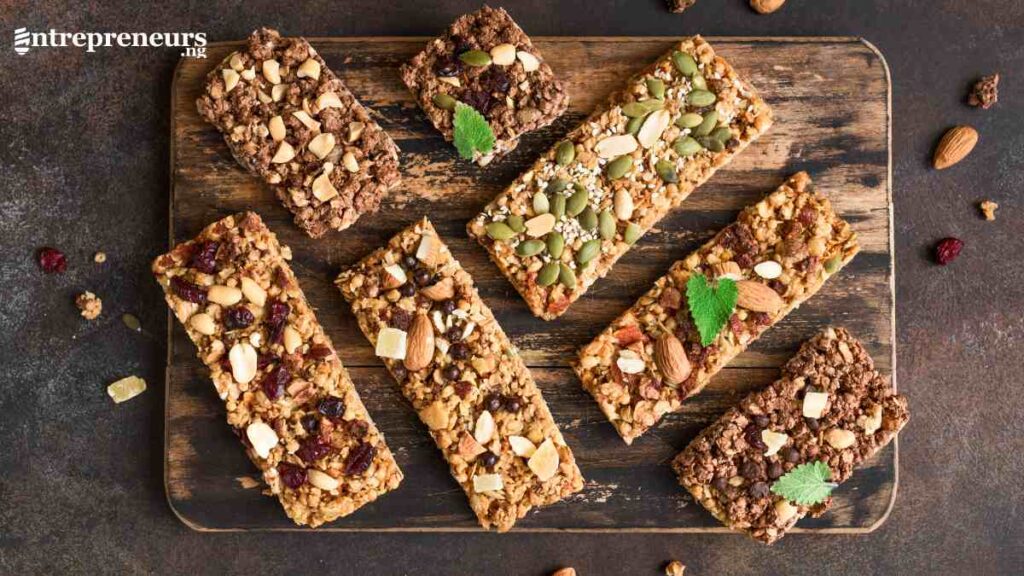
| Healthy Options | Granola clusters, roasted chickpeas, seaweed snacks, and protein bars |
| Sweet Treats | Energy bars, fruit leather, and chocolate bites |
| Regional or Traditional | Chin-chin, murukku, biltong, and cassava crisps |
| Kids’ Snacks | Mini crackers, nut-free bars, and yoghurt bites |
How to Start a Snack Business Step-by-Step
Turning snack business ideas into a profitable venture requires more than a good recipe; it takes planning, compliance, and smart execution.
This step-by-step guide breaks down the entire process, from product development and snack packaging ideas to building a clear snack business plan and selecting the right snack distribution channels.
Step 1: Define Your Customer and Core Idea
Every successful snack business begins with clarity about who you are serving and what problem your product solves.
Are you targeting busy professionals looking for healthy snack options, parents searching for school-friendly packs, or young people craving bold, indulgent flavours?
Once you know your customer, refine your snack business idea to meet their specific needs, whether it is convenience, nutrition, or novelty. This clarity helps you focus on creating a product with a clear value proposition and avoids the trap of making snacks that appeal to everyone but satisfy no one.
Step 2: Validate Your Snack Business Idea
Before investing heavily in equipment or packaging, test whether your snack concept truly resonates with consumers. Start small, make sample batches and offer them at community events, local stores, or through online pre-orders.
Collect feedback on taste, texture, price, and packaging appeal. Simple surveys, pop-up stalls, or even giving out samples in offices can reveal what people genuinely enjoy and are willing to pay for.
Validation helps you identify your winning product early, refine your recipe, and avoid wasting resources on snacks that will not sell.
Step 3: Develop Your Recipe and Nutrition Targets
Once your snack idea is validated, focus on perfecting the recipe. Aim for consistency in taste, texture, and portion size, as these factors build trust with customers. Decide whether your product will position itself as indulgent, functional, or part of the healthy snack business trend.
Keep nutrition in mind, balancing flavour with health claims such as “high protein,” “low sugar,” or “gluten-free” can increase your market appeal. Document every step of the production process, measure ingredient yields carefully, and note potential allergens.
This not only ensures quality control but also prepares you for regulatory compliance and eventual scale-up into snack manufacturing and supply.
Step 4: Food Safety and Labelling Basics
No matter how innovative your snack is, compliance with food safety and labelling regulations is non-negotiable. Clear, accurate labels build consumer trust, while safety standards protect both your customers and your business.
Whether you are running a small-scale snack production or planning for large-scale snack manufacturing and supply, aligning with global and local rules will keep you competitive and retail-ready.
| Requirement | What It Means |
|---|---|
| Food Safety System | Apply HACCP principles or seek ISO 22000 certification as you scale. |
| Ingredient List | List all ingredients in descending order of weight. |
| Allergen Declaration | Highlight allergens (e.g., nuts, gluten, dairy) clearly and consistently. |
| Nutrition Information | Show energy, fat, carbs, sugar, protein, fibre, and salt per serving. |
| Date Marking | Use “Best Before” or “Use By” dates depending on shelf life. |
| Business Details | Include your company name, address, and contact information. |
| Barcodes (GTIN) | Secure GS1 barcodes for each product SKU. |

Step 5: Source Ingredients and Packaging Suppliers
Your suppliers will shape both the quality and the cost of your snack business. Start by identifying reliable sources for key ingredients such as grains, nuts, fruits, or flavourings, and secure at least two options for each to avoid disruptions.
Prioritise consistency, food safety certifications, and reasonable minimum order quantities that fit your current scale. At the same time, explore snack packaging ideas that protect freshness, meet labelling requirements, and align with your brand image.
From resealable pouches to single-serve sachets, packaging can influence both shelf life and consumer appeal. Building strong relationships with trusted suppliers lays the foundation for smooth operations and scalable growth.
See Also: A Guide to Starting a Profitable Flower Business- Costs, Suppliers, and Marketing Tips
Step 6: Choose a Packaging Strategy
Packaging does far more than hold your product; it protects freshness, communicates your brand, ensures compliance, and influences buying decisions.
For a snack business, choosing the right packaging is a balance between practicality, cost, and consumer appeal. Below are common snack packaging ideas and what they offer.
| Packaging Type | Best For | Benefits |
|---|---|---|
| Stand-up Pouches | Nuts, trail mix, granola clusters | Lightweight, resealable, large branding space |
| Flow-wrap Packaging | Snack bars, cookies | Cost-effective, high-speed production, and easy portion control |
| Rigid Tubs and Cans | Crisps, popcorn, biscuits | Strong protection, stackable, premium appeal |
| Sachets or Single-Serve | On-the-go snacks, vending packs | Convenient, portion-controlled, ideal for sampling |
| Modified Atmosphere (MAP) | Chips, baked snacks, perishable products | Extends shelf life, maintains freshness |
| Eco-Friendly Options | All snack types (depending on format) | Recyclable or compostable materials appeal to eco-conscious consumers |
Step 7: Costing, Pricing, and Margins
Getting your numbers right is critical for turning a great snack idea into a profitable business. A well-structured snack business plan should detail your costs, selling prices, and expected margins across different snack distribution channels.
By breaking down costs and projecting margins, you will know whether your product can thrive in direct sales, retail shelves, or wholesale supply.
| Cost or Price Element | What It Covers |
|---|---|
| Ingredients | Raw materials like grains, nuts, and flavourings |
| Packaging | Pouches, wraps, tubs, labels, design |
| Labour | Production, handling, quality checks |
| Overheads | Rent, utilities, insurance, certifications |
| Logistics and Distribution | Transport to retailers, shipping for D2C, and 3PL fees |
| Retail Pricing (SRP) | Shelf price consumers pay |
| Wholesale or Distributor Margin | Discounts offered to retailers and middlemen |
| Net Profit Margin | What is left after all costs and allowances |
If you want a ready-made framework, get our Comprehensive Business Plan Template. Customise it for your snack business and start with confidence.
Step 8: Choosing Between In-House Production and Co-Manufacturing
One of the biggest decisions when starting a snack business is whether to produce in-house or partner with a co-packer (contract manufacturer).
Both options have advantages and trade-offs depending on your budget, expertise, and growth plans. Making the right choice early ensures consistency, safety, and scalability for your snack manufacturing and supply chain.
| Option | Pros | Cons | Best For |
|---|---|---|---|
| In-House Production | Full control over recipes, quality, and processes. Builds proprietary expertise. | High upfront costs for equipment, space, and certifications. Slower to scale. | Entrepreneurs who are starting small with limited SKUs and niche snacks. |
| Co-Manufacturing (Co-Packer) | Faster market entry, access to specialised equipment, often HACCP and ISO certified. | Less control, minimum order quantities (MOQs), potential for delays. | Brands aiming for rapid growth, wider distribution, and multiple SKUs. |
Step 9: Ensuring Shelf Life, Quality, and Traceability
For any snack business, long-term success depends not only on more than flavour but more on delivering safe, consistent products every time.
Managing shelf life, maintaining quality, and setting up traceability systems protects your brand, builds trust with consumers, and keeps you compliant with regulators and retailers.
A well-documented process ensures you can quickly respond to recalls, maintain freshness, and scale operations with confidence.
| Focus Area | What to Do |
|---|---|
| Shelf Life Testing | Conduct real-time and accelerated shelf-life studies. |
| Quality Control | Standardise recipes, monitor texture or taste, and test random batches. |
| Traceability | Use batch or lot coding, and maintain supplier and production records. |
| Packaging Match | Align packaging materials with product sensitivity, such as moisture, oxygen, and light. |
Step 10: Building Your Go-to-Market Strategy
A great snack will not succeed without a clear plan to reach consumers. Your go-to-market (GTM) strategy should outline how you will launch, promote, and sell your products across different snack distribution channels.
By matching your resources with the right channels, you can build brand awareness, generate sales, and scale sustainably.
| Channel | How It Works | Advantages | Considerations |
|---|---|---|---|
| Direct-to-Consumer (D2C) | Sell via your website or social media stores. | Higher margins, direct customer feedback. | Requires investment in digital marketing and fulfilment. |
| Marketplaces | Platforms like Amazon, Jumia, or Flipkart. | Large reach, credibility from trusted platforms. | Fees and competition can cut into margins. |
| Retail Stores | Supermarkets, convenience stores, health shops. | High visibility, access to everyday shoppers. | Slotting fees, distributor margins, and strict compliance. |
| Vending & Foodservice | Office vending machines, schools, gyms, cafés. | Steady volume, great for single-serve packs. | Requires reliable restocking and competitive pricing. |
| Export or International | Ship to diaspora markets or nearby regions. | Expands reach, taps into new demand pockets. | Complex regulations, labelling, and logistics. |
If you want to move beyond ideas and start your business, enrol in the Entrepreneurs Success Blueprint Program (ESBP) today and take the first confident step toward building the business of your dreams.
Step 11: Managing Sales Operations and Logistics
Once your snack reaches the market, smooth sales operations and logistics become critical. From warehousing to order fulfilment, every step affects customer satisfaction and profitability.
Whether you are selling through D2C platforms or supplying retail stores, efficient logistics ensure your snacks stay fresh, on time, and cost-effective.
| Area | What It Covers |
|---|---|
| Warehousing | Store finished goods in-house or through a 3PL provider. |
| Order Fulfilment | Picking, packing, and shipping customer or retail orders. |
| Inventory Management | Track SKUs, apply FEFO (First Expiry, First Out). |
| Transport & Delivery | Shipping to customers, retailers, or distributors. |
| Returns & Recalls | Process defective goods or handle safety recalls. |
Step 12: Expanding Through Distribution Channels
After setting up sales operations, the next step is scaling your reach by tapping into diverse snack distribution channels.
Each route offers unique advantages and challenges, so choosing the right mix depends on your resources, target audience, and growth ambitions.
| Distribution Channel | How It Works | Advantages | Challenges |
|---|---|---|---|
| Direct-to-Consumer (D2C) | Sell via your website, social media, or subscription boxes. | Higher profit margins, direct customer insights. | Marketing costs, fulfilment demands. |
| Retail & Supermarkets | Place products in grocery chains or convenience stores. | High visibility, large sales volumes. | Slotting fees, strict compliance, distributor cuts. |
| Specialty Stores | Health food shops, gourmet outlets, ethnic markets. | Attracts niche customers, premium positioning. | Limited volume, slower turnover. |
| Distributors & Wholesalers | Partner with intermediaries who resell to retailers. | Access to wide networks, reduced logistics burden. | Lower margins, less control over brand presence. |
| Vending & Foodservice | Supply offices, schools, gyms, and cafés. | Predictable volumes, ideal for single-serve packs. | Requires consistent restocking, competitive pricing. |
| Export or International | Ship to nearby regions or diaspora markets abroad. | Expands reach, taps into global demand. | Complex labelling, customs duties, and logistics. |
Step 13: Compliance Check Before Scaling
Before expanding into more stores, new regions, or export markets, ensure your snack business is fully compliant with food safety, labelling, and trade requirements.
A solid compliance foundation not only keeps you legally protected but also makes retailers and distributors more willing to carry your products.
| Compliance Area | Checklist Item |
|---|---|
| Food Safety | HACCP plan documented and applied consistently. |
| Labelling | Ingredients, allergens, nutrition, best-before or use-by dates clearly displayed. |
| Barcoding | GS1 barcodes (GTINs) to be applied to all SKUs and case packs. |
| Certifications | Relevant approvals (ISO 22000, organic, gluten-free, halal, kosher, etc.). |
| Packaging | Meets local recycling and sustainability regulations. |
| Documentation | Import or export papers, product specs, and batch records. |
Step 14: Launch and Growth Strategy
Getting your snacks shelf-ready is only half the work; the real test begins when you launch. A structured strategy helps you build awareness, drive trial, and scale sustainably.
By phasing your approach, you can start lean, measure performance, and reinvest in what works.
| Phase | Key Actions | Goals |
|---|---|---|
| Pre-Launch | Finalise branding, set up website or socials, secure packaging, and conduct sampling. | Build anticipation and collect early feedback. |
| Launch | Start D2C sales, approach local retailers, run social media ads, and offer promos. | Generate trial purchases and gain first stockists. |
| Growth | Expand SKUs, partner with distributors, enter supermarkets, and run in-store demos. | Increase visibility, boost repeat purchases, and grow market share. |
| Scale | Explore exports, new regions, vending or foodservice, and larger retail chains. | Establish a strong brand presence and long-term profitability. |
Step 15: Monitoring Performance and Continuous Improvement
A successful snack business is never “set and forget.” To stay competitive, you must track performance, learn from customer behaviour, and adapt your products and processes.
Regular monitoring ensures your business grows sustainably while staying aligned with market demands.
| Area to Monitor | How to Track It |
|---|---|
| Sales Velocity | Units sold per store per week (or per online channel). |
| Repeat Purchases | Customer reorder rates, subscription renewals. |
| Margins & Costs | Review ingredient, packaging, and logistics costs monthly. |
| Customer Feedback | Surveys, reviews, social listening, and focus groups. |
| Quality & Safety | Regular QC checks, shelf-life testing, and supplier audits. |
| Channel Performance | Compare D2C, retail, vending, and export profitability. |

Startup Costs and Profitability in a Snack Business
Understanding your startup costs upfront helps you set realistic goals and avoid financial surprises. From recipe development to distribution, each stage requires investment.
Pairing cost awareness with a strong pricing strategy ensures your snack business can move from break-even to profitability.
| Cost Category | Typical Range (USD) |
|---|---|
| Product Development | $500 – $3,000 |
| Licensing & Compliance | $1,000 – $5,000 |
| Ingredients & Packaging | $2,000 – $10,000 |
| Equipment | $3,000 – $25,000 |
| Branding & Marketing | $2,000 – $8,000 |
| Logistics & Distribution | $1,500 – $7,500 |
| Working Capital | $5,000 – $20,000 |
| Total Estimated Startup Cost | $15,000 – $75,000 |
Profitability Breakdown for a Snack Business
To understand how profits work in a snack business, it is useful to break down costs and margins per unit.
Below is a simple example using a granola bar as a case study. The same structure applies whether you are selling chips, trail mix, or cookies.
| Item | Cost or Price (USD) |
|---|---|
| Ingredients (per bar) | $0.30 |
| Packaging (per bar) | $0.15 |
| Labour and Overheads | $0.10 |
| Logistics (avg. per unit) | $0.05 |
| Total Cost per Unit | $0.60 |
| Suggested Retail Price (SRP) | $1.50 |
| Gross Profit per Unit | $0.90 |
| Gross Margin | 60% |
Building the Right Support System for Your Snack Business
No snack business grows in isolation. Success depends on the people you hire, the partners you collaborate with, and the tools you use to streamline operations.
Below, we break down each category with dedicated focus and clarity.
1. People: The Core Team Behind Your Snack Business
Even if you start small, having the right expertise—whether in-house or outsourced—can make the difference between struggling and scaling.
| Role | Function | Examples |
|---|---|---|
| Product Developer or Food Technologist | Develops recipes, tests flavours, and ensures compliance with nutrition and safety standards. | Freelance food scientists, consultants. |
| Sales & Marketing Team | Creates awareness, runs campaigns, and manages brand storytelling. | Social media marketers, brand managers. |
| Operations or Logistics Manager | Oversees production flow, warehousing, and delivery schedules. | In-house hire or outsourced specialist. |
| Finance or Accountant | Manages budgets, pricing, taxes, and profitability tracking. | Accountants, outsourced CFO services. |
2. Partners: External Support for Growth
Strategic partnerships amplify your reach and help you navigate complex areas like manufacturing and distribution.
| Partner | Function | Examples |
|---|---|---|
| Co-Manufacturer (Co-packer) | Produces snacks at scale, maintains certifications. | HACCP or ISO 22000 certified co-packers. |
| Distributors or Brokers | Places your products in retail and manages relationships. | Regional distributors, sales brokers. |
| Suppliers | Provide ingredients, packaging, and barcodes. | Ingredient suppliers, GS1 for barcodes. |
| Retailers or Stockists | Sell your snacks to end consumers. | Supermarkets, convenience stores, e-commerce. |
3. Tools: Systems That Streamline Snack Manufacturing and Supply
Smart tools automate workflows, reduce errors, and ensure compliance, critical for small-scale snack production that plans to scale.
| Tool Type | Function | Examples |
|---|---|---|
| E-commerce Platforms | Power direct-to-consumer (D2C) sales. | Shopify, WooCommerce. |
| Inventory & Operations Management | Tracks stock, expiry dates, and deliveries. | TradeGecko, Odoo, Zoho Inventory. |
| Food Safety & Quality Systems | Documents HACCP or ISO processes and audits. | Safefood 360, FoodLogiQ. |
| Marketing & Analytics Tools | Monitors campaigns, conversions, and engagement. | Google Analytics, Mailchimp, and HubSpot. |

International Expansion: Taking Your Snack Business Beyond Borders
Breaking into international markets is a major milestone for any snack business. But expansion should never be rushed; it demands readiness, compliance, and the right strategy.
Going global means adapting your snack business plan to new regulations, cultures, and distribution landscapes. For small-scale snack production aiming to scale into snack manufacturing and supply, international expansion can unlock new revenue streams, but it also brings new complexities.
Below is a simplified framework to help you decide when and how to leap.
| Factor | What to Evaluate | Importance | Practical Tips |
|---|---|---|---|
| Readiness Test | Repeat purchase rate, margins, supply chain stability. | Prevents overextending before your home market is solid. | Aim for 30%+ repeat purchase and reliable production capacity before expanding. |
| Market Selection | Demand trends, cultural fit, and diaspora markets. | Ensures your product resonates and finds a base quickly. | Start with regions where your product already has awareness (e.g., diaspora communities). |
| Regulatory Compliance | Food safety laws, labelling rules, and packaging requirements. | Non-compliance can block imports and trigger penalties. | Follow Codex Alimentarius as baseline, then adapt labels to each market (e.g., EU allergen emphasis, US Nutrition Facts). |
| Distribution Channels | Retail partnerships, online platforms, and regional distributors. | Determines how fast and cost-effectively you reach customers. | Consider Amazon Global, regional food distributors, or joint ventures with local firms. |
| Pricing & Costs | Tariffs, duties, logistics, and retailer margins. | Impacts competitiveness and profitability. | Build a landed cost model before setting international retail prices. |
| Brand Localisation | Language, flavours, packaging formats. | Helps connect authentically with local consumers. | Adapt pack sizes, flavours, and messaging (e.g., portion packs in Asia, health claims in the EU). |
| Risk Management | Currency fluctuations, logistics delays, cultural missteps. | Minimises financial losses and protects reputation. | Use insurance, diversify suppliers, and pilot test before full-scale entry. |
Challenges in Starting a Snack Business and How to Overcome Them
Every profitable snack business faces hurdles, whether in product development, compliance, or distribution. The difference between businesses that thrive and those that fail lies in how these challenges are anticipated and managed.
Below are common roadblocks and strategies to overcome them.
| Challenge | How to Overcome It |
|---|---|
| High Competition | Differentiate with a clear niche such as health focus, unique flavours, or sustainable packaging. Invest in strong branding and storytelling. |
| Regulatory Compliance | Start with Codex Alimentarius as a baseline. Hire a food compliance consultant, and use HACCP or ISO 22000 systems to stay audit-ready. |
| Supply Chain Disruptions | Diversify suppliers, maintain safety stock, and build strong relationships with reliable partners. |
| Shelf-life & Quality Control | Use proper barrier packaging (MAP, resealable pouches), run shelf-life tests, and track batch codes. |
| Distribution Barriers | Start with D2C and niche stockists, then scale gradually. Negotiate realistic terms with distributors and plan promotional spend. |
| Scaling Production | Consider co-packers to bridge the gap before investing in your own facility. Choose partners with certifications and matching line capabilities. |
| Cash Flow Management | Create a realistic snack business plan with clear unit economics. Use small-batch launches to test demand before big investments. |
| Consumer Trends Change Quickly | Keep close to customer feedback, monitor global trends, and stay agile with limited-edition flavours or pack formats. |
| Brand Awareness | Leverage social media, influencer partnerships, and sampling campaigns. Tell a founder story that resonates with your audience. |
Conclusion
Starting a snack business is an exciting but demanding journey that blends creativity with strategy. From choosing the right product ideas to designing effective packaging and mapping reliable distribution channels, success comes down to planning carefully and executing consistently.
With a solid snack business plan, the right partners, and a focus on quality and compliance, entrepreneurs can build not just a profitable venture but a lasting brand that thrives locally and expands globally.
We want to see you succeed, and that’s why we provide valuable business resources to help you every step of the way.
- Join over 23,000 entrepreneurs by signing up for our newsletter and receiving valuable business insights.
- Register your business today with Entrepreneurs.ng’s Business Registration Services.
- Tell Your Brand Story on Entrepreneurs.ng, let’s showcase your brand to our global audience.
- Need help with your marketing strategy? Get a Comprehensive Marketing and Sales Plan here.
- Sign up for our Entrepreneurs Success Blueprint Programme to learn how to start and scale your business in just 30 days.
- Book our one-on-one consulting and speak to an expert about structuring and growing your business.
- Visit our shop for business plan templates and other valuable resources to guide you.
- Get our Employee-Employer Super Bundle NDA templates to legally protect your business and workforce.
- Advertise your business to over a million entrepreneurs through our different advertising packages.

Frequently Asked Questions (FAQs)
What do I need to know about how to start a snack business?
To start a snack business, you need a clear snack business plan, validated product ideas, compliance with food safety and labelling regulations, attractive snack packaging, and a solid distribution strategy.
Which snack business ideas are most profitable?
Profitable snack business ideas include healthy snacks like roasted nuts, protein bars, plantain chips, granola clusters, and seaweed snacks, as well as indulgent options such as gourmet popcorn and artisanal cookies.
How much does it cost to start a snack business?
Costs vary by scale, but small-scale snack production can begin with as little as a few thousand dollars for raw materials and basic equipment. Larger snack manufacturing and supply ventures may require significant capital for machinery, certifications, and distribution.
What are some snack packaging ideas that attract customers?
Resealable pouches, stand-up bags, portion-control packs, and eco-friendly packaging are trending. Packaging should balance shelf-life protection with visual appeal to stand out in competitive snack distribution channels.
How can I sell snacks beyond my home market?
To expand internationally, ensure your product meets global standards like Codex Alimentarius, adapt labels to local laws, and partner with regional distributors or e-commerce platforms.
Do I need a food safety certification to run a snack business?
Yes, food safety systems like HACCP are recommended, and many retailers or distributors require certifications such as ISO 22000. These ensure your snacks meet international safety and quality standards.