

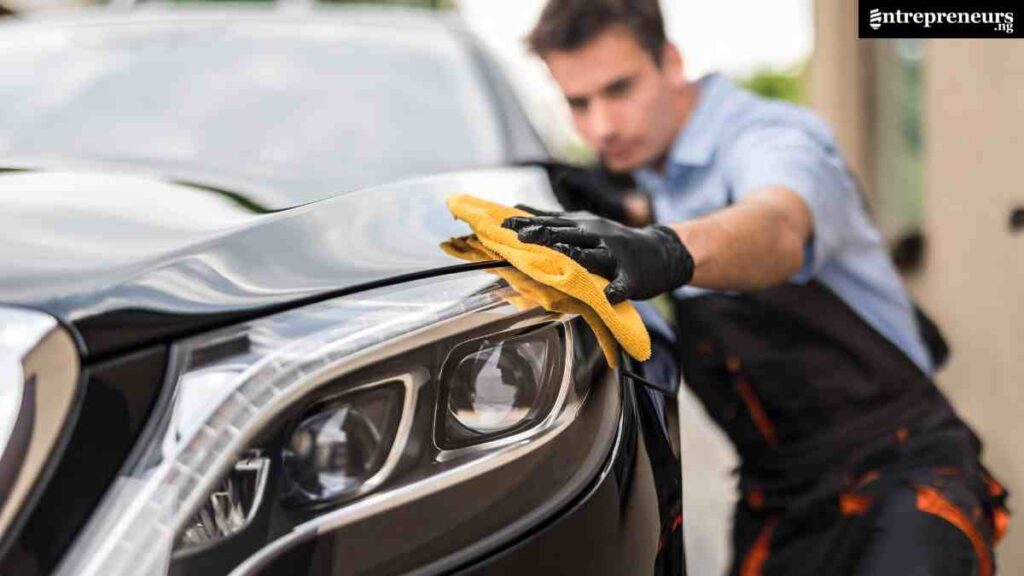
The demand for convenient vehicle care has never been higher, and learning how to start a mobile detailing business is your gateway to entering a growing, service-driven market.
Unlike fixed-site car washes, mobile detailing brings professional-grade cleaning and restoration directly to the customer’s doorstep, saving them time while offering premium service.
In this guide, you will discover what car detailing includes, the essential start-up steps, costs, equipment, and proven marketing strategies to build a profitable operation.
Key Takeaways
- Starting a mobile detailing business requires strategic planning, quality equipment, and strong local marketing to build a profitable and scalable operation.
- Success depends on offering high-quality services, competitive pricing, and consistent customer experience through clear systems and professional branding.
- Investing in digital marketing, fleet contracts, and premium add-ons like ceramic coating can significantly boost profitability and brand authority.
- Continuous learning, expert guidance, and efficient automation are essential for sustaining long-term growth in the competitive mobile detailing industry.

How to Start a Mobile Detailing Business – Step-by-Step Guide
Starting a mobile detailing business requires careful planning, a well-structured business model, and consistent execution.
This step-by-step guide walks you through each essential stage, from market research to full-scale operations, ensuring your business is positioned for long-term success.
Step 1: Conduct Market Research
Before investing in equipment or branding, understand your target market and competition.
Research detailing demand in your city or region, look at population density, car ownership rates, and weather patterns that affect vehicle maintenance needs.
Use online tools such as Google Trends and Yelp to identify where demand is highest and which services are underserved.
For example, southern states like Florida, Texas, and California have higher mobile detailing demand due to year-round driving and warmer climates.
Step 2: Define Your Services and Unique Selling Proposition
Decide which detailing services you’ll offer and how they will stand out from competitors.
Start with essential packages (exterior, interior, and combo) and consider add-ons like ceramic coating or fleet detailing for higher-value clients.
Create three structured service tiers:
| Package | Service Description | Average Price Range (USD) |
|---|---|---|
| Basic | Exterior wash and tyre dressing | $60 – $100 |
| Standard | Full exterior + interior clean | $150 – $250 |
| Premium | Complete detail + polish and wax | $300 – $600 |
Highlight your competitive advantage- eco-friendly products, convenience, flexible booking, or fast response times. A strong USP helps you build brand recognition and customer trust.
Step 3: Choose a Legal Structure and Register Your Business
Formally register your mobile detailing business. Choose the right business structure based on liability and taxation:
- Sole Proprietorship: Simplest form; full control but personal liability.
- Limited Liability Company (LLC): Provides liability protection and tax flexibility (most popular among small U.S. detailing businesses).
- Corporation (C-Corp or S-Corp): Best for larger, multi-vehicle operations or franchise models.
Register your business name with your state and obtain an Employer Identification Number (EIN) from the IRS.
You may also need local permits, such as water discharge or mobile vendor permits, depending on your city.
Step 4: Secure Licenses, Insurance, and Permits
Legal compliance builds credibility and protects your business. Obtain:
- General business license from your city or county.
- Auto detailing or mobile vendor permit (varies by location).
- Liability insurance to protect against accidental damage to customer vehicles.
- Commercial auto insurance for your service van or truck.
- Environmental permits if wastewater disposal laws apply in your area.
The U.S. Small Business Administration (SBA) recommends all small service-based businesses carry both liability and property insurance for risk management.
Step 5: Estimate Start-up Costs and Funding
The cost to start a car detailing business varies based on equipment level and operational scale.
| Expense Category | Estimated Cost Range (USD) |
|---|---|
| Vehicle/Van Purchase or Lease | $5,000 – $25,000 |
| Equipment & Supplies | $3,000 – $10,000 |
| Branding (Logo, Wrap, Website) | $1,000 – $5,000 |
| Licenses & Insurance | $1,000 – $3,000 |
| Marketing & Advertising | $1,000 – $4,000 |
| Total Estimated Start-up | $10,000 – $45,000 |
Most independent mobile detailers begin with a small van setup and expand gradually. To lower entry costs, consider leasing equipment or purchasing refurbished gear.
Step 6: Purchase Equipment and Supplies
Buy high-quality, reliable equipment suitable for mobile operations. Essential items include a water tank, pressure washer, vacuum, generator, and detailing chemicals.
Step 7: Build Your Brand Identity
Create a memorable brand that reflects professionalism and trust.
- Choose a name that clearly conveys your services (e.g., “SparkRide Mobile Detailing”).
- Design a clean, modern logo and vehicle wrap.
- Build a simple website with booking functionality and testimonials.
- Set up social media pages to showcase before-and-after photos.
You can find branding services at Entrepreneurs.ng/brand-assets.
Step 8: Develop Pricing and Payment Systems
Establish transparent pricing and easy payment options. Use digital invoicing and accept cards, mobile payments, and contactless transactions.
Clearly define package prices, additional fees, and discounts for repeat customers or fleets.
Step 9: Market Your Mobile Detailing Business
Leverage local SEO, social media, and partnerships. Create a Google Business Profile, list your services on Yelp, and collect customer reviews.
Partner with car dealerships, realtors, or office complexes to gain regular clients.
To reach a larger audience, explore content-driven advertising. Entrepreneurs.ng offers targeted advertising solutions through our Advertising Packages, helping brands connect with millions of entrepreneurs through strategic storytelling and SEO marketing.
Step 10: Launch and Manage Daily Operations
Once ready, launch with a limited service area to manage quality. Set a realistic schedule, track job durations, and optimise routes to reduce travel time.
Use scheduling apps or CRMs to manage appointments, customer data, and reviews.
A strong operational system ensures consistency, customer satisfaction, and profitability.
Step 11: Track Performance and Scale
Monitor key performance metrics such as average revenue per job, repeat customers, and profit margins.
As your bookings grow, hire assistants or add a second van. Scaling can also involve offering fleet detailing or subscription-based packages.
Entrepreneurs looking to scale their service operations can join the Entrepreneurs Success Blueprint Program at Entrepreneurs.ng/esbp. It offers expert-led strategies to grow service-based ventures sustainably.

What Does Car Detailing Include?
Car detailing goes beyond a standard car wash. It is a professional process of cleaning, restoring, and protecting a vehicle inside and out to achieve showroom-level condition.
Exterior Car Detailing
Exterior detailing focuses on the bodywork, paint, wheels, and visible surfaces. It involves deep cleaning, polishing, and applying protective finishes to enhance the vehicle’s appearance and longevity.
Typical exterior detailing tasks include:
- Hand washing and drying to remove surface dirt and grime.
- Claying to eliminate bonded contaminants such as tar, sap, and brake dust.
- Polishing to remove light scratches, swirl marks, and oxidation.
- Waxing or sealing to protect paint and add shine.
- Cleaning and dressing tyres, wheel wells, and exterior trim.
Interior Car Detailing
Interior detailing focuses on restoring cleanliness, comfort, and hygiene within the cabin. It is where attention to detail and customer satisfaction meet.
Key steps include:
- Vacuuming carpets, seats, and trunk spaces.
- Steam cleaning or shampooing upholstery and floor mats.
- Cleaning and conditioning leather surfaces.
- Detailing dashboards, vents, cup holders, and door panels.
- Sanitising touchpoints like steering wheels, gear shifts, and handles.
Specialty and Add-On Detailing Services
Many mobile detailing businesses boost profits by adding specialised services that cater to higher-value customers.
These services not only increase average ticket size but also help differentiate your brand in a competitive market.
Examples include:
- Paint correction and polishing for restoring faded or scratched paint.
- Ceramic coating or nano-coating for long-term surface protection.
- Engine bay cleaning to improve performance aesthetics.
- Headlight restoration for improved visibility and appearance.
- Odour removal and ozone treatment for interior freshness.
Table: Core vs Add-On Car Detailing Services
| Service Category | Typical Tasks | Average Price Range (USD) |
|---|---|---|
| Basic Exterior Wash | Hand wash, tyre clean, dry | $40 – $70 |
| Full Exterior Detail | Clay, polish, wax | $150 – $250 |
| Interior Detail | Vacuum, steam clean, sanitise | $100 – $200 |
| Paint Correction | Remove scratches and oxidation | $300 – $600 |
| Ceramic Coating | Apply nano-protective layer | $800 – $1500 |
| Headlight Restoration | Restore clarity and brightness | $50 – $100 |
(Prices vary by region, vehicle size, and service depth.)
When positioning your mobile detailing services, start with a balanced mix of basic and premium options.
This approach ensures consistent bookings while attracting clients who value high-quality car care.
See Also: Best CRM for Detailing Businesses: Features and Pricing Guide
Types of Car Detailing Business Models
The model you select determines your start-up costs, daily operations, target market, and potential for growth.
In the United States, entrepreneurs can choose from several car detailing business types, each with unique advantages and challenges.
Independent Mobile Detailer
This is the most common and flexible business model. An independent mobile detailer operates a single vehicle, travelling to customers’ homes or workplaces to perform detailing services.
Advantages:
- Low start-up cost and easy entry.
- Ability to set your schedule and service area.
- Direct relationships with customers, leading to strong retention rates.
Challenges:
- Income tied to personal availability.
- High physical demand and travel-related costs.
- Limited capacity to scale without hiring or investing in additional vehicles.
Multi-Vehicle or Team-Based Mobile Detailing
As the business grows, expanding into a multi-vehicle or team-based operation allows you to serve multiple customers simultaneously. Each team is equipped with its own detailing van or truck.
Advantages:
- Higher revenue potential through multiple service crews.
- Ability to cover larger geographic areas and accept fleet contracts.
- Easier to schedule urgent or same-day services.
Challenges:
- Increased overhead for staffing, equipment, and insurance.
- Requires strong systems for quality control and logistics.
- Management complexity rises with team size.
Many successful detailing businesses follow this model after 12 to 18 months of consistent operations, scaling their revenue through repeat customers and partnerships with local businesses or dealerships.
Fixed-Site Detailing Shop
A fixed-site car detailing shop operates from a physical location. Some mobile operators transition to this model once they have a stable customer base and want to reduce travel time.
Advantages:
- Easier control over work conditions and equipment.
- Ability to serve high-end customers who prefer shop-based detailing.
- Opportunity to retail products like car care kits or accessories.
Challenges:
- Higher start-up investment due to rent, utilities, and permits.
- Limited flexibility compared to mobile detailing.
- Competition with established local car wash centres.
Hybrid Detailing Business
A hybrid detailing business combines a fixed location with mobile service units. This model offers flexibility and stability, allowing you to cater to both walk-in and on-site customers.
Advantages:
- Maximises coverage and customer convenience.
- Provides backup during seasonal fluctuations.
- Builds brand visibility across multiple service channels.
Challenges:
- Requires efficient management of mobile and in-shop operations.
- Higher operational costs due to dual setups.
Niche or Specialised Detailing Businesses
Some entrepreneurs carve a niche by specialising in luxury vehicles, electric cars, or eco-friendly detailing.
Others target fleet and corporate contracts, such as rental car companies, dealerships, and logistics firms.
Examples of profitable niches:
- Eco-friendly or waterless mobile detailing.
- Ceramic coating and paint correction specialists.
- Fleet detailing for corporate and government clients.
- Subscription-based detailing for individual customers.
Table: Comparison of Car Detailing Business Models
| Business Type | Start-up Cost (USD) | Scalability | Ideal Customer Base | Profit Margin |
|---|---|---|---|---|
| Independent Mobile Detailer | $10,000 – $25,000 | Moderate | Residential customers | 30% – 50% |
| Multi-Vehicle Team | $30,000 – $75,000 | High | Fleets, corporate clients | 40% – 55% |
| Fixed-Site Shop | $50,000 – $100,000+ | High | High-end and repeat clients | 45% – 60% |
| Hybrid Detailing | $70,000 – $120,000 | Very High | Residential and business clients | 50% – 65% |
| Niche Detailing | Varies | Moderate to High | Luxury, eco-conscious, or fleet customers | 45% – 70% |
(Figures are industry averages; actual costs vary by state and service scope.)
Choosing the right detailing business type depends on your capital, skills, and long-term goals.

Cost to Start a Car Detailing Business
The start-up cost for a mobile detailing business in the United States depends on the scale of your operation, equipment quality, and chosen business model.
By estimating accurately, you can avoid cash flow issues and start strong.
Initial Start-Up Costs
Your initial investment covers everything from equipment and branding to licenses and marketing.
Below is an overview of the most common start-up expenses.
| Expense Category | Estimated Cost Range (USD) | Description |
|---|---|---|
| Vehicle or Van | $5,000 – $25,000 | Purchase or lease a reliable van/truck; include wrap design and branding. |
| Equipment & Supplies | $3,000 – $10,000 | Pressure washer, vacuum, generator, water tank, cleaning chemicals, and towels. |
| Business Registration & Permits | $500 – $1,500 | Includes LLC formation, licensing, and local vendor permits. |
| Insurance | $800 – $2,500 annually | Liability and commercial vehicle coverage. |
| Marketing & Branding | $1,000 – $4,000 | Logo, website, vehicle wrap, SEO setup, and digital advertising. |
| Software & Tools | $200 – $800 | CRM, scheduling, payment, and accounting tools. |
| Miscellaneous & Contingency | $500 – $1,000 | Unforeseen costs or small upgrades. |
| Estimated Total | $10,000 – $45,000 | Typical range for U.S. mobile detailing start-ups. |
These numbers align with market research from IBISWorld and Jobber, both indicating that small mobile detailers in the U.S. typically invest $10,000 to $50,000 during their first year, depending on the equipment level and service area.
Ongoing Monthly Expenses
Once operations begin, expect consistent monthly costs to maintain service quality and marketing presence.
| Expense Category | Monthly Estimate (USD) | Notes |
|---|---|---|
| Fuel & Travel | $300 – $700 | Depends on service radius and fuel prices. |
| Chemicals & Consumables | $200 – $400 | Includes cleaning agents, waxes, and microfiber towels. |
| Insurance | $100 – $200 | Averaged monthly cost for liability and auto coverage. |
| Marketing | $150 – $500 | Ongoing online ads, flyers, and promotional materials. |
| Maintenance & Repairs | $100 – $300 | Equipment upkeep and vehicle maintenance. |
| Software Subscriptions | $50 – $150 | Scheduling, CRM, and payment systems. |
Keeping track of these recurring costs is vital for maintaining profitability. The average operating margin for small mobile detailing businesses in the U.S. ranges between 35% and 55%, according to Grand View Research.
How to Lower Start-Up and Operating Costs
If you are launching with limited capital, you can strategically minimise costs while maintaining professional standards:
- Buy refurbished or gently used detailing equipment.
- Start with a smaller service area to reduce fuel expenses.
- Use waterless detailing products to save on water tanks and reduce permits.
- Offer pre-booking discounts to ensure consistent cash flow.
- Handle digital marketing in-house initially using social media and Google Business Profile.
Example Budget Scenarios
| Setup Type | Description | Total Estimated Cost (USD) |
|---|---|---|
| Lean Start-Up | Operate solo with basic van and low-cost tools | $10,000 – $15,000 |
| Standard Setup | Mid-range van, professional-grade tools, local ads | $20,000 – $35,000 |
| Premium Setup | Branded van, full equipment, team of two | $40,000 – $60,000 |
Most entrepreneurs start small and reinvest profits into premium tools or additional vehicles once steady cash flow is achieved.
Return on Investment and Break-Even
A well-run mobile detailing business can achieve strong returns quickly. With average service fees between $150 and $250 per job and daily capacity of three to five jobs, monthly revenue can exceed $8,000 to $15,000.
Assuming an average gross margin of 50 percent, many new mobile detailing businesses in the U.S. reach break-even within six to nine months.
Proper financial tracking is key. Tools like QuickBooks or Jobber help automate invoicing, monitor expenses, and forecast profits, essential for scaling effectively.
Equipment for Mobile Detailing
Below is a breakdown of essential, optional, and advanced tools needed to deliver exceptional detailing services anywhere in the United States.
Essential Mobile Detailing Equipment
Every mobile detailing business needs reliable core equipment to perform both interior and exterior cleaning efficiently.
| Category | Equipment | Purpose | Estimated Cost (USD) |
|---|---|---|---|
| Power Supply | Portable generator or inverter | Provides power for tools in remote locations | $500 – $2,000 |
| Water System | Water tank (50–100 gallons) and hose reel | Enables mobile washing on-site | $300 – $1,000 |
| Pressure Washer | Electric or gas pressure washer (1,500–2,000 PSI) | Removes dirt and grime from exteriors | $250 – $600 |
| Vacuum Cleaner | Wet/dry shop vac | Cleans upholstery, carpets, and interiors | $100 – $300 |
| Polisher/Buffer | Dual-action (DA) or rotary polisher | Corrects paint defects and applies wax | $150 – $400 |
| Steam Cleaner | Compact steam unit | Deep cleans and sanitises interiors | $200 – $600 |
| Air Compressor/Blower | Handheld or portable unit | Speeds up drying, removes debris from vents | $100 – $300 |
| Detailing Towels and Brushes | Microfibre cloths, applicators, brushes | For drying, wiping, and precise cleaning | $50 – $150 |
A combination of power, water, and cleaning equipment forms the foundation of a mobile detailing setup.
Start with quality, not quantity. Investing in durable, mid-range tools saves money in the long run and ensures reliability during daily operations.
Detailing Chemicals and Consumables
The right chemicals and cleaning agents can make or break your detailing results. Always choose products that are pH-balanced, biodegradable, and safe for vehicle surfaces.
| Product Type | Usage | Example or Description |
|---|---|---|
| Car Shampoo | Removes dirt and road film | Use pH-neutral shampoo for paint safety |
| All-Purpose Cleaner (APC) | Multi-surface cleaning | Ideal for engine bays, tyres, and interior plastics |
| Degreaser | Heavy-duty cleaning | For wheel wells, engines, and undercarriages |
| Clay Bar or Mitt | Surface decontamination | Removes tar, overspray, and bonded contaminants |
| Polish and Compound | Paint restoration | Smooths surface defects before waxing |
| Wax or Sealant | Paint protection | Adds gloss and water repellency |
| Glass Cleaner | Streak-free finish | Use ammonia-free formula for tinted windows |
| Leather Conditioner | Interior maintenance | Keeps seats soft and prevents cracking |
Optional Add-Ons for Efficiency and Professionalism
To enhance your workflow and customer experience, consider optional tools and accessories that save time and create a professional presentation.
- Foam Cannon: Produces thick foam for deeper cleaning and reduced swirl marks.
- Portable Canopy or Tent: Shields vehicles and workers from direct sunlight or rain.
- Rolling Cart or Organizer: Keeps supplies accessible and speeds up workflow.
- Lighting Equipment: Essential for detailing in dim garages or night jobs.
- Mobile Payment Terminal: Accepts debit, credit, and digital wallet payments on-site.
Advanced Equipment for Professional or Fleet Services
Once your mobile detailing business grows, consider upgrading to advanced tools that improve service quality and reduce labour time.
| Advanced Tool | Purpose | Approx. Cost (USD) |
|---|---|---|
| Dual-Action Polisher Kit | Complete correction and waxing | $400 – $800 |
| Hot Water Extractor | Deep cleans carpets and upholstery | $800 – $2,000 |
| Ceramic Coating Kit | Long-term paint protection | $500 – $1,200 |
| Infrared Curing Lamp | Speeds up drying for coatings | $300 – $700 |
| Paint Thickness Gauge | Measures clear coat depth | $100 – $250 |
Professional-grade detailing equipment increases productivity and enables premium pricing.
These investments are most suitable for businesses serving high-end clients, dealerships, or fleet contracts.
Vehicle Setup and Storage Tips
How you organise your detailing van or trailer affects your productivity and safety. Efficient setups typically include:
- Mounted water tanks and pressure washers for stability.
- Shelving units for chemical organisation.
- Secured power cords and hoses to prevent tripping hazards.
- Proper ventilation for generators and chemical fumes.
- Lockable compartments for expensive tools.
Maintaining a professional, tidy van also enhances your brand image when servicing clients on-site.
Equipment Maintenance and Lifespan
Routine maintenance prevents breakdowns and ensures long-term reliability.
- Flush pressure washers and hoses weekly to avoid mineral buildup.
- Empty vacuums and clean filters after each job.
- Replace worn-out microfibres regularly to prevent paint scratches.
- Store chemicals in a cool, dry place away from sunlight.
- Service generators and compressors according to manufacturer schedules.
When maintained properly, most detailing tools last three to five years, helping you achieve consistent quality and reduce replacement costs.
Investing wisely in equipment not only enhances performance but also builds credibility. Clients notice professionalism, and well-equipped mobile detailers can command premium pricing and referrals across their service regions.
How to Market and Grow Your Mobile Detailing Business
Once you understand how to start a mobile detailing business, the next step is creating a solid marketing plan that helps you attract new customers and retain existing ones.
Build a Strong Local Presence
Local marketing is crucial since most mobile detailing services cater to nearby clients. Optimise your Google Business Profile with accurate contact details, service areas, pricing, and photos of your work.
Use keywords like mobile car detailing near me and mobile auto detailing services in your descriptions to improve local SEO.
Encourage satisfied customers to leave reviews—businesses with more than 50 online reviews earn 54 percent more revenue than those without (BrightLocal). Responding to reviews also boosts your local ranking and builds trust.
Optimise Your Website for Conversions
Your website should serve as your primary sales platform. Include clear service descriptions, pricing packages, high-quality before-and-after photos, and easy booking options.
Integrate a blog with educational content using secondary keywords.
Website essentials for high conversions:
| Feature | Purpose |
|---|---|
| Mobile-friendly design | Most customers book via smartphone |
| Online booking form | Simplifies customer scheduling |
| Testimonials and reviews | Builds credibility |
| Secure payment options | Improves customer confidence |
| FAQ section | Answers common queries quickly |
Consider using Entrepreneurs.ng’s Advertising Packages to promote your detailing business through targeted storytelling and SEO-driven campaigns that reach thousands of potential clients across the U.S.
Leverage Social Media Marketing
Social media is a visual powerhouse for detailing businesses. Platforms like Instagram, TikTok, and Facebook allow you to showcase transformations that grab attention and generate leads.
Post videos of detailing processes, highlight customer testimonials, and run local ads targeting car owners.
Use location tags (e.g., mobile detailing Los Angeles) and relevant hashtags like #mobiledetailingusa or #cardetailinglife to increase discoverability.
Build Strategic Partnerships
Partnerships expand your client base faster than advertising alone. Collaborate with:
- Car dealerships and rental companies for regular fleet detailing contracts.
- Real estate agents who can refer clients preparing cars for sale.
- Corporate offices to offer employee car care days.
Establishing partnerships creates recurring revenue streams and reduces your dependence on one-time customers.
Offer Promotions and Loyalty Programs
Customers are more likely to return when rewarded. Offer bundle packages or subscription-based services, such as bi-monthly detailing at a discounted rate.
Create referral programs that reward existing customers with free add-ons like waxing or odour removal for bringing in new clients.
A subscription model can stabilise cash flow and improve forecasting.
Track and Measure Marketing Performance
Use tools like Google Analytics and Meta Business Suite to monitor your website traffic, ad conversions, and engagement rates.
Evaluate which campaigns bring the most bookings, and reinvest in high-performing channels.
Key marketing metrics to track:
| Metric | Description |
|---|---|
| Cost per lead (CPL) | Advertising cost to acquire a single lead |
| Conversion rate | Percentage of leads that book a service |
| Average revenue per job | Tracks profitability by service type |
| Customer retention rate | Measures loyalty and repeat business |
Scale Through Brand Positioning
As your brand gains traction, differentiate through storytelling and quality assurance. Position yourself as a premium, eco-friendly, or customer-first mobile detailing brand.
Document your process through short educational videos and testimonials to build authority.
How to Scale a Mobile Detailing Business
Once your mobile car detailing business is profitable and running smoothly, the next step is scaling it sustainably.
Scaling is about building systems, expanding reach, and increasing profitability without losing quality.
Build Efficient Systems and Standard Operating Procedures (SOPs)
As your bookings grow, consistency becomes your greatest asset. Create clear SOPs for every part of your business, from customer booking to job completion.
These systems ensure that every team member delivers the same level of quality, even as you expand.
Key SOP elements:
| Process | Purpose | Example Tool/Method |
|---|---|---|
| Service Checklists | Ensures consistency | Digital or printed job forms |
| Equipment Maintenance Schedule | Prevents downtime | Weekly inspection sheets |
| Customer Communication Templates | Maintains professionalism | Automated email/SMS templates |
| Quality Control | Guarantees customer satisfaction | Pre- and post-service inspection photos |
Expand Your Team and Fleet
When demand exceeds your capacity, hire skilled detailers and train them to maintain your brand standards.
Provide training on technique, customer service, and safety. Consider adding a second van or mobile unit once your first is consistently booked 80 percent of the time.
Team Expansion Plan Example:
| Stage | Team Structure | Monthly Revenue Goal (USD) |
|---|---|---|
| Solo Operator | 1 person, 1 van | $8,000 – $12,000 |
| Two-Person Crew | 1 assistant per van | $15,000 – $20,000 |
| Multi-Van Operation | 3–4 vans, 6–8 technicians | $40,000 – $60,000 |
Expanding your team allows you to increase capacity, take fleet contracts, and serve larger geographic areas efficiently.
Introduce Fleet and Commercial Contracts
Corporate contracts provide predictable revenue and can stabilise your cash flow.
Approach local businesses with company vehicles, real estate agencies, or rental car operators. Offer them weekly or monthly detailing packages at discounted bulk rates.
Sample Fleet Contract Benefits:
- Guaranteed recurring income.
- Consistent scheduling.
- Reduced marketing costs due to repeat clients.
Fleet and corporate accounts typically increase a detailing company’s monthly revenue by 25 to 40 percent, based on Small Business Trends data.
Diversify Services for Higher Profit Margins
Diversification helps you increase average ticket size and attract different customer segments. Once your base services are established, add high-margin offerings such as:
- Ceramic coating and paint correction for premium customers.
- Subscription-based maintenance plans (biweekly or monthly cleaning).
- Headlight restoration and engine bay detailing as add-ons.
- Eco-friendly detailing using waterless systems to attract environmentally conscious clients.
| Service Type | Average Add-On Price (USD) | Profit Margin |
|---|---|---|
| Ceramic Coating | $800 – $1,500 | 60% – 70% |
| Paint Correction | $300 – $600 | 55% – 65% |
| Headlight Restoration | $50 – $100 | 70% |
| Fleet Contracts | $500 – $2,000 monthly | 45% – 55% |
Adding these premium services can increase your annual revenue by up to 30 percent, according to the Professional Detailing Business Association (PDBA).
Invest in Branding and Content Marketing
Strong branding separates professional mobile detailers from part-time operators. Maintain consistent visuals across your vans, website, and uniforms. Use storytelling to show your mission and expertise.
To strengthen your visibility and brand authority, consider Entrepreneurs.ng’s Advertising Packages.
These packages combine SEO-driven storytelling, content marketing, and performance tracking to position your business as the go-to brand in your region.
Automate and Leverage Technology
Scaling efficiently requires automation. Use mobile apps for scheduling, route optimisation, and invoicing.
Platforms like Jobber, Square, or Housecall Pro allow you to manage bookings, payments, and customer follow-ups from one dashboard.
Automation saves time and enhances customer satisfaction- two essential factors for sustainable growth.
Measure Key Performance Indicators (KPIs)
Tracking business metrics helps you make informed decisions. Monitor:
- Customer retention rate: Measures loyalty and service satisfaction.
- Average revenue per job: Indicates pricing efficiency.
- Lead conversion rate: Tracks marketing effectiveness.
- Employee utilisation rate: Shows productivity and resource use.
A data-driven approach ensures that you identify bottlenecks early and maintain profitability as you expand.
Build Long-Term Customer Relationships
Your long-term success depends on repeat clients. Send service reminders, offer loyalty discounts, and create personalised communication after every job.
Simple follow-ups can boost retention by 25 percent or more, according to HubSpot’s Service Trends Report.
Subscribing to the Entrepreneurs.ng Newsletter helps you stay informed with expert insights and business strategies to continuously improve your operations.
Consider Franchising or Expansion
Once your mobile detailing business becomes a trusted brand, you can explore franchising or opening in new territories.
Create replicable systems, document your operations, and establish brand guidelines. This approach turns your detailing business from a service into a scalable enterprise.
Scaling is the mark of a well-managed business. By combining efficient systems, high service standards, and a clear brand identity, you can transform your mobile detailing operation into a thriving, multi-location enterprise with consistent growth and profitability.

Conclusion
Starting a mobile detailing business offers entrepreneurs the opportunity to tap into a growing service industry driven by convenience, personalisation, and premium care.
With low entry barriers and strong recurring demand, it is an ideal business for those who enjoy hands-on work and customer interaction while maintaining independence.
Success in mobile detailing depends on efficient systems, consistent quality, and strong local visibility.
We want to see you succeed, and that’s why we provide valuable business resources to help you every step of the way.
- Join over 23,000 entrepreneurs by signing up for our newsletter and receiving valuable business insights.
- Register your business today with Entrepreneurs.ng’s Business Registration Services.
- Tell Your Brand Story on Entrepreneurs.ng, let’s showcase your brand to our global audience.
- Need help with your marketing strategy? Get a Comprehensive Marketing and Sales Plan here.
- Sign up for our Entrepreneurs Success Blueprint Programme to learn how to start and scale your business in just 30 days.
- Book our one-on-one consulting and speak to an expert about structuring and growing your business.
- Visit our shop for business plan templates and other valuable resources to guide you.
- Get our Employee-Employer Super Bundle NDA templates to legally protect your business and workforce.
- Advertise your business to over a million entrepreneurs through our different advertising packages.
FAQs About Starting a Mobile Detailing Business
How much does it cost to start a mobile detailing business in the United States?
The cost to start a mobile detailing business in the U.S. generally falls between $10,000 and $45,000, depending on your setup, service level, and market location.
Entrepreneurs starting small with basic equipment and a used van can enter the market for around $10,000.
Those aiming for a professional-grade setup with branded vehicles, ceramic coating kits, and digital marketing campaigns may invest up to $50,000.
States with high competition or strict environmental rules, such as California and Florida, tend to require higher budgets.
Is a mobile detailing business profitable?
Yes. A mobile detailing business can be very profitable when you manage costs efficiently and focus on customer retention.
Most successful U.S. mobile detailers report profit margins of 35% to 55%, with average service fees ranging from $150 to $250 per job. Performing three to five detailing jobs per day can generate monthly revenues between $8,000 and $15,000.
Adding fleet contracts, subscription packages, and high-end services like ceramic coating can further increase profits.
What equipment do I need to start a mobile detailing business?
The essential equipment for mobile detailing includes a service van or truck, pressure washer, generator or inverter, water tank, wet/dry vacuum, steam cleaner, polisher, and high-quality detailing chemicals.
For premium packages, add tools such as a hot water extractor, ceramic coating kit, and paint correction tools. Always choose portable, durable, and water-efficient equipment to stay compliant with local environmental regulations.
What licenses and insurance do I need for a mobile detailing business in the U.S.?
You will need a general business license from your city or county, an auto detailing or mobile vendor permit (depending on state regulations), and liability insurance to protect against damages.
Commercial auto insurance covers your detailing van, while property or inland marine insurance protects your tools.
Some states, such as California and New York, also require water discharge permits for environmental compliance.
How do I market my mobile detailing business effectively?
Focus on local SEO by optimising your Google Business Profile with keywords such as mobile car detailing near me and mobile auto detailing services.
Use social media to share before-and-after videos, customer testimonials, and promotions. Partner with local businesses such as car dealerships or offices for recurring contracts.
Offering referral discounts and subscriptions helps increase repeat business. Entrepreneurs.ng’s Advertising Packages can also help promote your detailing brand through SEO-driven content and storytelling campaigns.
How long does it take to start making a profit in mobile detailing?
Most mobile detailing businesses in the U.S. break even within six to nine months, depending on marketing reach, pricing, and workload.
Building consistent income requires a mix of repeat customers, positive reviews, and efficient scheduling. Tracking expenses closely and reinvesting profits into quality tools and marketing accelerates your path to profitability.
Do I need experience to start a mobile detailing business?
No prior experience is required, but training is highly recommended. You can learn detailing techniques through online courses, workshops, or by shadowing experienced professionals.
Entrepreneurs who complete business and marketing training, such as those offered through the Entrepreneurs Success Blueprint Program at Entrepreneurs.ng/esbp, gain valuable insights into operations, customer service, and pricing, helping them grow faster and avoid costly mistakes.
What are the best states in the U.S. to start a mobile detailing business?
Mobile detailing thrives in regions with large car populations and warm climates. The best states to start include California, Florida, Texas, Arizona, and Georgia, where vehicle use and outdoor lifestyles drive consistent demand.
However, suburban areas in the Midwest and Northeast also offer opportunities due to increasing consumer preference for convenience-based car care services.
Can I start a mobile detailing business part-time?
Yes, starting part-time is common. Many entrepreneurs begin with weekend or evening services while maintaining another job.
As bookings grow and revenue stabilises, transitioning to full-time operation becomes easier. This approach reduces financial risk while allowing you to test your pricing, marketing, and workflow before expanding.
How do I scale a mobile detailing business?
To scale, standardise your operations, hire skilled technicians, and add additional vans or teams. Build partnerships with local car dealerships, rental companies, and fleet operators.
Introduce subscription-based maintenance plans for recurring income and invest in automation tools for scheduling, invoicing, and customer management.
What are the most profitable services in mobile detailing?
High-margin services include ceramic coating, paint correction, headlight restoration, and fleet detailing contracts.
These premium offerings not only increase average revenue per job but also attract higher-income clients who value quality and consistency.
Combining these with standard detailing packages creates a balanced and scalable pricing structure.




One Response
Good