Creators rely on email lists to build audiences they truly own. That is why choosing the right email signup tool for creators is important.
When comparing options like Beacons vs ConvertKit, the focus often comes down to how well each platform captures and nurtures subscribers.
This is important because email marketing still delivers exceptional results, with 35% of businesses reporting an ROI of $36 or more for every $1 spent, according to Litmus.
Key Takeaways
- Beacons offers simple email capture inside link-in-bio pages, making it ideal for influencers who want quick subscriber sign-ups.
- ConvertKit provides advanced sign-up forms with automation, tagging, and funnels designed for serious email marketing.
- Creators focused on monetising social traffic may prefer Beacons, while newsletter and course creators benefit more from ConvertKit.
- Overall, ConvertKit’s sign-up forms convert better for long-term email growth, while Beacons prioritises speed and simplicity.

What Is Beacons?
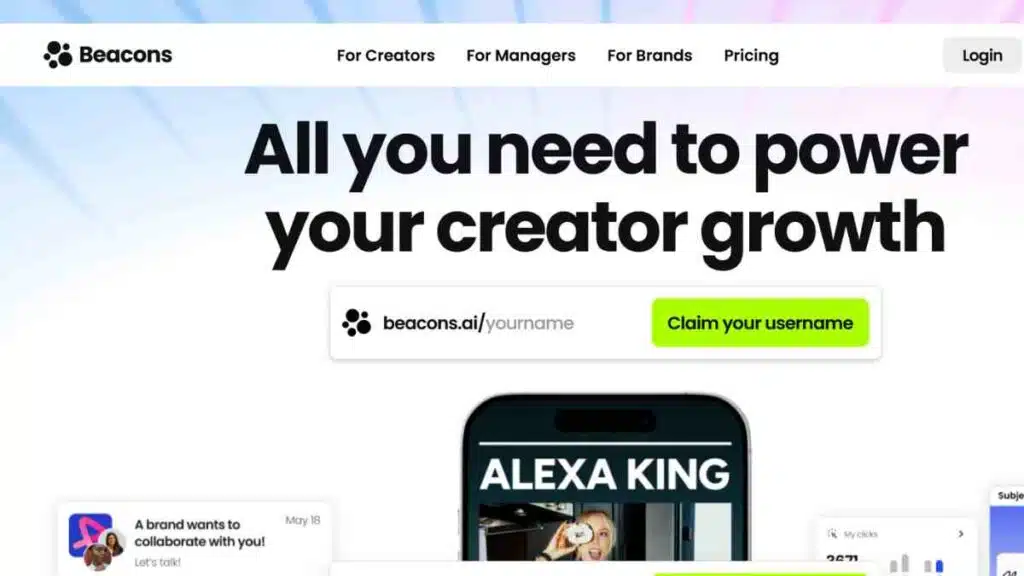
Beacons is an all-in-one creator platform designed to help digital creators manage their online presence, grow their audience, and monetise their content from a single link.
Originally launched as a link-in-bio tool, Beacons has evolved into a broader creator business platform that combines email collection, digital product sales, media kits, and analytics within one dashboard.
Today, many creators on platforms like TikTok, Instagram, YouTube, and X (Twitter) use Beacons as the central hub for their online activities.
Instead of directing followers to multiple websites, creators can place one Beacons link in their bio that leads to a customised page containing everything from social links to sign-up forms and products.
In simple terms, Beacons helps creators turn social media attention into subscribers, customers, and income.
Core Features of Beacons
Beacons offers several tools that allow creators to manage their digital presence in one place. The table below summarises its primary capabilities.
| Feature | Description |
|---|---|
| Link-in-Bio Page | A central landing page that hosts multiple links and creator tools |
| Email Capture Forms | Simple forms that collect subscriber emails directly from the bio page |
| Digital Product Store | Enables creators to sell digital products such as eBooks, courses, and downloads |
| Media Kits | Automatically generated creator portfolios showing audience statistics and partnerships |
| Audience Analytics | Provides insights into visitor behaviour and link performance |
| Integrations | Connects with tools like Stripe and social media platforms |
Together, these features allow creators to transform a simple profile link into a mini business hub.
How Beacons Works
The process of using Beacons is straightforward. Creators can build and launch their pages within minutes.
| Step | Process | Outcome |
|---|---|---|
| Step 1 | Create a Beacons account | Access the creator dashboard |
| Step 2 | Build a custom link-in-bio page | Add links, products, and email capture forms |
| Step 3 | Customise branding and layout | Align the page with personal brand identity |
| Step 4 | Add monetisation tools | Sell digital products or accept payments |
| Step 5 | Place the Beacons link in social profiles | Convert followers into subscribers or customers |
Once published, the Beacons page acts as the central destination for all audience interactions.
Key Tools Inside the Beacons Platform
Beacons provides several built-in tools that creators can activate depending on their needs.
| Tool | Function | Typical Users |
|---|---|---|
| Email Sign-Up Block | Collects email subscribers from bio traffic | Influencers and newsletter creators |
| Storefront | Sells digital downloads and creator products | Course creators and educators |
| Tip Jar | Accepts direct fan payments | Artists and live streamers |
| Media Kit Generator | Displays audience data for brands | Influencers seeking sponsorships |
| Link Hub | Organises external links and resources | Bloggers and content creators |
These tools help creators centralise audience engagement, marketing, and monetisation in one place.
Who Uses Beacons?
Beacons is particularly popular among creators whose audiences live primarily on social media platforms.
| Creator Type | How They Use Beacons |
|---|---|
| TikTok Creators | Promote content, sell digital products, and collect emails |
| Instagram Influencers | Share affiliate links and brand partnerships |
| YouTubers | Direct subscribers to merch stores and newsletters |
| Coaches and Educators | Offer resources, courses, and free guides |
| Artists and Musicians | Accept fan support and sell creative work |
Because of its simplicity and mobile-friendly design, Beacons works especially well for creators who rely heavily on mobile traffic from social platforms.
Limitations of Beacons
Although Beacons offers valuable tools, it is not designed to replace full-scale marketing platforms.
| Limitation | Explanation |
|---|---|
| Basic Email Marketing | Email capture is simple, but automation features are limited |
| Limited Funnel Building | The platform focuses more on quick conversions than complex marketing funnels |
| Fewer Advanced Integrations | Compared with dedicated email marketing tools, integrations are more limited |
For creators who want advanced email automation or complex marketing funnels, tools like ConvertKit often provide deeper functionality.

What Is ConvertKit?
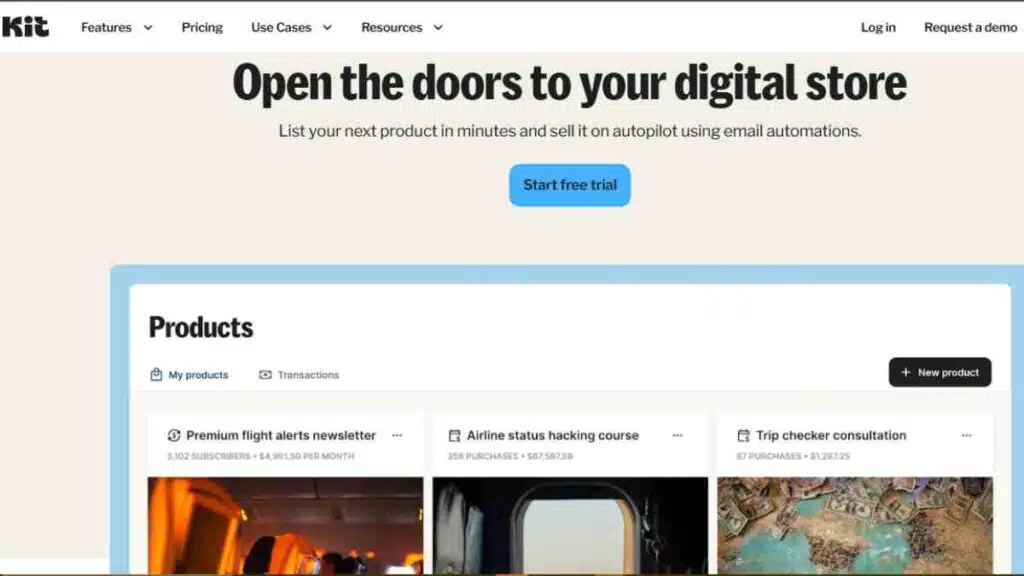
ConvertKit is an email marketing platform built specifically for creators, bloggers, and online entrepreneurs who want to grow and monetise their audiences through email.
Unlike traditional email marketing software designed for large corporations, ConvertKit focuses on simplicity, automation, and audience ownership for individual creators.
It enables users to collect email subscribers, send newsletters, build automated email sequences, and sell digital products directly to their audiences.
Core Features of ConvertKit
ConvertKit provides several powerful tools that help creators manage and grow their email audiences. Below are the platform’s core capabilities.
| Feature | Description |
|---|---|
| Email Sign-Up Forms | Customisable forms embedded on websites or landing pages |
| Landing Pages | Standalone pages designed for lead generation |
| Email Broadcasts | One-time emails sent to subscribers |
| Email Automation | Automated email sequences triggered by user actions |
| Subscriber Tagging | Labels subscribers based on interests or behaviour |
| Digital Product Sales | Allows creators to sell digital products directly |
| Creator Network | A feature that helps creators grow audiences through recommendations |
Together, these features allow creators to build professional email marketing systems without complex technical setups.
How ConvertKit Works
ConvertKit simplifies email marketing by guiding creators through a structured process for growing and engaging their audiences.
| Step | Process |
|---|---|
| Step 1 | Create a ConvertKit account |
| Step 2 | Build a sign-up form or landing page |
| Step 3 | Offer a lead magnet or incentive |
| Step 4 | Create automated email sequences |
| Step 5 | Segment and tag subscribers |
This workflow allows creators to develop automated marketing funnels that run continuously in the background.
Types of Sign-Up Forms in ConvertKit
One of ConvertKit’s biggest strengths is the variety of email capture forms it offers. These forms help creators collect subscribers from multiple channels.
| Form Type | Description | Best Use Case |
|---|---|---|
| Embedded Forms | Forms placed directly on websites or blogs | Blog email capture |
| Modal Pop-Up Forms | Pop-ups that appear on a page after a delay | Increasing conversion rates |
| Slide-In Forms | Small forms that slide into view as users scroll | Subtle lead capture |
| Sticky Bar Forms | A fixed sign-up bar at the top of a website | Constant visibility |
| Landing Pages | Dedicated pages designed for subscriber growth | Social media promotions |
These options allow creators to optimise their email collection strategy across multiple traffic sources.
Key Tools Inside the ConvertKit Platform
ConvertKit provides a number of tools that help creators manage their audiences and marketing campaigns more effectively.
| Tool | Function | Typical Users |
|---|---|---|
| Email Broadcasts | Send newsletters or announcements to subscribers | Newsletter creators |
| Email Sequences | Automated email series delivered over time | Course creators and educators |
| Visual Automation Builder | Drag-and-drop workflow builder for marketing funnels | Digital entrepreneurs |
| Subscriber Tagging | Categorises subscribers based on actions | Bloggers and marketers |
| Creator Network | Recommends other newsletters to grow audiences | Newsletter publishers |
These tools allow creators to build long-term audience relationships rather than relying on one-time interactions.
Who Uses ConvertKit?
ConvertKit is particularly popular among creators who prioritise email marketing and audience ownership.
| Creator Type | How They Use ConvertKit |
|---|---|
| Bloggers | Capture readers and build email newsletters |
| Newsletter Creators | Publish and monetise subscription newsletters |
| Course Creators | Deliver educational content and sales funnels |
| Coaches and Consultants | Nurture leads through automated email sequences |
| Podcasters and YouTubers | Convert listeners and viewers into email subscribers |
These users benefit from ConvertKit’s ability to build automated marketing systems that scale over time.
Limitations of ConvertKit
While ConvertKit offers powerful marketing tools, it may not be the best fit for every creator.
| Limitation | Explanation |
|---|---|
| Learning Curve | Beginners may need time to understand automation workflows |
| Subscriber-Based Pricing | Costs increase as the email list grows |
| Not a Link-in-Bio Tool | ConvertKit focuses on email marketing rather than social media bio links |
For creators whose main focus is social media traffic and quick link sharing, platforms like Beacons may be simpler.
Beacons vs ConvertKit Sign-Up Form Comparison
Choosing the right sign-up form tool can significantly impact how fast creators grow their email lists.
While both Beacons and ConvertKit allow creators to collect email subscribers, they approach sign-up forms very differently.
In this section, we compare the two platforms in detail to understand how their sign-up forms work, what features they offer, and which tool is better for converting followers into subscribers.
1. Form Design and Customisation
The design and flexibility of a sign-up form can significantly influence how many visitors become subscribers. A well-designed form improves user experience, builds trust, and increases conversion rates.
Beacons and ConvertKit take very different approaches to form design. Beacons focuses on simplicity and speed, while ConvertKit prioritises customisation and marketing optimisation.
Beacons sign-up forms usually appear as blocks within a link-in-bio page, making them easy to add but somewhat limited in design flexibility.
ConvertKit, on the other hand, offers several customisable templates and styling options that allow creators to match forms with their websites or landing pages.
The table below highlights the key differences in form design and customisation between the two platforms.
| Feature | Beacons Sign-Up Forms | ConvertKit Sign-Up Forms |
|---|---|---|
| Design Structure | Built as blocks inside a link-in-bio page | Standalone forms that can be embedded anywhere |
| Customisation Options | Basic styling such as colours, text, and layout | Extensive design control including templates, branding, and styling |
| Template Variety | Limited form templates | Multiple form templates designed for different marketing goals |
| Branding Flexibility | Custom colours and fonts within the Beacons page | Full brand customisation including fonts, images, and layouts |
| Mobile Optimisation | Strong mobile-first design for social media traffic | Fully responsive forms optimised for both desktop and mobile |
| Placement Options | Appears within a single link-in-bio page | Can be embedded on websites, blogs, landing pages, and pop-ups |
Overall, Beacons prioritises speed and simplicity, making it ideal for creators who want a quick way to capture emails from social media visitors.
ConvertKit, however, provides greater control over form design, allowing creators to optimise forms for different websites, landing pages, and marketing funnels.
2. Types of Forms Available
The variety of sign-up forms a platform offers determines how effectively creators can capture emails from different traffic sources.
Some audiences interact with embedded forms on websites, while others respond better to pop-ups, landing pages, or slide-ins.
Beacons keeps things simple by offering basic email capture blocks within its link-in-bio pages. These forms work well for social media visitors who click a creator’s bio link and quickly sign up.
ConvertKit, however, provides multiple types of forms designed for different marketing strategies, allowing creators to collect subscribers across blogs, websites, landing pages, and promotional campaigns.
The table below compares the types of sign-up forms available on both platforms.
| Form Type | Beacons | ConvertKit |
|---|---|---|
| Link-in-Bio Form | Yes – built directly into the creator’s bio page | Not available |
| Embedded Website Form | Limited – typically used within the Beacons page | Yes – can be embedded on websites and blogs |
| Landing Page Forms | Basic landing-style pages within the link-in-bio | Yes – dedicated landing pages designed for lead generation |
| Pop-Up Forms | Not available | Yes – modal pop-ups triggered by user actions |
| Slide-In Forms | Not available | Yes – subtle forms that appear while users scroll |
| Sticky Bar Forms | Not available | Yes – fixed bars that remain visible at the top of a webpage |
Because of this difference, Beacons works best for creators who rely heavily on social media traffic, where followers visit a single bio page and sign up quickly.
ConvertKit, on the other hand, is better suited for creators who operate websites, blogs, or marketing funnels, where different form types can be strategically placed to maximise subscriber growth.
See Also: HeyGen vs Colossyan – Which AI Video Generator Is Better for Businesses?
3. Lead Magnet Delivery and Subscriber Incentives
One of the most effective ways to grow an email list is by offering a lead magnet—a free resource given to users in exchange for their email address.
Examples include free guides, templates, checklists, mini-courses, or exclusive content.
This is where the difference between Beacons and ConvertKit becomes more noticeable.
While both platforms allow creators to collect email addresses, their ability to deliver lead magnets and automate follow-ups varies significantly.
Key Differences in Lead Magnet Delivery
| Capability | Beacons | ConvertKit |
|---|---|---|
| Lead Magnet Delivery | Basic – usually requires manual linking or external setup | Fully automated delivery via email |
| Welcome Email Automation | Limited automation options | Automatic welcome emails and sequences |
| Subscriber Tagging | Minimal tagging capabilities | Advanced tagging based on actions and interests |
| Funnel Building | Not designed for complex funnels | Built for automated marketing funnels |
| Follow-Up Email Sequences | Not a core feature | Dedicated automation builder for sequences |
In practical terms, this means creators using ConvertKit can build a complete email funnel automatically. For example, when someone downloads a free guide, they can instantly receive:
- the lead magnet
- a welcome email
- a series of educational emails
- promotional offers
Beacons focuses more on capturing email addresses quickly, while ConvertKit focuses on turning those subscribers into long-term engaged audiences and customers.
This difference highlights the broader philosophy behind the platforms: Beacons prioritises fast social-media-driven conversions, whereas ConvertKit emphasises structured email marketing and audience nurturing.
These contrasting approaches become even clearer when comparing email automation and subscriber management, which we explore next.

4. Email Automation and Subscriber Management
Capturing an email address is only the first step in building a strong creator business. What happens after someone signs up often determines whether that subscriber becomes an engaged fan or a paying customer.
This is where email automation and subscriber management play a crucial role.
Automation allows creators to send targeted messages automatically based on user behaviour, while subscriber management helps organise audiences for personalised communication.
Beacons offers basic email collection and simple messaging tools. However, its automation capabilities are relatively limited.
ConvertKit, on the other hand, is designed specifically for automated email marketing.
Automation and Subscriber Management Comparison
| Capability | Beacons | ConvertKit |
|---|---|---|
| Email Automation | Limited automation tools | Advanced automation workflows |
| Welcome Email Sequences | Basic or manual setup | Automated multi-email sequences |
| Subscriber Segmentation | Minimal segmentation features | Powerful tagging and segmentation |
| Behaviour-Based Triggers | Not a core feature | Automation triggered by user actions |
| Visual Automation Builder | Not available | Drag-and-drop automation builder |
| Campaign Personalisation | Limited personalisation | Highly personalised email campaigns |
For example, a creator using ConvertKit could automatically set up a workflow like this:
- A user signs up for a free guide.
- ConvertKit sends the download instantly.
- The subscriber receives a three-part welcome series.
- The system tags the subscriber based on their interests.
- Later, the creator sends a targeted offer based on those tags.
This type of automated journey helps creators build relationships with subscribers over time, rather than relying on one-off messages.
Beacons can still work well for creators who simply want to capture emails from social media visitors.
However, creators who want to build long-term email marketing systems and personalised campaigns typically benefit more from ConvertKit’s advanced automation capabilities.
5. Mobile Conversion Experience and User Journey
Many creators attract most of their traffic from mobile-first platforms like TikTok, Instagram, and YouTube. As a result, the mobile experience of a sign-up form can significantly affect conversion rates.
Both Beacons and ConvertKit support mobile-friendly forms. However, they approach mobile conversion from different angles.
Beacons focuses on fast, frictionless sign-ups from link-in-bio pages, while ConvertKit optimises forms for websites, landing pages, and marketing funnels.
Mobile Experience Comparison
| Feature | Beacons | ConvertKit |
|---|---|---|
| Mobile Design Approach | Mobile-first link-in-bio pages | Responsive forms for both mobile and desktop |
| Sign-Up Speed | Very fast, minimal form fields | Slightly longer due to more customisable forms |
| Ideal Traffic Source | Social media bio traffic | Websites, blogs, and landing pages |
| Page Load Speed | Optimised for quick mobile loading | Optimised but depends on landing page design |
| User Journey | Simple: bio link → sign-up | Funnel-based: landing page → sign-up → automation |
For example, a creator on TikTok can place their Beacons link in their bio, allowing followers to sign up instantly without navigating through multiple pages.
ConvertKit typically involves a more structured journey. A user may click a link to a landing page, read about a lead magnet, and then complete a sign-up form before entering an automated email sequence.
As a result, Beacons excels at quick mobile conversions, while ConvertKit is better suited for creators who want to guide subscribers through a more detailed marketing funnel.
6. Beacons vs ConvertKit Pricing Comparison
Pricing is an important factor when choosing a platform for collecting and managing email subscribers.
Both Beacons and ConvertKit offer free plans, but their pricing models differ significantly as creators grow their audiences.
Beacons uses a feature-based pricing model, where creators upgrade to unlock advanced monetisation tools and creator features.
ConvertKit, in contrast, follows a subscriber-based pricing structure, meaning the cost increases as your email list grows.
Below is a clear breakdown of the current pricing tiers for both platforms.
Beacons Pricing Plans
| Plan | Price |
|---|---|
| Free | $0 |
| Starter | $6/month |
| Pro | $12/month |
| Premium | $30/month |
Important note: Beacons focuses heavily on creator monetisation tools, including digital storefronts and brand partnership features, which are bundled into its higher-tier plans.
ConvertKit Pricing Plans
ConvertKit pricing depends largely on the number of email subscribers on your list. The platform offers a free plan for beginners and paid plans with more advanced features.
| Plan | Price |
|---|---|
| Newsletter | $0/month |
| Creator | $39/month |
| Pro | $79/month |
As subscriber numbers grow, pricing increases. This model allows creators to start for free but gradually pay more as their audience expands.
Beacons vs ConvertKit Pricing Comparison
Now that we understand each platform’s pricing structure, it becomes easier to compare the value they offer creators.
| Pricing Factor | Beacons | ConvertKit |
|---|---|---|
| Free Plan | Yes | Yes |
| Pricing Model | Feature-based | Subscriber-based |
| Cost as Audience Grows | Relatively stable | Increases with subscriber count |
| Best Value For | Social media creators monetising audiences | Email marketers and newsletter creators |
Overall, Beacons tends to be more affordable for creators focused on social media monetisation, while ConvertKit provides more advanced email marketing capabilities that justify higher costs as audiences grow.
Pros and Cons of Beacons vs ConvertKit
Every platform has strengths and limitations. Understanding these advantages and drawbacks helps creators choose the tool that best matches their growth strategy.
While Beacons focuses on simplicity and creator monetisation, ConvertKit prioritises advanced email marketing and automation.
The differences become clearer when we evaluate the pros and cons of each platform.
Beacons Pros and Cons
| Pros | Cons |
|---|---|
| Extremely easy to set up and use | Limited email marketing automation |
| Designed for social media creators and influencers | Few form types compared to email marketing platforms |
| Mobile-first link-in-bio experience | Basic subscriber segmentation |
| Built-in tools for selling digital products | Not ideal for complex marketing funnels |
| Affordable pricing for beginners | Limited integrations compared to email marketing tools |
Beacons works best for creators who want a simple hub to capture emails, share links, and monetise their audience directly from social media profiles.
However, creators who want advanced marketing capabilities may quickly outgrow its email features.
ConvertKit Pros and Cons
| Pros | Cons |
|---|---|
| Powerful email automation and workflows | Pricing increases as subscriber lists grow |
| Multiple sign-up form types for different marketing strategies | Slight learning curve for beginners |
| Advanced subscriber tagging and segmentation | Not designed as a link-in-bio tool |
| Strong integration ecosystem with creator tools | Requires more setup compared to simple link tools |
| Built specifically for creators, bloggers, and newsletter publishers | Some advanced features locked behind higher plans |
ConvertKit is ideal for creators who want to build long-term email marketing systems, automated funnels, and personalised subscriber journeys.
However, creators who only need basic email capture from social media traffic may find the platform more complex than necessary.

Beacons vs ConvertKit: Which Platform Is Better for Different Creators?
The right tool often depends on how a creator builds and monetises their audience. Some creators rely almost entirely on social media traffic, while others grow through blogs, newsletters, or digital products.
Because Beacons and ConvertKit were built for different purposes, each platform performs better for certain creator types.
Understanding these differences can help creators choose a platform that aligns with their growth strategy, audience behaviour, and monetisation goals, which is a key principle when selecting digital tools for business growth.
Best for Social Media Influencers
Creators who generate most of their traffic from platforms like TikTok, Instagram, or YouTube Shorts often prioritise speed and simplicity.
Their goal is to turn casual profile visitors into subscribers or customers as quickly as possible.
Beacons performs particularly well in this scenario because it acts as a central hub for multiple links, email capture, and monetisation tools within a single bio link.
Creators can place their Beacons link in their social profile and allow followers to:
- join an email list
- access multiple links
- purchase digital products
- support the creator directly
| Platform | Why It Works for Influencers |
|---|---|
| Beacons | Designed for link-in-bio traffic and quick conversions |
| ConvertKit | Better suited for deeper email marketing rather than social bio links |
For influencers focused primarily on social traffic and fast audience capture, Beacons is usually the more convenient option.
Best for Newsletter Creators
Newsletter creators have different priorities. Their main focus is building and nurturing a highly engaged email audience.
ConvertKit excels here because it provides advanced tools that support long-term email growth, including:
- automated email sequences
- subscriber tagging
- behaviour-based segmentation
- email analytics
These features allow newsletter creators to build consistent publishing workflows and personalised subscriber experiences.
| Platform | Why It Works for Newsletter Creators |
|---|---|
| Beacons | Basic email capture but limited newsletter tools |
| ConvertKit | Built specifically for newsletters and email publishing |
For creators launching or scaling a newsletter, ConvertKit typically provides the infrastructure needed to manage and grow an email audience effectively.
Best for Course Creators and Digital Product Sellers
Creators selling digital products, such as courses, templates, or memberships, need tools that support sales funnels and audience nurturing.
ConvertKit offers powerful automation features that make it easier to build these funnels. For example, creators can automatically:
- deliver a free lead magnet
- send educational email sequences
- promote a course or product
- segment buyers and non-buyers
| Platform | Sales Funnel Capabilities |
|---|---|
| Beacons | Simple storefront and product sales |
| ConvertKit | Advanced funnels and automated product promotion |
While Beacons allows creators to sell products directly through its storefront, ConvertKit provides more sophisticated marketing workflows that help convert subscribers into customers.
Best for Bloggers and Website Owners
Bloggers and website owners often rely on embedded forms, landing pages, and lead magnets to grow their email lists.
ConvertKit is particularly strong in this area because it supports multiple form placements across websites, including:
- embedded blog forms
- pop-up forms
- slide-in forms
- dedicated landing pages
| Platform | Website Email Capture |
|---|---|
| Beacons | Limited to link-in-bio style pages |
| ConvertKit | Fully integrated website forms and landing pages |
For creators who operate blogs or content websites, ConvertKit provides a more flexible system for capturing and managing subscribers.
Summary: Platform Fit by Creator Type
| Creator Type | Best Platform | Reason |
|---|---|---|
| Social Media Influencers | Beacons | Fast email capture through link-in-bio pages |
| Newsletter Creators | ConvertKit | Built specifically for email publishing |
| Course Creators | ConvertKit | Advanced automation and marketing funnels |
| Bloggers and Website Owners | ConvertKit | Flexible sign-up forms and landing pages |
Ultimately, Beacons works best for creators who want a simple tool to convert social traffic into subscribers, while ConvertKit is better suited for creators who want to build structured email marketing systems and long-term audience relationships.
Final Verdict: Beacons vs ConvertKit Sign-Up Forms
Choosing between Beacons and ConvertKit ultimately comes down to how you plan to grow and monetise your audience. While both platforms allow creators to collect email subscribers, they serve different strategic purposes.
Beacons is designed primarily for social media creators who want a fast and simple way to capture emails from link-in-bio traffic. Its strength lies in simplicity. ‘
ConvertKit, on the other hand, is built for serious email marketing and long-term audience growth.
To make the decision easier, the table below summarises the core differences.
| Category | Beacons | ConvertKit |
|---|---|---|
| Primary Purpose | Link-in-bio creator platform | Email marketing platform |
| Sign-Up Form Simplicity | Very simple and quick to deploy | More advanced but requires setup |
| Form Customisation | Limited design flexibility | Extensive customisation options |
| Automation Features | Minimal automation | Advanced automation and sequences |
| Lead Magnet Delivery | Limited automation | Fully automated lead magnet delivery |
| Best Traffic Source | Social media profiles | Websites, blogs, and landing pages |
| Ideal Users | Influencers and social creators | Newsletter creators and digital entrepreneurs |
When to Choose Beacons
Beacons is the better option if you:
- primarily drive traffic from TikTok, Instagram, or other social platforms
- want a simple link-in-bio tool with email capture
- prefer a quick setup with minimal technical complexity
- want to combine links, monetisation tools, and email collection in one place
For many influencers and content creators, Beacons offers a fast and frictionless way to turn followers into subscribers or customers.
When to Choose ConvertKit
ConvertKit is the better choice if you:
- want to build a long-term email marketing strategy
- plan to use lead magnets and automated email funnels
- run a newsletter, blog, or online course business
- need advanced subscriber segmentation and automation
In these cases, ConvertKit provides the infrastructure needed to grow and monetise an email audience at scale.
The Bottom Line
Both platforms solve the same problem, collecting email subscribers, but they approach it from very different angles.
Beacons focuses on speed and social media conversions, while ConvertKit focuses on automation, audience management, and long-term email marketing growth.
For creators deciding between the two, the best approach is to choose the platform that aligns with how and where your audience discovers you.
Conclusion
Beacons and ConvertKit both help creators capture email subscribers, but they serve different goals.
Beacons is ideal for quick email capture from social media traffic, while ConvertKit excels at building automated email marketing systems and long-term audience relationships.
The right choice depends on whether your priority is simple social conversions or advanced email marketing growth.
We want to see you succeed, and that’s why we provide valuable business resources to help you every step of the way.
- Join over 23,000 entrepreneurs by signing up for our newsletter and receiving valuable business insights.
- Register your business today with Entrepreneurs.ng’s Business Registration Services.
- Tell Your Brand Story on Entrepreneurs.ng, let’s showcase your brand to our global audience.
- Need help with your marketing strategy? Get a Comprehensive Marketing and Sales Plan here.
- Sign up for our Entrepreneurs Success Blueprint Programme to learn how to start and scale your business in just 30 days.
- Book our one-on-one consulting and speak to an expert about structuring and growing your business.
- Visit our shop for business plan templates and other valuable resources to guide you.
- Get our Employee-Employer Super Bundle NDA templates to legally protect your business and workforce.
- Advertise your business to over a million entrepreneurs through our different advertising packages.

Frequently Asked Questions (FAQs)
What is the main difference between Beacons and ConvertKit?
The main difference is their primary purpose. Beacons is a link-in-bio creator platform focused on social media monetisation, while ConvertKit is an email marketing platform designed for building and managing email audiences.
Does Beacons have email marketing features?
Yes, Beacons allows creators to collect email addresses and send basic messages. However, its email marketing features are limited compared to dedicated platforms like ConvertKit.
Is ConvertKit better for email marketing?
Yes. ConvertKit was built specifically for email marketing, offering features such as automation, subscriber tagging, email sequences, and advanced segmentation.
Can Beacons replace ConvertKit?
For simple email collection from social media, Beacons can work as a lightweight alternative. However, it cannot fully replace ConvertKit’s advanced automation, funnel building, and email marketing capabilities.
Which platform is better for influencers?
Beacons is often better for influencers who rely heavily on TikTok, Instagram, or YouTube traffic, because it simplifies link sharing and email capture through a single bio link.
Which platform is best for newsletter creators?
ConvertKit is generally the better choice for newsletter creators because it offers tools specifically designed for publishing and managing newsletters.
Do Beacons sign-up forms support automation?
Beacons supports basic email collection, but it does not provide advanced automation workflows like ConvertKit.
Can ConvertKit create landing pages for email sign-ups?
Yes. ConvertKit includes landing page builders and multiple sign-up form types designed to help creators grow their email lists.
Which platform has better sign-up form customisation?
ConvertKit offers far more customisation options, including templates, branding controls, and multiple form types. Beacons forms are simpler and mainly designed for link-in-bio pages.
Is Beacons free to use?
Yes. Beacons offers a free plan with basic features, while paid plans unlock advanced creator tools and monetisation options.
Does ConvertKit offer a free plan?
Yes. ConvertKit provides a free plan that allows creators to manage up to 1,000 subscribers with basic email marketing features.
Which platform is better for selling digital products?
Both platforms support digital product sales, but ConvertKit offers stronger marketing automation for promoting products through email funnels.
Can ConvertKit be used with social media platforms?
Yes. Creators can share ConvertKit landing pages and sign-up forms on social media to capture subscribers.
Which platform is easier for beginners?
Beacons is generally easier for beginners because it requires minimal setup and technical knowledge.
Which platform is better for long-term audience growth?
ConvertKit is better for long-term growth because it provides automation, segmentation, and advanced marketing tools that help creators nurture and monetise their audiences over time.