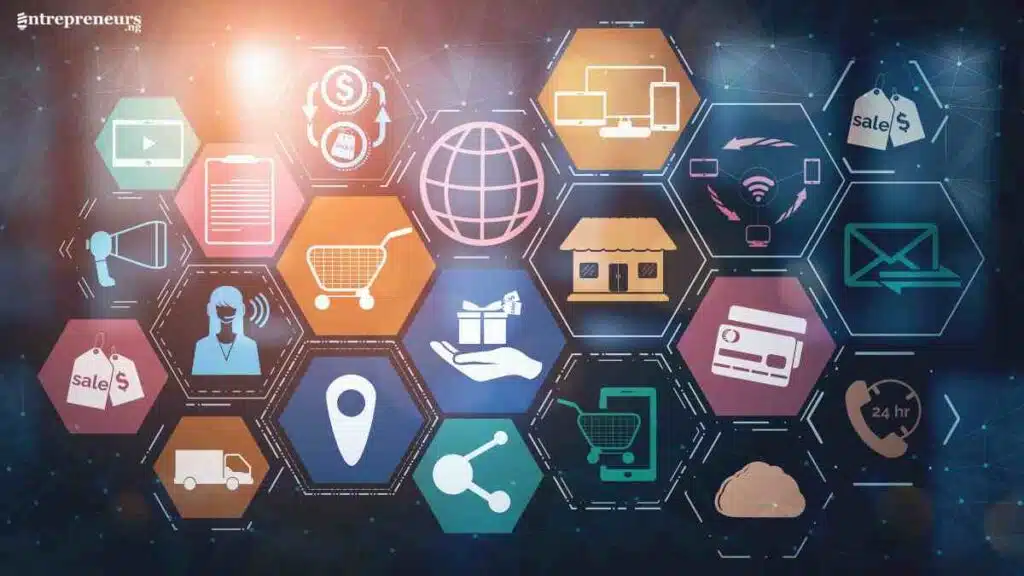
Bridging the gap between channels is now central to growth, and understanding how to bridge online and offline customer experience is key to delivering a seamless journey.
Customers move seamlessly across digital and physical touchpoints, so businesses need an omnichannel strategy that keeps every interaction connected.
Salesforce reports that 73% of customers expect companies to understand their unique needs, making consistency, context, and personalisation essential for any effective online-to-offline customer experience strategy.
Key Takeaways
- Customers expect one seamless journey, not separate online and offline interactions.
- A strong omnichannel strategy connects data, technology, and touchpoints into one experience.
- Personalisation and consistency across channels drive higher loyalty, retention, and revenue.
- Businesses that integrate digital and physical experiences gain a clear competitive advantage.

What Does It Mean to Bridge Online and Offline Customer Experience?
Bridging online and offline customer experience means creating a seamless, connected journey for customers as they move between digital platforms and physical touchpoints.
Instead of treating your website, social media, mobile app, and physical store as separate channels, you integrate them into one unified experience that feels consistent and personalised at every stage.
At its core, it is about removing friction. A customer might discover your brand on Instagram, research your product on your website, visit your store to see it in person, and complete the purchase through a mobile app.
When these interactions are aligned, relevant, and connected, you have successfully bridged the gap between online and offline.
Omnichannel vs Multichannel: Understanding the Difference
Many businesses operate across multiple platforms, but not all deliver a true omnichannel experience.
- Multichannel means being present on different platforms (e.g., website, store, social media), but each operates independently.
- Omnichannel, on the other hand, connects these platforms so they share data, context, and customer history.
In a multichannel setup, a customer may need to repeat information across channels.
In an omnichannel system, the business already knows the customer, their preferences, and their past interactions, making every touchpoint smarter and more relevant.
What is Online-to-Offline (O2O) Experience?
Online-to-offline (O2O) refers to strategies that drive customers from digital platforms into physical locations or experiences. It is a key part of bridging the gap.
Examples include:
- Ordering online and picking up in-store (click-and-collect)
- Booking appointments online for in-store services
- Using mobile apps for in-store payments or rewards
However, true integration goes beyond just moving customers between channels. It ensures that the experience feels continuous, not disconnected.
Why Customer Expectations Have Changed
Today’s customers are more informed, connected, and impatient than ever. They expect:
- Instant access to information
- Personalised recommendations
- Consistency across all touchpoints
They no longer distinguish between “online” and “offline” interactions. To them, it is all part of one brand experience.
This shift means businesses must rethink how they design customer journeys.
Success now depends on how well you integrate digital convenience with physical engagement to create a unified, frictionless experience.
Importance of Bridging Online and Offline Customer Experience
In today’s fast-moving digital world, customers no longer see a difference between online and offline interactions.
They expect brands to recognise them, remember their preferences, and deliver a consistent experience wherever they engage.
Bridging online and offline customer experience is therefore not just a competitive advantage; it is essential for survival and long-term growth.
Enhances Customer Satisfaction and Convenience
When businesses connect their digital and physical touchpoints, customers enjoy a smoother and more convenient journey.
They can start an interaction online and complete it offline without confusion or repetition. This ease reduces frustration and builds trust, making customers more likely to return.
A seamless experience shows that a brand values the customer’s time and effort.
Strengthens Customer Loyalty and Retention
Consistency across channels creates familiarity, and familiarity builds loyalty.
When customers receive the same quality of service whether they are online or in-store, they develop stronger emotional connections with the brand.
Over time, this connection increases retention rates and encourages repeat purchases, which are far more valuable than one-time transactions.
Drives Higher Revenue and Conversions
A well-integrated experience removes barriers to purchase. Customers who can easily switch between channels are more likely to complete their buying journey.
For example, a shopper who researches a product online and finds it available in-store is more inclined to buy immediately.
This fluidity increases conversion rates and ultimately boosts revenue.
Provides Better Customer Insights and Data
Integrating online and offline channels allows businesses to collect and analyse richer customer data.
Instead of fragmented information, companies gain a complete view of customer behaviour across all touchpoints.
These insights help businesses make smarter decisions, personalise marketing efforts, and improve overall performance.
Builds a Stronger and More Consistent Brand Image
A disconnected experience can confuse customers and weaken brand perception. However, when every interaction reflects the same message, tone, and quality, it strengthens the brand’s identity.
Customers begin to recognise and trust the brand more easily, which enhances credibility and long-term positioning in the market.
Creates a Sustainable Competitive Advantage
As more businesses compete for attention, experience becomes the key differentiator.
Companies that successfully bridge online and offline experiences stand out because they deliver something others struggle to achieve: true convenience and consistency.
This advantage is difficult to replicate quickly, making it a powerful driver of long-term success.

The Modern Customer Journey – How People Actually Buy Today
The way people buy has changed completely. Today’s customer journey is no longer linear or predictable.
Instead of moving neatly from awareness to purchase, customers jump between digital and physical touchpoints, comparing options, seeking validation, and switching channels effortlessly.
Understanding this behaviour is crucial if you want to bridge online and offline customer experience successfully.
Discovery Happens Mostly Online
The journey often begins online. Customers discover products through search engines, social media, online ads, or recommendations.
At this stage, visibility matters more than anything else. If your brand does not show up where customers are searching or scrolling, you lose the opportunity before the journey even starts.
This is where strong online presence and content strategy play a critical role.
Consideration Spans Multiple Channels
Once interest is created, customers begin to evaluate their options. This stage is no longer confined to one platform.
A buyer might read reviews on your website, check ratings on third-party platforms, visit your social media pages, and even walk into a physical store to see the product firsthand.
The decision-making process is now a mix of digital research and physical validation, making consistency across channels essential.
Purchase Can Happen Anywhere
Unlike before, the purchase stage is flexible. Some customers prefer to complete transactions online for convenience, while others still value the reassurance of buying in-store.
Many combine both, such as researching online and purchasing offline, or vice versa.
Businesses that make this transition smooth, through options like click-and-collect or in-store digital support, are more likely to capture the sale.
Post-Purchase Experience Drives Loyalty
The journey does not end after the purchase. In fact, this is where long-term value is created.
Customers expect follow-up communication, easy returns, personalised offers, and consistent support across all channels.
A positive post-purchase experience increases satisfaction and encourages repeat business, while a poor one can quickly damage trust.
The Journey Is Continuous, Not Linear
Perhaps the most important shift is that the customer journey is now a continuous loop rather than a straight path.
Customers may revisit earlier stages, switch devices, or interact with multiple touchpoints before making a decision.
This behaviour reinforces the need for a unified experience where every interaction feels connected, relevant, and effortless.
How to Bridge Online and Offline Customer Experience Using 10 Proven Strategies
Bridging online and offline customer experience requires more than just being present on multiple channels; it demands a deliberate, well-executed strategy that connects every touchpoint into one seamless journey.
Businesses that succeed in this area do not leave interactions to chance; they design experiences that flow naturally from digital to physical and back again.
In this section, we will explore ten proven strategies that help you integrate channels, enhance customer engagement, and create a consistent experience that drives loyalty and growth.
1. Create a Unified Customer Data System
If there is one foundation for successfully bridging online and offline customer experience, it is data.
Without a unified customer data system, every channel operates in isolation, leading to fragmented interactions and missed opportunities.
However, when all customer information is connected, businesses can deliver a seamless, personalised experience across every touchpoint.
A unified system brings together data from your website, mobile app, social media, email campaigns, and physical store interactions into one central platform.
What a Unified Customer Data System Looks Like
| Component | Online Touchpoint | Offline Touchpoint | Integrated Outcome |
|---|---|---|---|
| Customer Profile | Website visits, app usage, email activity | In-store purchases, customer service interactions | A single, complete view of the customer |
| Purchase History | E-commerce transactions | Point-of-sale (POS) data | Consistent recommendations across channels |
| Preferences | Browsing behaviour, wishlists | In-store inquiries, product trials | Personalised offers and communication |
| Engagement | Social media interactions, ads clicked | Loyalty programmes, in-store promotions | Smarter, targeted marketing campaigns |
When these elements are connected, the experience becomes fluid. For instance, a customer who browses a product online can walk into a store and receive personalised assistance based on their browsing history.
Similarly, a purchase made in-store can trigger relevant follow-up emails or product recommendations online.
Why It Matters
A unified customer data system does more than organise information; it transforms how businesses interact with customers. It enables:
- Personalisation at scale, where every interaction feels tailored
- Consistency across channels, eliminating confusion and repetition
- Faster decision-making, driven by real-time insights
- Stronger customer relationships, built on understanding and relevance
In essence, data is the bridge that connects digital and physical experiences. Without it, integration is impossible.
With it, every channel works together to deliver a truly seamless customer journey.
2. Invest in Omnichannel Technology Integration
Bridging online and offline customer experience becomes far more effective when the right technology connects every interaction behind the scenes.
Without proper integration, even the best strategies can fall apart due to delays, inconsistencies, or disconnected systems. This is why investing in omnichannel technology is not optional; it is essential.
An effective setup links key systems such as Customer Relationship Management (CRM), Point-of-Sale (POS), inventory management, and marketing platforms.
When these tools work together, they create a smooth flow of information that supports real-time, consistent customer interactions across all channels.
Key Technologies That Enable Integration
| Technology | Function | Impact on Customer Experience |
|---|---|---|
| CRM Systems | Stores customer data and interaction history | Enables personalised communication across all channels |
| POS Systems | Handles in-store transactions | Syncs offline purchases with online profiles |
| Inventory Management | Tracks product availability in real time | Prevents stock issues and improves fulfilment accuracy |
| Marketing Automation Tools | Manages campaigns and customer engagement | Delivers consistent messaging across digital platforms |
| Mobile Apps | Connects digital interactions with physical experiences | Enhances convenience through features like mobile payments and loyalty rewards |
When these technologies are integrated, the experience becomes seamless.
A customer can check product availability online, visit a store to confirm quality, and complete the purchase through whichever channel is most convenient, all without encountering conflicting information or delays.
The result is a more efficient operation and a smoother, more connected journey that aligns perfectly with modern customer expectations.
3. Personalise Customer Interactions Across Channels
Personalisation is what transforms a connected experience into a meaningful one.
When businesses effectively bridge the online and offline customer experience, they do not just connect systems; they use customer data to deliver relevant, timely, and tailored interactions at every touchpoint.
Today’s customers expect brands to understand their needs without having to repeat themselves.
Whether they are browsing online or speaking to a sales assistant in-store, they want the experience to feel consistent and customised. This is where cross-channel personalisation becomes a powerful differentiator.
How Personalisation Works Across Channels
| Touchpoint | Customer Action | Personalised Experience |
|---|---|---|
| Website | Browses specific products | Displays tailored recommendations and offers |
| Opens or clicks campaigns | Sends relevant follow-up content or discounts | |
| Social Media | Engages with posts or ads | Shows targeted ads based on interests |
| In-Store | Visits or makes inquiries | Staff provide recommendations based on customer history |
| Mobile App | Uses features or saves items | Push notifications with personalised updates |
When these interactions are aligned, the customer journey feels intentional rather than random. Each touchpoint builds on the last, creating a sense of continuity that increases engagement and trust.
The real strength of personalisation lies in its ability to make customers feel recognised and valued, regardless of where or how they interact with your brand.
4. Enable Click-and-Collect and Hybrid Shopping Experiences
One of the most practical ways to bridge online and offline customer experience is by giving customers the flexibility to move effortlessly between both worlds.
Click-and-collect, along with other hybrid shopping options, allows customers to combine the convenience of online browsing with the immediacy of in-store fulfilment.
This approach meets customers exactly where they are. Some prefer to research products online but want to see or collect them physically.
Others may visit a store first and later complete their purchase online. By enabling these flexible pathways, businesses remove friction and make the buying process more convenient.
How Hybrid Shopping Connects the Experience
| Customer Journey Stage | Online Action | Offline Experience | Resulting Benefit |
|---|---|---|---|
| Product Search | Browses products on website or app | Visits store to see or test product | More confident purchase decision |
| Purchase | Buys online | Picks up in-store (click-and-collect) | Faster fulfilment and convenience |
| In-Store Visit | Checks availability online | Confirms product in-store | Reduced uncertainty and wasted trips |
| Post-Purchase | Orders in-store | Receives home delivery | Flexible fulfilment options |
When these options are available and well-coordinated, customers feel in control of their journey. They can choose how, when, and where to interact with your brand without being restricted by channel limitations.
This flexibility not only improves the overall experience but also increases the likelihood of conversion, as customers are more inclined to complete purchases when the process fits seamlessly into their lifestyle.
5. Maintain Brand Consistency Across All Touchpoints
Consistency is what ties the entire customer experience together.
Even when businesses connect their online and offline channels, the experience can still feel disjointed if the brand looks, sounds, or behaves differently across platforms.
Maintaining consistency ensures that customers recognise and trust your brand, no matter where they interact with it.
A customer might see your product on social media, visit your website for more information, and then walk into your store.
If each touchpoint delivers a different message, tone, or level of service, it creates confusion and weakens the overall experience. However, when everything aligns, it reinforces credibility and builds a stronger connection.
How to Ensure Consistency Across Channels
| Touchpoint | Key Element | Consistent Experience Delivered |
|---|---|---|
| Website | Branding, tone, product information | Matches in-store messaging and visuals |
| Social Media | Voice, content style, promotions | Aligns with website and offline campaigns |
| Physical Store | Staff behaviour, product display | Reflects online brand identity and promises |
| Customer Support | Communication style, responsiveness | Provides the same quality across online and offline channels |
| Marketing Campaigns | Offers, messaging, timing | Unified across all platforms and locations |
When customers encounter the same message and experience at every stage, it reduces uncertainty and builds confidence in their decisions.
They know what to expect, and that reliability becomes a key reason they continue choosing your brand over others.

6. Train Staff for Omnichannel Engagement
Technology can connect systems, but people bring the experience to life. Your staff play a critical role in bridging online and offline customer experience because they are often the final touchpoint where decisions are made.
If they are not aligned with your omnichannel strategy, the entire experience can break down.
Customers expect staff to be informed, responsive, and connected to their journey. For instance, if a customer walks into a store after browsing products online, they should not have to start from scratch.
Well-trained staff can access relevant information, understand customer intent, and continue the conversation seamlessly.
What Effective Omnichannel Training Looks Like
| Training Area | Focus | Impact on Customer Experience |
|---|---|---|
| Product Knowledge | Deep understanding of products across channels | Enables confident and helpful recommendations |
| Digital Tools | CRM systems, inventory tools, mobile apps | Allows staff to access real-time customer and product data |
| Customer Interaction | Communication skills and personalisation | Creates a consistent and engaging experience |
| Cross-Channel Awareness | Understanding customer journey across platforms | Helps staff continue conversations seamlessly |
| Problem Resolution | Handling issues across online and offline touchpoints | Reduces friction and improves satisfaction |
When staff are properly equipped, they become an extension of your digital experience.
They can guide customers, resolve issues quickly, and deliver a level of service that feels connected rather than fragmented.
7. Use Mobile as the Bridge Between Channels
Mobile devices have become the most powerful link between digital and physical experiences. Customers carry their phones everywhere, using them to search, compare, review, and even complete purchases.
This makes mobile the natural bridge that connects online interactions with offline actions.
When businesses optimise for mobile, they create a continuous experience that follows the customer in real time.
A customer might browse products on their phone, check reviews while in-store, scan a QR code for more details, or complete payment through a mobile wallet.
Each of these actions connects the digital and physical journey without interruption.
How Mobile Connects Online and Offline Experiences
| Mobile Feature | Online Interaction | Offline Connection | Resulting Experience |
|---|---|---|---|
| Mobile Website/App | Product browsing and research | Used in-store for comparisons | Informed and confident decisions |
| QR Codes | Access to product details or promotions | Scanned in physical locations | Enhanced in-store engagement |
| Mobile Payments | Digital checkout options | Used at physical stores | Faster and more convenient transactions |
| Push Notifications | Personalised offers and updates | Triggered by location or behaviour | Timely and relevant engagement |
| Loyalty Apps | Tracks rewards and activity | Redeemed in-store or online | Seamless rewards experience |
By making mobile a central part of your strategy, you ensure that customers can move effortlessly between channels without losing context.
It turns every interaction into part of a connected journey, rather than a separate experience.
8. Leverage Real-Time Data and Analytics for Decision Making
Bridging online and offline customer experience becomes far more effective when decisions are driven by real-time data.
Customer behaviour is constantly changing, and businesses that can track, analyse, and respond to these changes instantly are better positioned to deliver relevant and timely experiences.
Real-time data allows you to understand what customers are doing at any given moment, what they are browsing, where they are located, and how they are interacting with your brand.
This insight enables businesses to adjust messaging, offers, and service delivery on the spot, ensuring that every interaction feels current and personalised.
How Real-Time Data Connects the Experience
| Data Source | Insight Gathered | Offline Application | Resulting Experience |
|---|---|---|---|
| Website Analytics | Browsing behaviour and popular products | Adjust in-store displays and promotions | More relevant product visibility |
| Mobile Activity | Location and engagement patterns | Send location-based offers in-store | Timely and personalised interactions |
| POS Data | Purchase trends and customer preferences | Align inventory and staff recommendations | Better product availability and service |
| Social Media Insights | Customer sentiment and engagement | Improve in-store messaging and campaigns | Consistent and responsive brand experience |
| CRM Data | Customer history and behaviour patterns | Personalised in-store assistance | Seamless and informed interactions |
When businesses use real-time data effectively, they move from reactive to proactive engagement.
Instead of waiting for customers to act, they anticipate needs and deliver experiences that feel intuitive, connected, and highly relevant.
9. Align Marketing, Sales, and Customer Service Teams
Bridging online and offline customer experience is not just a technology challenge; it is an organisational one.
When marketing, sales, and customer service teams operate in silos, the customer experience becomes fragmented.
However, when these teams are aligned, every interaction feels connected, intentional, and consistent.
Customers do not see departments; they see one brand. They expect the message they receive in an online ad to match what a sales representative says in-store.
They also expect customer service to understand their previous interactions, regardless of where they occurred.
This level of consistency can only happen when teams share information, goals, and a unified approach to customer engagement.
How Team Alignment Connects the Experience
| Team Function | Role in Online Channels | Role in Offline Channels | Integrated Outcome |
|---|---|---|---|
| Marketing | Runs digital campaigns, social media, email marketing | Supports in-store promotions and branding | Consistent messaging across all touchpoints |
| Sales | Engages customers through online platforms and inquiries | Assists customers in-store and closes sales | Smooth transition from interest to purchase |
| Customer Service | Handles online support and queries | Resolves in-store issues and provides assistance | Continuous and informed customer support |
| Data Sharing | Collects and analyses customer insights | Applies insights to in-person interactions | Unified understanding of customer behaviour |
When teams collaborate effectively, the customer journey feels like one continuous conversation rather than separate interactions.
This cohesion strengthens trust, improves efficiency, and ensures that every touchpoint contributes to a unified experience.
10. Continuously Optimise the Customer Journey Through Feedback
Bridging online and offline customer experience is not a one-time effort; it requires constant refinement. Customer expectations evolve quickly, and what works today may become outdated tomorrow.
This makes continuous optimisation essential for maintaining a seamless and relevant experience.
Customer feedback is one of the most valuable tools in this process. It provides direct insight into what is working, what is confusing, and where friction exists across the journey.
By actively collecting and analysing feedback from both online and offline channels, businesses can identify gaps and make informed improvements.
How Feedback Improves the Customer Experience
| Feedback Source | Insight Gathered | Action Taken | Resulting Improvement |
|---|---|---|---|
| Online Reviews | Customer satisfaction and pain points | Improve product or service quality | Better overall experience |
| Surveys (Email/App) | Detailed customer opinions | Adjust processes or offerings | More customer-centric decisions |
| Social Media | Real-time reactions and sentiment | Refine messaging and engagement | Stronger brand connection |
| In-Store Feedback | Immediate customer concerns | Enhance service delivery | Faster issue resolution |
| Customer Support Interactions | Common complaints and challenges | Streamline processes and training | Reduced friction across channels |
When businesses treat feedback as an ongoing loop rather than a one-off activity, they create a system that evolves with the customer.
This approach ensures that both digital and physical experiences remain aligned, relevant, and continuously improving.
The Role of Technology in Bridging Online and Offline Experience
Technology is the backbone of any successful effort to bridge online and offline customer experience.
While strategy defines the direction, technology enables execution by connecting systems, tracking customer behaviour, and delivering seamless interactions in real time.
Without the right tools in place, even the most well-designed customer journey can feel disconnected and inconsistent.
Key Technologies Driving Integration
| Technology | Core Function | Role in Online Experience | Role in Offline Experience | Resulting Impact |
|---|---|---|---|---|
| CRM Systems | Centralises customer data | Tracks online interactions and behaviour | Provides staff with customer history in-store | Personalised and consistent engagement |
| POS Systems | Manages transactions | Syncs with e-commerce platforms | Records in-store purchases in real time | Unified purchase history across channels |
| Inventory Management Systems | Tracks product availability | Displays real-time stock online | Ensures accurate in-store availability | Reduces stock issues and improves trust |
| Marketing Automation Tools | Automates campaigns | Sends targeted emails and ads | Aligns promotions with in-store campaigns | Consistent and timely messaging |
| Mobile Applications | Connects customer interactions | Enables browsing, payments, and engagement | Supports in-store navigation and loyalty use | Seamless transition between channels |
| Data Analytics Platforms | Analyses customer behaviour | Provides insights from digital activity | Applies insights to improve in-store experience | Smarter decision-making and optimisation |
| AI and Personalisation Tools | Enhances customer targeting | Recommends products and content | Supports personalised in-store assistance | More relevant and engaging interactions |
When these technologies are integrated effectively, they eliminate gaps between channels and create a unified system that supports a smooth, connected customer experience.

How to Build Your Own Omnichannel Strategy (Step-by-Step Framework)
Building an effective omnichannel strategy is not about adopting every new tool or trend. It is about designing a connected system that aligns your business goals with how customers actually behave.
To successfully bridge the online and offline customer experience, you need a structured approach that ensures every touchpoint works together seamlessly.
Step 1: Map Your Customer Journey
The first step is to understand how your customers interact with your brand from start to finish. This involves identifying every touchpoint, from initial discovery online to in-store visits and post-purchase engagement.
By mapping this journey, you can see where customers switch between channels and where gaps or friction exist.
This clarity forms the foundation for building a truly connected experience.
Step 2: Identify Gaps Between Online and Offline Channels
Once the journey is mapped, the next step is to pinpoint where the experience breaks down.
These gaps could include inconsistent pricing, lack of product availability visibility, disconnected customer data, or poor communication between teams.
Identifying these issues helps you focus your efforts on areas that directly impact customer satisfaction and conversion.
Step 3: Choose the Right Technology Stack
After identifying gaps, you need the right tools to bridge them. This means selecting technologies that integrate well with each other, such as CRM systems, POS platforms, and marketing automation tools.
The goal is not to use more tools, but to use the right ones that enable data flow and support a unified customer experience across channels.
Step 4: Align Your Teams and Processes
Technology alone cannot deliver a seamless experience. Your teams must be aligned and work towards the same objectives.
Marketing, sales, and customer service need to share information, collaborate effectively, and follow consistent processes.
When everyone understands the customer journey and their role within it, the experience becomes more cohesive and efficient.
Step 5: Test, Measure, and Optimise Continuously
An omnichannel strategy is never static. Customer expectations evolve, and your approach must evolve with them.
Regularly test different elements of your strategy, measure performance using key metrics, and make improvements based on real data and feedback.
This ongoing optimisation ensures that your online and offline experiences remain relevant, effective, and aligned with customer needs.
How to Measure the Success of Your Omnichannel Customer Experience Strategy
Bridging online and offline customer experience is only effective when it delivers measurable results.
To understand whether your strategy is working, you need to track the right performance indicators across both digital and physical touchpoints.
These metrics provide clear insights into customer behaviour, engagement, and overall business impact.
| Metric | What It Measures | How It Applies Across Channels | What It Tells You |
|---|---|---|---|
| Customer Retention Rate | Percentage of returning customers | Tracks repeat purchases online and in-store | Indicates loyalty and satisfaction |
| Conversion Rate | Percentage of visitors who complete a purchase | Measures both online checkouts and in-store sales | Shows how effectively you turn interest into revenue |
| Customer Lifetime Value (CLV) | Total revenue generated from a customer over time | Combines online and offline spending | Reflects long-term profitability |
| Net Promoter Score (NPS) | Customer willingness to recommend your brand | Captured through surveys across channels | Measures overall customer satisfaction and trust |
| Cross-Channel Engagement | Interaction across multiple touchpoints | Tracks movement between online and offline platforms | Shows how well your channels are integrated |
| Average Order Value (AOV) | Average spend per transaction | Includes both digital and physical purchases | Indicates effectiveness of upselling and cross-selling |
| Customer Journey Completion Rate | Percentage of customers who complete the full journey | Tracks drop-offs between channels | Identifies friction points in the experience |
By consistently monitoring these metrics, businesses gain a clear picture of how well their omnichannel strategy is performing and where improvements are needed.
Future Trends in Online and Offline Customer Experience
The future of customer experience lies in deeper integration, smarter technology, and more immersive interactions. As customer expectations continue to rise, businesses must go beyond basic omnichannel strategies and embrace innovations that blend digital and physical experiences even more seamlessly. The focus is shifting towards creating intuitive, personalised, and highly engaging journeys that feel effortless at every touchpoint.
Emerging Trends Shaping the Future
| Trend | What It Involves | Impact on Customer Experience |
|---|---|---|
| Phygital Experiences | Blending physical and digital interactions into one unified experience | Creates immersive and seamless journeys across channels |
| AI-Driven Personalisation | Using artificial intelligence to analyse data and predict behaviour | Delivers highly relevant and tailored customer interactions |
| Augmented Reality (AR) | Allowing customers to visualise products digitally in real environments | Enhances decision-making and reduces uncertainty |
| Voice Commerce | Using voice assistants for search and purchases | Simplifies interactions and increases convenience |
| Smart Retail (IoT) | Connected devices tracking behaviour and automating experiences | Improves in-store efficiency and personalisation |
| Hyper-Personalised Marketing | Real-time, behaviour-driven messaging and offers | Increases engagement and conversion rates |
| Contactless and Mobile-First Experiences | Mobile payments, digital wallets, and touch-free interactions | Speeds up transactions and improves convenience |
Businesses that stay ahead of these trends will be better equipped to meet evolving customer expectations and create experiences that feel not just connected, but truly effortless.
Future Trends in Online and Offline Customer Experience
The future of customer experience lies in deeper integration, smarter technology, and more immersive interactions.
As customer expectations continue to rise, businesses must go beyond basic omnichannel strategies and embrace innovations that blend digital and physical experiences even more seamlessly.
The focus is shifting towards creating intuitive, personalised, and highly engaging journeys that feel effortless at every touchpoint.
| Trend | What It Involves | Impact on Customer Experience |
|---|---|---|
| Phygital Experiences | Blending physical and digital interactions into one unified experience | Creates immersive and seamless journeys across channels |
| AI-Driven Personalisation | Using artificial intelligence to analyse data and predict behaviour | Delivers highly relevant and tailored customer interactions |
| Augmented Reality (AR) | Allowing customers to visualise products digitally in real environments | Enhances decision-making and reduces uncertainty |
| Voice Commerce | Using voice assistants for search and purchases | Simplifies interactions and increases convenience |
| Smart Retail (IoT) | Connected devices tracking behaviour and automating experiences | Improves in-store efficiency and personalisation |
| Hyper-Personalised Marketing | Real-time, behaviour-driven messaging and offers | Increases engagement and conversion rates |
| Contactless and Mobile-First Experiences | Mobile payments, digital wallets, and touch-free interactions | Speeds up transactions and improves convenience |
Businesses that stay ahead of these trends will be better equipped to meet evolving customer expectations and create experiences that feel not just connected, but truly effortless.
Conclusion
Bridging online and offline customer experience is no longer optional; it is the standard customers expect.
Businesses that successfully connect their digital and physical touchpoints create smoother journeys, stronger relationships, and better results.
We want to see you succeed, and that’s why we provide valuable business resources to help you every step of the way.
- Join over 23,000 entrepreneurs by signing up for our newsletter and receiving valuable business insights.
- Register your business today with Entrepreneurs.ng’s Business Registration Services.
- Tell Your Brand Story on Entrepreneurs.ng, let’s showcase your brand to our global audience.
- Need help with your marketing strategy? Get a Comprehensive Marketing and Sales Plan here.
- Sign up for our Entrepreneurs Success Blueprint Programme to learn how to start and scale your business in just 30 days.
- Book our one-on-one consulting and speak to an expert about structuring and growing your business.
- Visit our shop for business plan templates and other valuable resources to guide you.
- Get our Employee-Employer Super Bundle NDA templates to legally protect your business and workforce.
- Advertise your business to over a million entrepreneurs through our different advertising packages.

Frequently Asked Questions (FAQs)
What is online and offline customer experience integration?
It is the process of connecting digital and physical touchpoints so customers enjoy a seamless and consistent journey across all channels.
What is the difference between omnichannel and multichannel?
Multichannel uses separate platforms, while omnichannel connects them to deliver a unified and consistent customer experience.
Why is bridging online and offline customer experience important?
It improves customer satisfaction, increases loyalty, and drives higher conversions by removing friction across the journey.
What is an omnichannel customer experience strategy?
It is a structured approach that integrates all customer touchpoints—online and offline—into one cohesive experience.
How can small businesses integrate online and offline customer experience?
Small businesses can start by unifying customer data, using simple CRM tools, and ensuring consistent communication across channels.
What is online-to-offline (O2O) marketing?
O2O marketing focuses on driving customers from digital platforms to physical locations or experiences.
How do you create a seamless customer journey?
By aligning data, technology, and teams so customers can move between channels without disruption or repetition.
What role does technology play in customer experience integration?
Technology connects systems, tracks behaviour, and enables real-time interactions across digital and physical channels.
What are examples of omnichannel customer experience?
Examples include click-and-collect services, mobile app integration with in-store experiences, and personalised cross-channel marketing.
How does personalisation improve customer experience?
It makes interactions more relevant by using customer data to tailor recommendations, offers, and communication.
What are the biggest challenges in bridging online and offline experiences?
Common challenges include disconnected systems, inconsistent messaging, poor data integration, and lack of team alignment.
How can businesses measure omnichannel success?
They can track metrics such as customer retention, conversion rates, customer lifetime value, and cross-channel engagement.
What is a unified customer data system?
It is a central platform that collects and integrates customer data from all touchpoints into a single view.
How does mobile help bridge online and offline experiences?
Mobile devices connect digital and physical interactions through apps, payments, QR codes, and real-time engagement.
What future trends are shaping customer experience?
Trends include AI-driven personalisation, augmented reality, phygital experiences, and mobile-first interactions.