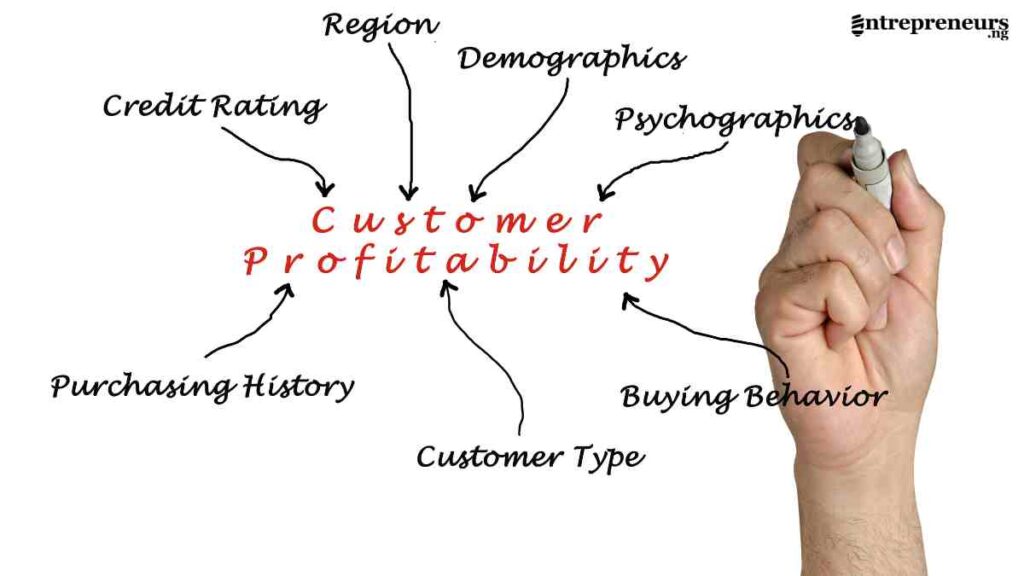
Customer profitability sits at the centre of every sustainable business decision. Many companies chase revenue but never examine which customers genuinely create value.
Understanding customer profitability helps you see the real drivers of profit rather than assumptions based on size or activity.
Once you can measure it clearly, you gain the clarity needed to grow with confidence.
Key Takeaways
- Customer profitability reveals the true financial value of each customer by comparing revenue with the full cost to serve.
- Accurate measurement requires reliable data on revenue, direct costs, indirect costs, and customer behaviour.
- Profitability improves through better pricing discipline, smart cost management, and focused investment in high-value customers.
- Consistent customer profitability analysis helps businesses make stronger strategic decisions and build a healthier customer mix.

What Is Customer Profitability
Customer profitability refers to the net value a customer contributes to a business after subtracting the full cost required to acquire, serve, and retain that customer.
It moves beyond simple revenue and gives a clear view of profit performance at the individual or segment level. This clarity helps leaders decide where to focus energy and investment.
Customer profitability is essential because two customers who generate the same revenue rarely create the same level of profit. Some require more support, deeper discounts, or heavier management.
Others consistently buy with little friction. By understanding customer profitability early, companies avoid misallocating resources and strengthen long-term financial health.
A helpful way to view customer profitability is to look at its two core components: revenue generated and cost to serve.
Revenue is predictable and easy to track. Cost to serve varies widely, which is why businesses often misjudge profitability.
The table below shows a simple illustration of how two customers with equal revenue can produce very different outcomes.
| Customer | Annual Revenue | Total Cost To Serve | Net Profit | Profit Margin |
|---|---|---|---|---|
| Customer A | 50,000 | 20,000 | 30,000 | 60 percent |
| Customer B | 50,000 | 42,000 | 8,000 | 16 percent |
This difference is common across industries. Research by Harvard Business Review found that 20 percent of customers often generate between 100 and 150 percent of total profit, while many customers erode margins through high service costs or low pricing.
This insight shows why customer profitability must be assessed individually rather than assumed.
Factors Contributing to Customer Profitability
Each factor influences how much value a customer delivers after costs are considered. Understanding these drivers helps businesses refine customer strategy and improve profit per customer without unnecessary spending.
Revenue Related Factors
Revenue patterns play a major role in customer profitability. Customers who buy consistently, purchase higher value items, or commit to longer term contracts typically generate stronger margins.
Predictable and recurring revenue allows businesses to manage resources efficiently and reduce financial volatility.
Key revenue drivers include frequency of purchase, average order value, contract length, and product mix.
Customers who gravitate towards high-margin products naturally produce higher profitability.
Cost To Serve Factors
Cost to serve is often the biggest differentiator between profitable and unprofitable customers. It includes the internal effort required to support each customer throughout the lifecycle.
These costs can vary significantly by customer type and behaviour.
Typical cost to serve elements include onboarding time, support hours, delivery requirements, payment follow-up, returns, and order customisation.
According to Bain and Company, reducing cost to serve by as little as 5 percent can increase overall customer profitability by more than 25 percent.
The table below provides a simplified illustration of how cost to serve components vary.
| Cost To Serve Component | Low Cost Customer | High Cost Customer |
|---|---|---|
| Support interactions | Few and straightforward | Frequent and complex |
| Delivery requirements | Standard shipping | Expedited or specialised |
| Payment behaviour | Timely | Late or inconsistent |
| Order returns | Rare | Frequent |
| Account management | Minimal oversight | High touch and time intensive |
Acquisition and Retention Costs
Customer acquisition cost and retention cost influence profitability from the start.
High acquisition costs may be justified if customer lifetime value will exceed them, but when CAC is high and retention is low, customer profitability suffers.
Retention expenses also impact margins when customers require ongoing incentives or service adjustments to stay engaged.
McKinsey reports that increasing retention by 5 percent can improve profit by 25 to 95 percent, making retention investment a critical lever for maintaining strong customer profitability.
Customer Behaviour and Relationship Factors
Customer habits matter. Customers who pay on time, escalate fewer issues, adopt digital channels, and maintain strong communication are easier and more cost-effective to serve.
They also offer higher upsell potential and produce stable long-term profitability.
Customer behaviours that negatively impact profitability include excessive discount requests, frequent special handling, slow decision-making, and poor communication.
These may appear harmless individually, but accumulate into significant cost to serve.
Product and Service Fit
A strong fit between customer needs and the company offering increases efficiency and reduces operational friction.
Misalignment leads to high customisation costs and service inefficiencies that limit profitability.
Businesses that regularly assess product customer fit reduce wasteful effort and direct resources towards customers where the offering delivers genuine value.

Core Metrics Behind Customer Profitability
Customer profitability is shaped by a set of core metrics that help businesses understand value creation at the customer level.
These metrics highlight how much customers contribute financially and how much they cost to maintain.
Together, they provide a clear foundation for customer profitability analysis and guide decisions on growth, pricing, and resource allocation.
Customer Lifetime Value – CLV
Customer lifetime value shows the total value a customer is expected to generate over the entire relationship with the business.
It helps organisations understand long-term profitability rather than focusing on short-term revenue. A higher CLV indicates stronger customer profitability, especially when acquisition and service costs remain controlled.
Research from Wharton shows that acquiring a new customer can cost up to five times more than retaining an existing one, reinforcing the importance of increasing CLV through better retention and relationship management.
Customer Acquisition Cost – CAC
Customer acquisition cost measures how much a business spends to acquire a new customer. CAC includes marketing, sales activities, promotional efforts, and onboarding.
High CAC affects customer profitability when the cost outweighs the revenue and long-term value the customer generates.
Understanding CAC helps businesses refine campaigns, improve targeting, and reduce unnecessary spend while attracting profitable customer segments.
Average Order Value – AOV or Average Revenue Per User – ARPU
Average order value and ARPU measure how much revenue a customer produces per transaction or per billing cycle.
Higher AOV or ARPU typically leads to stronger customer profitability when paired with steady purchasing patterns.
These metrics are especially important in ecommerce, SaaS, and subscription-based models, where small increases can deliver meaningful profit gains.
Cost To Serve – CTS
Cost to serve represents the total cost required to support a customer. It includes service interactions, delivery, operational effort, payment processing, refunds, and other activities that influence profitability.
Because cost to serve varies significantly by customer behaviour, it is one of the key metrics in customer profitability analysis.
The table below illustrates how cost to serve data supports clearer decision making.
| Metric | Description | Impact on Profitability |
|---|---|---|
| CTS per transaction | Cost of each fulfilment or service instance | Identifies customers with high operational burden |
| CTS per customer | Total cost to manage one customer | Shows true profitability beyond revenue |
| CTS ratio | CTS divided by revenue | Highlights customers with disproportionate service costs |
Customer Profitability Margin
Customer profitability margin shows the percentage of revenue that remains after all costs tied to the customer are deducted.
It is a direct measure of profit performance and a key indicator of financial health. Higher margins signal strong profitability, while low or negative margins reveal the need for strategic changes.
Retention Rate and Churn
Retention rate measures how many customers stay over a given period, while churn reflects how many leave.
These metrics directly influence customer profitability because retaining customers is far more cost-effective than replacing them.
Improving retention strengthens long-term profitability and reduces the financial pressure created by high acquisition costs.

Customer Profitability Formula: How To Calculate It
The customer profitability formula offers a simple way to quantify the value a customer contributes after accounting for the cost to serve them.
This calculation is central to customer profitability analysis because it provides a measurable figure that guides strategic decisions, pricing, and resource allocation.
The Core Customer Profitability Formula
At its most practical level, customer profitability is calculated as:
Customer Profitability = Customer Revenue minus Customer Cost To Serve
Revenue represents the total amount the customer pays over a period. Cost to serve includes all direct and indirect costs linked to supporting that customer.
When evaluated consistently, this formula helps businesses identify profitable customers, borderline customers, and loss-making customers.
Components of the Formula
Customer Revenue
This includes all invoiced amounts from the customer within the selected period. It covers product sales, service fees, subscriptions, or any other transaction that contributes to top-line income.
Customer Cost To Serve
Cost to serve captures the full operational effort required to maintain the relationship. This may include service hours, logistics, account management, technical support, fulfilment, payment handling, and any customer-specific adjustments.
Indirect costs can be allocated using methods such as activity-based costing, which offers a clearer view of profitability.
Example Calculation Table
The following illustration shows how two customers with similar revenue can produce different profitability outcomes once cost to serve is considered.
| Customer | Revenue | Direct Costs | Indirect CTS | Total Cost To Serve | Customer Profitability | Profit Margin |
|---|---|---|---|---|---|---|
| Customer A | 25,000 | 6,000 | 4,000 | 10,000 | 15,000 | 60 percent |
| Customer B | 25,000 | 9,000 | 8,000 | 17,000 | 8,000 | 32 percent |
This calculation highlights why understanding cost to serve is essential for accurate customer profitability analysis.
Two customers may appear similar on paper but deliver very different financial outcomes.
Why the Formula Matters
This formula helps leaders benchmark customer performance, refine pricing strategies, allocate resources more effectively, and improve the overall customer mix.
It is also the foundation used in more advanced models that evaluate lifetime value, account expansion potential, and long-term profitability.
How To Measure Customer Profitability
This process supports smarter pricing, better resource allocation, and more effective customer strategies.
Step 1: Collect Revenue Data by Customer
Begin by gathering all revenue generated by each customer within the selected period. This includes product sales, service fees, subscriptions, or project-based income.
Clean and accurate revenue data ensures the rest of the customer profitability analysis produces meaningful insights.
Step 2: Identify Direct Costs Per Customer
Direct costs are expenses that can be traced to individual customers. These often include delivery fees, transaction costs, service hours, commissions, refunds, or any activity directly connected to fulfilling the customer relationship.
Tracking direct costs helps reveal customers who demand more effort than their revenue justifies.
Step 3: Allocate Indirect Costs Using a Clear Method
Indirect costs such as support operations, logistics overhead, administrative activities, and shared resources must be allocated fairly.
Activity-based costing is commonly used because it distributes costs based on the actual activities that customers trigger.
This approach provides a more accurate picture of customer profitability compared to blanket cost allocation.
Below is a simple example of indirect cost allocation.
| Cost Category | Total Cost | Allocation Basis | Cost Assigned to Customer X |
|---|---|---|---|
| Customer Support | 40,000 | Number of support hours | 4,000 |
| Logistics Overhead | 30,000 | Number of shipments | 3,000 |
| Account Management | 20,000 | Time spent | 2,000 |
Step 4: Calculate Customer Profit and Profit Margin
Once revenue, direct costs, and indirect costs are outlined, calculate customer profit and profit margin. This identifies how much value each customer adds to the business.
Customer Profit = Revenue minus Total Cost To Serve
Profit Margin = Customer Profit divided by Revenue multiplied by 100
This step highlights the customers who contribute meaningfully and those who require closer evaluation.
Step 5: Segment Customers Based on Profitability
After calculating profitability, group customers into profitability tiers. Segmentation makes customer profitability analysis useful at scale and helps businesses create targeted strategies.
Common tiers include:
- High-value customers
- Stable mid-value customers
- Low-value customers
- Loss-making customers
Segmentation supports smarter decision-making and allows teams to prioritise the relationships that drive success.
Step 6: Use the Insights to Guide Strategy
Once customer profitability is measured, the insights should guide marketing focus, sales effort, service design, and customer investment.
Customers with strong profitability profiles may deserve retention programs or strategic nurturing, while customers with low profitability may require pricing adjustments or cost optimisation strategies.
Customer profitability analysis becomes more powerful when repeated regularly. Quarterly or annual reviews help track changes in behaviour, cost patterns, and market conditions.

Customer Profitability Analysis
This is the structured process of evaluating how each customer contributes to the financial performance of the business.
It moves beyond general revenue reporting and examines the true economic value of every customer relationship.
When done correctly, it uncovers hidden costs, reveals high-value segments, and supports clearer strategic decisions.
Purpose of Customer Profitability Analysis
The main purpose of customer profitability analysis is to give leaders a practical view of which customers strengthen the business and which ones dilute profit.
It helps companies allocate resources intelligently, refine pricing, and improve customer strategy. With clear visibility, teams can prioritise high-value relationships and implement changes that enhance overall profitability.
Key Components of Customer Profitability Analysis
Customer profitability analysis works effectively when it evaluates customers across multiple financial and behavioural dimensions. Below are the core components that shape a complete analysis.
Revenue Contribution
This shows the income generated by each customer within the chosen period. Understanding revenue patterns helps identify which customers have strong purchasing potential or stable revenue streams.
Cost To Serve
Cost to serve captures the full operational effort required to maintain the customer relationship. This includes support, logistics, account management, payment follow-up, and service usage.
Accurate cost to serve allocation is essential for reliable customer profitability insights.
Profitability Ranking
Ranking customers clarifies how each customer compares to others in terms of value creation.
Rankings help executives and sales teams understand where to focus attention and how to shape customer strategies.
Tools and Systems That Support Customer Profitability Analysis
Different tools can be used depending on the scale of the business and the sophistication of its data operations.
The goal is to build a clear, reliable view of customer profitability without overcomplicating the process.
| Tool Type | Examples | Best Use Case |
|---|---|---|
| Spreadsheets | Excel, Google Sheets | Small to midsize businesses performing periodic analysis |
| BI Platforms | Power BI, Tableau, Looker | Larger organisations needing live dashboards and automated reporting |
| CRM Systems | Salesforce, HubSpot, Zoho | Businesses aligning customer profitability insights with sales strategy |
| ERP Systems | SAP, Oracle | Organisations requiring integrated financial and operational data |
How Often to Perform Customer Profitability Analysis
Customer profitability analysis should be performed regularly to capture changes in customer behaviour, operational cost shifts, and margin fluctuations.
Most businesses benefit from quarterly reviews, while high-volume industries may require monthly analysis to keep decisions aligned with real-time performance patterns.
Practical Example of Customer Profitability Analysis
Below is a simplified example showing how customer profitability analysis highlights the differences in customer contribution.
| Customer | Revenue | Total Cost To Serve | Customer Profitability | Profit Ranking |
|---|---|---|---|---|
| Customer A | 60,000 | 28,000 | 32,000 | High |
| Customer B | 45,000 | 39,000 | 6,000 | Low |
| Customer C | 30,000 | 15,000 | 15,000 | Medium |
This simple illustration highlights the importance of evaluating profit rather than revenue alone. Customer B generates significant revenue but produces far lower profitability compared to others.
A strong customer profitability analysis empowers leaders to improve margins, optimise customer mix, and introduce profitable practices.
It informs decisions such as adjusting pricing structures, revising service levels, reducing operational overhead, and identifying customers with high lifetime value potential.
It is also valuable for businesses considering product expansion, service redesign, or customer segmentation strategies. It provides the evidence needed to prioritise investments and shape long-term growth direction.
Strategies To Improve Customer Profitability
Improving customer profitability requires a deliberate focus on customer value, operational efficiency, and commercial discipline.
It is not about reducing service quality. It is about aligning effort with value and ensuring that each customer relationship contributes positively to the business.
The strategies below help companies strengthen margins while maintaining strong customer relationships.
Strengthen High Value Customer Relationships
High-value customers should receive focused attention because they generate the strongest contribution to profit.
Businesses that identify and invest in these customers increase retention and unlock new revenue opportunities.
Tailored communication, periodic reviews, and personalised offers support deeper engagement.
A simple comparison between low investment and high investment strategies is shown below.
| Approach | Outcome for Customer | Outcome for Business |
|---|---|---|
| Generic engagement | Limited loyalty | Unpredictable revenue |
| Targeted, value based engagement | Stronger relationship | Higher retention and profitability |
Increase Average Order Value and Revenue Per Customer
Small improvements in average order value or ARPU can significantly increase customer profitability.
Businesses can achieve this through thoughtful product bundling, volume incentives, cross-selling, and tailored upsell opportunities.
When these techniques align with customer needs, revenue increases without substantial added cost.
Studies published in the Journal of Marketing Science highlight that structured upselling strategies can raise revenue per customer by up to 30 percent, making AOV improvement a powerful profitability lever.
Reduce Cost To Serve Without Reducing Customer Satisfaction
Cost to serve reduction is one of the most effective ways to improve customer profitability, but it must be done carefully to avoid harming customer experience.
Efficient processes help companies deliver value without unnecessary expense.
Effective cost to serve reduction methods include:
- Introducing self-service channels
- Streamlining onboarding and fulfilment
- Enhancing first contact resolution
- Shifting routine interactions to digital channels
The table below shows common examples of cost to serve improvements.
| Challenge | Cost to Serve Impact | Improvement Opportunity |
|---|---|---|
| High support volume | Increased service hours | Knowledge base, automated responses |
| Manual invoicing | Administrative time | Digital invoicing and reminders |
| Frequent order changes | Operational complexity | Clearer order guidelines, minimum thresholds |
Improve Pricing Discipline and Reduce Margin Leakage
Pricing discipline plays a significant role in customer profitability. Unnecessary discounts, unstructured price negotiations, and inconsistent terms can weaken margins.
Companies that introduce clear pricing rules, approval workflows, and value-based pricing models maintain stronger profitability.
Key pricing improvement areas include:
- Setting minimum margin thresholds
- Introducing tiered pricing
- Charging appropriately for custom work
- Reviewing discounts regularly
This approach helps companies maintain profitability while offering fair and transparent prices.
Manage or Transition Loss-Making Customers
Some customers consistently drain resources, regardless of process improvements. These customers may require a direct and thoughtful strategy.
Options include renegotiating terms, adjusting service levels, automating parts of the relationship, or transitioning the customer out.
A structured assessment helps determine whether the customer can become profitable or whether resources would be better allocated elsewhere.
| Customer Type | Profitability Challenge | Recommended Action |
|---|---|---|
| High demand, low revenue | Excessive service usage | Adjust pricing or service scope |
| Late paying | Cash flow pressure | Enforce payment terms |
| Highly customised | Operational inefficiency | Standardise or increase fees |
Businesses that regularly evaluate these patterns maintain a healthier customer mix and stronger financial performance over time.

Conclusion
Customer profitability offers a clear view of which relationships genuinely strengthen the business and which ones quietly erode margins.
When companies understand the true cost of serving each customer, decisions become more focused, strategic, and financially sound.
As businesses apply these principles consistently, they build stronger financial foundations and create customer strategies that are both profitable and aligned with long-term goals.
We want to see you succeed, and that’s why we provide valuable business resources to help you every step of the way.
- Join over 23,000 entrepreneurs by signing up for our newsletter and receiving valuable business insights.
- Register your business today with Entrepreneurs.ng’s Business Registration Services.
- Tell Your Brand Story on Entrepreneurs.ng, let’s showcase your brand to our global audience.
- Need help with your marketing strategy? Get a Comprehensive Marketing and Sales Plan here.
- Sign up for our Entrepreneurs Success Blueprint Programme to learn how to start and scale your business in just 30 days.
- Book our one-on-one consulting and speak to an expert about structuring and growing your business.
- Visit our shop for business plan templates and other valuable resources to guide you.
- Get our Employee-Employer Super Bundle NDA templates to legally protect your business and workforce.
- Advertise your business to over a million entrepreneurs through our different advertising packages.
FAQs
What is customer profitability in simple terms?
Customer profitability refers to the net profit a customer contributes after subtracting the full cost to serve them.
It highlights which customers add value and which ones reduce overall profitability. Businesses use this insight to focus on relationships that support long-term growth.
How is customer profitability different from customer lifetime value?
Customer profitability measures profit within a specific period, while customer lifetime value CLV estimates the total value a customer will generate over the entire relationship.
CLV predicts long-term potential. Customer profitability focuses on actual performance. Both metrics help companies make smarter decisions about customer investment.
What causes customers to be unprofitable?
Customers become unprofitable when the cost to serve exceeds the revenue they produce.
Common reasons include high service demands, frequent order changes, excessive discounts, low order volumes, inconsistent payments, and complex account management. Analysing cost to serve helps uncover these patterns early.
How can small businesses measure customer profitability?
Small businesses can measure customer profitability using simple tools like spreadsheets.
By tracking revenue, direct costs, and allocated overhead for each customer, they can identify which customers strengthen the business. Clear segmentation helps small teams focus their energy on the most profitable relationships.
What is a good customer profitability margin?
A good margin varies by industry, but many companies aim for a customer profitability margin that is comfortably positive after all costs are included.
The goal is not to reach a specific number but to ensure the cost to serve is proportionate to the value the customer provides. Regular monitoring helps maintain healthy margins.
How often should businesses perform customer profitability analysis?
Most businesses benefit from performing customer profitability analysis quarterly. Industries with high transaction volume or fast-shifting customer behaviour may conduct monthly reviews.
The key is consistency, which ensures decisions reflect current customer performance.
Can customer profitability improve without increasing prices?
Yes. Customer profitability can improve through better cost management, more efficient processes, stronger customer segmentation, higher retention, and increased average order value.
These adjustments enhance profitability without raising prices or affecting customer experience.
What is cost to serve and why does it matter in customer profitability?
Cost to serve includes all the operational activities required to support a customer, such as onboarding, service interactions, fulfilment, logistics, and account management.
Because these costs vary widely across customers, cost to serve plays a central role in accurate customer profitability assessment.
Should unprofitable customers be removed?
Not always. Some unprofitable customers can become profitable with clearer pricing, adjusted service levels, or process improvements.
Others may require strategic transition if their long term impact remains negative. The decision should be guided by data from customer profitability analysis.
How does pricing affect customer profitability?
Pricing directly influences customer profitability because it shapes revenue and margin.
Clear pricing policies, structured discounts, value-based pricing, and minimum margin requirements help businesses maintain profitable relationships. Poor pricing discipline is a common cause of weak customer profitability.
What role does customer behaviour play in customer profitability?
Customer behaviour affects the cost to serve. Customers who communicate clearly, make timely payments, follow processes, and adopt digital channels tend to have stronger profitability profiles.
Those requiring frequent assistance or customisation often generate lower margins.
What industries benefit most from customer profitability analysis?
Industries with recurring revenue, complex service needs, or varied cost structures benefit significantly. This includes SaaS, ecommerce, banking, logistics, manufacturing, agencies, and professional services.
However, any business that serves multiple customers can benefit from customer profitability analysis.