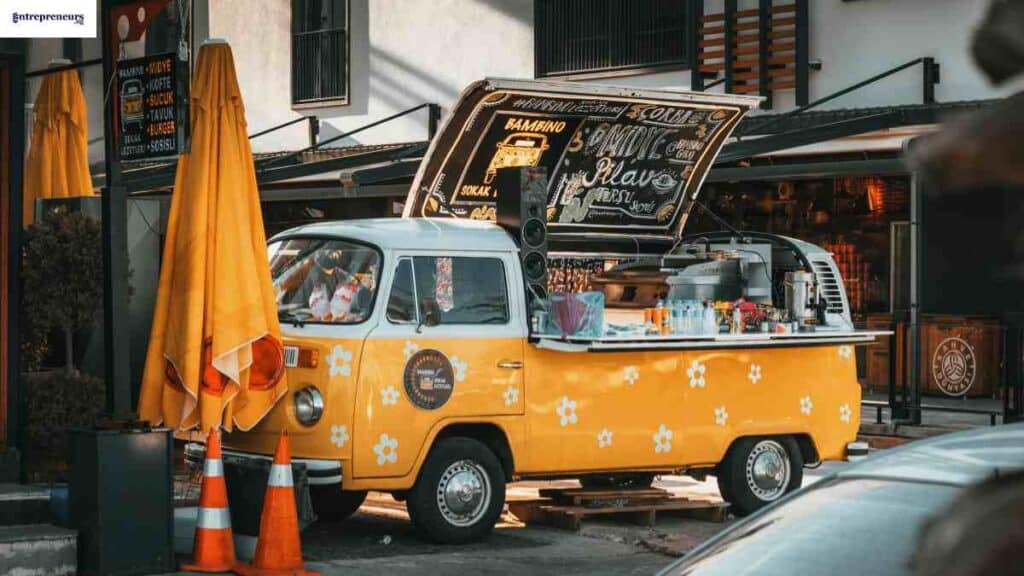
Starting a food truck business on a budget is one of the smartest ways to enter the food industry without the heavy rent, staffing, and setup costs of a full restaurant.
The opportunity is real. Grand View Research valued the global food truck market at $5.42 billion in 2024 and projects it will reach $7.87 billion by 2030, driven by demand for convenient, creative, and affordable meals.
This guide breaks down how to start a food truck business into 8 practical steps, from reducing startup costs and choosing the right truck to securing permits, buying equipment wisely.
Key Takeaways
- Start lean by validating demand before investing heavily in a truck or equipment.
- Keep startup costs low with a focused menu, essential equipment, and a realistic budget.
- Secure the right permits, licences, and insurance to avoid costly legal setbacks.
- Prioritise smart marketing, profitable locations, and operational efficiency to grow sustainably.

What Is a Food Truck Business?
A food truck business is a mobile food service operation that prepares, cooks, and sells meals, snacks, or beverages from a specially equipped vehicle.
Unlike traditional restaurants, food trucks can move between locations, allowing owners to serve customers at busy streets, business districts, festivals, markets, sporting events, and private functions.
The business model appeals to many entrepreneurs because it typically requires less capital than opening a brick-and-mortar restaurant.
With the right concept, location, and marketing strategy, a food truck can build a loyal customer base while maintaining lower overhead costs.
Understanding Food Truck Startup Costs Before You Begin
Before starting a food truck business on a budget, you need to know where your money will go. A food truck is cheaper than a traditional restaurant, but it is not “cheap” if you enter blindly.
Recently, Square estimated that food truck startup costs typically range from $50,000 to $200,000, depending on the country, city, truck condition, equipment, permits, and how much customisation you need.
For a budget-conscious entrepreneur, the goal is not to buy the fanciest truck. The goal is to launch safely, legally, and profitably with only what you need.
1. Truck Purchase, Lease, or Rental
The truck itself will likely be your biggest expense.
A new food truck can cost between $75,000 and $200,000, especially if it is custom-built with premium kitchen fittings.
A used food truck may cost less, often around $30,000 to $70,000, depending on age, mileage, kitchen condition, and local market prices.
Renting or leasing can also reduce upfront costs, with some estimates placing rentals at around $2,000 to $4,000 per month.
For a lean launch, a used truck, food trailer, or cart may make more sense than a brand-new build. However, always inspect the engine, plumbing, gas lines, electrical system, ventilation, and kitchen layout before paying.
2. Food Truck Equipment
Food truck equipment depends on your menu. A coffee truck needs different tools from a burger, taco, pizza, or smoothie truck.
Common equipment may include:
- Griddle, fryer, oven, grill, or hot plate
- Refrigerator and freezer
- Prep tables
- Generator or power system
- Water tanks and sinks
- Fire suppression system
- Storage shelves
- POS system
- Utensils, cookware, and packaging
This can cost anywhere from $10,000 to $50,000+, depending on whether you buy new, used, or refurbished equipment.
The cheapest approach is to design your menu around fewer tools. For example, a grilled sandwich truck may need less equipment than a full-service truck selling fried, baked, and chilled items.
3. Food Truck Permits and Licences
Food truck permits and licences vary widely by country, state, and city.
You may need a business licence, food handler permit, health department approval, parking permit, fire safety inspection, vehicle registration, and special event permits.
In some locations, permit costs are modest. In others, they can run into thousands of dollars.
For example, recent reporting on Texas’ statewide food truck permit system shows that food truck operators may pay between $300 and $1,350 for initial application and inspection, depending on the permit category.
This is why you must contact your local council, health authority, or municipal licensing office before buying a truck. A cheap truck becomes expensive if it cannot pass inspection.
4. Insurance
Insurance protects you from accidents, food-related claims, fire, theft, and vehicle damage. At minimum, most operators need:
- Commercial vehicle insurance
- General liability insurance
- Product liability insurance
- Workers’ compensation, where required
- Property or equipment cover
Costs vary by country and insurer, but many operators should budget at least $2,000 to $6,000 per year for basic coverage. High-risk menus, multiple staff, and expensive equipment can push this higher.
5. Initial Inventory and Packaging
Your first inventory purchase includes ingredients, drinks, condiments, napkins, takeaway packs, cups, labels, cleaning supplies, and uniforms.
A small food truck can often start with $1,000 to $5,000 in opening inventory. However, this depends on the menu. Fresh seafood, meat-heavy menus, imported ingredients, and premium packaging will increase costs.
To stay lean, start with a short menu of 5–7 strong items. This reduces waste, speeds up service, and makes stock control easier.
6. Branding, Marketing, and Launch Costs
You do not need a huge marketing budget at the beginning, but you still need visibility.
Budget for:
- Logo and brand design
- Truck wrap or signage
- Menu board
- Social media content
- Flyers or launch promotions
- Google Business Profile setup
- Food photography
A simple launch budget can range from $500 to $5,000. A full truck wrap alone can cost much more, so budget founders can begin with clean signage, branded aprons, QR-code menus, and strong social media content.
7. POS, Technology, and Payment Fees
A food truck needs a reliable way to accept payments. POS costs vary. Some small-business POS providers offer low or no monthly software fees, while others charge monthly subscriptions plus transaction fees.
Investopedia notes that small businesses may spend around $39 to $89 per month on POS software, with hardware costs and card processing fees added separately.
Do not ignore these fees. A small card processing charge on every transaction can affect your margins over time.
8. Monthly Operating Costs
Startup cost is only the beginning. You also need working capital for the first few months.
Monthly costs may include:
- Fuel
- Staff wages
- Ingredients
- Commissary kitchen fees
- Parking fees
- Event fees
- Insurance
- Repairs
- Marketing
- POS fees
- Loan or lease payments
For many small food trucks, monthly operating costs can sit around $5,000 to $10,000, depending on location, staff size, food costs, and sales volume.
Sample Food Truck Startup Costs Breakdown
| Expense Category | Lean Budget | Moderate Budget | Higher Budget |
|---|---|---|---|
| Used truck, cart, or trailer | $15,000–$50,000 | $50,000–$90,000 | $90,000–$200,000 |
| Equipment | $5,000–$20,000 | $20,000–$40,000 | $40,000+ |
| Permits and licences | $500–$3,000 | $3,000–$8,000 | $8,000+ |
| Insurance | $2,000–$6,000 yearly | $6,000–$10,000 yearly | $10,000+ yearly |
| Initial inventory | $1,000–$3,000 | $3,000–$7,000 | $7,000+ |
| Branding and marketing | $500–$2,000 | $2,000–$7,000 | $7,000+ |
| POS and tech | $300–$1,500 | $1,500–$4,000 | $4,000+ |
| Emergency fund | $3,000–$10,000 | $10,000–$20,000 | $20,000+ |
A realistic lean launch may fall between $30,000 and $75,000 if you use a second-hand truck, keep your menu small, avoid over-customisation, and negotiate smartly.
However, a fully fitted new truck in a major city can easily move towards $150,000 to $200,000.
The best way to start a food truck business with little money is to control the big three costs: the truck, the equipment, and the menu. Once those are lean, every other part of the business becomes easier to manage.

How to Start a Food Truck Business on a Budget
Starting a food truck business on a budget is not about cutting corners; it is about making smart decisions that maximise every dollar you invest.
Many successful food truck owners begin with limited capital by focusing on essential expenses, choosing a simple business model, and growing gradually as revenue increases.
The following eight steps will show you how to do exactly that.
Step 1: Research Your Market and Choose a Profitable Niche
Before you spend money on a truck, equipment, or permits, find out what people actually want to buy.
Many food truck businesses fail because owners build their concept around personal preferences rather than customer demand.
Start by studying your local market. Visit popular food truck locations, food festivals, office districts, university areas, and community events.
Pay attention to the types of food being sold, customer queues, pricing, and peak operating hours.
The goal is not to copy competitors. Instead, identify gaps in the market that you can fill better or differently.
Identify High-Demand Food Categories
Some food concepts consistently perform well because they are easy to prepare, portable, and profitable.
| Food Category | Demand Level | Startup Complexity |
|---|---|---|
| Burgers and Sandwiches | High | Moderate |
| Tacos and Street Food | High | Low |
| Coffee and Beverages | High | Low |
| Pizza | High | Moderate |
| Desserts and Ice Cream | Moderate to High | Low |
| Vegan and Healthy Foods | Growing | Moderate |
While trendy food concepts can attract attention, focus on products with consistent demand rather than short-lived food trends.
Analyse Your Competition
Research at least five food trucks operating in your target area.
| What to Study | What to Look For |
|---|---|
| Menu | Best-selling items |
| Pricing | Average meal cost |
| Locations | High-traffic areas |
| Customer Reviews | Common complaints |
| Social Media | Engagement and promotions |
Customer reviews are particularly useful. They often reveal opportunities competitors have missed, such as slow service, limited menu options, or inconsistent food quality.
Validate Your Idea Before Investing
Testing your concept before buying a truck can save thousands of dollars.
Start small by selling at:
- Farmers’ markets
- Pop-up events
- Community fairs
- Weekend markets
- Catering events
These channels allow you to collect feedback, test pricing, and identify your best-selling items with minimal risk.
Narrow Your Menu
One of the biggest mistakes new operators make is offering too many items.
A smaller menu reduces food waste, simplifies inventory management, speeds up service, and lowers equipment costs.
| Menu Size | Operational Impact |
|---|---|
| 5–7 Items | Easier operations and lower costs |
| 8–12 Items | Moderate complexity |
| 13+ Items | Higher costs and slower service |
A focused menu also helps customers remember your brand. Many of the world’s most successful food trucks built their reputation around a handful of signature dishes rather than dozens of menu options.
By the end of your market research, you should know exactly who your target customers are, what food they want, how much they are willing to pay, and how your food truck will stand out from the competition.
This information will guide every decision you make in the next steps.
Step 2: Create a Lean Food Truck Business Plan
A food truck business plan does not need to be a lengthy document.
At this stage, your focus should be on creating a practical roadmap that helps you control costs, estimate revenue, and make informed decisions.
Your plan should clearly define your concept, target market, menu, startup budget, pricing strategy, and growth goals. It should also answer a simple question: how will this business make money consistently?
Include the Essential Elements
| Business Plan Section | What to Include |
|---|---|
| Business Concept | Food type, unique selling point, target audience |
| Market Analysis | Competitors, customer demand, location opportunities |
| Menu | Core products and pricing |
| Startup Budget | Truck, equipment, permits, inventory, marketing |
| Revenue Forecast | Estimated daily and monthly sales |
| Marketing Plan | Social media, events, partnerships |
| Growth Strategy | Catering, festivals, additional trucks |
Keep the plan simple and realistic. Overestimating sales is one of the most common mistakes new food truck owners make.
Estimate Your Startup Budget
Before moving forward, calculate how much capital you actually need.
| Expense Category | Estimated Cost Range |
|---|---|
| Truck or Trailer | $15,000 – $70,000 |
| Equipment | $5,000 – $30,000 |
| Permits and Licences | $500 – $8,000 |
| Initial Inventory | $1,000 – $5,000 |
| Branding and Marketing | $500 – $5,000 |
| Working Capital | $3,000 – $15,000 |
This exercise helps you identify where you can cut costs and where spending more may be necessary.
Create a Simple Revenue Projection
Your projections do not need to be complex. Start with realistic assumptions.
| Metric | Example |
|---|---|
| Average Customers Per Day | 50 |
| Average Order Value | $12 |
| Daily Revenue | $600 |
| Monthly Revenue (25 Days) | $15,000 |
Adjust these numbers based on your market research and local demand.
Plan Your Growth From Day One
Even if you are starting small, think about future opportunities.
Potential growth channels include:
- Corporate catering
- Food festivals
- Private events
- Delivery partnerships
- Additional food trucks
- Brick-and-mortar expansion
Having a clear direction will help you make better decisions as the business grows.
A lean food truck business plan keeps you focused on profitability rather than unnecessary spending.
It also becomes a valuable tool if you decide to seek financing, attract investors, or apply for business grants in the future.
Step 3: Choose the Right Food Truck on a Budget
The truck you choose will have a major impact on your startup costs and long-term profitability.
While a brand-new food truck may look appealing, it is rarely the best option for entrepreneurs working with limited capital.
Instead, focus on finding a reliable vehicle that meets your operational needs without consuming most of your budget.
The money you save can be invested in marketing, inventory, permits, and working capital.
Compare Your Options
| Option | Average Cost | Best For |
|---|---|---|
| Used Food Truck | $30,000 – $70,000 | Budget-conscious startups |
| New Food Truck | $75,000 – $200,000+ | Established operators |
| Food Trailer | $10,000 – $50,000 | Lower startup costs |
| Food Cart | $2,000 – $15,000 | Testing a concept |
| Truck Lease | $2,000 – $4,000/month | Limited upfront capital |
For most first-time owners, a used food truck or food trailer offers the best balance between affordability and functionality.
Match the Truck to Your Menu
Your menu should determine the truck, not the other way around.
| Food Concept | Space Requirement |
|---|---|
| Coffee and Beverages | Small |
| Tacos and Wraps | Small to Medium |
| Burgers and Sandwiches | Medium |
| Pizza | Medium to Large |
| Full-Service Meals | Large |
Buying a large truck for a small menu only increases fuel, maintenance, and equipment costs.
Inspect Before You Buy
A low purchase price can become expensive if the vehicle needs major repairs.
Pay close attention to:
| Area | What to Check |
|---|---|
| Engine | Service history and mileage |
| Generator | Power output and condition |
| Electrical System | Wiring and outlets |
| Plumbing | Water tanks and sinks |
| Ventilation | Hood and exhaust system |
| Cooking Equipment | Functionality and age |
| Flooring | Damage or rust |
Whenever possible, hire a qualified mechanic and food truck inspector before finalising the purchase.
Consider Buying Used Equipment
Many food truck owners save thousands by purchasing refurbished equipment.
| Equipment Type | Potential Savings |
|---|---|
| Refrigerators | 30–50% |
| Griddles | 25–50% |
| Freezers | 30–60% |
| Prep Tables | 20–50% |
However, avoid buying critical equipment without testing it first.
Keep Customisation to a Minimum
Many new operators overspend on custom paint jobs, expensive wraps, luxury interiors, and specialised equipment before generating their first sale.
Focus on functionality first. Customers care more about food quality, service speed, and consistency than expensive finishes.
A simple, clean, and professionally branded truck can perform just as well as a vehicle that costs twice as much.
Step 4: Secure the Necessary Permits, Licences, and Insurance
Before serving your first customer, you must ensure your food truck operates legally.
Permit and licensing requirements vary by country, state, and city, but nearly every food truck business needs approval from health, safety, and local authorities.
Starting this process early can prevent costly delays and unexpected expenses later.
Common Food Truck Permits and Licences
The exact requirements depend on your location, but most operators will need some combination of the following:
| Permit or Licence | Purpose |
|---|---|
| Business Licence | Allows you to legally operate a business |
| Food Service Permit | Authorises food preparation and sales |
| Health Department Permit | Confirms compliance with food safety standards |
| Vehicle Registration | Registers the truck for road use |
| Parking or Vending Permit | Allows operation in approved locations |
| Fire Safety Permit | Verifies compliance with fire regulations |
| Food Handler Certification | Demonstrates food safety knowledge |
Contact your local licensing authority before purchasing a truck. Some cities restrict where food trucks can operate, while others limit the number of permits issued each year.
Prepare for Health Inspections
Food trucks are typically subject to the same food safety standards as restaurants.
Inspectors often check:
| Inspection Area | What Authorities Review |
|---|---|
| Food Storage | Proper temperatures and handling |
| Water Supply | Clean water availability |
| Waste Disposal | Safe wastewater management |
| Equipment | Cleanliness and functionality |
| Staff Hygiene | Handwashing and food handling practices |
Keeping accurate records and maintaining a clean truck will make inspections easier and reduce the risk of fines.
Choose the Right Insurance Coverage
Insurance protects your business from accidents, property damage, theft, and liability claims.
| Insurance Type | What It Covers |
|---|---|
| Commercial Auto Insurance | Vehicle accidents and damage |
| General Liability Insurance | Customer injuries and claims |
| Product Liability Insurance | Food-related incidents |
| Property Insurance | Equipment and inventory |
| Workers’ Compensation | Employee injuries where required |
While insurance adds to your operating costs, it can prevent financial losses that could otherwise shut down your business.
Create a Compliance Checklist
Before launch, make sure you have:
| Requirement | Status |
|---|---|
| Business registration completed | □ |
| Required permits obtained | □ |
| Health inspection passed | □ |
| Insurance purchased | □ |
| Food safety certifications secured | □ |
| Parking permissions confirmed | □ |
Treat compliance as an investment rather than an expense.
A properly licensed and insured food truck business builds trust with customers, avoids regulatory issues, and creates a stronger foundation for long-term growth.

Step 5: Buy Only the Essential Equipment
One of the fastest ways to exceed your budget is by purchasing equipment you do not immediately need.
Many first-time food truck owners spend heavily on specialised appliances, only to discover they rarely use them.
Start with equipment that supports your core menu items. As sales grow, you can add more tools and expand your offerings.
Prioritise Equipment Based on Your Menu
Every piece of equipment should serve a clear purpose.
| Equipment | Essential for Most Food Trucks |
|---|---|
| Refrigerator | Yes |
| Freezer | Yes |
| Prep Table | Yes |
| Handwashing Sink | Yes |
| Storage Shelves | Yes |
| POS System | Yes |
| Generator | Usually |
| Fire Suppression System | Usually Required |
Your menu will determine additional equipment such as grills, fryers, ovens, coffee machines, or blenders.
Buy Used Where Possible
New equipment can quickly consume your startup budget. Refurbished equipment often performs just as well at a significantly lower cost.
| Equipment Type | New Cost | Used Cost |
|---|---|---|
| Commercial Refrigerator | $1,500–$5,000 | $700–$2,500 |
| Griddle | $500–$3,000 | $250–$1,500 |
| Freezer | $1,000–$4,000 | $500–$2,000 |
| Prep Table | $500–$2,000 | $250–$1,000 |
Always inspect used equipment before purchasing and verify that it meets local health and safety regulations.
Keep Your Kitchen Layout Efficient
A crowded food truck slows service and creates operational challenges.
Design your workspace around:
- Food preparation
- Cooking
- Packaging
- Customer service
- Cleaning
A simple workflow reduces staff movement, improves productivity, and helps serve more customers during peak hours.
Consider a Commissary Kitchen
Many food truck operators use commissary kitchens to reduce costs and simplify operations.
A commissary kitchen can provide:
| Benefit | Advantage |
|---|---|
| Food Preparation Space | Reduces pressure inside the truck |
| Cold Storage | Minimises equipment needs |
| Dry Storage | Saves valuable truck space |
| Cleaning Facilities | Supports compliance requirements |
In some cities, using a commissary kitchen is mandatory for food truck operators.
Delay Non-Essential Purchases
Not every piece of equipment needs to be purchased before launch.
Examples often include:
| Equipment | Can It Wait? |
|---|---|
| Additional Freezer | Yes |
| Specialty Cooking Equipment | Yes |
| Digital Menu Screens | Yes |
| Advanced Coffee Machines | Yes |
| Extra POS Terminals | Yes |
Focus on generating revenue first. Once the business becomes profitable, you can reinvest in upgrades that improve efficiency or expand your menu.
A lean equipment strategy keeps startup costs under control and gives you greater financial flexibility during the critical first year of operation.
The less money tied up in unnecessary equipment, the more cash you have available for inventory, marketing, and day-to-day operations.
Step 6: Develop a Small but Profitable Menu
Your menu will determine your food costs, equipment needs, service speed, and profit margins.
While it may be tempting to offer a wide range of options, successful food truck businesses often build their reputation around a few standout items.
A focused menu is easier to manage, cheaper to operate, and more profitable in the long run.
Start With a Core Menu
Choose a small selection of products that share similar ingredients and preparation methods.
| Menu Approach | Result |
|---|---|
| 5–7 Core Items | Lower costs and faster service |
| 8–12 Items | Moderate complexity |
| 13+ Items | Higher food waste and slower operations |
A smaller menu also makes inventory management easier and reduces the amount of equipment required.
Focus on High-Margin Items
Not all menu items generate the same profit.
| Food Category | Typical Profit Potential |
|---|---|
| Coffee and Specialty Drinks | Very High |
| Fries and Sides | High |
| Tacos and Wraps | High |
| Burgers and Sandwiches | Moderate to High |
| Pizza Slices | Moderate to High |
| Premium Desserts | High |
The most successful operators balance customer demand with profitability rather than simply offering the cheapest food.
Calculate Food Costs Before Pricing
Many new food truck owners set prices based on competitors rather than actual costs.
Use this simple formula:
| Calculation | Example |
|---|---|
| Ingredient Cost Per Item | $3 |
| Desired Food Cost Percentage | 30% |
| Selling Price | $10 |
In this example, a product that costs $3 to make should sell for around $10 to maintain healthy margins.
Use Ingredients Across Multiple Dishes
Smart menu design reduces waste and improves profitability.
| Ingredient | Can Be Used In |
|---|---|
| Chicken | Wraps, tacos, salads, sandwiches |
| Cheese | Burgers, fries, tacos |
| Tomatoes | Burgers, salads, wraps |
| Onions | Multiple menu items |
| Sauces | Several signature dishes |
This approach lowers inventory costs and simplifies purchasing.
Test Your Menu Before Expanding
Monitor customer orders during your first few months.
Track:
| Metric | Purpose |
|---|---|
| Best-Selling Items | Identify customer favourites |
| Lowest-Selling Items | Remove underperformers |
| Food Waste | Reduce unnecessary purchases |
| Profit Per Item | Improve margins |
Many food truck owners discover that a small number of menu items generate most of their revenue.
Focus on those products and remove anything that slows operations or reduces profitability.
A well-designed menu does more than attract customers. It keeps food costs under control, speeds up service, and helps you build a profitable food truck business without increasing your operating expenses.
Step 7: Launch and Market Your Food Truck on a Budget
A great menu alone will not guarantee success. Customers need to know where to find you, what you sell, and why they should choose your food truck over the competition.
Fortunately, marketing a food truck business does not require a large budget. Consistency and visibility often matter more than expensive advertising.
Build a Memorable Brand
Your brand should be easy to recognise and remember.
| Branding Element | Purpose |
|---|---|
| Business Name | Creates recognition |
| Logo | Builds identity |
| Truck Design | Attracts attention |
| Colour Scheme | Improves brand recall |
| Tagline | Communicates your concept |
Keep your branding simple and consistent across your truck, menus, social media pages, and packaging.
Focus on Social Media
Social media is one of the most effective marketing tools for food trucks because customers often want to know your location before visiting.
Prioritise:
| Platform | Best Use |
|---|---|
| Food photos and location updates | |
| TikTok | Behind-the-scenes content and trends |
| Community engagement and events | |
| Google Business Profile | Local discovery and reviews |
Post regularly and include your operating location, menu specials, and opening hours.
Choose High-Traffic Locations
The right location can generate more sales than any marketing campaign.
Look for:
| Location Type | Potential Customer Flow |
|---|---|
| Business Districts | High |
| Universities | High |
| Tourist Areas | High |
| Sports Events | High |
| Farmers’ Markets | Moderate to High |
| Residential Areas | Moderate |
Before committing to a location, observe foot traffic during different times of the day.
Attend Events and Festivals
Food festivals, concerts, community events, and corporate gatherings can introduce your brand to hundreds or even thousands of potential customers in a single day.
| Event Type | Benefit |
|---|---|
| Food Festivals | Brand exposure |
| Corporate Events | High-volume sales |
| Private Functions | Predictable revenue |
| Community Events | Local awareness |
While some events charge vendor fees, they can still generate strong returns when managed properly.
Encourage Customer Reviews
Online reviews influence purchasing decisions and improve local visibility.
Encourage satisfied customers to leave reviews on Google, Facebook, Yelp (where available) and Local food directories.
Respond professionally to both positive and negative feedback.
Create Repeat Customers
Acquiring a new customer often costs more than retaining an existing one.
Simple loyalty strategies include:
| Strategy | Example |
|---|---|
| Loyalty Cards | Buy 9 meals, get the 10th free |
| Exclusive Offers | Discounts for returning customers |
| Email List | Promotions and event announcements |
| Social Media Giveaways | Increased engagement |
A successful food truck business is built on repeat customers. The more often people return, the less you need to spend on marketing.
By combining strong branding, strategic locations, social media marketing, and customer loyalty initiatives, you can build a steady customer base without spending heavily on advertising.
Step 8: Track Performance and Scale Strategically
Launching your food truck is only the beginning. To build a sustainable and profitable food truck business, you need to monitor performance, identify opportunities for improvement, and expand carefully.
Many food truck owners focus solely on sales. However, revenue alone does not determine success. Profitability, efficiency, and customer retention are equally important.
Track Key Business Metrics
Monitoring a few core metrics can help you make smarter business decisions.
| Metric | What It Measures |
|---|---|
| Daily Sales | Revenue generated each day |
| Average Order Value | Average customer spend |
| Food Cost Percentage | Cost of ingredients relative to sales |
| Labour Costs | Staff expenses |
| Customer Traffic | Number of customers served |
| Profit Margin | Actual earnings after expenses |
Review these figures weekly and monthly to identify trends and address problems early.
Manage Inventory Efficiently
Poor inventory management can quickly reduce profits.
Track:
| Inventory Area | What to Monitor |
|---|---|
| Best-Selling Items | Maintain adequate stock |
| Slow-Moving Items | Reduce over-ordering |
| Food Waste | Minimise spoilage |
| Ingredient Usage | Improve purchasing decisions |
Regular inventory checks help prevent shortages, reduce waste, and improve cash flow.
Expand Through Catering
Catering is often one of the easiest ways to increase revenue without purchasing another truck.
Potential catering opportunities include:
| Catering Type | Revenue Potential |
|---|---|
| Corporate Events | High |
| Weddings | High |
| Private Parties | Moderate to High |
| Community Events | Moderate |
| School Functions | Moderate |
These events typically provide predictable sales and reduce the uncertainty associated with daily street vending.
Explore Food Festivals and Large Events
Once operations become stable, larger events can significantly boost sales.
| Event Opportunity | Potential Benefit |
|---|---|
| Food Festivals | Brand exposure and revenue |
| Music Festivals | High customer volume |
| Sporting Events | Consistent demand |
| Cultural Celebrations | New customer acquisition |
Evaluate vendor fees carefully to ensure the event remains profitable.
Consider Adding a Second Truck
Expansion should happen only after the first truck consistently generates profit.
Before adding another vehicle, assess:
| Expansion Question | Goal |
|---|---|
| Is the first truck profitable? | Ensure stable cash flow |
| Are operations documented? | Maintain consistency |
| Can management handle growth? | Avoid operational issues |
| Is demand increasing? | Support expansion |
Expanding too quickly can strain finances and reduce service quality.
Build Multiple Revenue Streams
The most successful food truck operators rarely rely on a single income source.
| Revenue Stream | Growth Potential |
|---|---|
| Street Service | Core income |
| Catering | High |
| Festivals and Events | High |
| Delivery Services | Moderate |
| Merchandise | Moderate |
| Food Products and Sauces | Long-term opportunity |
Diversifying revenue helps reduce risk and creates a more resilient business.
Think Beyond the Food Truck
Many well-known food brands started with a single truck, cart, or street-food operation.
As your customer base grows, opportunities may emerge to launch additional trucks, open a physical location, franchise your concept, or develop packaged products.
The goal is not simply to operate a food truck. The goal is to build a profitable brand that can grow over time.
By tracking performance, controlling costs, and expanding strategically, you can turn a modest startup into a thriving food business.
How Profitable Can a Food Truck Business Be?
A food truck business can be profitable, but it is not automatic. The owners who make real money control food costs, choose strong locations, keep menus simple, and track their numbers closely.
Recent industry estimates show that food trucks can generate around $20,000 to $42,000 in monthly revenue, or roughly $250,000 to $500,000 annually, depending on location, menu, events, pricing, and operating days.
However, revenue is not profit. A truck that makes $30,000 a month may still struggle if food costs, staff, fuel, repairs, permit fees, and event charges are too high.
Typical Food Truck Profit Margins
Food trucks usually operate on thin but workable margins.
Shopify estimates that food trucks average around 8% profit, while CloudWaitress places many operators between 3% and 8%, with top performers reaching 10% to 15%.
| Performance Level | Monthly Revenue | Net Profit Margin | Estimated Monthly Profit |
|---|---|---|---|
| Struggling Truck | $10,000 | 3% | $300 |
| Average Truck | $25,000 | 8% | $2,000 |
| Strong Truck | $42,000 | 12% | $5,040 |
| Top Performer | $60,000 | 15% | $9,000 |
These numbers show why volume matters. A food truck must sell enough meals daily to cover fixed and variable costs.
Profitability Breakdown Example
Here is a simple example for a food truck generating $30,000 per month.
| Expense Category | Estimated Cost | Share of Revenue |
|---|---|---|
| Food and Ingredients | $9,000 | 30% |
| Labour | $7,500 | 25% |
| Fuel and Generator Costs | $1,200 | 4% |
| Permits, Parking, and Event Fees | $1,500 | 5% |
| Insurance | $600 | 2% |
| Repairs and Maintenance | $1,200 | 4% |
| Packaging and Supplies | $1,500 | 5% |
| Marketing and POS Fees | $900 | 3% |
| Miscellaneous Costs | $1,200 | 4% |
| Total Expenses | $24,600 | 82% |
| Estimated Net Profit | $5,400 | 18% |
This is a healthy scenario. In many cases, profit will be lower, especially during the first year.
Break-Even Example
Assume your startup cost is $60,000 and your average monthly net profit is $3,000.
| Startup Cost | Monthly Net Profit | Estimated Break-Even Timeline |
|---|---|---|
| $40,000 | $3,000 | 13–14 months |
| $60,000 | $3,000 | 20 months |
| $90,000 | $3,000 | 30 months |
This is why starting lean matters. The less you spend upfront, the faster you can recover your investment.
What Affects Profit the Most?
Your biggest profit drivers are menu pricing, food cost, location, labour, and daily sales volume.
A simple menu with shared ingredients can protect margins. Also, busy locations and event catering can increase revenue without requiring a second truck.
A profitable food truck business is built through discipline. Keep your startup costs low, watch your margins, remove slow-selling items, and use data to decide where and when to operate.

Licences and Permits Needed for a Food Truck Business
Before launching your food truck, you must obtain the necessary licences and permits required by local authorities.
The exact requirements vary by country, state, province, or city, but most food truck operators need approvals related to business registration, food safety, public health, and vehicle operation.
Failing to secure the proper documentation can result in fines, permit revocation, or even business closure. Therefore, it is important to research the regulations in your area before investing in a truck or equipment.
| Licence or Permit | Purpose |
|---|---|
| Business Licence | Allows you to legally operate a business within your jurisdiction. |
| Food Service Permit | Authorises the preparation and sale of food to the public. |
| Health Department Permit | Confirms compliance with food safety and sanitation standards. |
| Food Handler’s Certificate | Demonstrates that you and your staff understand food safety practices. |
| Vehicle Registration | Registers the food truck for legal road use. |
| Commercial Driver’s Licence (where required) | May be necessary for operating larger food trucks in some regions. |
| Fire Safety Permit | Verifies compliance with fire prevention and suppression requirements. |
| Mobile Vendor Permit | Allows the truck to operate in designated public areas. |
| Parking or Street Vending Permit | Grants permission to sell food in approved locations. |
| Commissary Kitchen Permit | Required in some jurisdictions where food trucks must use approved kitchen facilities. |
| Waste Disposal Permit | Ensures proper handling of grease, wastewater, and food waste. |
| Special Event Permit | Needed when operating at festivals, fairs, concerts, or temporary events. |
| Sales Tax Permit | Allows collection and remittance of applicable sales taxes. |
| Employer Identification Number (EIN) or Tax ID | Required for hiring employees and managing business taxes in many countries. |
Since regulations change frequently, contact your local business licensing office, health department, and transportation authority to confirm the specific requirements for your area.
Securing the correct permits from the start will help you operate legally, avoid costly penalties, and build trust with customers and event organisers.
Essential Equipment Needed for a Food Truck Business
The equipment you need will depend on your menu, available space, and budget.
However, every food truck requires a combination of cooking, storage, cleaning, and service equipment to operate efficiently and meet health and safety standards.
When starting on a budget, focus on purchasing equipment that directly supports your core menu items. You can always add more specialised equipment as your business grows.
| Equipment | Purpose |
|---|---|
| Commercial Refrigerator | Keeps ingredients fresh and maintains food safety standards. |
| Freezer | Stores frozen ingredients and prepared items. |
| Griddle | Used for burgers, sandwiches, breakfast foods, and other grilled items. |
| Deep Fryer | Prepares fried foods such as chips, chicken, and snacks. |
| Grill | Suitable for meats, vegetables, and speciality menu items. |
| Oven | Used for baking, roasting, and heating food. |
| Food Warmer | Keeps prepared food at safe serving temperatures. |
| Prep Tables | Provides workspace for food preparation and assembly. |
| Handwashing Sink | Required for staff hygiene and regulatory compliance. |
| Three-Compartment Sink | Used for washing, rinsing, and sanitising utensils and equipment. |
| Fresh Water Tank | Supplies clean water for cooking and cleaning. |
| Wastewater Tank | Collects used water for proper disposal. |
| Generator | Powers equipment when external electricity is unavailable. |
| Ventilation Hood | Removes smoke, grease, and heat from the cooking area. |
| Fire Suppression System | Helps prevent and control kitchen fires. |
| Storage Shelves | Organises ingredients, utensils, and supplies. |
| Point-of-Sale (POS) System | Processes customer payments and tracks sales. |
| Cash Drawer | Stores cash transactions securely. |
| Cooking Utensils | Includes spatulas, knives, tongs, pots, and pans. |
| Food Storage Containers | Keeps ingredients organised and protected. |
| Serving Counter | Facilitates customer service and order collection. |
| Menu Board | Displays menu items and prices clearly. |
| Packaging Supplies | Includes takeaway containers, cups, napkins, and cutlery. |
| First Aid Kit | Provides emergency medical supplies for minor incidents. |
| Security System or Camera | Helps protect equipment, inventory, and cash. |
To minimise food truck startup costs, consider purchasing quality used equipment, leasing expensive appliances, or using a commissary kitchen for food preparation and storage.
A lean setup with only essential equipment can significantly reduce your initial investment while allowing you to serve customers efficiently.
Common Food Truck Business Mistakes and How to Avoid Them
Starting a food truck business can be rewarding, but many entrepreneurs make costly mistakes that affect profitability and growth.
Understanding these common pitfalls can help you make better decisions and improve your chances of success from the start.
| Common Mistake | How to Avoid It |
|---|---|
| Overspending on a New Truck | Start with a reliable used truck or trailer and upgrade later. |
| Skipping Market Research | Study local demand, competitors, pricing, and customer preferences before launching. |
| Offering Too Many Menu Items | Focus on a small menu of high-demand, high-margin products. |
| Underestimating Startup Costs | Create a detailed budget and include a contingency fund for unexpected expenses. |
| Choosing Poor Locations | Test different locations and prioritise areas with high foot traffic. |
| Ignoring Permits and Licences | Research local regulations early and obtain all required approvals before opening. |
| Buying Unnecessary Equipment | Purchase only equipment needed for your core menu and operations. |
| Poor Inventory Management | Track stock levels regularly and avoid over-ordering ingredients. |
| Setting Prices Too Low | Calculate food costs properly and price items to maintain healthy profit margins. |
| Neglecting Social Media Marketing | Post consistently, share your location, and engage with customers online. |
| Failing to Track Expenses | Monitor revenue, costs, and profit margins using accounting or POS software. |
| Not Having an Emergency Fund | Keep reserve funds for repairs, maintenance, and unexpected business expenses. |
| Relying on One Revenue Source | Explore catering, festivals, private events, and delivery opportunities. |
| Ignoring Customer Feedback | Review comments and ratings regularly to improve service and menu offerings. |
| Expanding Too Quickly | Ensure the first truck is consistently profitable before adding new locations or vehicles. |
Avoiding these mistakes will not guarantee success, but it can significantly reduce risk and help you build a more profitable and sustainable food truck business.
Most successful operators grow steadily, manage costs carefully, and adapt quickly to customer needs and market trends.
Conclusion
Starting a food truck business on a budget is entirely possible with the right strategy.
By researching your market, controlling startup costs, choosing the right equipment, securing the necessary permits, and focusing on a profitable menu, you can build a successful business without overspending.
Start lean, track your performance, and reinvest your profits wisely.
We want to see you succeed, and that’s why we provide valuable business resources to help you every step of the way.
- Join over 23,000 entrepreneurs by signing up for our newsletter and receiving valuable business insights.
- Register your business today with Entrepreneurs.ng’s Business Registration Services.
- Tell Your Brand Story on Entrepreneurs.ng, let’s showcase your brand to our global audience.
- Need help with your marketing strategy? Get a Comprehensive Marketing and Sales Plan here.
- Sign up for our Entrepreneurs Success Blueprint Programme to learn how to start and scale your business in just 30 days.
- Book our one-on-one consulting and speak to an expert about structuring and growing your business.
- Visit our shop for business plan templates and other valuable resources to guide you.
- Get our Employee-Employer Super Bundle NDA templates to legally protect your business and workforce.
- Advertise your business to over a million entrepreneurs through our different advertising packages.

Frequently Asked Questions (FAQs)
How much does it cost to start a food truck business?
Food truck startup costs typically range from $30,000 to $200,000, depending on whether you buy a used or new truck, the equipment required, and local licensing costs.
Can I start a food truck business with little money?
Yes. Many entrepreneurs reduce costs by buying a used truck, leasing equipment, starting with a small menu, and focusing on low-cost marketing strategies.
Is a food truck business profitable?
A food truck business can be profitable if you manage food costs, choose high-traffic locations, maintain efficient operations, and build a loyal customer base.
What food sells best from a food truck?
Popular options include burgers, tacos, sandwiches, pizza, barbecue, coffee, desserts, and specialty street food that is easy to prepare and serve.
Do I need a business plan for a food truck?
Yes. A food truck business plan helps you estimate startup costs, define your target market, forecast revenue, and create a growth strategy.
What licences and permits do I need for a food truck business?
Requirements vary by location but commonly include a business licence, food service permit, health department permit, vehicle registration, and fire safety approval.
How do I choose the right food truck?
Select a truck based on your menu, budget, and operational needs. Many first-time owners save money by purchasing a reliable used truck instead of a new one.
Should I buy or lease a food truck?
Buying gives you full ownership, while leasing requires less upfront capital. The best option depends on your budget and long-term business goals.
How can I reduce food truck startup costs?
You can lower costs by buying used equipment, starting with a smaller menu, using a commissary kitchen, and avoiding unnecessary truck customisations.
What equipment is essential for a food truck?
Most food trucks need refrigeration, cooking equipment, prep tables, sinks, storage units, a generator, a POS system, and food safety equipment.
How do food trucks attract customers?
Food trucks attract customers through strategic locations, social media marketing, event participation, customer referrals, and strong branding.
How much can a food truck make per month?
Monthly revenue varies widely, but many food trucks generate between $20,000 and $40,000 per month, depending on location, menu pricing, and customer demand.
How long does it take for a food truck to become profitable?
Many food truck businesses reach profitability within one to three years, depending on startup costs, sales volume, and operating expenses.
Can a food truck operate without a commissary kitchen?
Some locations allow it, while others require food trucks to use an approved commissary kitchen for food preparation, storage, and cleaning.
What are the biggest challenges of running a food truck business?
Common challenges include securing permits, managing food costs, finding profitable locations, maintaining equipment, and dealing with weather-related disruptions.
Is catering a good way to increase food truck revenue?
Yes. Catering private parties, weddings, corporate events, and festivals can provide predictable income and help increase overall profitability.
Can a food truck business grow into a restaurant?
Absolutely. Many successful restaurant brands started as food trucks and later expanded into multiple trucks, permanent locations, franchises, or packaged food products.
What is the most important factor in food truck success?
The combination of a profitable menu, strong location strategy, effective cost management, and consistent customer experience is often the biggest driver of long-term success.