

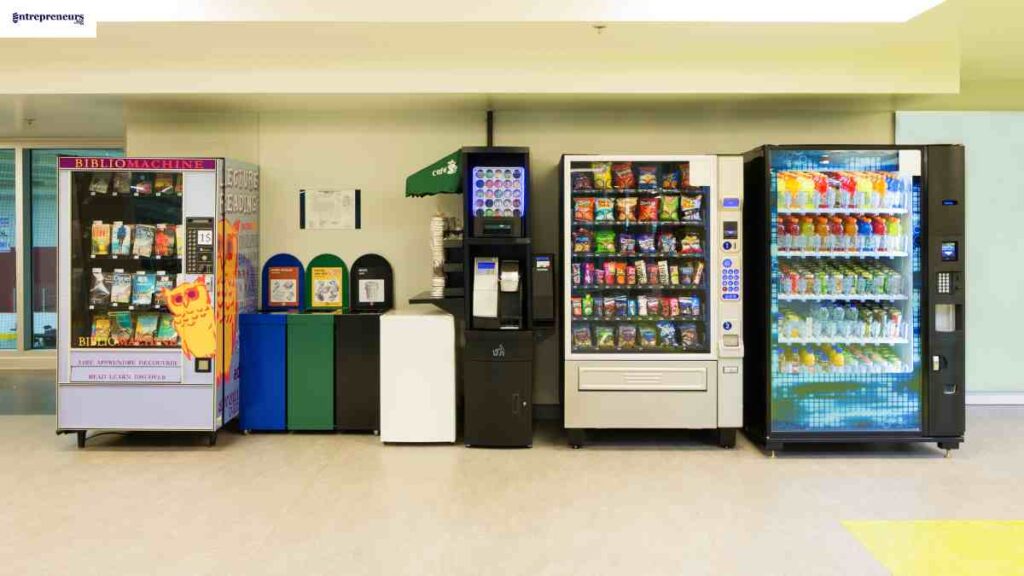
Knowing how to buy a vending machine route is about more than finding a vending machine route for sale. The real challenge is identifying a route with proven earnings, strong locations, and genuine profit potential.
Research and Markets projects the global vending machine operators market will reach $58.75 billion in 2026, driven by rising demand for unattended retail. Yet not every route is worth buying.
In this guide, you will learn how to evaluate, value, and buy a vending machine route without overpaying.
Key Takeaways
- Buy a vending route based on verified cash flow, not the seller’s claims or machine count.
- Use proper vending route valuation methods to determine a fair purchase price and avoid overpaying.
- Complete thorough due diligence on financials, locations, contracts, and equipment before closing the deal.
- Focus on route density, strong locations, and growth potential to maximise long-term ROI and business value.

What Is a Vending Machine Route?
A vending machine route is a collection of vending machines located at different sites and managed as a single business operation.
Instead of relying on one machine for income, route owners service multiple machines across offices, schools, hospitals, gyms, hotels, factories, and other high-traffic locations.
Each machine generates revenue from product sales, while the route owner is responsible for restocking inventory, collecting payments, maintaining equipment, and building relationships with location owners.
The value of a vending route depends on factors such as the number of machines, location quality, route density, revenue performance, and profit margins.
How Does a Vending Machine Route Generate Revenue?
A vending machine route generates revenue by selling products through multiple machines placed in strategic locations.
Every time a customer buys a snack, drink, or other item, the route owner earns the difference between the selling price and the cost of the product.
While the concept sounds simple, a route’s profitability depends on several factors, including location quality, product selection, machine uptime, and operating efficiency.
The Basic Revenue Model
At its core, a vending route follows a straightforward business model.
| Revenue Component | How It Works |
|---|---|
| Product Sales | Customers purchase snacks, drinks, or other items from the machine. |
| Gross Revenue | Total money collected from all sales before expenses. |
| Cost of Goods Sold (COGS) | The amount spent purchasing inventory for resale. |
| Operating Expenses | Fuel, maintenance, commissions, card processing fees, and labour costs. |
| Net Profit | Revenue remaining after all expenses are deducted. |
For example, if a bottle of water costs $0.50 to purchase wholesale and sells for $1.50, the gross profit on that sale is $1.00 before operating expenses are considered.
See Also: How to Start a Vending Machine Business in 10 Easy Steps Plus Costs And Profits
Revenue Depends on Location Quality
The most profitable vending routes are built around high-traffic locations.
A machine placed in a busy office building with hundreds of employees will generally outperform a machine located in a small business with limited foot traffic.
The table below illustrates how location quality can influence revenue potential.
| Location Type | Revenue Potential | Key Advantage |
|---|---|---|
| Hospitals | Very High | 24-hour customer traffic |
| Manufacturing Plants | High | Large workforce with limited food options |
| Office Buildings | High | Consistent daily demand |
| Schools and Universities | High | Large customer base throughout the day |
| Hotels | Moderate to High | Steady guest traffic |
| Gyms and Fitness Centres | Moderate | Demand for drinks and healthy snacks |
| Small Retail Stores | Low to Moderate | Limited captive audience |
A route with fewer machines in premium locations often generates more profit than a larger route spread across weaker sites.
Product Mix Directly Impacts Earnings
Revenue is not determined solely by customer traffic. The products stocked inside the machines also play a major role in overall performance.
Operators who regularly analyse sales data can identify top-selling products and remove slow-moving inventory.
In many cases, a small adjustment to product selection can increase revenue without adding new machines or locations.
| Product Category | Typical Profit Potential |
|---|---|
| Bottled Water | Moderate |
| Soft Drinks | High |
| Energy Drinks | Very High |
| Chocolate and Confectionery | High |
| Chips and Salty Snacks | High |
| Healthy Snacks | Moderate to High |
| Specialty Products | Varies by location |
Successful route owners continually optimise product offerings to match customer preferences.
Multiple Machines Create Recurring Cash Flow
One of the biggest advantages of a vending route is that revenue comes from multiple income-producing assets.
Rather than relying on a single machine, operators generate cash flow from an entire network of machines.
Consider the example below.
| Number of Machines | Average Monthly Revenue Per Machine | Total Monthly Revenue |
|---|---|---|
| 10 | $300 | $3,000 |
| 25 | $300 | $7,500 |
| 50 | $300 | $15,000 |
| 100 | $300 | $30,000 |
Actual figures vary significantly depending on location quality and product demand, but the principle remains the same: the larger and more efficient the route, the greater the revenue potential.
Technology Can Increase Revenue
Modern vending machines generate more revenue than older machines because they offer greater convenience and better customer experiences.
Features such as cashless payments, mobile wallet acceptance, inventory monitoring, and remote management help increase sales while reducing operational inefficiencies.
Many operators report higher transaction volumes after upgrading machines to accept debit cards, credit cards, and mobile payments, as customers increasingly carry less cash.
The Real Driver of Profitability
While revenue is important, smart buyers focus on profit rather than sales alone. A route generating $20,000 per month in sales may be less attractive than a route generating $15,000 if operating costs are significantly higher.
This is why experienced investors evaluate route density, location contracts, inventory costs, machine condition, and service requirements before purchasing a route.
Ultimately, the most successful vending machine routes generate consistent revenue while keeping operating expenses under control.
Types of Vending Machine Routes
Not all vending routes operate the same way. The products sold, customer demographics, and locations served can significantly influence revenue, operating costs, and long-term profitability.
Understanding the different types of vending routes can help buyers identify the opportunities that best match their investment goals, budget, and management style.
The table below highlights the most common types of vending machine routes and their key characteristics.
| Route Type | Products Sold | Common Locations | Profit Potential | Management Complexity |
|---|---|---|---|---|
| Snack Vending Routes | Chips, chocolate, biscuits, confectionery | Offices, schools, factories | High | Low |
| Beverage Vending Routes | Soft drinks, water, energy drinks, juices | Gyms, offices, hospitals, schools | High | Low |
| Combo Vending Routes | Snacks and drinks in one machine | Offices, hotels, apartments | Very High | Moderate |
| Healthy Vending Routes | Protein bars, low-sugar drinks, healthy snacks | Gyms, wellness centres, schools | Moderate to High | Moderate |
| Coffee Vending Routes | Coffee, tea, hot chocolate | Offices, hospitals, universities | High | Moderate |
| Specialty Vending Routes | Electronics, beauty products, PPE, toys, CBD products (where legal) | Airports, malls, hotels | High | High |
| Bulk Vending Routes | Gumballs, candy, small toys | Retail stores, family entertainment centres | Low to Moderate | Low |
| Micro-Market Routes | Self-service kiosks with snacks, drinks, and fresh food | Large offices, factories, hospitals | Very High | High |
Among these options, combo vending routes are often considered the most attractive for first-time buyers because they generate revenue from both snacks and beverages while requiring fewer machine placements.
Meanwhile, micro-market routes have emerged as one of the fastest-growing segments of the industry, offering higher revenue potential through a broader product selection and a more convenient shopping experience.
When evaluating a vending machine route for sale, focus less on the route type itself and more on the quality of its locations, customer traffic, and financial performance.
See Also: 10 Best Banks for Vending Machine Business- Top Banking Partners for Cash-Heavy Operations
Why Buy a Vending Machine Route Instead of Building One?
Starting a vending business from scratch can be rewarding, but it often takes months or even years to secure locations, install machines, build customer demand, and generate consistent profits.
Buying an existing vending machine route allows you to skip many of these early challenges and acquire a business that is already generating revenue.
For many investors and entrepreneurs, purchasing an established route offers a faster and less risky path to ownership.
Immediate Cash Flow
One of the biggest advantages of buying a vending machine route is immediate access to revenue.
Existing routes already have machines in place, customers making purchases, and a history of sales performance.
Instead of waiting months to secure locations and attract customers, you can begin generating income from day one, provided the route has been properly evaluated.
Established Locations
Finding profitable vending locations is often the hardest part of building a route from scratch.
Property owners receive numerous requests from vending operators, making premium locations highly competitive.
When you buy an existing route, you acquire access to locations that have already been secured and proven to generate demand. This can save significant time and effort while reducing uncertainty.
Proven Revenue History
An established route comes with financial records that show how the business has performed over time.
Sales reports, inventory records, and profit statements provide valuable insights into revenue trends and earning potential.
This historical data makes it easier to estimate future performance compared to launching a brand-new route with no operating history.
Lower Startup Risk
Building a route from the ground up involves a considerable amount of trial and error. Some locations perform well, while others fail to generate enough sales to justify the investment.
Buying an existing route reduces this risk because the machines, locations, and product demand have already been tested in the market.
While no business is risk-free, proven performance provides a stronger foundation for decision-making.
Existing Supplier Relationships
Successful route operators often have established relationships with wholesalers, distributors, and service providers.
These relationships can help secure better pricing, a reliable supply of inventory, and faster support when issues arise.
Acquiring a route often means inheriting these operational advantages, making it easier to manage the business efficiently from the outset.
Faster Path to Growth
Building a route machine by machine can be a slow process.
By purchasing an established operation, you start with an existing customer base, multiple income-generating assets, and a functioning business model.
This allows you to focus on improving performance, adding new locations, and increasing profitability rather than spending your time building the foundation from scratch.
Greater Financing Opportunities
Lenders and sellers are generally more willing to finance a business with a proven track record than a startup with no revenue history.
Existing routes with documented earnings may qualify for seller financing, equipment financing, or small business loans.
This can reduce the amount of capital required upfront and make larger acquisitions more accessible.
Build vs Buy: A Quick Comparison
| Factor | Building a Route | Buying a Route |
|---|---|---|
| Time to Generate Revenue | Slow | Immediate |
| Location Acquisition | Must secure locations yourself | Locations already established |
| Revenue History | None | Available for review |
| Startup Risk | Higher | Lower |
| Supplier Relationships | Must build from scratch | Often included |
| Financing Options | Limited | More accessible |
| Growth Potential | Gradual | Faster |
Ultimately, buying a vending machine route is often the smarter choice for entrepreneurs who want immediate cash flow, established locations, and a proven business model.
While building a route can cost less initially, acquiring an existing operation can significantly shorten the path to profitability and long-term growth.

How Much Is a Vending Machine Route Really Worth?
Determining the value of a vending machine route is one of the most important steps in the buying process.
A route is not worth what the seller hopes to get for it; it is worth what its earnings, assets, locations, and growth potential justify.
While many first-time buyers focus on the number of machines included in a sale, experienced investors focus on cash flow. A route with fewer machines in excellent locations can be far more valuable than a larger route with weak sales and high operating costs.
Several valuation methods are commonly used to determine a fair purchase price.
Seller’s Discretionary Earnings (SDE) Valuation
For small and owner-operated routes, SDE is often the most widely used valuation method.
Seller’s Discretionary Earnings represent the profit the business generates before the owner’s salary, benefits, and certain discretionary expenses are deducted.
In simple terms, it estimates how much income a new owner could potentially take from the business.
The formula is straightforward: Business Value = SDE × Industry Multiple.
For example:
| Metric | Amount |
|---|---|
| Annual Revenue | $250,000 |
| SDE | $70,000 |
| Valuation Multiple | 2.5x |
| Estimated Business Value | $175,000 |
Most vending routes sell within a range of 1.5x to 3x SDE, depending on their quality, stability, and growth prospects.
However, earnings alone do not tell the whole story. Buyers must also consider the assets that generate those earnings.
Asset-Based Valuation
Every vending route includes tangible assets that contribute to its overall value.
These typically include:
| Assets Commonly Included | Examples |
|---|---|
| Vending Machines | Snack, beverage, combo, and specialty machines |
| Inventory | Snacks, drinks, and other products in stock |
| Vehicles | Vans and service trucks |
| Equipment | Card readers, software, and maintenance tools |
This method calculates the value of all assets and subtracts any liabilities.
It provides a useful baseline but should rarely be used as the sole valuation method because machines alone do not create profits; locations and sales do.
That is why many buyers also examine the route’s revenue performance.
Revenue Multiple Valuation
Some smaller routes are valued using a percentage of annual gross revenue.
Under this approach, a route might sell for a fraction of its yearly sales, with stronger routes commanding higher multiples.
| Annual Revenue | Example Multiple | Estimated Value |
|---|---|---|
| $150,000 | 0.75x | $112,500 |
| $250,000 | 0.75x | $187,500 |
| $400,000 | 0.75x | $300,000 |
Although simple, this method has limitations because two routes with identical revenue can have vastly different profit margins.
This is why professional buyers rarely stop at revenue alone.
Location Quality and Route Density Premiums
Once the numbers look attractive, the next factor to consider is location quality.
Premium locations can significantly increase a route’s value because they provide predictable and recurring demand.
Hospitals, manufacturing plants, universities, airports, and large office buildings often command higher valuations than lower-traffic sites.
A route with 25 machines concentrated within a small geographic area is generally worth more than a route with the same number of machines spread across a large region.
Fewer travel hours mean lower fuel costs, lower labour expenses, and higher profit margins.
Machine Age and Technology
The condition of the machines also affects value.
Modern machines equipped with cashless payment systems, remote monitoring, and inventory tracking software are often more valuable because they improve customer convenience and operational efficiency.
| Machine Feature | Impact on Value |
|---|---|
| Cashless Payments | Increases sales potential |
| Remote Monitoring | Reduces servicing costs |
| Energy-Efficient Systems | Lowers operating expenses |
| Newer Equipment | Reduces maintenance risk |
Older machines may still generate strong profits, but buyers often factor future replacement costs into their valuation.
Growth Potential
Finally, buyers should assess what the route could become, not just what it is today.
A route with available space for additional machines, underutilised locations, or opportunities to introduce higher-margin products may justify a higher valuation than current earnings suggest.
Questions to consider include:
- Can sales be increased through better product selection?
- Are there opportunities to add machines at existing locations?
- Can cashless payment systems improve revenue?
- Is there room to expand into nearby locations?
Ultimately, the most valuable vending machine routes combine strong earnings, quality locations, efficient operations, modern equipment, and clear growth opportunities.
When all five factors align, buyers are far more likely to pay a premium, and still achieve an attractive return on investment.
How to Buy a Vending Machine Route in 12 Practical Steps
Buying a vending machine route is more than finding a seller and signing a contract.
The most successful buyers follow a structured acquisition process that helps them identify profitable opportunities, verify earnings, avoid costly mistakes, and negotiate favourable terms.
Whether you are purchasing your first route or expanding an existing portfolio, the following 12-step framework will help you move from initial research to a successful ownership transition with greater confidence and less risk.
Step 1: Define Your Investment Goals
Before looking at any vending machine route for sale, decide what you want the investment to achieve.
Some buyers want a side business that generates extra income, while others are looking for a full-time operation they can scale over time.
Your goals will influence the type of route you pursue, the number of machines you need, the locations you target, and the amount of capital you are prepared to invest.
A route that suits a first-time buyer may not be suitable for someone seeking rapid expansion.
| Investment Goal | Typical Route Size | Suitable Buyer |
|---|---|---|
| Supplemental Income | 5–15 machines | Side hustlers and part-time operators |
| Part-Time Business | 15–30 machines | Entrepreneurs seeking additional income |
| Full-Time Income | 30–60 machines | Owner-operators |
| Growth and Expansion | 60+ machines | Investors and acquisition entrepreneurs |
It is also important to establish your financial expectations early.
Knowing your target income, desired return on investment, and available budget will help narrow your search and prevent you from wasting time on unsuitable opportunities.
| Key Question | Example Answer |
|---|---|
| How much can I invest? | $25,000–$100,000 |
| What income do I want? | $2,000–$8,000 monthly |
| How involved do I want to be? | Part-time or full-time |
| Do I want to grow the route? | Yes, through acquisitions and new locations |
With clear objectives in place, you can begin evaluating routes based on whether they align with your financial goals and long-term business plans rather than simply choosing the first opportunity that appears attractive.
Step 2: Determine Your Budget and Financing Options
Once you have defined your goals, the next step is to establish how much you can realistically spend.
Vending machine routes vary significantly in price, depending on their earnings, locations, equipment, and growth potential.
Your budget should cover more than just the purchase price. New owners often need additional funds for inventory, machine upgrades, maintenance, insurance, and working capital during the transition period.
| Expense Category | What It Covers |
|---|---|
| Purchase Price | Cost of acquiring the route |
| Inventory | Initial stock of snacks and beverages |
| Repairs and Upgrades | Machine servicing and improvements |
| Insurance | Business and equipment coverage |
| Working Capital | Day-to-day operating expenses |
Not every buyer pays entirely in cash. Many acquisitions are financed through a combination of personal funds, loans, and seller financing.
| Financing Method | Description |
|---|---|
| Cash Purchase | Buyer pays the full amount upfront |
| Seller Financing | Seller allows payment over time |
| Equipment Financing | Loan secured against vending assets |
| Small Business Loan | Funding from banks or lending institutions |
| Investor Partnership | Capital provided by partners or investors |
For example, a route valued at $120,000 may require only $40,000 upfront if the seller agrees to finance the remaining balance over several years.
This can make larger and more profitable routes accessible to buyers with limited capital.
Before approaching sellers, know your maximum budget and preferred financing structure. This will make negotiations easier and help you focus only on opportunities you can realistically acquire.
Step 3: Find Vending Machine Routes for Sale
With your budget established, you can begin searching for routes that match your investment criteria.
While listings can be found in online marketplaces, some of the best opportunities are sourced through brokers, industry contacts, and direct outreach to route owners.
At this stage, focus on identifying routes that fit your target size, budget, preferred locations, and income goals. There is little value in analysing a route that falls outside your acquisition criteria.
| Source | What to Expect |
|---|---|
| Business Marketplaces | Large selection of publicly listed routes |
| Business Brokers | Curated opportunities and seller introductions |
| Industry Networks | Off-market deals and referrals |
| Direct Outreach | Potential access to sellers before they list publicly |
| Franchise Resale Platforms | Existing franchise-operated vending routes |
As you review opportunities, collect basic information before requesting detailed financial records.
| Information to Gather | Purpose |
|---|---|
| Number of Machines | Understand route size |
| Number of Locations | Assess route scale |
| Asking Price | Compare against your budget |
| Annual Revenue | Initial performance indicator |
| Reason for Sale | Provides important context |
| Geographic Coverage | Helps evaluate route efficiency |
It is tempting to focus on routes with the highest reported revenue, but experienced buyers often prioritise route quality over size.
A smaller route with strong locations and efficient logistics can be far more profitable than a larger route spread across multiple cities.
At this stage, your goal is not to buy a route. It is to create a shortlist of opportunities worthy of deeper investigation.
Step 4: Conduct an Initial Screening
After creating a shortlist, perform a preliminary review before investing time in detailed due diligence. The goal is to quickly identify whether a route deserves further investigation.
At this stage, you are looking for obvious strengths, potential concerns, and whether the asking price appears reasonable based on the information available.
| Screening Factor | What to Look For |
|---|---|
| Asking Price | Consistent with reported earnings |
| Route Size | Matches your investment goals |
| Location Types | High-traffic and stable environments |
| Machine Condition | Modern, functional equipment |
| Revenue Claims | Supported by available records |
| Route Density | Machines located within a manageable area |
Pay close attention to how the seller presents the business. Sellers who provide clear information, organised records, and realistic expectations often make the acquisition process much smoother.
Conversely, vague answers, missing details, or unusually high profit claims should prompt additional scrutiny.
| Potential Warning Sign | Initial Concern |
|---|---|
| “Cash-only business” with no records | Difficult to verify revenue |
| Exceptionally high margins | May not reflect actual performance |
| Frequent location turnover | Revenue instability |
| Old machines with no upgrade history | Future repair costs |
| Urgent sale with little explanation | Requires further investigation |
The purpose of this step is not to verify every claim. Instead, it helps separate promising opportunities from routes that are unlikely to justify deeper analysis.
Once a route passes this initial screening, you can move on to reviewing its financial records in detail.
Step 5: Request and Review Financial Records
Once a route passes the initial screening stage, it is time to examine the numbers. This is where a promising opportunity is either confirmed or eliminated.
A profitable vending machine route should have financial records that clearly show its revenue, expenses, and cash flow.
The more organised and transparent the records are, the easier it becomes to evaluate the business accurately.
Start by requesting documents that verify the route’s performance over at least the past 12 months.
| Financial Record | What It Reveals |
|---|---|
| Profit and Loss Statements | Revenue, expenses, and profitability |
| Bank Statements | Actual cash deposits and transactions |
| Sales Reports | Machine and location performance |
| Tax Returns | Historical business income |
| Inventory Records | Product turnover and stock levels |
| Merchant Processing Reports | Card payment revenue |
As you review the records, focus on trends rather than isolated numbers. Consistent revenue growth and stable profit margins are generally stronger indicators than a single high-performing month.
| Positive Indicators | Potential Concerns |
|---|---|
| Stable monthly sales | Large revenue fluctuations |
| Consistent profit margins | Rising operating costs |
| Documented card transactions | Unverifiable cash sales |
| Clear financial reporting | Missing or incomplete records |
| Growing sales trends | Declining revenue patterns |
Pay particular attention to the relationship between revenue and expenses. A route generating high sales may still produce weak profits if inventory costs, commissions, fuel expenses, or maintenance costs are excessive.
At this stage, avoid relying solely on the seller’s summaries or verbal claims. Every figure should be supported by documentation.
If the numbers cannot be verified, they should not influence your valuation of the business. Once the financial records check out, the next step is to verify whether the route’s earnings are truly sustainable.
Step 6: Verify the Route’s Revenue Claims
Financial statements provide a useful starting point, but they should never be accepted at face value.
Before moving forward, you need to confirm that the route’s reported earnings reflect what the machines are actually generating.
Many vending route transactions involve cash sales, making independent verification especially important. The goal is to ensure that the revenue being advertised is real, consistent, and sustainable.
Start by comparing financial records against supporting documentation.
| Verification Source | What It Confirms |
|---|---|
| Bank Statements | Revenue deposited into accounts |
| Merchant Processor Reports | Card transaction volumes |
| Inventory Purchase Records | Product sales activity |
| Cash Collection Logs | Machine-level collections |
| Tax Returns | Reported business income |
One useful technique is to compare inventory purchases with reported sales. If a seller claims strong revenue but inventory turnover appears unusually low, the numbers may not align.
| Example | Amount |
|---|---|
| Monthly Revenue Claimed | $12,000 |
| Inventory Purchases | $1,500 |
| Estimated Margin | Appears unusually high |
| Further Review Needed? | Yes |
Where possible, request machine-level sales reports rather than route-wide summaries. This provides a clearer picture of which locations generate most of the revenue and whether certain machines are underperforming.
Some buyers also accompany the seller during collection days to observe the route in operation. This can help confirm customer activity, machine usage, and collection procedures.
A route’s value depends heavily on its earnings. Before progressing to the next stage, ensure the revenue can be independently verified through multiple sources rather than relying solely on the seller’s representations.
Step 7: Evaluate the Locations and Route Density
A vending machine route is only as strong as the locations it serves. Even the newest machines and best product selection cannot compensate for poor foot traffic or weak demand.
At this stage, assess each location individually rather than viewing the route as a single business.
The objective is to understand where revenue comes from and whether those locations are likely to remain productive in the future.
| Location Factor | What to Assess |
|---|---|
| Foot Traffic | Number of potential customers |
| Customer Base | Employees, students, visitors, or residents |
| Competition | Nearby food outlets and vending options |
| Accessibility | Ease of servicing and restocking |
| Contract Status | Existing agreements and renewal terms |
It is common to discover that a small number of locations generate the majority of a route’s revenue.
Understanding this concentration helps you identify both strengths and risks.
| Revenue Distribution Example | Contribution |
|---|---|
| Top 5 Locations | 65% of Route Revenue |
| Next 10 Locations | 25% of Route Revenue |
| Remaining Locations | 10% of Route Revenue |
Beyond location quality, route density is equally important.
A route spread across a wide geographic area often requires more fuel, travel time, and labour than a concentrated route generating the same revenue.
| Route Type | Operational Efficiency |
|---|---|
| Machines clustered within a small area | High |
| Machines spread across multiple cities | Low |
| Locations serviced on a single route | Very High |
| Frequent long-distance travel required | Low |
Whenever possible, visit the locations yourself. Observe customer activity, inspect machine placement, and assess the overall environment.
A route with strong locations and efficient route density will typically generate higher profits and be easier to scale than one with similar sales but poor logistics.
Step 8: Inspect the Machines and Equipment
After evaluating the locations, turn your attention to the assets that generate the revenue. A route may appear profitable on paper, but outdated or poorly maintained machines can quickly turn into expensive liabilities.
Begin by inspecting the condition, functionality, and age of every machine included in the sale.
Pay particular attention to machines located at the route’s highest-performing locations, as any downtime can directly affect revenue.
| Machine Component | What to Check |
|---|---|
| Exterior Condition | Signs of damage, rust, or vandalism |
| Cooling Systems | Proper temperature and performance |
| Payment Systems | Cash, card, and mobile payment functionality |
| Product Dispensing | Reliable operation and minimal jams |
| Lighting and Displays | Customer visibility and user experience |
| Security Features | Locks, cash boxes, and anti-theft measures |
The age of the equipment also matters. While older machines can remain profitable, they often require more frequent repairs and may lack features that modern consumers expect.
| Machine Condition | Potential Impact |
|---|---|
| New or Recently Upgraded | Lower maintenance costs |
| Cashless Payment Enabled | Higher sales potential |
| Energy-Efficient Models | Reduced operating costs |
| Frequent Repair History | Increased future expenses |
| Obsolete Technology | Reduced customer convenience |
Ask the seller for maintenance records if available. These documents can reveal recurring issues, replacement history, and overall machine reliability.
You should also confirm that all machines included in the sale are fully owned and free of liens or financing obligations. In some cases, buyers discover after closing that certain machines were leased rather than owned.
By the end of this step, you should have a clear understanding of the equipment’s condition, replacement needs, and likely maintenance costs.
This information will play an important role when negotiating the purchase price and determining the route’s true value.
Step 9: Review Contracts, Agreements, and Legal Documents
Strong locations are valuable, but their value can disappear quickly if there is no agreement securing your right to operate there.
Before proceeding with a purchase, review all contracts and legal documents associated with the route.
The objective is to confirm that the locations, machines, and business assets can legally transfer to a new owner and continue operating without disruption.
| Document | What to Verify |
|---|---|
| Location Agreements | Length of contract and renewal terms |
| Commission Agreements | Percentage paid to location owners |
| Equipment Ownership Records | Proof that machines are owned outright |
| Business Licences | Compliance with local regulations |
| Insurance Policies | Existing coverage and requirements |
| Supplier Agreements | Any obligations tied to vendors |
Pay close attention to location agreements. Some contracts automatically transfer to a new owner, while others require approval from the property owner before the sale can be completed.
| Contract Type | Risk Level |
|---|---|
| Long-Term Written Agreement | Low |
| Renewable Contract | Moderate |
| Month-to-Month Agreement | Higher |
| Verbal Agreement Only | Very High |
It is also important to identify any obligations that could affect future profitability. These may include commission increases, exclusive supplier arrangements, or restrictions on product offerings.
If key locations operate without written agreements, discuss this with the seller before moving forward. A route’s revenue may look attractive today, but its value depends on the security of the locations generating that income.
By the end of this review, you should know exactly what assets, rights, and obligations you will be acquiring as part of the transaction.
Step 10: Negotiate the Purchase Price and Deal Terms
Once the financials, locations, equipment, and contracts have been verified, you can begin negotiating the deal.
The seller’s asking price should serve as a starting point, not the final amount you pay.
Your objective is to reach a price that reflects the route’s actual earnings, asset quality, risks, and growth potential.
| Factor | Impact on Negotiations |
|---|---|
| Strong Verified Earnings | May justify a higher price |
| Weak or Declining Sales | Supports a lower valuation |
| Newer Equipment | Adds value |
| Ageing Machines | May warrant a discount |
| Long-Term Location Contracts | Increases value |
| Unsecured Locations | Reduces value |
Price is only one part of the negotiation. Many successful acquisitions are structured through favourable deal terms rather than significant price reductions.
| Deal Term | Potential Benefit |
|---|---|
| Seller Financing | Reduces upfront capital required |
| Transition Support | Helps ensure a smooth handover |
| Inventory Included | Lowers startup costs |
| Non-Compete Agreement | Prevents the seller from becoming a competitor |
| Performance-Based Payments | Reduces buyer risk |
For example, a seller asking $150,000 may agree to accept $50,000 upfront and finance the remaining balance over several years. This can improve cash flow while reducing the amount of capital tied up in the acquisition.
Throughout negotiations, rely on the facts uncovered during due diligence rather than emotion.
Verified financial data, machine condition, and location quality provide strong leverage when discussing price and terms.
The goal is not simply to buy the route at the lowest possible price but to structure a deal that allows the business to remain profitable from the first day of ownership.
Step 11: Finalise the Purchase and Complete the Transition
After reaching an agreement, the focus shifts from negotiation to ownership transfer.
This stage involves completing the legal documentation, transferring assets, and ensuring a smooth handover of day-to-day operations.
A well-managed transition helps minimise disruptions, maintain customer relationships, and preserve revenue from existing locations.
| Transfer Item | What Should Be Included |
|---|---|
| Vending Machines | All machines listed in the sale agreement |
| Inventory | Existing stock and products |
| Location Agreements | Contracts and contact details |
| Payment Systems | Card readers and merchant accounts where applicable |
| Business Records | Sales reports, maintenance records, and supplier information |
| Keys and Access Codes | Machine keys, locks, and software access credentials |
During the transition period, many buyers arrange for the seller to provide short-term support.
This often includes introducing the new owner to location managers, explaining service schedules, and demonstrating collection and restocking procedures.
| Transition Activity | Purpose |
|---|---|
| Location Introductions | Maintain relationships with site owners |
| Route Training | Learn servicing procedures |
| Supplier Handover | Ensure uninterrupted inventory supply |
| System Demonstrations | Understand machine and payment operations |
| Maintenance Guidance | Reduce operational mistakes |
Before the transaction is officially completed, confirm that all agreed assets have been transferred and that the terms of the purchase agreement have been fulfilled.
A successful transition does more than transfer ownership. It helps ensure the route continues generating revenue without unnecessary interruptions, giving the new owner the strongest possible start.
Step 12: Monitor Performance and Optimise the Route
The acquisition process does not end when ownership transfers.
The first few months after purchase are critical because they reveal whether the route is performing as expected and where improvements can be made.
Start by tracking the performance of each machine and location. This will help you identify underperforming sites, popular products, and opportunities to increase profitability.
| Metric | What It Measures |
|---|---|
| Monthly Revenue | Sales generated by each machine |
| Profit Margin | Earnings after operating expenses |
| Inventory Turnover | How quickly products sell |
| Service Frequency | Number of visits required |
| Machine Downtime | Lost revenue from equipment issues |
It is common to discover that some locations perform significantly better than others.
Reviewing sales data regularly allows you to make informed decisions about product selection, pricing, and machine placement.
| Optimisation Opportunity | Potential Result |
|---|---|
| Introduce Best-Selling Products | Higher sales |
| Upgrade to Cashless Payments | Increased transaction volume |
| Remove Slow-Moving Inventory | Better profit margins |
| Improve Service Schedules | Lower operating costs |
| Add Machines to Strong Locations | Additional revenue |
The first year of ownership is also the ideal time to look for expansion opportunities. Existing locations may have room for additional machines, while strong cash flow can help finance future acquisitions.
A successful vending route is not simply maintained; it is continuously improved.
By monitoring performance and making data-driven adjustments, you can increase revenue, improve efficiency, and build a more valuable business over time.

How Much Does a Vending Machine Route Cost?
One of the first questions buyers ask is, “How much does a vending machine route cost?”
The answer depends on several factors, including the route’s earnings, number of machines, location quality, equipment condition, and growth potential.
Unlike buying individual vending machines, purchasing a route means acquiring an operating business.
As a result, buyers are paying not only for the equipment but also for the cash flow, customer base, and established locations that generate revenue.
In most cases, route prices range from a few thousand dollars for small owner-operated routes to several hundred thousand dollars for larger operations with proven earnings.
Typical Vending Route Price Ranges
The size of the route is often the biggest factor influencing price.
| Route Size | Typical Number of Machines | Estimated Price Range |
|---|---|---|
| Small Route | 5–15 machines | $10,000–$75,000 |
| Medium Route | 15–40 machines | $75,000–$250,000 |
| Large Route | 40–100 machines | $250,000–$750,000+ |
| Enterprise Route | 100+ machines | $750,000–$2 million+ |
These figures vary significantly depending on profitability and location quality. A 20-machine route in premium locations may be worth more than a 40-machine route in weaker markets.
Revenue Often Drives Value More Than Machine Count
Many first-time buyers make the mistake of valuing a route based on the number of machines included in the sale.
In reality, investors care far more about earnings than equipment.
Consider the example below:
| Route | Machines | Annual Revenue | Estimated Value |
|---|---|---|---|
| Route A | 15 | $200,000 | Higher |
| Route B | 30 | $120,000 | Lower |
Although Route B has twice as many machines, Route A would likely command a higher valuation because it generates stronger revenue from fewer assets.
This is why experienced buyers focus on cash flow rather than machine count.
The Role of Profitability in Pricing
Routes with strong profit margins generally sell for higher multiples than routes with similar revenue but higher operating costs.
| Annual Net Profit | Typical Valuation Range* |
|---|---|
| $20,000 | $30,000–$60,000 |
| $50,000 | $75,000–$150,000 |
| $100,000 | $150,000–$300,000 |
| $200,000 | $300,000–$600,000 |
Actual valuations vary based on location quality, contracts, equipment condition, and market demand.
The stronger the profits, the more buyers are usually willing to pay.
What Are You Actually Paying For?
When acquiring a route, the purchase price usually includes more than just vending machines.
| Included Asset | Contribution to Value |
|---|---|
| Vending Machines | Physical equipment |
| Existing Locations | Revenue-generating placements |
| Inventory | Products ready for sale |
| Customer Demand | Established purchasing patterns |
| Location Contracts | Revenue security |
| Supplier Relationships | Operational efficiency |
| Business Systems | Software, payment systems, and processes |
In many cases, the locations themselves can be more valuable than the machines.
A modern vending machine placed in a poor location may struggle to generate sales, while an older machine in a busy hospital or manufacturing plant can remain highly profitable.
Additional Costs Buyers Should Budget For
The purchase price is only part of the total investment. New owners should also account for transition and operating expenses.
| Additional Cost | Estimated Range |
|---|---|
| Initial Inventory | $500–$10,000+ |
| Machine Repairs | $500–$20,000+ |
| Vehicle Purchase or Upgrade | $5,000–$50,000+ |
| Insurance | Varies by market |
| Licences and Permits | Varies by location |
| Working Capital | 3–6 months of operating expenses |
Having adequate working capital can make the transition much smoother, particularly during the first few months of ownership.
Why Premium Locations Command Higher Prices
Two routes with identical earnings today may not have the same value tomorrow. Buyers are often willing to pay a premium for locations that provide stable, long-term demand.
Examples include:
| Premium Location Type | Reason for Higher Value |
|---|---|
| Hospitals | Around-the-clock traffic |
| Manufacturing Plants | Large captive workforce |
| Universities | High daily footfall |
| Airports | Consistent customer flow |
| Corporate Offices | Predictable demand |
These locations often provide greater revenue stability, making them attractive acquisition targets.
How Financing Affects Affordability
Not every buyer purchases a route outright. Many acquisitions are completed using seller financing, equipment loans, or small business financing.
For example:
| Purchase Price | Down Payment | Financed Amount |
|---|---|---|
| $100,000 | $30,000 | $70,000 |
| $250,000 | $75,000 | $175,000 |
| $500,000 | $150,000 | $350,000 |
This allows buyers to acquire larger routes while preserving capital for inventory, upgrades, and future expansion.
What Should You Expect to Pay?
Most first-time buyers acquire routes in the $50,000 to $250,000 range because these businesses are large enough to generate meaningful cash flow but still manageable for an owner-operator.
However, the right question is not how much a vending machine route costs. The more important question is whether the route’s earnings, locations, and growth potential justify the asking price.
A route that costs $200,000 but consistently generates strong profits may be a far better investment than a route priced at $50,000 with weak locations and declining sales.
Ultimately, a vending machine route should be valued as a business first and a collection of machines second.
Are Vending Machine Routes Profitable?
Yes, vending machine routes can be highly profitable, but profitability depends on far more than the number of machines you own.
The most successful routes combine strong locations, efficient operations, healthy profit margins, and consistent customer demand.
This is why two routes with similar revenues can produce vastly different profits.
Ultimately, a vending machine route should be judged by its cash flow rather than its sales volume.
Understanding How Vending Route Profitability Works
A vending route earns revenue from product sales, but profit is what remains after all operating expenses have been deducted.
The basic formula looks like this:
| Metric | Calculation |
|---|---|
| Gross Revenue | Total sales generated |
| Cost of Goods Sold (COGS) | Inventory purchased |
| Gross Profit | Revenue minus inventory costs |
| Operating Expenses | Fuel, commissions, repairs, card fees, labour |
| Net Profit | Remaining earnings |
For example:
| Example Monthly Performance | Amount |
|---|---|
| Revenue | $10,000 |
| Inventory Costs | $4,000 |
| Gross Profit | $6,000 |
| Operating Expenses | $2,000 |
| Net Profit | $4,000 |
In this example, the route produces a 40% net profit margin.
Average Vending Route Profit Margins
Profit margins vary depending on product mix, route efficiency, and machine performance. However, most successful operators aim for healthy margins after inventory and operating costs.
| Profit Metric | Typical Range |
|---|---|
| Gross Margin | 45%–65% |
| Net Profit Margin | 15%–35% |
| High-Performing Routes | 35%–50%+ |
| Poorly Managed Routes | Below 15% |
Routes with concentrated locations, modern machines, and strong product demand generally achieve the highest margins.
Profitability by Route Size
The size of a route often influences total earnings, although larger routes do not automatically guarantee better profits.
| Route Size | Monthly Revenue | Estimated Monthly Profit |
|---|---|---|
| Small Route (5–15 Machines) | $2,000–$8,000 | $500–$2,500 |
| Medium Route (15–40 Machines) | $8,000–$25,000 | $2,000–$8,000 |
| Large Route (40–100 Machines) | $25,000–$75,000 | $6,000–$25,000 |
| Enterprise Route (100+ Machines) | $75,000+ | $20,000+ |
Actual results vary significantly depending on location quality and operational efficiency.
What Makes Some Routes More Profitable Than Others?
Location quality remains the single biggest driver of profitability.
A machine placed in a busy manufacturing facility with hundreds of employees will generally outperform a machine located in a low-traffic office.
The same machine, stocked with the same products, can produce dramatically different results depending on where it is placed.
Several factors influence profitability:
| Factor | Impact on Profit |
|---|---|
| High-Traffic Locations | Increases sales volume |
| Route Density | Reduces fuel and labour costs |
| Cashless Payments | Increases transaction frequency |
| Product Selection | Improves margins and turnover |
| Machine Reliability | Reduces downtime |
| Inventory Management | Minimises waste and stockouts |
When these factors work together, profitability can increase substantially without adding more machines.
A Profitability Comparison
The example below illustrates why revenue alone does not determine success.
| Route A | Route B |
|---|---|
| Revenue: $20,000 | Revenue: $20,000 |
| Operating Costs: $6,000 | Operating Costs: $11,000 |
| Net Profit: $14,000 | Net Profit: $9,000 |
| Profit Margin: 70% | Profit Margin: 45% |
Both routes generate the same revenue, yet Route A produces significantly more profit because it operates more efficiently.
How Long Does It Take to Recover Your Investment?
Many buyers evaluate a route based on its payback period, which measures how quickly profits can recover the purchase price.
| Purchase Price | Annual Profit | Estimated Payback Period |
|---|---|---|
| $50,000 | $20,000 | 2.5 Years |
| $100,000 | $40,000 | 2.5 Years |
| $200,000 | $80,000 | 2.5 Years |
| $300,000 | $100,000 | 3 Years |
Routes with strong earnings and stable locations often recover their acquisition costs within two to four years, although results vary by market and operating conditions.
The Reality of Vending Route Profitability
Vending machine routes are not passive income machines that generate profits without effort. They require inventory management, machine maintenance, location relationships, and ongoing optimisation.
However, when acquired at the right price and managed effectively, a profitable vending machine route can generate consistent recurring cash flow, attractive margins, and long-term business value.
This is precisely why many acquisition entrepreneurs view vending routes as cash-flow businesses rather than side hustles.
Where to Find Vending Machine Routes for Sale
Finding the right vending machine route is often more challenging than evaluating one. While thousands of routes are listed for sale each year, the best opportunities do not always appear on public marketplaces.
Successful buyers typically use multiple sourcing channels to increase their chances of finding profitable routes at reasonable valuations.
The table below highlights the most common places to find vending machine routes for sale and what you can expect from each source.
| Source | What You’ll Find | Best For |
|---|---|---|
| Business Marketplaces | Publicly listed vending businesses and routes | First-time buyers and broad searches |
| Business Brokers | Professionally marketed routes with financial records | Buyers seeking larger acquisitions |
| Industry Associations | Networking opportunities and industry contacts | Finding off-market deals |
| Direct Outreach | Owners willing to sell but not actively advertising | Buyers seeking less competition |
| Franchise Resale Platforms | Existing franchise-operated routes | Buyers looking for structured systems |
| Online Business Communities | Seller discussions and acquisition opportunities | Networking and market insights |
| Trade Shows and Industry Events | Route owners, operators, and suppliers | Relationship building and deal sourcing |
Not all routes are publicly advertised. In fact, some of the most attractive acquisitions are sold privately through industry contacts and referrals before they ever reach the open market.
This is why experienced buyers often spend as much time networking as they do browsing listings.
Regardless of where you find a route, treat every opportunity as a lead rather than a deal.
A route’s true value can only be determined after reviewing its financial records, locations, contracts, and operational performance through proper due diligence.

Red Flags That Signal a Bad Vending Route
Not every vending machine route for sale is a good investment.
Some routes appear profitable at first glance but contain hidden issues that can reduce earnings, increase operating costs, or lead to the loss of valuable locations after the acquisition.
Before committing to a purchase, watch for warning signs that may indicate the route is overpriced, poorly managed, or riskier than it appears.
| Red Flag | Why It Should Concern You |
|---|---|
| Missing Financial Records | Revenue and profits cannot be independently verified. |
| Seller Refuses Access to Documents | May indicate hidden problems or inflated earnings. |
| Heavy Reliance on Cash Sales | Makes revenue verification more difficult. |
| Declining Sales Trends | Could signal weakening demand or poor locations. |
| High Location Turnover | Suggests unstable customer relationships. |
| Verbal Location Agreements Only | Locations may be lost after the sale. |
| Ageing Machines Requiring Frequent Repairs | Can lead to significant future expenses. |
| Poor Route Density | Higher fuel, labour, and servicing costs. |
| Unusually High Profit Claims | May not reflect actual operating performance. |
| Excessive Location Commissions | Reduces overall profitability. |
| Multiple Underperforming Locations | Limits growth and cash flow potential. |
| Deferred Maintenance | Hidden repair costs may emerge after purchase. |
| No Cashless Payment Systems | Lost sales opportunities in an increasingly cashless market. |
| Seller Rushing the Sale | May indicate underlying operational or financial issues. |
| Asking Price Based on Potential Rather Than Actual Performance | Buyers should pay for proven results, not promises. |
A single red flag does not automatically make a route a bad investment. However, when several warning signs appear together, buyers should proceed cautiously and investigate further before moving forward.
The strongest acquisitions are typically backed by verified earnings, stable locations, reliable equipment, and transparent records.
How to Increase the Value of Your Vending Route After Purchase
Buying a vending route is only the beginning. The real opportunity lies in improving its performance and increasing its value over time.
Routes that generate higher profits, operate efficiently, and have growth potential typically command stronger valuations when it is time to sell.
The most successful operators focus on improving revenue and margins without significantly increasing costs.
| Strategy | How It Increases Value |
|---|---|
| Optimise Product Selection | Increases sales and profit margins |
| Introduce Cashless Payments | Boosts transaction volume and convenience |
| Upgrade Older Machines | Reduces downtime and maintenance costs |
| Improve Route Density | Lowers fuel and labour expenses |
| Remove Underperforming Locations | Improves overall profitability |
| Add Machines to Strong Locations | Increases revenue without acquiring new sites |
| Negotiate Better Supplier Pricing | Improves margins on every sale |
| Implement Inventory Tracking Software | Reduces waste and stock shortages |
| Improve Machine Appearance | Enhances customer experience and sales |
| Secure Longer-Term Location Agreements | Increases business stability and valuation |
Small operational improvements often produce significant results.
For example, replacing slow-moving products with best-sellers, introducing card payments, or relocating underperforming machines can increase revenue without expanding the route.
As profitability improves, so does the route’s market value. Buyers are generally willing to pay higher multiples for businesses with strong earnings, modern equipment, and stable locations.
How to Scale a Vending Route Into a Larger Business
Once a route is operating efficiently, the next step is growth. Scaling allows owners to increase revenue, spread operating costs across more machines, and build a business that generates greater long-term value.
However, successful scaling requires more than simply adding machines. Growth should be strategic and focused on maintaining profitability.
| Growth Strategy | Expected Outcome |
|---|---|
| Acquire Additional Routes | Faster revenue growth |
| Expand Within Existing Locations | Increased sales from proven sites |
| Secure New High-Traffic Locations | Larger customer base |
| Introduce Micro-Markets | Higher average transaction values |
| Add Specialty Machines | New revenue streams |
| Hire Route Technicians or Drivers | Frees up owner time |
| Standardise Operating Procedures | Improves efficiency |
| Invest in Route Management Software | Better performance tracking |
| Upgrade to Smart Machines | Greater operational control |
| Expand Geographically | Access to new markets |
Many operators find that expanding within existing locations is often easier and more profitable than constantly searching for new ones.
A manufacturing plant that currently supports two machines may have demand for four, creating growth without additional customer acquisition costs.
As the route grows, delegation becomes increasingly important.
| Business Stage | Typical Focus |
|---|---|
| 5–20 Machines | Owner manages everything |
| 20–50 Machines | Begin systemising operations |
| 50–100 Machines | Hire support staff |
| 100+ Machines | Focus on management and acquisitions |
The most valuable vending businesses are rarely built machine by machine. They are built through a combination of route optimisation, strategic acquisitions, operational efficiency, and disciplined expansion.
By increasing profitability first and scaling second, owners can transform a small vending route into a significant cash-flow business with substantial resale value.
The Ultimate Vending Route Due Diligence Checklist
A vending machine route can look profitable on the surface while hiding problems that reduce its true value. This is why due diligence is one of the most important stages of the acquisition process.
Before committing to a purchase, buyers should verify the route’s financial performance, operational efficiency, legal standing, and growth potential.
The following checklist covers the key areas that deserve careful review before closing a deal.
Financial Due Diligence
The first priority is confirming that the route generates the revenue and profits claimed by the seller.
Every financial figure should be supported by documentation rather than verbal assurances.
| Financial Item | What to Verify |
|---|---|
| Profit and Loss Statements | Revenue, expenses, and net profit |
| Bank Statements | Actual deposits and cash flow |
| Tax Returns | Reported business income |
| Sales Reports | Machine and location performance |
| Merchant Processing Reports | Card transaction revenue |
| Inventory Records | Product turnover and purchasing trends |
| Outstanding Debts | Existing liabilities and obligations |
The objective is to ensure the route’s earnings are real, consistent, and sustainable.
Operational Due Diligence
A route may produce strong sales today, but operational inefficiencies can reduce profitability over time.
Reviewing how the business functions on a day-to-day basis helps identify hidden costs and future challenges.
| Operational Item | What to Review |
|---|---|
| Route Density | Distance between locations |
| Service Schedules | Frequency of machine visits |
| Machine Downtime | Equipment reliability |
| Maintenance Records | Repair history and recurring issues |
| Product Mix | Best-selling and slow-moving products |
| Inventory Management | Stock control systems |
| Supplier Relationships | Reliability and pricing stability |
A well-organised route is typically easier to manage and scale.
Location Due Diligence
The locations are often the most valuable assets in a vending route acquisition.
Strong locations can generate revenue for years, while weak or unstable locations can quickly undermine profitability.
| Location Item | What to Confirm |
|---|---|
| Foot Traffic Levels | Customer demand potential |
| Location Contracts | Length and transferability |
| Renewal Terms | Future contract security |
| Commission Agreements | Percentage paid to property owners |
| Competition | Nearby vending and food options |
| Expansion Opportunities | Space for additional machines |
| Relationship Quality | Seller’s standing with location managers |
Whenever possible, visit the locations in person to validate their quality.
Equipment Due Diligence
The condition of the machines directly affects revenue, maintenance costs, and customer experience. A route filled with ageing equipment may require significant capital after purchase.
| Equipment Item | What to Inspect |
|---|---|
| Machine Age | Remaining useful life |
| Physical Condition | Damage, wear, or vandalism |
| Cooling Systems | Proper operation |
| Payment Systems | Cashless and mobile payment capabilities |
| Software Systems | Monitoring and reporting tools |
| Ownership Status | Confirm machines are owned outright |
| Replacement Needs | Future capital expenditure requirements |
Equipment inspections often reveal issues that are not obvious in financial statements.
Legal Due Diligence
Before completing a purchase, confirm that the route and its assets can legally transfer to a new owner without restrictions.
| Legal Item | What to Verify |
|---|---|
| Business Ownership | Seller’s legal authority to sell |
| Location Agreements | Transferability provisions |
| Licences and Permits | Regulatory compliance |
| Insurance Coverage | Existing policies and requirements |
| Liens or Encumbrances | Outstanding claims against assets |
| Non-Compete Agreements | Protection after the sale |
| Purchase Agreement | Terms and obligations |
Legal issues discovered late in the process can delay or derail an acquisition.
Growth Potential Due Diligence
A route’s future opportunities can be just as important as its current performance. Some routes have significant room for expansion, while others have already reached their limits.
| Growth Factor | What to Assess |
|---|---|
| Additional Machine Opportunities | Capacity within existing locations |
| Product Expansion | New products and categories |
| Cashless Payment Upgrades | Revenue improvement potential |
| Route Expansion | Nearby acquisition opportunities |
| Underperforming Locations | Improvement possibilities |
| Market Demand | Future growth prospects |
Routes with clear growth opportunities often justify stronger valuations.
Final Due Diligence Summary
Before moving forward with any acquisition, confirm that you can answer “yes” to the following questions:
| Critical Question | Yes/No |
|---|---|
| Have the route’s earnings been independently verified? | □ |
| Are the locations stable and protected by agreements? | □ |
| Are the machines in good working condition? | □ |
| Have all major expenses been identified? | □ |
| Are there any legal or ownership concerns? | □ |
| Does the asking price reflect the route’s true value? | □ |
| Is there potential to increase revenue after acquisition? | □ |
A successful vending route acquisition is rarely about finding the cheapest deal. It is about identifying a business with verified earnings, quality locations, reliable equipment, and long-term growth potential.
A thorough due diligence process helps ensure you are buying a profitable business rather than inheriting expensive problems.
Conclusion
Buying a vending machine route can be an excellent way to acquire an income-generating business without starting from scratch.
However, success depends on more than finding a route for sale. It requires careful valuation, thorough due diligence, smart negotiation, and a clear plan for growth.
We want to see you succeed, and that’s why we provide valuable business resources to help you every step of the way.
- Join over 23,000 entrepreneurs by signing up for our newsletter and receiving valuable business insights.
- Register your business today with Entrepreneurs.ng’s Business Registration Services.
- Tell Your Brand Story on Entrepreneurs.ng, let’s showcase your brand to our global audience.
- Need help with your marketing strategy? Get a Comprehensive Marketing and Sales Plan here.
- Sign up for our Entrepreneurs Success Blueprint Programme to learn how to start and scale your business in just 30 days.
- Book our one-on-one consulting and speak to an expert about structuring and growing your business.
- Visit our shop for business plan templates and other valuable resources to guide you.
- Get our Employee-Employer Super Bundle NDA templates to legally protect your business and workforce.
- Advertise your business to over a million entrepreneurs through our different advertising packages.

Frequently Asked Questions (FAQs)
How do I buy a vending machine route?
Start by defining your budget and investment goals, then search for routes for sale, review financial records, conduct due diligence, inspect locations and equipment, negotiate the deal, and complete the ownership transfer.
Are vending machine routes profitable?
Yes, vending machine routes can be profitable when they have strong locations, efficient operations, healthy profit margins, and consistent customer demand. Profitability depends more on location quality and route management than the number of machines.
How much does a vending machine route cost?
The cost varies based on revenue, profitability, location quality, and route size. Small routes may sell for under $50,000, while larger, established routes can cost several hundred thousand dollars.
What is a profitable vending machine route?
A profitable vending machine route generates consistent revenue, maintains healthy profit margins, has reliable locations, and requires manageable operating costs. The best routes combine strong sales with efficient operations.
How do I find a vending machine route for sale?
You can find vending machine routes through business marketplaces, brokers, industry associations, franchise resale platforms, networking events, and direct outreach to route owners.
How do I evaluate a vending machine route before buying?
Review the route’s financial records, inspect the machines, analyse location quality, assess route density, verify contracts, and calculate potential return on investment before making an offer.
What should be included in a vending machine route due diligence checklist?
A comprehensive due diligence checklist should cover financial records, machine inspections, location agreements, inventory records, maintenance history, supplier relationships, and legal documents.
How do I verify vending machine route earnings?
Compare sales reports with bank statements, tax returns, merchant processing reports, inventory purchases, and cash collection records. Never rely solely on the seller’s claims.
What is vending route valuation?
Vending route valuation is the process of determining what a route is worth based on its earnings, assets, locations, contracts, and growth potential. Most routes are valued using profit or SDE multiples.
How do I value a vending machine business?
Most buyers use Seller’s Discretionary Earnings (SDE), net profit multiples, revenue multiples, and asset-based valuation methods to determine a fair purchase price.
Is seller financing available for vending routes?
Yes. Many sellers offer financing to qualified buyers, allowing part of the purchase price to be paid over time rather than requiring full payment upfront.
What are the best vending machine routes to buy?
The best vending machine routes typically operate in hospitals, manufacturing facilities, universities, large office buildings, airports, and other high-traffic locations with consistent customer demand.
How many vending machines do I need to make full-time income?
The answer depends on revenue and profitability. Some operators achieve full-time income with 30 to 50 high-performing machines, while others may require more depending on their locations and operating costs.
Is it better to buy a vending route or build one from scratch?
Buying a route often provides immediate cash flow, established locations, and proven revenue history. Building from scratch may cost less initially but usually requires more time and carries greater risk.
What are the biggest red flags when buying a vending route?
Warning signs include missing financial records, declining sales, verbal location agreements, ageing equipment, poor route density, excessive commissions, and sellers who refuse to provide documentation.
What is a good vending machine route ROI?
Many buyers aim to recover their investment within two to four years. However, the actual ROI depends on the purchase price, profitability, operating costs, and future growth opportunities.
Can I grow a vending route after buying it?
Yes. Common growth strategies include adding machines to existing locations, securing new sites, upgrading equipment, introducing cashless payments, acquiring additional routes, and expanding into micro-markets.
Do vending machine routes require daily management?
Not necessarily. Smaller routes can often be managed part-time, while larger routes may require regular servicing, inventory management, maintenance, and staff support. The level of involvement depends on the size and structure of the business.


