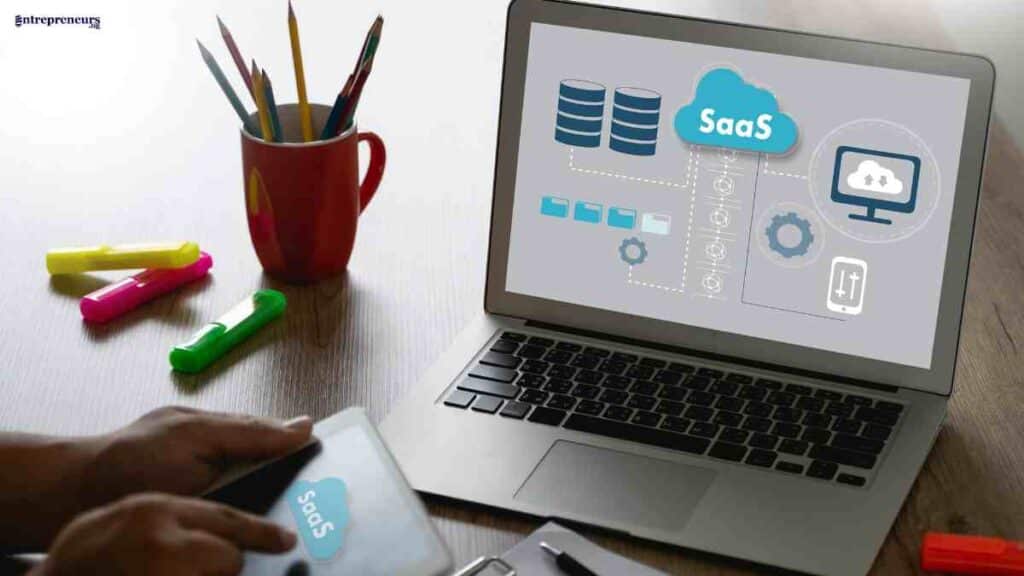
Artificial intelligence is removing many of the barriers that once made entrepreneurship expensive and complicated.
For aspiring founders looking to understand how to start a business using AI, this shift creates an opportunity to launch faster and build with fewer resources.
According to a U.S. Chamber of Commerce report, nearly 60% of small businesses now use AI in their operations, more than double the adoption rate recorded in 2023.
As AI entrepreneurship continues to evolve, entrepreneurs are using AI-powered tools to validate ideas, automate tasks, and turn no-code business ideas into viable companies.
Key Takeaways
- Starting a business using AI begins with solving a real problem, then using AI to validate demand, research customers, and refine your idea faster.
- It no longer requires coding skills, as no-code platforms and AI tools can help you build, launch, and scale efficiently.
- AI entrepreneurship succeeds when you combine human creativity with AI-powered automation for branding, marketing, customer service, and operations.
- To build a business with AI and stay competitive, focus on creating value, leveraging AI strategically, and continuously improving based on real customer feedback.

What Does It Mean to Start a Business Using AI?
Starting a business using AI means leveraging artificial intelligence tools to perform tasks that traditionally required specialised skills, large teams, or significant capital.
Instead of hiring developers, marketers, designers, researchers, and customer support staff from day one, entrepreneurs can use AI to generate business ideas, conduct market research, create content, build websites, automate operations, and engage customers more efficiently.
In practical terms, AI acts as a powerful business assistant that helps you move from idea to launch faster and at a lower cost.
Traditional Entrepreneurship vs AI-Powered Entrepreneurship
For decades, starting a business often required significant capital, specialised skills, and a team of professionals to handle everything from market research to product development and marketing.
Today, artificial intelligence is changing that model. Entrepreneurs can now use AI tools to automate tasks, accelerate decision-making, and launch businesses faster than ever before.
The biggest difference is not that AI replaces entrepreneurs; it amplifies their capabilities.
An AI-powered business allows founders to achieve more with fewer resources, making entrepreneurship more accessible, scalable, and cost-effective for people around the world.
| Business Function | Traditional Entrepreneurship | AI-Powered Entrepreneurship |
|---|---|---|
| Idea Generation | Relies on personal experience, brainstorming, and extensive research | Uses AI to identify trends, market gaps, and profitable opportunities in minutes |
| Market Research | Time-consuming surveys, reports, and manual analysis | AI gathers, analyses, and summarises market insights quickly |
| Business Planning | Often takes weeks to create a detailed plan | AI helps generate and refine business plans within hours |
| Branding | Requires hiring designers and copywriters | AI creates business names, logos, taglines, and brand messaging |
| Website Development | Requires coding skills or expensive developers | No-code AI tools build professional websites without programming |
| Content Creation | Time-intensive writing and design processes | AI generates blogs, emails, social media posts, and marketing materials |
| Customer Support | Requires dedicated staff and longer response times | AI chatbots provide instant, round-the-clock support |
| Marketing | Manual campaign planning and execution | AI automates campaigns, personalisation, and performance tracking |
| Startup Costs | Higher upfront investment | Lower costs through automation and AI-powered tools |
| Scalability | Growth often requires hiring more people | AI enables businesses to scale operations with lean teams |
This shift is creating a new era of AI entrepreneurship, where founders can build a business with AI, launch faster, and compete effectively without large budgets or technical expertise.
For many aspiring entrepreneurs, starting a business with AI has become one of the most practical ways to turn an idea into a profitable venture.
Can Anyone Start a Business With AI?
The short answer is yes. One of the biggest advantages of artificial intelligence is that it has lowered many of the traditional barriers to entrepreneurship.
In the past, starting a business often required technical expertise, specialised knowledge, significant capital, or a team of professionals.
Today, AI tools can help individuals perform many of those tasks faster, cheaper, and more efficiently.
However, while AI makes entrepreneurship more accessible, it does not eliminate the need for human judgment, creativity, and problem-solving.
| Requirement | Before AI | With AI |
|---|---|---|
| Coding Skills | Often required for websites, apps, and digital products | No-code AI platforms can handle much of the technical work |
| Business Experience | Usually gained through years of practice | AI can provide guidance, frameworks, and business insights |
| Marketing Knowledge | Required to create campaigns and content | AI assists with content creation, SEO, and marketing strategies |
| Design Skills | Needed for branding and visual assets | AI design tools generate logos, graphics, and brand materials |
| Research Capabilities | Time-consuming and resource-intensive | AI analyses markets, competitors, and customer needs quickly |
| Large Budget | Often necessary to hire specialists | AI reduces costs by automating many business functions |
| Team Size | Multiple people needed for different roles | Solo entrepreneurs can manage more with AI support |
| Speed to Launch | Can take months to prepare and launch | AI significantly shortens the path from idea to execution |
The real opportunity lies in combining human insight with AI capabilities.
Whether you want to launch a freelance service, an online store, a digital product, or a fully AI-powered business, the tools available today make it possible for almost anyone to get started.
The entrepreneurs who succeed will not necessarily be the most technical; they will be the ones who know how to start a business using AI strategically to solve problems, serve customers, and create value.

How to Start a Business Using AI in 10 Simple Steps
Starting a business no longer requires a large team, technical expertise, or a substantial budget.
Thanks to advances in artificial intelligence, entrepreneurs can now validate ideas, research markets, create brands, build websites, develop products, and automate operations using tools that are accessible to anyone.
The following 10-step framework shows how to start a business using AI from idea to launch.
Step 1: Identify a Problem Worth Solving
Every successful business starts with a problem. Before choosing a product, designing a logo, or building a website, focus on finding a challenge that people are actively trying to solve.
The best opportunities often come from everyday frustrations, inefficiencies, or unmet needs in a specific market.
When learning how to start a business using AI, avoid asking, “What business should I start?”
Instead, ask, “What problem can I solve better, faster, or more affordably?” AI can help you uncover opportunities that may not be immediately obvious.
Use AI to Discover Market Opportunities
AI tools such as ChatGPT, Gemini, and Perplexity can analyse trends, customer complaints, industry discussions, and emerging needs across different markets.
This allows you to identify potential business ideas without spending weeks conducting manual research.
Try prompts such as:
- What are the biggest challenges facing small business owners today?
- What common customer complaints exist in the online fitness industry?
- What underserved opportunities are emerging in remote work?
Focus on Problems With Business Potential
Not every problem is worth building a business around. Look for opportunities that meet the following criteria:
| Question | What to Look For |
|---|---|
| Is the problem common? | Many people experience it regularly |
| Is it frustrating? | People actively want a solution |
| Can people pay for a solution? | There is clear commercial value |
| Can AI help solve it? | AI can improve speed, quality, or efficiency |
For example, instead of creating another generic content agency, you might identify that small businesses struggle to produce consistent content.
That insight could lead to an AI-powered business that offers affordable content creation services using AI tools and human oversight.
The goal at this stage is simple: find a real problem before you build a solution. It is one of the most important steps in AI entrepreneurship and lays the foundation for everything that follows.
Step 2: Use AI to Research Your Market
Once you have identified a problem worth solving, the next step is to understand the market around it.
Market research helps you determine whether people are already paying for solutions, who your competitors are, and where opportunities exist to stand out.
Traditionally, this process could take weeks. Today, AI can analyse large amounts of information in minutes, making it easier to validate ideas before investing significant time or money.
Analyse Competitors With AI
AI tools can help you identify existing businesses, evaluate their strengths, and uncover gaps in the market.
Instead of copying competitors, look for areas where customer needs are not being fully met.
Use prompts such as:
- Who are the leading companies in this industry?
- What services do competitors offer?
- What complaints do customers frequently have about these businesses?
- What market gaps are competitors overlooking?
Understand Your Ideal Customer
A business becomes more successful when it solves a specific problem for a specific audience.
AI can help you build detailed customer profiles based on demographics, behaviours, goals, and pain points.
| Research Area | Questions to Answer |
|---|---|
| Target Audience | Who needs this solution most? |
| Pain Points | What challenges are they facing? |
| Buying Behaviour | How do they currently solve the problem? |
| Budget | How much are they willing to spend? |
| Expectations | What would make them choose your solution? |
Validate Demand Before Building
One of the biggest mistakes entrepreneurs make is building a product before confirming demand.
AI can help you assess whether people are actively searching for solutions by analysing online discussions, reviews, search trends, and customer feedback.
If people are consistently asking the same questions, complaining about the same issues, or searching for better alternatives, you may have identified a genuine business opportunity.
Step 3: Define Your Business Model
A great idea alone is not a business. To turn an opportunity into a sustainable venture, you need a clear plan for how the business will generate revenue. This is where your business model comes in.
When learning how to start a business using AI, many entrepreneurs focus heavily on tools and automation but overlook the importance of a profitable business model.
AI can help you build faster, but your business still needs a reliable way to make money.
Choose How Your Business Will Generate Revenue
Start by deciding how customers will pay for your product or service.
AI can help you explore different revenue models based on your industry, target audience, and market trends.
Some of the most popular models include:
| Business Model | How It Works |
|---|---|
| Service-Based | Clients pay for expertise, support, or completed work |
| Subscription | Customers pay recurring monthly or annual fees |
| Digital Products | Revenue comes from ebooks, templates, courses, or software |
| Ecommerce | Income is generated through product sales |
| Consulting | Businesses pay for specialised advice and solutions |
| Membership | Customers pay for access to exclusive content or communities |
Use AI to Refine Your Offer
Once you choose a business model, use AI to strengthen your value proposition.
Ask AI tools to evaluate your offer, identify weaknesses, and suggest ways to differentiate yourself from competitors.
For example, instead of offering generic social media management, you might position your company as an AI-powered business that helps small businesses create content faster and more affordably.
Keep It Simple
Many first-time founders try to launch multiple products, services, and revenue streams at once. A simpler approach is usually more effective.
Focus on solving one problem for one audience with one clear offer.
At this stage, your goal is to create a business model that is easy to understand, easy to sell, and capable of generating consistent revenue. Once that foundation is in place, you can expand and scale more confidently.
Step 4: Create a Business Plan in Hours Instead of Weeks
A business plan gives structure to your idea and helps you move from concept to execution.
While many entrepreneurs spend days or even weeks creating one, AI can help you develop a solid first draft in a matter of hours.
The goal is not to let AI write your entire plan for you. Instead, use it to organise your thoughts, identify gaps, and create a roadmap for your business.
Use AI to Build the Foundation
AI tools can help you generate key sections of a business plan based on your idea, target market, and revenue model.
| Business Plan Section | How AI Can Help |
|---|---|
| Executive Summary | Summarise your business concept and goals |
| Market Analysis | Identify trends, competitors, and opportunities |
| Target Audience | Define customer segments and buyer profiles |
| Marketing Strategy | Suggest channels and customer acquisition methods |
| Revenue Model | Explore pricing and monetisation options |
| Operations Plan | Outline workflows and business processes |
Refine AI-Generated Content
AI can provide a strong starting point, but your business plan should reflect your specific goals and market realities.
Review every section carefully and replace generic recommendations with practical insights based on your research.
For example, if you are building an AI-powered business, include details about the tools you plan to use, how they improve efficiency, and the value they create for customers.
Focus on Action, Not Perfection
Many entrepreneurs delay launching because they believe their business plan must be perfect. In reality, your plan will evolve as you gain customers and learn more about the market.
At this stage, aim for clarity rather than complexity. A simple plan that guides action is far more valuable than a lengthy document that never gets used.
Step 5: Build Your Brand Using AI
Your brand is more than a logo or a business name. It is how customers recognise your business, remember it, and differentiate it from competitors.
A strong brand creates trust and makes it easier to attract and retain customers.
The good news is that you no longer need a large design budget to create a professional brand. AI tools can help you develop a complete brand identity in a fraction of the time and cost.
Create the Core Elements of Your Brand
AI can generate ideas and creative assets that help bring your business to life.
| Branding Element | How AI Can Help |
|---|---|
| Business Name | Generate memorable and relevant name ideas |
| Tagline | Create concise and compelling brand messages |
| Logo | Design professional logos based on your brand identity |
| Brand Voice | Define how your business communicates with customers |
| Colour Palette | Suggest colours that align with your industry and audience |
Focus on Clarity and Consistency
A strong brand should immediately communicate what your business does and who it serves.
Avoid overly complex names, confusing messages, or branding that does not reflect your target audience.
For example, if you are building an AI-powered business that helps freelancers automate administrative tasks, your branding should emphasise simplicity, productivity, and efficiency rather than generic technology themes.
Let AI Assist, Not Decide
AI can generate dozens of branding options within minutes, but the final decision should always align with your business goals and customer expectations.
Choose a brand identity that feels authentic and clearly communicates your value.
As you continue learning how to start a business using AI, remember that branding is not about looking impressive.
It is about creating a clear and memorable identity that helps customers understand why they should choose your business.
Step 6: Build a Website Without Coding
A website gives your business a professional online presence and serves as a central place where potential customers can learn about your offer, contact you, or make a purchase.
In the past, building a website often required coding knowledge or hiring a developer. Today, AI-powered website builders have made the process much simpler.
Whether you are launching a service-based company, an online store, or a digital product, you can create a functional website in a matter of hours.
Use AI Website Builders
Several AI tools can generate websites based on a few simple prompts about your business.
| AI Website Tool | Best For |
|---|---|
| Wix AI | Small business websites and online stores |
| Framer AI | Modern landing pages and startup websites |
| Durable | Fast website creation for service businesses |
| Hostinger AI Website Builder | Affordable business websites |
| Squarespace AI | Professional portfolios and brand-focused websites |
Include the Essentials
Your first website does not need dozens of pages. Focus on the information visitors need most.
- A clear explanation of what your business offers
- The problem you solve
- Your products or services
- Customer testimonials or social proof
- Contact information or a call-to-action
Optimise for Search and Conversions
As you build a business with AI, your website should do more than look good. It should help people find your business and take action.
Use AI tools to create SEO-friendly page titles, meta descriptions, service pages, and blog content that target relevant search terms.
Remember, your website is not the final product. It is a tool for testing ideas, attracting customers, and gathering feedback.
Step 7: Create Your Product or Service With AI
With your website and brand in place, it is time to create something customers can actually buy.
This could be a service, digital product, online course, software solution, or physical product. The goal is to develop an offer that solves the problem you identified earlier.
One of the biggest advantages of starting a business with AI is that you can create and test offers much faster than traditional businesses.
Choose an Offer That Matches the Problem
Your product or service should provide a direct solution to the challenge your target audience faces.
| Business Type | How AI Can Help |
|---|---|
| Consulting Services | Create frameworks, reports, and presentations |
| Digital Products | Develop ebooks, templates, guides, and toolkits |
| Online Courses | Generate lesson outlines, scripts, and learning materials |
| Content Services | Produce articles, social media content, and marketing assets |
| Software Solutions | Build simple applications using no-code AI tools |
| Ecommerce | Create product descriptions, customer support content, and marketing materials |
Start With a Minimum Viable Offer
Many entrepreneurs spend months perfecting products before selling them. A better approach is to launch a simple version first and improve it based on customer feedback.
For example, if you want to create an AI content agency, start by offering content creation services before investing heavily in automation systems or complex workflows.
Focus on Results, Not Features
Customers do not buy products because of features alone. They buy outcomes. Instead of focusing on what your offer includes, emphasise the problem it solves and the value it delivers.
As you learn how to build a startup using AI, remember that your first product does not need to be perfect.
It simply needs to solve a real problem well enough for customers to pay for it. Once people start buying, you can refine and expand your offer based on real-world feedback.
Step 8: Automate Your Operations With AI
As your business grows, repetitive tasks can quickly consume your time.
Responding to enquiries, scheduling appointments, managing emails, creating reports, and tracking customer interactions are all necessary, but they do not always require your direct involvement.
This is where AI automation becomes a major advantage.
By automating routine processes, you can focus on higher-value activities such as strategy, sales, and business growth.
Identify Tasks You Can Automate
Start by looking for activities that are repetitive, time-consuming, and follow predictable patterns.
| Business Activity | AI Automation Solution |
|---|---|
| Customer Support | AI chatbots and automated responses |
| Appointment Scheduling | AI scheduling assistants |
| Email Management | Automated email workflows |
| Lead Capture | AI-powered forms and CRM systems |
| Social Media Posting | Content scheduling and publishing tools |
| Data Entry | AI-assisted workflow automation |
Connect Your Business Systems
Tools such as Zapier, Make, and n8n allow you to connect different applications and automate workflows without coding.
For example, when someone submits a form on your website, their information can automatically be added to your CRM, trigger a welcome email, and notify your sales team.
This type of automation helps create a more efficient AI-powered business while reducing manual work.
Keep the Human Touch
Automation should improve customer experience, not replace genuine human interaction.
Use AI to handle routine tasks, but remain available for complex questions, relationship-building, and decision-making.
As you continue building a business with AI, automation becomes one of your greatest advantages.
It enables you to operate more efficiently, serve customers faster, and scale without immediately increasing your workload or hiring additional staff.
Step 9: Use AI for Marketing and Sales
A great product will struggle if the right people never hear about it.
Marketing helps you attract potential customers, while sales help convert interest into revenue. AI can support both by making it easier to create content, personalise communication, and identify growth opportunities.
The key is not to market everywhere. Focus on the channels where your target audience already spends time and use AI to improve consistency and efficiency.
Use AI to Create and Distribute Content
AI tools can help you produce marketing materials faster without sacrificing quality.
| Marketing Activity | How AI Can Help |
|---|---|
| Blog Content | Generate article ideas, outlines, and drafts |
| Social Media | Create captions, posts, and content calendars |
| Email Marketing | Write newsletters and automated email sequences |
| Video Content | Generate scripts and video ideas |
| SEO | Identify keywords and optimise content for search engines |
| Advertising | Create ad copy and campaign variations |
Build a Simple Sales Process
Your sales process should guide potential customers from awareness to purchase.
AI can help you create lead magnets, email sequences, chatbot interactions, and follow-up campaigns that nurture prospects automatically.
For example, someone who downloads a free guide from your website can receive a series of automated emails that educate them about your solution and encourage them to take the next step.
Measure What Works
One of the biggest advantages of AI entrepreneurship is access to better insights.
AI-powered analytics tools can track customer behaviour, identify high-performing content, and highlight opportunities for improvement.
As you start a business with AI, remember that marketing is not about reaching everyone. It is about reaching the right people with the right message at the right time.
Consistent marketing combined with a strong offer creates the foundation for sustainable business growth.
Step 10: Launch, Measure, and Improve
The final step is to put your business in front of real customers. Many entrepreneurs spend too much time planning and not enough time testing.
The sooner you launch, the sooner you can gather feedback, make improvements, and start generating revenue.
Remember, the goal is not to launch a perfect business. The goal is to launch a business that can learn, adapt, and grow.
Start With a Small Launch
You do not need thousands of customers on day one. Begin by introducing your offer to a small audience and observing how they respond.
| Launch Activity | Purpose |
|---|---|
| Share Your Offer | Generate initial awareness |
| Collect Feedback | Understand customer needs and concerns |
| Monitor Engagement | Track interest and behaviour |
| Make Improvements | Refine your product, service, or messaging |
| Test Pricing | Identify what customers are willing to pay |
Use AI to Analyse Performance
AI-powered analytics tools can help you understand what is working and what needs attention.
Monitor key metrics such as website traffic, conversion rates, customer acquisition costs, and customer feedback.
This data allows you to make informed decisions rather than relying on assumptions.
Commit to Continuous Improvement
Successful businesses evolve over time. As you gather customer insights, refine your offer, improve your marketing, and optimise your operations.
Small improvements made consistently often produce significant results over the long term.
Learning how to start a business using AI is not just about launching quickly. It is about using AI to continuously improve every part of your business.
The entrepreneurs who succeed are not necessarily those with the best ideas, but those who learn, adapt, and execute faster than everyone else.
Best AI Business Ideas You Can Start Today
One of the biggest advantages of AI entrepreneurship is the variety of opportunities available to aspiring founders.
Whether you want to offer services, create digital products, or build a scalable online business, AI can help you launch faster and operate more efficiently.
The best opportunities are often those that solve existing problems while using AI to improve speed, quality, or customer experience.
The following AI business ideas require little upfront investment and can often be started without coding skills.
| AI Business Idea | What You Do | Income Potential |
|---|---|---|
| AI Content Agency | Create blog posts, social media content, and marketing materials for businesses using AI tools | High |
| AI Marketing Consultancy | Help businesses implement AI for marketing, automation, and customer engagement | High |
| AI Automation Services | Set up automated workflows for businesses using tools like Zapier and Make | High |
| AI Virtual Assistant Business | Offer administrative, research, scheduling, and customer support services powered by AI | Medium to High |
| AI-Powered Copywriting Service | Create sales pages, email campaigns, and advertising copy for brands | Medium to High |
| AI Course Creation Business | Develop and sell online courses using AI for research, scripting, and content development | High |
| AI Design Studio | Use AI tools to create logos, graphics, presentations, and branding assets | Medium to High |
| AI-Powered Ecommerce Store | Sell physical or digital products while using AI for marketing, customer support, and operations | High |
| AI Resume and Career Service | Help job seekers create CVs, cover letters, and LinkedIn profiles with AI assistance | Medium |
| AI Research and Data Analysis Service | Provide market research, competitor analysis, and business intelligence reports | High |
| AI Chatbot Development Service | Build customer service and lead generation chatbots for businesses using no-code tools | High |
| AI Newsletter Business | Create niche newsletters using AI for content research, curation, and distribution | Medium to High |
The best idea is not necessarily the most complex one.
As you learn how to start a business using AI, focus on opportunities that match your skills, interests, and market demand.
A simple solution to a real problem will often outperform a sophisticated idea that nobody needs.

How Much Does It Cost to Start a Business Using AI?
The cost of starting a business with AI depends on the type of business, the tools you choose, and how much you do yourself.
However, it is now possible to launch a lean AI-powered business with a few hundred dollars, especially if you start online, use free plans, and avoid unnecessary expenses.
Recent business cost data shows that many founders overestimate what they need.
Estimated Cost Breakdown
| Startup Item | Estimated Cost |
|---|---|
| AI writing and research tool | $0–$100/month |
| Website builder | $0–$50/month |
| Domain name | $10–$25/year |
| Business email | $7–$20/month |
| Design tool | $0–$20/month |
| Automation tool | $0–$30/month |
| Payment processing | Usually no setup fee |
| Basic marketing | $0–$300/month |
| Legal/admin setup | Varies by country |
Lean AI Startup Budget
For someone learning how to start a business using AI, a practical first-month budget could look like this:
| Budget Level | Estimated Startup Cost | Best For |
|---|---|---|
| Ultra-Lean | $50–$200 | Freelance services, consulting, digital products |
| Practical Starter | $300–$1,000 | Professional website, paid AI tools, branding, email |
| Growth-Ready | $1,000–$5,000 | Automation, paid ads, premium tools, contractors |
| Larger Startup | $5,000+ | SaaS, ecommerce inventory, product development, legal support |
What You Can Start With Little Money
If you are launching a service-based AI business, your biggest investment is usually your time.
You can use free or low-cost tools to research your market, create offers, build a landing page, design basic brand assets, and promote your services online.
Low-cost AI business ideas include:
AI content services, AI virtual assistance, AI automation consulting, newsletter businesses, digital templates, resume writing, research services, and no-code website services.
Where Costs Can Increase
Costs rise when you add paid advertising, hire freelancers, buy inventory, subscribe to too many tools, or build complex software before validating demand.
This is where many founders waste money.
A smarter approach is to start small, sell first, then upgrade your tools as revenue grows.
When starting a business with AI, your goal is not to look big. Your goal is to prove that customers want what you offer.
Practical Cost Advice
You do not need every AI tool on the market.
Start with one AI assistant, one website builder, one design tool, and one automation tool. Keep your monthly expenses low until the business starts generating revenue.
In simple terms, you can build a business with AI for less than many traditional startups. But the real advantage is not just lower cost. It is speed, flexibility, and the ability to test ideas before committing serious money.
How Profitable Is a Business Started With AI?
One of the biggest reasons entrepreneurs are embracing AI is its potential to improve profitability.
By reducing labour costs, increasing productivity, and automating repetitive tasks, AI allows businesses to generate more revenue with fewer resources.
However, profitability depends on factors such as your business model, pricing strategy, market demand, and ability to attract customers.
AI can improve efficiency, but it cannot replace a strong offer or a clear understanding of customer needs.
How AI Improves Profitability
| Profit Driver | Traditional Business | AI-Powered Business |
|---|---|---|
| Staffing Costs | Higher payroll expenses | Lower costs through automation |
| Content Creation | Outsourced or in-house teams | AI-assisted content production |
| Customer Support | Dedicated support staff | AI chatbots and automated responses |
| Marketing | Time-intensive and costly | Faster content creation and optimisation |
| Operations | More manual processes | Automated workflows and systems |
| Scalability | Often requires more hires | Can scale with lean teams |
Potential Monthly Revenue by Business Type
The income potential of an AI business varies widely depending on the niche, expertise, and client demand.
| AI Business Type | Beginner Monthly Revenue | Established Monthly Revenue |
|---|---|---|
| AI Content Agency | $500–$3,000 | $5,000–$20,000+ |
| AI Marketing Consultancy | $1,000–$5,000 | $10,000–$50,000+ |
| AI Automation Services | $1,000–$4,000 | $8,000–$30,000+ |
| AI Virtual Assistant Business | $500–$2,500 | $5,000–$15,000+ |
| AI Course Business | $0–$2,000 | $5,000–$50,000+ |
| AI-Powered Ecommerce Store | $500–$5,000 | Unlimited based on scale |
| AI Research Services | $1,000–$4,000 | $10,000–$25,000+ |
Sample Profitability Breakdown
The example below shows how a solo entrepreneur running an AI content agency might perform financially.
| Monthly Metric | Amount |
|---|---|
| Revenue | $5,000 |
| AI Tool Subscriptions | $100 |
| Website and Software | $50 |
| Marketing Expenses | $300 |
| Miscellaneous Costs | $150 |
| Total Expenses | $600 |
| Estimated Monthly Profit | $4,400 |
In this example, the profit margin exceeds 80%, which is one reason service-based AI businesses have become attractive to entrepreneurs.
Since many AI businesses sell expertise, services, or digital products, they often have lower overhead costs than traditional businesses.
Profitability by Business Model
| Business Model | Profit Potential | Scalability |
|---|---|---|
| Freelance Services | High | Moderate |
| Consulting | High | Moderate |
| Digital Products | Very High | High |
| Online Courses | Very High | High |
| AI Agencies | High | High |
| Ecommerce | Moderate to High | High |
| SaaS and Software | Very High | Very High |
What Determines Profitability?
The most profitable AI businesses typically share four characteristics:
- They solve a real and urgent problem.
- They target a clearly defined audience.
- They use AI to reduce operating costs.
- They focus on recurring or scalable revenue streams.
The Reality of AI Business Profitability
While stories of entrepreneurs earning thousands of dollars with AI attract attention, profitability is not automatic. AI can help you launch faster and operate more efficiently, but customers still pay for value, not technology.
The most successful founders do not simply use AI tools. They use AI to deliver better results, improve customer experiences, and create solutions people are willing to pay for.
That is where long-term profitability comes from.
Essential AI Tools Every Entrepreneur Should Know
Knowing how to start a business using AI is not just about having a great idea. It is also about choosing the right tools to help you work smarter, automate repetitive tasks, and scale efficiently.
Fortunately, today’s entrepreneurs have access to AI solutions that can assist with everything from market research and content creation to website building and workflow automation.
The key is not to use every AI tool available. Instead, focus on tools that solve specific business problems and support your growth objectives.
| Category | AI Tool | Primary Use |
|---|---|---|
| AI Assistant | ChatGPT | Research, idea generation, content creation, business planning |
| AI Assistant | Claude | Long-form writing, analysis, document review |
| AI Assistant | Gemini | Research, productivity, and Google Workspace integration |
| Market Research | Perplexity | AI-powered search, competitor analysis, and industry insights |
| Website Builder | Wix AI | Building websites and online stores without coding |
| Website Builder | Framer AI | Creating landing pages and startup websites |
| Graphic Design | Canva AI | Logos, presentations, social media graphics, and marketing materials |
| Content Creation | Jasper | Marketing copy, blogs, and advertising content |
| Content Creation | Copy.ai | Sales copy, email campaigns, and social media content |
| Automation | Zapier | Connecting apps and automating business workflows |
| Automation | Make | Advanced workflow automation without coding |
| CRM and Sales | HubSpot AI | Customer relationship management and sales automation |
| Customer Support | Tidio AI | AI chatbots and customer service automation |
| Customer Support | Intercom AI | Customer engagement and support management |
| Video Creation | Synthesia | AI-generated training, marketing, and explainer videos |
| Meeting Assistant | Otter.ai | Meeting transcription and note-taking |
| Productivity | Notion AI | Project management, documentation, and knowledge organisation |
| App Development | Lovable | Building applications without traditional coding |
| App Development | Replit AI | AI-assisted software development and prototyping |
| SEO and Marketing | Surfer SEO | Content optimisation and search engine visibility |
Build Your AI Toolkit Gradually
Many entrepreneurs make the mistake of subscribing to dozens of AI tools before generating revenue. A better approach is to start with a small toolkit and expand as your business grows.
For most beginners, the following combination is enough to launch an AI-powered business:
- ChatGPT for research, planning, and content creation
- Canva AI for branding and design
- Wix AI or Framer AI for website creation
- Zapier for automation
- Perplexity for market research
These tools can help you handle many of the tasks traditionally performed by researchers, marketers, designers, and administrators.
As you continue building a business with AI, focus on mastering a few tools that deliver real value rather than constantly chasing the latest technology.
The Future of AI Entrepreneurship
Artificial intelligence is transforming how businesses are built, operated, and scaled.
What once required large teams, specialised expertise, and significant capital can now be achieved by small teams or even solo entrepreneurs using AI-powered tools.
As technology continues to evolve, the opportunities for entrepreneurs will only expand.
| Emerging Trend | What It Means for Entrepreneurs |
|---|---|
| AI Agents | Autonomous AI systems will handle research, customer support, scheduling, and other business tasks |
| One-Person Businesses | Entrepreneurs will be able to build and scale companies with minimal staff |
| No-Code Development | More products, websites, and applications will be built without traditional programming |
| Hyper-Personalisation | Businesses will deliver highly customised experiences to customers at scale |
| AI-Powered Decision Making | Founders will use AI insights to make faster and more informed business decisions |
| Automated Operations | Routine workflows will become increasingly self-managing |
| AI-Driven Marketing | Marketing campaigns will become more targeted, efficient, and data-driven |
| Global Business Expansion | Entrepreneurs will be able to serve international markets more easily through AI-powered localisation and automation |
The future of business is not about choosing between humans and AI. It is about combining the strengths of both to build smarter, faster, and more resilient companies.
For entrepreneurs willing to embrace that shift, the opportunities are enormous.
Conclusion
Learning how to start a business using AI is no longer just an advantage; it is becoming a competitive necessity.
With the right tools, you can research a market, validate an idea, build a brand, create a website, automate operations, and attract customers without coding skills or a large budget.
We want to see you succeed, and that’s why we provide valuable business resources to help you every step of the way.
- Join over 23,000 entrepreneurs by signing up for our newsletter and receiving valuable business insights.
- Register your business today with Entrepreneurs.ng’s Business Registration Services.
- Tell Your Brand Story on Entrepreneurs.ng, let’s showcase your brand to our global audience.
- Need help with your marketing strategy? Get a Comprehensive Marketing and Sales Plan here.
- Sign up for our Entrepreneurs Success Blueprint Programme to learn how to start and scale your business in just 30 days.
- Book our one-on-one consulting and speak to an expert about structuring and growing your business.
- Visit our shop for business plan templates and other valuable resources to guide you.
- Get our Employee-Employer Super Bundle NDA templates to legally protect your business and workforce.
- Advertise your business to over a million entrepreneurs through our different advertising packages.

Frequently Asked Questions (FAQs)
Can Anyone Start a Business Using AI?
Yes. Anyone with a business idea, internet access, and a willingness to learn can start a business using AI. Modern AI and no-code tools make it possible to research markets, create content, build websites, and automate operations without technical expertise.
Do I Need Coding Skills to Start a Business With AI?
No. Many AI-powered platforms are designed for non-technical users. Website builders, automation tools, and no-code app development platforms allow entrepreneurs to launch businesses without writing code.
What Is the Best Way to Start a Business Using AI?
The best approach is to identify a real problem, validate market demand, choose a business model, create an offer, and use AI tools to streamline research, branding, marketing, and operations.
How Much Money Do I Need to Start a Business With AI?
The cost varies depending on the business model. Many service-based and digital businesses can be launched for less than $500 using affordable AI tools, a domain name, and a simple website.
What Are the Most Profitable AI Business Ideas?
Some of the most profitable AI business ideas include AI content agencies, AI automation services, AI consulting, AI-powered ecommerce stores, online courses, digital products, and chatbot development services.
Can AI Create a Business Plan?
Yes. AI tools can help generate executive summaries, market research, financial projections, marketing strategies, and operational plans. However, you should always review and customise the output to match your business goals.
How Can AI Help With Market Research?
AI can analyse competitors, identify industry trends, evaluate customer feedback, and uncover market opportunities much faster than traditional research methods.
What Are the Best AI Tools for Entrepreneurs?
Popular AI tools include ChatGPT for content and planning, Perplexity for research, Canva AI for design, Wix AI for website creation, and Zapier for workflow automation.
Can I Start an Online Business Using AI?
Yes. AI can help you build an online business by creating content, designing websites, automating marketing, managing customer support, and analysing performance data.
How Do I Build a Startup Using AI?
To build a startup using AI, start by solving a specific problem, validate demand, create a minimum viable offer, launch quickly, gather feedback, and use AI tools to improve efficiency and scalability.
Is AI Entrepreneurship Profitable?
AI entrepreneurship can be highly profitable because AI reduces operating costs, improves productivity, and enables entrepreneurs to scale with smaller teams and fewer resources.
Can AI Replace Employees in a Small Business?
AI can automate many repetitive tasks, but it works best when combined with human oversight. Most successful businesses use AI to improve productivity rather than completely replace people.
How Long Does It Take to Start a Business Using AI?
Depending on the business type, you can validate an idea, create a brand, build a website, and launch an offer within days or weeks using AI-powered tools.
What Businesses Can Be Automated With AI?
Many businesses can automate customer support, content creation, scheduling, lead generation, email marketing, data entry, reporting, and workflow management using AI.
What Are the Risks of Starting a Business With AI?
Common risks include relying too heavily on AI-generated content, failing to validate market demand, ignoring customer feedback, and using automation without proper quality control.
Can AI Help Me Find Business Ideas?
Yes. AI can analyse market trends, identify customer pain points, evaluate industry gaps, and suggest opportunities based on demand, competition, and emerging technologies.
What Is the Future of AI-Powered Businesses?
The future of AI-powered businesses includes AI agents, advanced automation, hyper-personalised customer experiences, no-code product development, and leaner companies that can scale more efficiently than traditional businesses.
How Can I Use AI to Grow My Existing Business?
AI can help optimise marketing campaigns, improve customer service, automate routine tasks, generate insights from data, create content, and increase overall operational efficiency.
Is Starting a Business With AI Better Than Traditional Entrepreneurship?
AI does not replace traditional entrepreneurship, but it significantly reduces barriers to entry. Entrepreneurs can launch faster, lower costs, and scale more efficiently while focusing on innovation and customer value.
What Is the Biggest Mistake Entrepreneurs Make When Using AI?
The biggest mistake is treating AI as a complete business solution. AI is a powerful tool, but long-term success still depends on solving real problems, understanding customers, and delivering value consistently.