

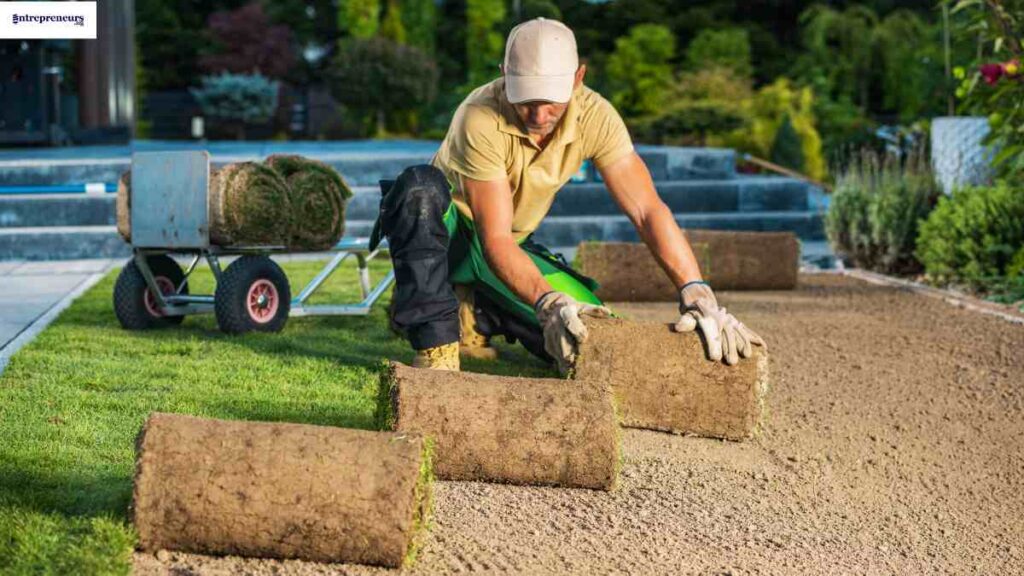
Starting a landscaping business can be a smart move for entrepreneurs who want a low-barrier business with strong recurring revenue potential.
From lawn care and garden maintenance to hardscaping and irrigation, there are several profitable landscaping business ideas you can explore depending on your budget and skills.
And the demand is rising fast. The global landscaping services market was worth $330.58 billion in 2024 and is expected to keep growing through 2030, according to Grand View Research.
Key Takeaways
- A landscaping business can generate steady recurring income through maintenance contracts and repeat clients.
- Choosing the right niche and creating a solid landscaping business plan improves profitability and long-term growth.
- Understanding landscaping business startup costs helps you avoid overspending and price your services correctly.
- Strong marketing, proper licensing, and efficient systems are essential for building a profitable landscaping business.

What Is a Landscaping Business?
A landscaping business provides outdoor improvement and maintenance services for residential, commercial, and public properties.
These services can include lawn care, garden maintenance, tree trimming, irrigation installation, hardscaping, outdoor design, and seasonal clean-up.
Unlike basic lawn mowing services, a landscaping business focuses on improving the appearance, functionality, and value of outdoor spaces.
Some companies specialise in regular maintenance contracts, while others offer premium design and installation services for homes, offices, hotels, and public spaces.
Landscaping Businesses You Can Start
The landscaping industry offers more than one path to success.
While some entrepreneurs focus on basic lawn care, others build specialised businesses around outdoor design, irrigation, hardscaping, or commercial property maintenance.
Choosing the right type of landscaping business depends on your skills, budget, target market, and long-term goals.
| Landscaping Business Type | What It Involves | Startup Cost Level | Best For |
|---|---|---|---|
| Lawn Care Business | Grass cutting, edging, fertilising, and routine maintenance | Low | Beginners and solo operators |
| Garden Maintenance Business | Plant care, pruning, weeding, and garden upkeep | Low to Medium | People with gardening skills |
| Landscape Design Business | Planning and designing outdoor spaces | Medium | Creative entrepreneurs |
| Hardscaping Business | Patios, walkways, retaining walls, and stone features | High | Skilled contractors |
| Irrigation Services Business | Installing and maintaining sprinkler systems | Medium | Technical service providers |
| Tree Care Business | Tree trimming, removal, and stump grinding | High | Experienced professionals |
| Commercial Landscaping Business | Maintaining offices, hotels, and public properties | Medium to High | Entrepreneurs seeking recurring contracts |
| Eco-Landscaping Business | Sustainable gardens and water-efficient landscaping | Medium | Green-focused entrepreneurs |
| Seasonal Clean-Up Business | Leaf removal, snow clearing, and seasonal maintenance | Low | Part-time or seasonal operators |
| Luxury Landscaping Business | High-end outdoor living spaces and premium garden projects | High | Entrepreneurs targeting affluent clients |
See Also: Most Profitable Landscaping Services to Offer – 20+ High-Profit Landscaping Business Ideas

How to Start a Landscaping Business in 12 Simple Steps
Starting a landscaping business involves more than buying a lawn mower and finding clients.
You need a clear business model, proper planning, the right equipment, legal registration, and a marketing strategy that helps you attract steady customers.
Whether you want to run a solo operation or build a full-service landscaping company, these steps will help you start on a strong foundation.
| Step | What You Need to Do |
|---|---|
| Step 1 | Understand the landscaping industry and market demand |
| Step 2 | Choose the type of landscaping business you want to start |
| Step 3 | Research competitors and identify profitable opportunities |
| Step 4 | Create a landscaping business plan |
| Step 5 | Calculate startup costs and pricing structure |
| Step 6 | Register your landscaping business legally |
| Step 7 | Get licences, permits, and insurance |
| Step 8 | Buy landscaping equipment and tools |
| Step 9 | Build your brand and online presence |
| Step 10 | Market your landscaping business to attract clients |
| Step 11 | Hire staff and set up operational systems |
| Step 12 | Scale your landscaping business for long-term profitability |
Step 1: Understand the Landscaping Industry
Before starting a landscaping business, you need a clear understanding of how the industry works.
Landscaping is a broad service industry that covers everything from lawn mowing and garden maintenance to irrigation, outdoor design, and hardscaping.
Some businesses focus on residential clients, while others work with commercial properties such as offices, hotels, schools, and retail centres.
Understanding the market helps you identify the services people need most in your area and the type of clients you want to serve.
| Landscaping Segment | Typical Services | Common Clients |
|---|---|---|
| Lawn Care | Mowing, edging, fertilising | Homeowners |
| Garden Maintenance | Pruning, planting, weeding | Residential properties |
| Commercial Landscaping | Grounds maintenance, seasonal care | Offices, hotels, malls |
| Hardscaping | Patios, walkways, retaining walls | Residential and commercial clients |
| Irrigation Services | Sprinkler installation and repairs | Property owners |
| Landscape Design | Outdoor planning and garden layouts | Premium residential clients |
You should also understand the difference between landscaping and lawn care.
Lawn care mainly focuses on maintaining grass and basic outdoor upkeep, while landscaping includes design, construction, and improvement of outdoor spaces.
The industry can be highly profitable when you build recurring revenue through maintenance contracts and repeat customers.
However, success depends on service quality, efficient operations, customer retention, and smart pricing from the beginning.
Step 2: Choose Your Landscaping Niche
The landscaping industry includes different services, customer types, and pricing models. Choosing a niche helps you focus your marketing, control startup costs, and build expertise faster.
Instead of trying to offer every service at once, start with one area you can deliver well and expand later as your business grows.
Your choice should depend on your skills, local demand, budget, and long-term business goals.
For example, lawn care businesses are easier and cheaper to start, while hardscaping and landscape design usually require more experience, equipment, and capital.
| Niche | Services Offered | Startup Difficulty | Income Potential |
|---|---|---|---|
| Lawn Care | Grass cutting, edging, fertilising | Low | Medium |
| Garden Maintenance | Plant care, pruning, weeding | Low | Medium |
| Hardscaping | Patios, stone paths, retaining walls | High | High |
| Irrigation Services | Sprinkler installation and repairs | Medium | High |
| Commercial Landscaping | Property maintenance contracts | Medium | High |
| Eco-Landscaping | Sustainable and water-efficient gardens | Medium | High |
| Landscape Design | Outdoor planning and aesthetics | Medium to High | High |
If you are starting with limited funds, a lawn care or garden maintenance business is usually the easiest entry point because it requires fewer tools and lower landscaping business startup costs.
On the other hand, commercial landscaping and hardscaping can generate larger contracts and recurring revenue once you gain experience.
You should also consider whether you want a seasonal business or one that can operate throughout the year.
Many landscaping entrepreneurs combine services such as lawn care, irrigation, and seasonal clean-ups to maintain steady income across different seasons.
See Also: Starting a Gardening Business – Costs, Tools & Profit Tips Guide
Step 3: Research Your Market and Competitors
Market research helps you understand the demand for landscaping services in your area and identify opportunities your competitors may be missing.
Before investing in equipment or marketing, study the type of landscaping businesses already operating nearby, the services they offer, and how they price their work.
Start by checking local competitors online. Look at their websites, customer reviews, social media pages, and Google Business Profiles.
Pay attention to the services customers request most often and the complaints they frequently mention. This can help you position your landscaping business differently and offer better customer experience.
| Area to Research | What to Look For |
|---|---|
| Competitors | Services, pricing, customer reviews |
| Local Demand | Popular landscaping services in your area |
| Target Customers | Residential, commercial, or luxury clients |
| Pricing Trends | Average rates for landscaping jobs |
| Seasonal Demand | Busy and slow periods during the year |
You should also identify the type of customers you want to serve.
Residential clients may need regular lawn care and garden maintenance, while commercial clients often look for long-term contracts and professional property management.
During your research, pay attention to gaps in the market. For example, your area may have many lawn care companies but few businesses offering eco-friendly landscaping, irrigation services, or premium outdoor design.
Finding an underserved niche can make it easier to attract clients and compete effectively.
Step 4: Create a Landscaping Business Plan
A landscaping business plan gives your business direction and helps you make better financial and operational decisions.
It outlines the services you will offer, your target market, startup budget, pricing structure, marketing strategy, and income goals.
Your plan does not need to be overly complicated at the beginning. A simple and practical business plan can help you stay organised, manage costs, and measure growth as your landscaping business expands.
| Section | What to Include |
|---|---|
| Business Overview | Type of landscaping services you will offer |
| Target Market | Residential, commercial, or specialised clients |
| Startup Costs | Equipment, transport, licences, and marketing |
| Pricing Strategy | Hourly, project-based, or contract pricing |
| Marketing Plan | Local SEO, referrals, flyers, and social media |
| Revenue Goals | Monthly and yearly income targets |
You should also define your landscaping business model early.
Some companies focus on one-time projects such as garden installations, while others build recurring revenue through weekly or monthly maintenance contracts.
A clear business plan will make it easier to grow your landscaping business, apply for funding if needed, and make smarter decisions as opportunities arise.
Step 5: Calculate Startup Costs and Pricing
Understanding your startup costs helps you avoid overspending and gives you a clearer idea of how much capital you need to launch your landscaping business successfully.
Your expenses will depend on the services you offer, the equipment you need, and whether you start alone or with a team.
Most small landscaping businesses begin with basic tools and gradually invest in more equipment as revenue increases. Starting lean can help you manage cash flow more effectively during the early stages.
| Startup Expense | Estimated Cost Range |
|---|---|
| Lawn mower and trimmers | Moderate |
| Hand tools | Low |
| Vehicle or trailer | Moderate to High |
| Fuel and maintenance | Ongoing |
| Licences and insurance | Moderate |
| Branding and marketing | Low to Moderate |
| Website and software | Low |
You also need a pricing structure that covers your labour, fuel, maintenance, transport, taxes, and profit margin.
Many landscaping businesses charge either hourly rates, flat project fees, or recurring monthly contracts depending on the service.
| Pricing Model | Best For |
|---|---|
| Hourly Pricing | Small maintenance jobs |
| Flat-Rate Pricing | One-time landscaping projects |
| Contract Pricing | Recurring lawn and property maintenance |
Avoid setting prices too low simply to win customers.
Underpricing can quickly reduce profits and make it difficult to grow. Instead, focus on delivering reliable service, professional communication, and consistent quality that justify your rates.
As your business grows, track all expenses carefully so you can understand which services generate the best profit margins and where you need to improve efficiency.
Step 6: Register Your Landscaping Business Legally
Registering your landscaping business gives you legal protection, improves credibility, and makes it easier to open business bank accounts, apply for funding, and secure larger contracts.
The exact registration process depends on your country or region, but most landscaping businesses follow a similar structure.
One of the first decisions you will make is choosing a business structure. Your choice affects taxes, liability, and how the business operates.
| Business Structure | Features | Best For |
|---|---|---|
| Sole Proprietorship | Simple and inexpensive to start | Solo operators |
| Partnership | Shared ownership and responsibilities | Two or more founders |
| Limited Liability Company (LLC) | Separates personal and business liabilities | Small to medium businesses |
| Corporation | More complex structure with stronger legal separation | Larger landscaping companies |
After choosing a structure, register your business name with the appropriate authority in your country or state.
You should also check if the business name is available online so you can secure a matching website domain and social media handles.
Most landscaping businesses also need basic tax registration and operational permits before they begin serving clients.
| Registration Requirement | Purpose |
|---|---|
| Business Name Registration | Legal operation and branding |
| Tax Identification Number | Tax filing and financial records |
| Business Bank Account | Separating personal and business finances |
| Local Business Permit | Permission to operate legally |
| Employer Registration | Required if hiring staff |
If you plan to hire employees, you may also need payroll registration, workers’ compensation coverage, and labour compliance documentation depending on local regulations.
Taking care of the legal structure early helps you avoid penalties and positions your landscaping business as professional and trustworthy from the start.

Step 7: Get Licences, Permits, and Insurance
Before taking on clients, make sure your landscaping business has the required licences, permits, and insurance coverage.
These requirements vary by location and the type of services you offer, but operating legally protects your business from fines, lawsuits, and unnecessary risks.
Some landscaping services, such as pesticide application, irrigation work, or tree removal, may require specialised certification or professional licences.
| Licence or Permit | Purpose |
|---|---|
| General Business Licence | Allows legal operation in your area |
| Landscaping Contractor Licence | Required in some regions for landscaping projects |
| Pesticide Application Licence | Needed for chemical treatments and fertilisers |
| Irrigation Permit | Required for sprinkler and irrigation installation |
| Vehicle and Trailer Registration | Legal transport of equipment |
| Environmental Permits | May apply for waste disposal or tree removal |
Insurance is equally important because landscaping work involves equipment, vehicles, physical labour, and client property.
A single accident or damaged property claim can become expensive without proper coverage.
| Insurance Type | What It Covers |
|---|---|
| General Liability Insurance | Property damage and client injury claims |
| Workers’ Compensation | Employee injuries and medical costs |
| Commercial Vehicle Insurance | Business vehicles and trailers |
| Equipment Insurance | Theft or damage to landscaping tools |
| Professional Liability Insurance | Errors related to landscaping design or advice |
You should also follow local safety regulations, especially when using heavy equipment, chemicals, or power tools.
sBasic safety training, protective gear, and clear operational procedures can reduce accidents and improve professionalism.
Having the right licences and insurance in place can also help you win commercial contracts, as many corporate and government clients require proof of compliance before hiring contractors.
Step 8: Buy Landscaping Equipment and Tools
The equipment you buy will depend on the type of landscaping business you want to run.
A lawn care startup may only need basic mowing and trimming tools, while hardscaping or commercial landscaping businesses usually require heavier equipment and larger investments.
Start with essential tools first and expand gradually as your client base and revenue grow. Buying too much equipment too early can put unnecessary pressure on your cash flow.
| Essential Equipment | Common Use |
|---|---|
| Lawn Mower | Grass cutting and lawn maintenance |
| String Trimmer | Edge trimming and tight spaces |
| Leaf Blower | Clearing leaves and debris |
| Hand Tools | Digging, pruning, planting, and weeding |
| Wheelbarrow | Moving soil, plants, and materials |
| Hedge Trimmer | Shaping shrubs and hedges |
| Safety Gear | Gloves, boots, goggles, and ear protection |
You will also need reliable transportation for moving tools and materials between job sites.
| Vehicle Type | Best For |
|---|---|
| Pickup Truck | General landscaping work |
| Trailer | Carrying large equipment |
| Van | Tool storage and transport |
| Commercial Truck | Large-scale landscaping operations |
When buying equipment, decide whether purchasing new, buying used, or leasing makes the most financial sense for your business.
| Option | Advantage | Drawback |
|---|---|---|
| New Equipment | Reliable and warranty-backed | Higher cost |
| Used Equipment | Lower startup cost | Higher maintenance risk |
| Leasing | Lower upfront expense | Ongoing payments |
Many landscaping businesses are also switching to electric equipment because it is quieter, easier to maintain, and more environmentally friendly.
While electric tools may cost more initially, they can reduce fuel and maintenance expenses over time.
Focus on durability, efficiency, and reliability rather than buying the cheapest equipment available. Quality tools can improve productivity, reduce breakdowns, and help you deliver more professional results.
See Also: How to Start a Lawn Cutting Business – Startup Costs, Tools, and Client Growth
Step 9: Build Your Brand and Online Presence
A strong brand helps your landscaping business look professional and makes it easier for customers to remember and trust you.
Your branding should appear consistently across your business name, logo, uniforms, vehicle signage, website, and social media pages.
Choose a business name that is simple, professional, and easy to pronounce. It should also reflect the type of landscaping services you offer.
| Branding Element | Purpose |
|---|---|
| Business Name | Creates identity and recognition |
| Logo | Builds a professional image |
| Website | Showcases services and contact details |
| Social Media Pages | Promotes your work and attracts clients |
| Vehicle Branding | Increases local visibility |
| Uniforms | Improves professionalism and trust |
Your website does not need to be complex, but it should clearly explain your services, pricing approach, service areas, and contact information.
Adding before-and-after photos of completed landscaping projects can also help potential clients see the quality of your work.
You should also create and optimise a Google Business Profile. This improves your chances of appearing in local search results when people search for landscaping services nearby.
| Online Platform | Main Benefit |
|---|---|
| Google Business Profile | Local search visibility |
| Visual promotion of landscaping projects | |
| Community engagement and referrals | |
| Commercial and corporate networking | |
| TikTok or YouTube | Short project videos and brand awareness |
Customer reviews are especially important in the landscaping industry because many clients choose service providers based on reputation and trust.
Encourage satisfied customers to leave reviews and share photos of completed work online.
A professional online presence can help your landscaping business attract more leads, charge better rates, and compete more effectively in your market.
Step 11: Hire Staff and Build Systems
As your landscaping business grows, handling every job alone becomes difficult. Hiring staff can help you take on more clients, complete projects faster, and increase revenue.
Start with a small team and focus on hiring reliable workers who understand safety, professionalism, and customer service.
Your first hires may include landscapers, equipment operators, or administrative support depending on the size of your business.
| Role | Main Responsibility |
|---|---|
| Landscaper | Lawn care, planting, and maintenance |
| Equipment Operator | Handling heavy landscaping machinery |
| Crew Supervisor | Managing teams and job quality |
| Administrative Assistant | Scheduling, invoicing, and customer support |
Clear systems are also important as your business expands.
Without proper scheduling, communication, and workflow management, it becomes harder to maintain service quality and profitability.
| System | Purpose |
|---|---|
| Scheduling System | Organises appointments and routes |
| Invoicing System | Tracks payments and expenses |
| Customer Database | Stores client details and service history |
| Inventory Tracking | Monitors tools and equipment |
| Safety Procedures | Reduces accidents and operational risks |
Landscaping software can make daily operations easier by helping you manage bookings, invoices, staff schedules, customer communication, and route planning from one platform.
| Software Type | Common Use |
|---|---|
| CRM Software | Managing customer relationships |
| Scheduling Apps | Route and appointment planning |
| Accounting Software | Expense tracking and invoicing |
| Payroll Systems | Employee payment management |
Training is equally important. Employees should understand how to use equipment safely, interact with clients professionally, and maintain consistent work quality.
Strong systems and reliable staff can help your landscaping business operate more efficiently and prepare it for long-term growth.
Step 12: Scale Your Landscaping Business Profitably
Once your landscaping business has a steady client base and reliable income, the next step is scaling without losing quality or profitability.
Growth should be strategic, with a focus on recurring revenue, efficient operations, and higher-value services.
Many successful landscaping companies grow by expanding their service offerings and securing long-term maintenance contracts instead of relying only on one-time projects.
| Growth Strategy | Benefit |
|---|---|
| Recurring Maintenance Contracts | Predictable monthly income |
| Commercial Landscaping | Larger and more stable projects |
| Additional Services | Increases revenue per customer |
| Team Expansion | Handles more jobs efficiently |
| Route Optimisation | Reduces fuel and travel costs |
| Premium Landscaping Services | Higher profit margins |
Customer retention is also important for long-term growth. It is usually cheaper to keep existing clients than constantly search for new ones.
Providing consistent service, clear communication, and reliable scheduling can help build long-term relationships and increase referrals.
| Service Expansion Option | Potential Opportunity |
|---|---|
| Irrigation Services | Residential and commercial properties |
| Hardscaping | Patios, walkways, and outdoor features |
| Seasonal Services | Snow removal and seasonal clean-ups |
| Landscape Design | Premium outdoor transformation projects |
| Eco-Landscaping | Sustainable and water-efficient solutions |
As your business grows, track profitability carefully. Some services may generate more revenue but lower profit margins because of labour, equipment, or material costs.
Reviewing your expenses regularly helps you identify the most profitable areas of the business.
Scaling successfully also requires strong leadership, dependable staff, efficient systems, and a clear vision for growth.
A landscaping business that focuses on service quality and operational efficiency can grow from a small local operation into a highly profitable company with long-term recurring revenue.
How Much Does It Cost to Start a Landscaping Business?
One of the biggest advantages of starting a landscaping business is that you can begin small and expand gradually. Compared to many other businesses, the startup costs are relatively flexible.
A solo lawn care operator can start with basic tools and a used vehicle, while a full-service landscaping company may require significant investment in equipment, staff, and commercial vehicles.
On average, most small landscaping businesses start with anywhere between $5,000 and $50,000, depending on the services offered, equipment quality, location, and business size.
Estimated Landscaping Business Startup Costs
| Expense Category | Estimated Cost Range |
|---|---|
| Lawn mower | $300 – $15,000 |
| String trimmer and edger | $150 – $1,000 |
| Leaf blower | $100 – $700 |
| Hand tools | $200 – $1,500 |
| Trailer | $1,000 – $8,000 |
| Pickup truck or van | $5,000 – $40,000 |
| Business registration and licences | $100 – $2,000 |
| Insurance | $500 – $5,000 annually |
| Website and branding | $300 – $3,000 |
| Marketing and advertising | $500 – $5,000 |
| Fuel and maintenance | Ongoing monthly cost |
| Landscaping software | $20 – $300 monthly |
The biggest expense for most landscaping businesses is transportation and equipment.
Commercial-grade mowers alone can cost several thousand dollars, especially if you plan to handle larger residential or commercial properties.
Startup Cost by Business Type
| Landscaping Business Type | Estimated Startup Cost |
|---|---|
| Lawn Care Business | $5,000 – $15,000 |
| Garden Maintenance Business | $3,000 – $10,000 |
| Commercial Landscaping Business | $20,000 – $50,000+ |
| Hardscaping Business | $10,000 – $100,000+ |
| Landscape Design Business | $2,000 – $15,000 |
| Irrigation Services Business | $5,000 – $30,000 |
If you are starting with limited capital, you can reduce costs by:
- Buying used equipment
- Leasing tools instead of purchasing
- Starting with residential clients
- Operating from home initially
- Renting specialised equipment only when needed
Many successful landscaping entrepreneurs start with basic lawn care services and reinvest profits into additional equipment and services over time.
Ongoing Monthly Operating Costs
Starting the business is only part of the financial picture. You also need to budget for recurring expenses that affect cash flow and profitability.
| Monthly Expense | Estimated Monthly Cost |
|---|---|
| Fuel | $200 – $2,000 |
| Equipment maintenance | $100 – $1,000 |
| Staff wages | Varies by team size |
| Insurance | $50 – $500 |
| Marketing | $100 – $2,000 |
| Software subscriptions | $20 – $300 |
| Vehicle maintenance | $100 – $1,000 |
Labour costs can become your largest ongoing expense as your landscaping business grows.
However, efficient scheduling, route planning, and recurring contracts can help improve profitability and reduce wasted time.
Should You Start Small or Invest Big?
Starting small is often the safer option for new entrepreneurs because it lowers financial risk and gives you time to understand the market.
Many landscaping businesses begin with:
- One mower
- Basic hand tools
- A pickup truck
- Local residential clients
As revenue grows, you can expand into commercial landscaping, hardscaping, irrigation services, or premium outdoor design projects.
The key is to avoid overspending on equipment before you have consistent customers.
A profitable landscaping business is built through steady cash flow, reliable service, and smart reinvestment rather than expensive tools alone.

How Profitable Is a Landscaping Business?
A landscaping business can be highly profitable when managed properly.
The industry benefits from recurring demand, relatively low entry barriers, and multiple revenue streams ranging from lawn care and garden maintenance to commercial landscaping and hardscaping.
Profitability depends on factors such as service pricing, operating costs, equipment expenses, labour efficiency, and customer retention.
Businesses that secure recurring maintenance contracts and commercial clients often generate more stable income and higher long-term profits.
Average Landscaping Business Revenue
Revenue varies significantly depending on the business size, location, and services offered.
| Business Type | Estimated Annual Revenue |
|---|---|
| Solo Lawn Care Operator | $30,000 – $100,000 |
| Small Landscaping Company | $100,000 – $500,000 |
| Commercial Landscaping Business | $500,000 – $2 million+ |
| Large Full-Service Landscaping Company | $2 million+ |
A solo landscaper handling regular residential maintenance can earn consistent monthly income with relatively low overhead costs.
Larger companies generate higher revenue through commercial contracts, recurring maintenance agreements, and premium landscaping projects.
Landscaping Business Profitability Breakdown
The landscaping industry can generate strong cash flow, but profitability depends on controlling expenses carefully.
| Revenue and Expense Category | Estimated Percentage |
|---|---|
| Labour Costs | 30% – 50% |
| Equipment and Vehicle Costs | 10% – 20% |
| Fuel and Maintenance | 5% – 15% |
| Insurance and Licences | 2% – 5% |
| Marketing and Advertising | 3% – 10% |
| Net Profit Margin | 10% – 20% |
Labour is usually the largest expense for landscaping businesses, especially as teams grow. Fuel, equipment maintenance, and transport costs can also affect margins significantly if operations are not managed efficiently.
Businesses that optimise scheduling, reduce travel time, and maintain recurring customers tend to achieve better profitability.
Profit Potential by Landscaping Service
Some landscaping services are more profitable than others because they require specialised skills or generate larger project values.
| Service Type | Profit Potential |
|---|---|
| Lawn Maintenance | Medium |
| Garden Maintenance | Medium |
| Commercial Landscaping | High |
| Hardscaping | Very High |
| Irrigation Services | High |
| Landscape Design | High |
| Eco-Landscaping | High |
Hardscaping and commercial landscaping often produce the highest profits because projects are larger and clients typically have bigger budgets.
However, these services also require more equipment, labour, and expertise.
Break-Even Timeline
The break-even point depends on startup costs, monthly expenses, pricing, and how quickly you secure paying clients.
Most small landscaping businesses can break even within 6 to 18 months if they maintain steady work and control operating costs.
| Business Size | Typical Break-Even Timeline |
|---|---|
| Solo Lawn Care Business | 3 – 9 months |
| Small Landscaping Company | 6 – 18 months |
| Commercial Landscaping Business | 12 – 24 months |
Businesses that start with lower equipment costs and focus on recurring maintenance services often recover their investment faster.
For example, a solo landscaping business generating $4,000 monthly revenue with $2,500 monthly operating expenses could produce approximately $1,500 monthly profit.
At that rate, a business with $10,000 startup costs could break even in roughly 7 months.
Factors That Increase Profitability
Several factors can improve landscaping business profits over time:
| Profit Driver | Impact on Business |
|---|---|
| Recurring Contracts | Predictable monthly income |
| Commercial Clients | Larger long-term projects |
| Efficient Scheduling | Lower fuel and labour costs |
| Premium Services | Higher pricing opportunities |
| Strong Customer Retention | More referrals and repeat business |
| Upselling Services | Higher revenue per customer |
Landscaping businesses become more profitable when they move beyond one-time jobs and build recurring revenue systems.
Weekly lawn maintenance, seasonal contracts, irrigation servicing, and commercial property management can create stable income throughout the year.
A landscaping business that combines operational efficiency, strong marketing, and reliable customer service can grow into a highly profitable long-term enterprise.
Tools and Equipment Needed for a Landscaping Business
The tools and equipment you need will depend on the type of landscaping services you offer.
A small lawn care business can start with basic mowing and trimming tools, while larger landscaping companies may require trailers, commercial vehicles, irrigation equipment, and heavy machinery.
Starting with reliable essentials is usually the best approach. As your landscaping business grows, you can invest in more specialised equipment based on customer demand and the services you provide.
| Tool or Equipment | Main Use | Estimated Cost Range |
|---|---|---|
| Lawn Mower | Grass cutting and lawn maintenance | $300 – $15,000 |
| String Trimmer | Edge trimming and tight spaces | $100 – $600 |
| Leaf Blower | Clearing leaves and debris | $100 – $700 |
| Hedge Trimmer | Shaping shrubs and hedges | $150 – $800 |
| Hand Tools | Digging, pruning, planting, and weeding | $100 – $1,500 |
| Wheelbarrow | Moving soil and landscaping materials | $80 – $300 |
| Chainsaw | Tree cutting and branch removal | $150 – $1,500 |
| Pressure Washer | Cleaning patios and outdoor surfaces | $200 – $1,000 |
| Irrigation Tools | Sprinkler installation and repairs | $200 – $5,000 |
| Safety Gear | Gloves, goggles, boots, and ear protection | $100 – $500 |
Transportation is also essential because landscaping businesses move tools, materials, and waste between job sites regularly.
| Vehicle or Transport Equipment | Purpose |
|---|---|
| Pickup Truck | Carrying tools and landscaping materials |
| Trailer | Transporting heavy equipment |
| Van | Storing and moving tools securely |
| Commercial Truck | Large-scale landscaping operations |
For businesses offering advanced services such as hardscaping or commercial landscaping, additional equipment may be required.
| Advanced Equipment | Common Use |
|---|---|
| Mini Excavator | Digging and grading |
| Skid Steer Loader | Moving heavy materials |
| Concrete Mixer | Hardscaping and paving projects |
| Sod Cutter | Lawn replacement projects |
| Stump Grinder | Removing tree stumps |
Many landscaping businesses now invest in electric tools because they are quieter, environmentally friendly, and cheaper to maintain over time.
However, gas-powered equipment is still widely used for larger commercial projects due to its higher power capacity.
When buying equipment, focus on durability, efficiency, and ease of maintenance rather than simply choosing the cheapest option.
Licences Needed for a Landscaping Business
The licences and permits required for a landscaping business depend on your location and the type of services you offer.
Some businesses only need a basic business licence, while others may require specialised permits for pesticide application, irrigation work, or tree removal.
Getting the right licences helps you operate legally, build customer trust, and qualify for larger residential or commercial contracts.
| Licence or Permit | Purpose | Estimated Cost Range |
|---|---|---|
| General Business Licence | Allows legal business operation | $50 – $500 |
| Landscaping Contractor Licence | Required for landscaping projects in some regions | $100 – $1,000 |
| Pesticide Application Licence | Needed for chemical treatments and fertiliser application | $50 – $500 |
| Irrigation Licence or Permit | Required for sprinkler and irrigation installation | $100 – $1,500 |
| Tree Service Licence | Needed for tree trimming or removal in some areas | $100 – $1,000 |
| Environmental Permit | May apply for waste disposal or land clearing | $50 – $500 |
| Vehicle and Trailer Registration | Legal transportation of equipment | Varies by location |
| Employer Identification or Tax Registration | Required for taxes and hiring employees | Usually low cost |
Some countries or states may also require landscaping businesses to pass certification exams before obtaining specialised licences, especially for pesticide handling or irrigation installation.
| Specialised Certification | Common Requirement |
|---|---|
| Pesticide Safety Certification | Chemical handling and application |
| Irrigation Certification | Water system installation and maintenance |
| Arborist Certification | Professional tree care services |
| Safety Compliance Training | Equipment and workplace safety |
If you plan to hire employees, additional registrations may apply, including payroll tax registration, workers’ compensation coverage, and labour compliance documentation.
Before launching your landscaping business, check with your local business authority or licensing agency to confirm the exact permits and legal requirements in your area.
Operating without the necessary licences can lead to fines, legal issues, or loss of contracts.
Trends Shaping the Landscaping Industry
The landscaping industry is evolving as customer preferences, environmental concerns, and technology continue to influence outdoor design and property maintenance.
Modern landscaping businesses are no longer focused only on lawn mowing and garden care.
Many clients now want sustainable solutions, smart irrigation systems, low-maintenance outdoor spaces, and premium landscape designs.
Understanding these trends can help your landscaping business stay competitive, attract higher-paying clients, and identify new revenue opportunities.
| Landscaping Trend | What It Involves | Business Opportunity |
|---|---|---|
| Eco-Friendly Landscaping | Sustainable plants and reduced chemical use | Growing demand for green solutions |
| Smart Irrigation Systems | Automated watering and water-saving technology | Irrigation installation and maintenance |
| Outdoor Living Spaces | Patios, outdoor kitchens, and fire pits | High-value hardscaping projects |
| Native Plant Landscaping | Using local plants that require less maintenance | Lower water usage and eco-conscious clients |
| Electric Landscaping Equipment | Battery-powered tools with lower emissions | Reduced fuel and maintenance costs |
| Low-Maintenance Gardens | Simple, durable outdoor designs | Popular with busy homeowners |
| Commercial Property Maintenance | Long-term landscaping contracts | Stable recurring revenue |
| AI and Landscaping Software | Scheduling, design, and route optimisation tools | Improved operational efficiency |
Sustainability is one of the fastest-growing trends in the landscaping industry.
Many property owners now prefer drought-resistant plants, water-efficient irrigation systems, and environmentally friendly landscaping practices that reduce maintenance costs over time.
| Technology Trend | Main Benefit |
|---|---|
| CRM and Scheduling Software | Better customer management |
| GPS Route Optimisation | Reduced fuel and travel costs |
| AI Landscape Design Tools | Faster project visualisation |
| Automated Invoicing Systems | Easier payment tracking |
| Drone Site Surveys | Faster property inspections |
Outdoor living spaces are also becoming increasingly popular, especially in residential markets.
Homeowners are investing more in patios, outdoor seating areas, lighting, and entertainment spaces that improve property value and lifestyle appeal.
Landscaping businesses that adapt to changing customer preferences and modern technology are often better positioned for long-term growth and profitability.
Conclusion
Starting a landscaping business can be a rewarding and profitable venture when built on proper planning, smart pricing, quality service, and consistent marketing.
From choosing a niche and understanding landscaping business startup costs to securing licences, buying equipment, and attracting clients, every step plays an important role in long-term success.
We want to see you succeed, and that’s why we provide valuable business resources to help you every step of the way.
- Join over 23,000 entrepreneurs by signing up for our newsletter and receiving valuable business insights.
- Register your business today with Entrepreneurs.ng’s Business Registration Services.
- Tell Your Brand Story on Entrepreneurs.ng, let’s showcase your brand to our global audience.
- Need help with your marketing strategy? Get a Comprehensive Marketing and Sales Plan here.
- Sign up for our Entrepreneurs Success Blueprint Programme to learn how to start and scale your business in just 30 days.
- Book our one-on-one consulting and speak to an expert about structuring and growing your business.
- Visit our shop for business plan templates and other valuable resources to guide you.
- Get our Employee-Employer Super Bundle NDA templates to legally protect your business and workforce.
- Advertise your business to over a million entrepreneurs through our different advertising packages.

Frequently Asked Questions (FAQs)
How much does it cost to start a landscaping business?
The cost of starting a landscaping business can range from around $5,000 to over $50,000 depending on the services you offer, the equipment you buy, and whether you start alone or with a team.
Is a landscaping business profitable?
Yes, a landscaping business can be highly profitable. Many landscaping companies operate with profit margins between 10% and 20%, while specialised services like hardscaping and commercial landscaping can generate even higher profits.
Do I need a licence to start a landscaping business?
In many locations, you need at least a general business licence. Additional licences may be required for pesticide application, irrigation services, or tree removal.
What equipment do I need to start a landscaping business?
Basic landscaping equipment includes a lawn mower, string trimmer, leaf blower, hand tools, wheelbarrow, safety gear, and a vehicle or trailer for transportation.
Can I start a landscaping business with no experience?
Yes, many successful landscapers start with basic lawn care services and learn more advanced landscaping skills over time through practice, training, and experience.
What is the difference between landscaping and lawn care?
Lawn care mainly focuses on maintaining grass and outdoor upkeep, while landscaping includes designing, building, and improving outdoor spaces.
How do landscaping businesses get clients?
Landscaping businesses attract clients through local SEO, Google Business Profiles, referrals, social media marketing, flyers, vehicle branding, and partnerships with property managers or real estate agents.
How much can a landscaping business make per year?
A solo landscaping business may earn between $30,000 and $100,000 annually, while larger landscaping companies can generate hundreds of thousands or even millions of dollars in revenue.
How long does it take for a landscaping business to become profitable?
Many small landscaping businesses break even within 6 to 18 months, depending on startup costs, pricing, operating expenses, and customer demand.
What are the most profitable landscaping services?
Hardscaping, commercial landscaping, irrigation services, and landscape design are often among the most profitable landscaping services.
Should I specialise in one landscaping niche?
Specialising in a niche can help your landscaping business stand out, attract the right customers, and build expertise faster. Many businesses later expand into additional services.
Can I run a landscaping business part-time?
Yes, many entrepreneurs start landscaping businesses part-time while building their customer base before transitioning into full-time operations.
What insurance does a landscaping business need?
Most landscaping businesses need general liability insurance, workers’ compensation coverage, commercial vehicle insurance, and equipment protection.
Is landscaping seasonal?
In many regions, landscaping demand changes with the seasons. However, businesses can maintain year-round income by offering services such as snow removal, irrigation maintenance, or seasonal clean-ups.
What is the biggest challenge in running a landscaping business?
Common challenges include managing labour costs, maintaining equipment, handling seasonal demand fluctuations, and attracting consistent clients.
Do landscaping businesses need contracts?
Yes, written contracts help define pricing, project scope, payment terms, and responsibilities, reducing misunderstandings with clients.
How do I price landscaping services?
Landscaping services can be priced hourly, per project, or through recurring maintenance contracts. Pricing should cover labour, fuel, equipment, transport, and profit margin.
Can a landscaping business grow into a large company?
Yes, many landscaping businesses start as small operations and grow into large companies by adding staff, expanding services, and securing commercial maintenance contracts.


