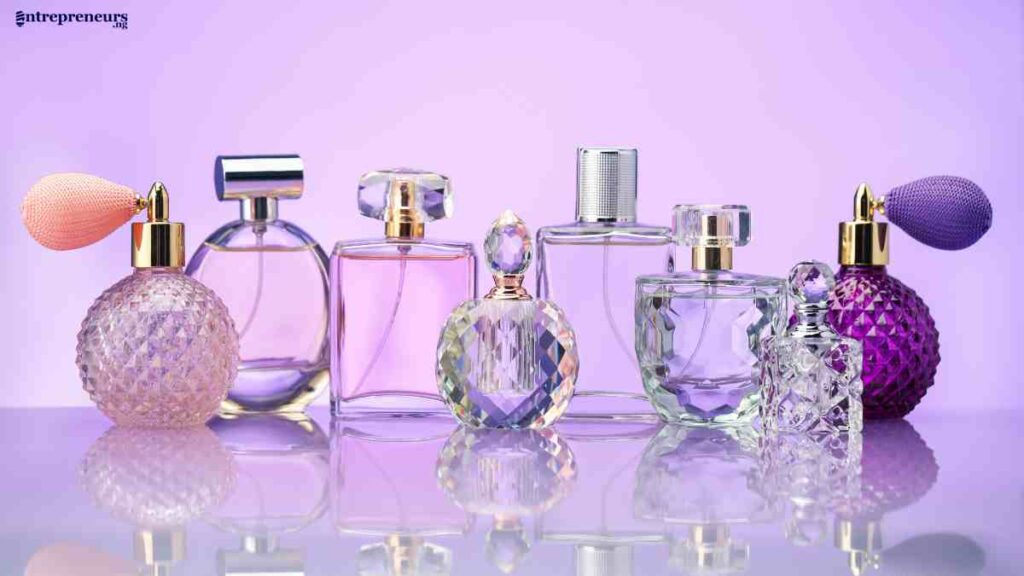
A perfume business plan is more than a document you write for a bank or investor. It is the foundation for building a brand that can actually survive in a crowded beauty market.
This is especially important as the global fragrance market reached $56.6 billion in 2024, according to Grandview Research and continues to expand, signalling strong and sustained demand for perfumes worldwide.
This article shows how to write a practical plan, from estimating perfume production costs to building a strong perfume brand strategy.
Key Takeaways
- A perfume business plan provides a clear roadmap for launching, managing, and scaling a profitable fragrance brand.
- Understanding market demand, startup costs, and the right perfume business model helps entrepreneurs make smarter investment decisions.
- A strong plan must include market analysis, product strategy, operations, marketing, and realistic financial projections.
- Successful perfume brands combine a solid business plan with a unique perfume brand strategy and effective marketing.

What Is a Perfume Business Plan?
A perfume business plan is a document that outlines how you will start, run, and grow your fragrance business.
It defines your perfume brand concept, target market, business model, startup costs, marketing strategy, and financial projections.
More importantly, it serves as a roadmap that helps entrepreneurs organise their ideas, estimate production costs, and build a clear brand strategy for long-term success.
Components of a Perfume Business Plan
A well-structured perfume business plan includes several key sections that explain how the business will operate, attract customers, and generate profit.
Each component provides essential details about your brand, market opportunity, production process, and financial strategy.
Below are the core components typically included in a perfume brand business plan:
| Component | Description |
|---|---|
| Executive Summary | A brief overview of the perfume business, its mission, and goals. |
| Company Overview | Details about the business structure, brand concept, and ownership. |
| Market Analysis | Research on the fragrance industry, target customers, and market trends. |
| Product Line | Description of the perfumes or fragrance products you plan to sell. |
| Marketing & Sales Strategy | How you will promote, position, and sell your perfume brand. |
| Operations Plan | Details about perfume production, sourcing, packaging, and distribution. |
| Management Team | Information about the founders and key team members. |
| Financial Plan | Startup costs, revenue projections, expenses, and profit forecasts. |
| Funding Requirements | The amount of investment or funding needed to launch or grow the business. |
Executive Summary
The executive summary is the first section of a perfume business plan, but it is usually written last.
It provides a concise overview of the entire business, highlighting the key points investors or stakeholders need to understand quickly.
This section should clearly explain your perfume brand concept, business goals, target market, and revenue potential.
The goal is to give readers a compelling snapshot of why the business is viable and worth supporting.
Company Overview
The company overview explains the structure and identity of your perfume business.
It introduces the brand, outlines the business model, and provides key information about ownership and operations.
This section helps readers understand the foundation of your business and how it will operate in the fragrance market.
In a perfume manufacturing business plan, this section may also highlight whether the company will produce fragrances in-house or outsource production to private label manufacturers.
Market Analysis
The market analysis section examines the fragrance industry and identifies the target audience for your products.
It demonstrates that you understand the perfume market and have researched customer needs, industry trends, and potential opportunities.
In this section, you should analyse the global fragrance market, customer demographics, buying behaviour, and competitor brands.
A strong market analysis also explains how your brand will position itself within the competitive landscape and meet existing demand.
Product Line
The product line section describes the perfumes or fragrance products your business will offer. It explains the types of scents you plan to sell and how they will appeal to your target market.
Your product line might include items such as eau de parfum, eau de toilette, perfume oils, solid perfumes, or scented body products.
This section should also highlight unique elements of your fragrances, such as natural ingredients, distinctive scent profiles, luxury packaging, or limited-edition collections.
Including details about perfume production cost, ingredients, and formulation approach can help demonstrate that the product concept is realistic and well planned.
Marketing and Sales Strategy
The marketing and sales strategy explains how you will attract customers and generate revenue.
Because the fragrance industry is highly competitive, this section should show how your brand will stand out and build customer loyalty.
Your strategy should cover key areas such as brand positioning, pricing, distribution channels, and promotional activities.
Many perfume brands rely on digital marketing, influencer partnerships, social media campaigns, and storytelling to create emotional connections with customers.
You should also explain where the perfumes will be sold, whether through e-commerce platforms, retail stores, online marketplaces, or direct-to-consumer websites.
Operations Plan
The operations plan outlines how the perfume business will function on a day-to-day basis. It describes the processes involved in producing, packaging, storing, and delivering the perfumes to customers.
For example, this section should explain how fragrances will be formulated, where ingredients will be sourced, and how production will take place.
Some businesses manufacture perfumes in-house, while others work with private label fragrance laboratories.
The operations plan should also cover logistics such as inventory management, order fulfilment, packaging design, and supplier relationships.
Management Team
The management team section introduces the people responsible for running the perfume business.
Investors and partners often pay close attention to this section because the success of a business depends heavily on the skills and experience of its leadership.
This part of the plan should highlight the founder’s background, industry experience, and areas of expertise.
If the company has additional team members or advisors, their roles and qualifications should also be explained.
Financial Plan
The financial plan is one of the most critical sections of a perfume business plan. It outlines the financial expectations of the business and shows whether the venture is likely to be profitable.
This section typically includes startup cost estimates, revenue forecasts, operating expenses, and profit projections.
It should also explain assumptions behind the numbers, such as expected sales volume, pricing strategy, and production costs.
A well-prepared financial plan helps entrepreneurs understand the funding needed to launch the perfume brand and how long it may take to reach profitability.
Funding Requirements
The funding requirements section explains how much capital the perfume business needs and how the funds will be used.
This section is particularly important if you plan to seek investment, apply for a loan, or attract business partners.
You should clearly state the amount of funding required, the purpose of the investment, and the expected return.
A transparent funding plan helps investors understand how their capital will contribute to the growth of the perfume brand.
See Also: How to Start a Perfume Business From Scratch – Branding, Packaging, and Sales Guide

How to Write a Perfume Business Plan in 7 Simple Steps
Writing a perfume business plan requires careful research and clear planning.
It helps you define your perfume business model, estimate perfume business startup costs, analyse the market, and create a strong brand strategy.
By following a structured process, you can turn your fragrance idea into a practical plan that guides production, marketing, and long-term growth.
Below are the key steps involved in writing a successful perfume brand business plan:
| Step | Description |
|---|---|
| 1. Define Your Business Concept | Clearly explain the type of perfume business you want to start and your brand vision. |
| 2. Conduct Market Research | Analyse the fragrance industry, target audience, and competitor brands. |
| 3. Develop Your Product Line | Describe the perfumes you will offer, including scent types, ingredients, and packaging. |
| 4. Create a Marketing Strategy | Outline how you will promote your perfume brand and attract customers. |
| 5. Plan Your Operations | Explain how perfumes will be produced, sourced, packaged, and distributed. |
| 6. Prepare Financial Projections | Estimate startup costs, perfume production costs, revenue forecasts, and expenses. |
| 7. Outline Funding Requirements | State the capital needed to launch and grow the perfume business. |
Step 1. Define Your Business Concept
Start by clearly explaining what kind of perfume business you want to build. This is where you define your brand idea, niche, and value proposition.
You should state whether you want to launch a luxury perfume line, a private label fragrance brand, a natural perfume business, or a perfume retail store.
This step helps shape the rest of the plan because it gives your business direction. It also helps you decide on your perfume business model, target audience, and positioning in the market.
Step 2. Conduct Market Research
The next step is to study the perfume industry and understand the market you want to enter. This includes researching customer preferences, industry trends, competitor brands, and pricing patterns.
Your goal here is to show that there is demand for your product and to identify where your brand can stand out.
Strong market research makes your perfume business plan more realistic and helps you make better decisions about branding, pricing, and sales.
Step 3. Develop Your Product Line
Once you understand the market, describe the perfume products you plan to sell. This section should explain the types of fragrances, scent profiles, bottle sizes, packaging style, and product quality.
You should also think about whether your perfumes will be made in-house or through a private label manufacturer.
This step is important because it connects your brand idea to an actual product customers can buy.
Step 4. Create a Marketing Strategy
After defining your product, explain how you will attract customers and grow the brand. Your marketing strategy should cover your brand message, pricing, promotion channels, and sales approach.
For a perfume brand, this often includes social media marketing, influencer campaigns, content creation, email marketing, and e-commerce.
A clear perfume brand strategy will help your business gain visibility and build trust with customers.
Step 5. Plan Your Operations
This step focuses on how the business will run every day. You need to explain how your perfumes will be produced, sourced, packaged, stored, and delivered.
Your operations plan should also include supplier relationships, fulfilment processes, inventory handling, and quality control.
This makes your plan practical and shows that the business can function efficiently beyond just having a good idea.
Step 6. Prepare Financial Projections
A strong perfume business plan must include realistic financial estimates. This means calculating your perfume business startup cost, expected expenses, sales projections, and profit potential.
You should include key figures such as startup capital, production cost per unit, pricing, monthly revenue targets, and operating costs.
This step helps you understand whether the business is financially viable.
Step 7. Outline Funding Requirements
If you need outside funding, clearly state how much money you need and what it will be used for. This could include product development, packaging, inventory, marketing, equipment, or website setup.
This section is especially important if you want to apply for a loan or approach investors. It shows that you understand your financial needs and have a clear plan for using the funds wisely.
Perfume Business Plan Sample Using a Hypothetical Company
To better understand how a perfume business plan works in practice, it helps to look at a simple real-life example.
The sample below illustrates how an entrepreneur might structure a perfume brand business plan for a small startup fragrance company, including the concept, target market, products, and revenue approach.
This example demonstrates how a perfume idea can be organised into a clear and practical business strategy.
1. Executive Summary
Business Name: Aurora Essence
Business Type: Online niche perfume brand
Business Model: Direct-to-consumer fragrance brand
Business Concept
Aurora Essence is a premium fragrance brand that creates unique, long-lasting perfumes inspired by nature and luxury lifestyles.
The brand focuses on elegant scents made from high-quality ingredients and modern packaging designed to appeal to young professionals and fragrance enthusiasts.
Target Market
The brand targets customers aged 25–45 who enjoy luxury fragrances but want something unique and distinctive.
The primary market includes urban professionals, online shoppers, and perfume collectors interested in niche scents.
Product Line
Aurora Essence plans to launch three signature fragrances:
| Product Name | Fragrance Type | Description |
|---|---|---|
| Midnight Bloom | Floral | Elegant evening fragrance |
| Golden Horizon | Woody | Warm daytime scent |
| Ocean Whisper | Aquatic | Fresh and light fragrance |
Each perfume will be sold in 50ml and 100ml bottles through the company’s e-commerce website.
Marketing Strategy
The brand will promote its perfumes through social media marketing, influencer collaborations, and targeted digital advertising.
The marketing approach will focus on storytelling, elegant visuals, and fragrance education to build brand loyalty.
Startup Costs
Estimated startup investment: $18,000
| Expense Category | Estimated Cost |
|---|---|
| Fragrance formulation | $6,000 |
| Packaging and bottle design | $4,000 |
| Initial inventory | $5,000 |
| Website development | $2,000 |
| Marketing campaign | $1,000 |
| Total Startup Cost | $18,000 |
Revenue Projection
Aurora Essence expects to sell 400 bottles per month at an average price of $65 per bottle, generating monthly revenue of approximately $26,000 once the brand gains traction.
2. Company Overview
Aurora Essence is positioned as a modern niche perfume brand that blends artistic fragrance creation with contemporary branding and digital distribution.
The company will operate primarily as an e-commerce fragrance business, allowing it to reach a global audience while keeping operational costs manageable.
Business Identity
Business Name: Aurora Essence
Industry: Fragrance and Beauty
Business Structure: Limited Liability Company (LLC)
Location: Online-based fragrance brand with global distribution
Primary Sales Channel: E-commerce website and selected online marketplaces
Aurora Essence focuses on creating distinctive fragrances that combine high-quality ingredients with elegant design. The brand’s goal is to offer perfumes that feel luxurious while remaining accessible to a wider audience.
Mission Statement
The mission of Aurora Essence is to create memorable fragrances that allow customers to express their personality and lifestyle through scent, while delivering high-quality perfumes at accessible luxury prices.
Vision Statement
The vision of Aurora Essence is to become a globally recognised niche fragrance brand known for innovative scent creation, exceptional product quality, and strong customer loyalty.
Business Objectives
Aurora Essence aims to achieve the following objectives during its early stages:
- Launch three signature fragrances within the first year of operation
- Build a strong digital presence through social media and influencer partnerships
- Achieve consistent monthly online sales through direct-to-consumer channels
- Expand the fragrance collection and introduce limited edition scents within three years
3. Market Analysis
The fragrance industry continues to expand due to increasing interest in personal grooming, luxury beauty products, and niche fragrance brands.
According to Grand View Research, the global fragrance market was valued at over $56 billion in 2024 and is expected to grow steadily in the coming years as consumers seek unique and personalised scent experiences.
Aurora Essence aims to take advantage of this growth by focusing on a niche fragrance segment that values originality, quality ingredients, and modern branding.
Industry Overview
The perfume industry is part of the broader global beauty and personal care market.
In recent years, niche and independent fragrance brands have gained popularity because consumers increasingly want unique scents rather than mass-produced perfumes.
Key industry trends include:
- Rising demand for niche and artisanal fragrances
- Growth of direct-to-consumer perfume brands
- Increased influence of social media and beauty influencers
- Strong growth in online fragrance sales
These trends create favourable opportunities for new fragrance brands like Aurora Essence that operate with a strong digital presence.
Target Market
Aurora Essence focuses on customers who appreciate distinctive fragrances and premium branding.
| Market Segment | Description |
|---|---|
| Age Group | 25–45 years |
| Gender | Male and female fragrance consumers |
| Lifestyle | Urban professionals and fragrance enthusiasts |
| Buying Behaviour | Prefer unique scents and online shopping convenience |
These customers often seek fragrances that reflect their personality and are willing to explore emerging brands that offer originality and storytelling.
Competitive Analysis
The fragrance market includes both global luxury brands and emerging niche perfume companies.
| Competitor Type | Examples | Market Position |
|---|---|---|
| Luxury Designer Brands | Chanel, Dior, Gucci | Established global brands with premium pricing |
| Celebrity Fragrances | Ariana Grande, Rihanna | Mass appeal with strong marketing |
| Niche Perfume Brands | Byredo, Le Labo | Unique scent concepts and strong brand identity |
Aurora Essence will compete primarily within the niche fragrance segment, differentiating itself through storytelling, elegant packaging, and distinctive scent compositions.
Market Opportunity
The rise of niche perfume brands and online fragrance communities presents a strong opportunity for Aurora Essence.
By combining quality fragrances, digital marketing, and direct-to-consumer sales, the brand can reach a global audience while maintaining a distinctive identity.
This positioning allows Aurora Essence to attract customers looking for new fragrance experiences beyond traditional designer perfumes.
See Also: Credit Repair Business Plan – A Complete Step-by-Step Guide to Create One + Sample

4. Product Line
Aurora Essence will launch with a focused collection of signature fragrances designed to reflect elegance, individuality, and modern lifestyle preferences.
Each perfume will be crafted to deliver long-lasting scents with high-quality ingredients and visually appealing packaging.
Initial Fragrance Collection
The brand will introduce three core fragrances during its launch phase.
| Product Name | Fragrance Type | Key Notes | Description |
|---|---|---|---|
| Midnight Bloom | Floral | Jasmine, rose, vanilla | A rich and elegant evening fragrance designed for special occasions. |
| Golden Horizon | Woody | Sandalwood, amber, cedar | A warm and sophisticated daytime scent with a luxurious feel. |
| Ocean Whisper | Aquatic | Sea salt, citrus, musk | A fresh and clean fragrance inspired by ocean breezes. |
Product Features
Each perfume will be designed with the following features:
- High-quality fragrance oils to ensure long-lasting scent performance
- Elegant glass bottles with minimalist luxury packaging
- Multiple bottle sizes to cater to different customer preferences
- Unisex fragrance appeal to attract a broader audience
Aurora Essence perfumes will initially be available in 50ml and 100ml bottles, allowing customers to choose between standard and premium sizes.
Future Product Expansion
As the brand grows, Aurora Essence plans to expand its product line to include:
- Limited-edition seasonal fragrances
- Perfume oils and travel-size bottles
- Scented candles and body care products
This product expansion strategy will help strengthen the brand identity and create additional revenue streams while maintaining the core focus on distinctive fragrances.
5. Marketing and Sales Strategy
Aurora Essence will position itself as a modern niche fragrance brand that combines elegant design with distinctive scent profiles.
The strategy focuses primarily on online channels, allowing the business to reach a global audience while maintaining efficient operating costs.
Brand Positioning
Aurora Essence will position its perfumes as accessible luxury fragrances designed for individuals who appreciate unique scents and premium aesthetics.
The brand identity will emphasise elegance, quality ingredients, and emotional storytelling around each fragrance.
Marketing Channels
The company will use a mix of digital marketing strategies to promote its perfume products.
| Channel | Strategy |
|---|---|
| Social Media Marketing | Build brand awareness through Instagram, TikTok, and Pinterest with fragrance storytelling and visuals. |
| Influencer Collaborations | Partner with beauty influencers and fragrance reviewers to promote the brand. |
| Content Marketing | Publish fragrance guides, scent education, and brand stories to attract customers. |
| Email Marketing | Build a subscriber list and promote new launches, discounts, and exclusive offers. |
| Digital Advertising | Run targeted ads on social media platforms and search engines. |
Sales Channels
Aurora Essence will primarily sell its products through online platforms.
| Sales Channel | Description |
|---|---|
| E-commerce Website | Primary sales channel where customers can purchase directly from the brand. |
| Online Marketplaces | Selected platforms such as Amazon or beauty marketplaces to expand reach. |
| Social Commerce | Direct purchases through social media platforms like Instagram Shops. |
Pricing Strategy
Aurora Essence will adopt a premium yet accessible pricing model.
The average price per bottle will range between $55 and $75, positioning the brand between mass-market perfumes and luxury designer fragrances.
This pricing strategy allows the brand to maintain strong profit margins while remaining attractive to customers seeking high-quality fragrances at reasonable prices.
Customer Retention Strategy
To build long-term customer loyalty, Aurora Essence will focus on:
- Personalised customer experiences
- Exclusive fragrance launches for returning customers
- Loyalty rewards and referral programmes
- Limited edition collections to maintain excitement around the brand
This marketing and sales approach will help Aurora Essence build brand recognition, drive consistent online sales, and gradually expand its presence in the competitive fragrance market.
6. Operations Plan
Aurora Essence will operate with a lean production model, outsourcing fragrance manufacturing to a certified fragrance laboratory while focusing internally on branding, marketing, and customer experience.
This approach reduces initial capital requirements and allows the business to scale efficiently.
Production Process
Aurora Essence perfumes will be produced through a professional fragrance manufacturer that specialises in private label perfume formulation.
The manufacturer will handle fragrance blending, quality control, and bulk production according to the brand’s specifications.
| Production Stage | Description |
|---|---|
| Fragrance Formulation | Creation and testing of scent formulas with professional perfumers. |
| Ingredient Sourcing | Procurement of fragrance oils, alcohol bases, and raw materials. |
| Perfume Blending | Mixing fragrance ingredients to create the final scent. |
| Bottling and Packaging | Filling bottles, sealing, labelling, and packaging products. |
Supplier and Manufacturing Partnerships
Aurora Essence will partner with trusted suppliers and fragrance laboratories to maintain consistent quality.
| Supplier Type | Role |
|---|---|
| Fragrance Laboratory | Develops and manufactures perfume formulas. |
| Packaging Supplier | Provides bottles, caps, labels, and packaging boxes. |
| Logistics Partner | Handles product shipping and delivery services. |
These partnerships allow the company to maintain high product standards without investing heavily in manufacturing infrastructure during the early stages.
Inventory Management
Aurora Essence will maintain a moderate level of inventory to ensure product availability while avoiding excessive storage costs.
Inventory will be managed through an e-commerce inventory system that tracks stock levels, orders, and restocking needs. Regular monitoring will help prevent stock shortages and overproduction.
Order Fulfilment and Delivery
Orders placed through the company’s website will be processed through a streamlined fulfilment system.
| Step | Activity |
|---|---|
| Order Processing | Customer orders are received through the e-commerce website. |
| Packaging | Products are prepared and packed for shipment. |
| Shipping | Orders are shipped through reliable courier services. |
| Customer Notification | Customers receive shipping confirmation and tracking details. |
Quality Control
Maintaining fragrance quality is critical for brand reputation.
Aurora Essence will ensure that all products undergo quality checks before distribution to verify scent consistency, packaging quality, and product safety.
By implementing efficient production partnerships and structured operations, Aurora Essence will be able to maintain product quality while scaling its perfume brand sustainably.
7. Management Team
Aurora Essence will initially operate with a small but focused leadership structure, where the founder oversees key aspects of the business including product development, branding, and marketing.
As the company grows, additional specialists will be brought in to support operations, marketing, and logistics.
Founder and Leadership
The company will be led by the founder, who is responsible for developing the brand concept and managing the overall business strategy.
Founder and CEO – Aurora Essence
The founder will oversee the strategic direction of the brand, including product development, brand positioning, partnerships, and financial planning.
The role also involves coordinating with fragrance manufacturers, managing marketing campaigns, and building relationships with suppliers and distributors.
Key Responsibilities of the Leadership Team
| Role | Responsibility |
|---|---|
| Founder / CEO | Oversees business strategy, brand development, and overall operations |
| Marketing Manager | Handles brand promotion, social media campaigns, and influencer collaborations |
| Operations Coordinator | Manages supplier relationships, production schedules, and inventory |
| Customer Experience Manager | Oversees customer service, order fulfilment, and brand loyalty initiatives |
Future Team Expansion
As Aurora Essence grows, the company plans to expand its management team to include specialists in fragrance development, digital marketing, and international distribution.
Building a skilled team will allow the brand to scale operations while maintaining high product quality and strong customer relationships.
With a clear leadership structure and defined responsibilities, Aurora Essence is positioned to manage its operations effectively and pursue long-term growth in the fragrance market.

8. Financial Plan
Aurora Essence will operate with a lean startup model, focusing on controlled production costs, digital marketing, and direct-to-consumer sales.
This approach helps reduce overhead while maintaining healthy profit margins.
Startup Cost Breakdown
The initial investment will cover product development, packaging, branding, inventory, and marketing for the launch of the perfume line.
| Expense Category | Estimated Cost |
|---|---|
| Fragrance formulation and testing | $6,000 |
| Bottle and packaging design | $4,000 |
| Initial inventory production | $5,000 |
| Website development and branding | $2,000 |
| Marketing launch campaign | $1,000 |
| Total Startup Investment | $18,000 |
Pricing Strategy
Aurora Essence will adopt a premium-accessible pricing model that balances quality with affordability.
| Product Size | Retail Price |
|---|---|
| 50ml Bottle | $55 |
| 100ml Bottle | $75 |
This pricing allows the brand to remain competitive while maintaining strong profit margins.
Sales Forecast
The company expects to generate revenue through online sales driven by digital marketing and influencer partnerships.
| Metric | Monthly Estimate |
|---|---|
| Average selling price | $65 |
| Estimated monthly sales | 400 bottles |
| Estimated monthly revenue | $26,000 |
Operating Expenses
Recurring business costs will include production, marketing, shipping, and operational expenses.
| Expense Category | Estimated Monthly Cost |
|---|---|
| Product manufacturing | $6,000 |
| Marketing and advertising | $2,500 |
| Shipping and logistics | $1,500 |
| Website maintenance and tools | $500 |
| Total Monthly Expenses | $10,500 |
Profit Projection
Based on projected sales and operating costs, Aurora Essence expects to generate positive cash flow within the first year of operation.
As brand awareness increases, sales volume is expected to grow, allowing the business to scale production and improve profit margins over time.
This financial plan shows that Aurora Essence has a realistic cost structure and revenue model, making it a viable opportunity within the growing fragrance market.
9. Funding Requirements
Aurora Essence requires an initial investment to cover product development, production, branding, and marketing during the launch phase.
Total Funding Required
| Funding Category | Amount |
|---|---|
| Product development and formulation | $6,000 |
| Packaging and bottle production | $4,000 |
| Initial inventory | $5,000 |
| Website and branding development | $2,000 |
| Marketing and launch campaigns | $1,000 |
| Total Funding Required | $18,000 |
Use of Funds
The investment will be used to support the most critical areas required to launch the perfume brand.
| Area | Purpose |
|---|---|
| Product Development | Creating and testing the fragrance formulas |
| Packaging Design | Designing bottles, labels, and brand packaging |
| Inventory Production | Producing the initial batch of perfumes for sale |
| Marketing | Launch campaigns, influencer promotions, and digital advertising |
| Technology | Developing and maintaining the e-commerce website |
Funding Sources
Aurora Essence plans to secure funding through a combination of personal investment and external financing.
Possible funding sources include:
- Founder’s personal investment
- Small business loans
- Angel investors
- Strategic business partners
By securing the required capital and allocating it efficiently, Aurora Essence will be able to launch its fragrance collection, establish its brand presence, and scale operations in the competitive perfume market.
Common Mistakes When Writing a Perfume Business Plan
Writing a perfume business plan requires careful research and realistic planning.
However, many entrepreneurs make avoidable mistakes that weaken their business strategy and reduce their chances of success or investor approval.
Below are some of the most common mistakes entrepreneurs make when preparing a perfume business plan and how to avoid them.
| Mistake | Why It is a Problem | How to Avoid It |
|---|---|---|
| Lack of Market Research | Without proper research, the plan may ignore customer demand, trends, or competitors. | Conduct detailed market research and analyse your target audience and competing perfume brands. |
| Unrealistic Financial Projections | Overestimating sales or underestimating costs can make the plan unreliable. | Use realistic estimates for perfume production costs, startup expenses, and sales projections. |
| Weak Brand Positioning | A vague brand concept makes it difficult to stand out in a competitive fragrance market. | Develop a clear perfume brand strategy with a strong identity, target audience, and unique value proposition. |
| Ignoring Production and Supply Details | Investors want to know how perfumes will be manufactured, packaged, and delivered. | Clearly explain your production process, supplier partnerships, and logistics plan. |
| Poor Marketing Strategy | A great perfume product may fail if there is no clear plan to reach customers. | Outline specific marketing channels such as social media, influencer marketing, and e-commerce sales. |
| Underestimating Startup Costs | Many founders overlook expenses such as packaging, branding, and marketing. | Prepare a detailed breakdown of your perfume business startup cost before launching. |
Avoiding these mistakes will help you create a well-structured perfume business plan that demonstrates credibility, strategic thinking, and long-term potential.
Tools to Use When Writing a Perfume Business Plan
Creating a strong perfume business plan is easier when you use the right tools for research, financial planning, and document preparation.
These tools help entrepreneurs gather market data, organise ideas, estimate perfume business startup costs, and build accurate financial projections.
Below are some useful tools that can help you develop a well-structured perfume brand business plan.
| Tool | Purpose | How It Helps |
|---|---|---|
| LivePlan | Business planning software | Helps create professional business plans with financial projections and structured templates. |
| Upmetrics | Business plan builder | Provides guided templates for writing business plans and forecasting revenue. |
| Google Docs | Document writing | Allows you to write, edit, and collaborate on your perfume business plan easily. |
| Microsoft Excel | Financial planning | Useful for calculating startup costs, perfume production costs, and revenue forecasts. |
| Canva | Branding and presentation | Helps design product mockups, packaging concepts, and visual presentations for investors. |
| Statista | Market research | Provides industry statistics and fragrance market data to support your market analysis. |
| SEMrush or Ahrefs | Keyword and market research | Helps analyse search trends and understand customer demand in the fragrance industry. |
Using these tools can make the process of writing a perfume manufacturing business plan more organised, data-driven, and professional.
They also help ensure that your plan includes realistic numbers, strong market insights, and a clear strategy for building a successful perfume brand.
Conclusion
A well-written perfume business plan turns a fragrance idea into a structured and profitable venture.
By clearly outlining your business model, market opportunity, product strategy, operations, and financial projections, you create a roadmap that guides your brand from concept to market success.
We want to see you succeed, and that’s why we provide valuable business resources to help you every step of the way.
- Join over 23,000 entrepreneurs by signing up for our newsletter and receiving valuable business insights.
- Register your business today with Entrepreneurs.ng’s Business Registration Services.
- Tell Your Brand Story on Entrepreneurs.ng, let’s showcase your brand to our global audience.
- Need help with your marketing strategy? Get a Comprehensive Marketing and Sales Plan here.
- Sign up for our Entrepreneurs Success Blueprint Programme to learn how to start and scale your business in just 30 days.
- Book our one-on-one consulting and speak to an expert about structuring and growing your business.
- Visit our shop for business plan templates and other valuable resources to guide you.
- Get our Employee-Employer Super Bundle NDA templates to legally protect your business and workforce.
- Advertise your business to over a million entrepreneurs through our different advertising packages.

Frequently Asked Questions (FAQs)
What is a perfume business plan?
A perfume business plan is a detailed document that explains how a fragrance business will start, operate, and grow. It outlines the brand concept, target market, product line, marketing strategy, operations, and financial projections.
Why is a perfume business plan important?
A perfume business plan helps entrepreneurs organise their ideas, estimate startup costs, and define a clear strategy for launching and growing their fragrance brand. It also helps attract investors or secure business funding.
How do I start a perfume business?
To start a perfume business, you need to research the fragrance market, develop your perfume concept, create a business plan, source manufacturers or ingredients, design packaging, and build a marketing strategy.
How much does it cost to start a perfume business?
The perfume business startup cost depends on the business model. A small private label perfume brand may start with $2,000 to $10,000, while a perfume manufacturing business may require significantly higher investment.
Is the perfume business profitable?
Yes, the perfume business can be highly profitable because fragrance products often have high profit margins. Many perfume brands mark up their products significantly compared to production costs.
What should be included in a perfume business plan?
A typical perfume business plan should include an executive summary, company overview, market analysis, product line, marketing strategy, operations plan, management team, financial plan, and funding requirements.
What is a perfume business model?
A perfume business model explains how the company creates and sells fragrances to generate revenue. Examples include private label perfume brands, perfume manufacturing businesses, and online fragrance retail stores.
Can I start a perfume business from home?
Yes, many entrepreneurs start perfume businesses from home by using private label manufacturers or small-batch perfume production methods before expanding to larger operations.
How do perfume brands make money?
Perfume brands generate revenue through product sales, online stores, retail partnerships, subscription services, and collaborations with other beauty or lifestyle brands.
What is the difference between perfume manufacturing and private label perfume?
A perfume manufacturing business produces fragrances from raw ingredients, while a private label perfume brand sells fragrances produced by third-party manufacturers under its own brand name.
How do I choose a target market for my perfume brand?
You can define your target market by analysing customer demographics, fragrance preferences, lifestyle habits, and spending behaviour to determine who is most likely to buy your perfumes.
What factors influence perfume production cost?
Several factors affect perfume production cost, including fragrance ingredients, bottle design, packaging materials, manufacturing scale, and distribution expenses.
How can I market a perfume brand successfully?
Successful perfume marketing often includes social media promotion, influencer partnerships, storytelling around fragrances, strong packaging design, and targeted online advertising.
How long does it take to launch a perfume brand?
Launching a perfume brand typically takes between three and twelve months depending on product development, manufacturing timelines, branding, and marketing preparation.
What are the biggest challenges in the perfume business?
Common challenges include strong competition, branding differentiation, marketing costs, supply chain management, and maintaining consistent fragrance quality.