The pros and cons of owning a bounce house business deserve a good look before anyone commits money, time, and effort to it.
Many entrepreneurs are attracted to the bounce house business because it appears affordable to start and easy to scale, especially within the growing inflatable rental business industry.
In fact, the global party rental market was valued at about $15.23 billion in 2023, according to Grand View Research, reflecting steady demand for event entertainment and services.
However, before starting a bounce house business, it is important to weigh its income potential against risks like liability and seasonal demand, and this guide breaks it down.
Key Takeaways
- A bounce house business can be profitable because inflatables generate revenue repeatedly after purchase.
- The advantages of a bounce house business include flexible work and steady demand for children’s events.
- The disadvantages of a bounce house business include physical work, maintenance, and seasonal income changes.
- Understanding bounce house rental business risks like safety liability and insurance is essential before starting.

What Is a Bounce House Rental Business?
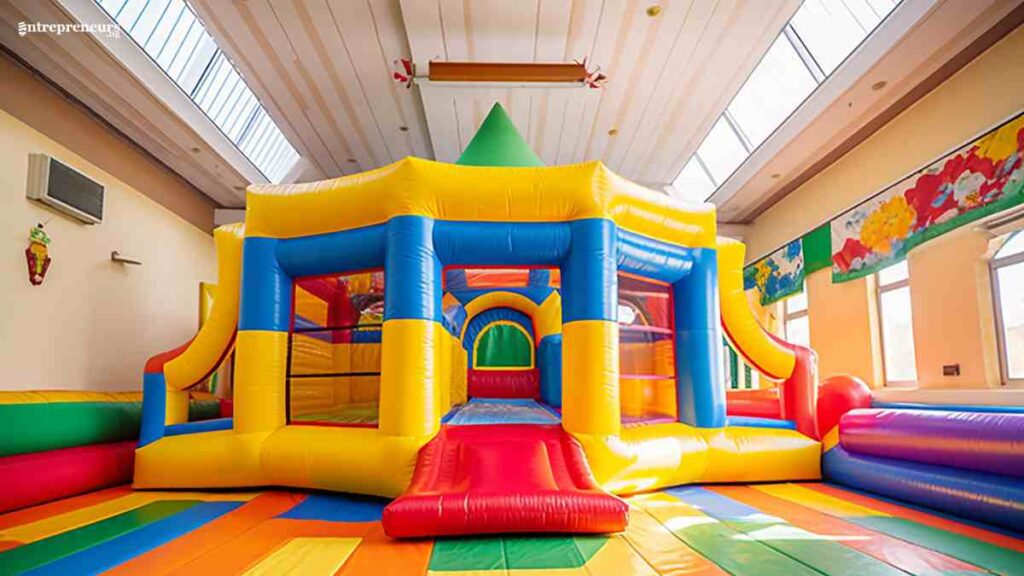
A bounce house rental business is a service-based venture that rents inflatable play structures for events.
These inflatables are commonly used at children’s birthday parties, school functions, festivals, corporate family days, and community gatherings.
Unlike many traditional businesses, an inflatable rental business does not rely on a permanent storefront. Instead, it operates as a mobile service.
The simplicity of the model is one reason many entrepreneurs consider starting a bounce house business. Once the equipment is purchased, it can generate income repeatedly for several years if properly maintained.
How the Business Model Works
The typical operation of a bounce house rental company follows a simple sequence.
Customers book an inflatable for a specific event, the company delivers and installs the equipment, and the customer pays a rental fee.
| Stage | What Happens |
|---|---|
| Booking | Customer reserves inflatable through phone, website, or social media |
| Delivery | Business transports inflatable to the event location |
| Setup | Inflatable is anchored and connected to an electric blower |
| Event Use | Children or guests use the inflatable during the event |
| Takedown | Operator deflates, cleans, and packs equipment |
Most rentals last 4–8 hours, though some companies offer overnight or multi-day bookings for festivals and large events.
Typical Customers
The success of a bounce house rental business largely depends on event-driven demand.
Parents and event organisers frequently rent inflatables to provide entertainment for children.
| Customer Type | Event Example | Rental Frequency |
|---|---|---|
| Families | Birthday parties | High |
| Schools | Fun days, graduations | Moderate |
| Churches | Holiday celebrations | Moderate |
| Event planners | Community festivals | High |
| Corporations | Family fun days | Occasional |
Family birthday parties remain the largest source of bookings, but schools and community organisations often generate repeat contracts.
Types of Inflatables Used in the Business
Although many people associate the industry with simple bounce houses, the modern inflatable rental business includes a wide variety of equipment designed for different age groups and event types.
| Inflatable Type | Description | Average Rental Price |
|---|---|---|
| Bounce house | Basic inflatable jumping area | $100 – $250 |
| Combo unit | Bounce house with slide attached | $150 – $350 |
| Water slide | Inflatable slide with water feature | $200 – $400 |
| Obstacle course | Large inflatable challenge course | $250 – $600 |
| Interactive games | Sports-themed inflatable games | $150 – $300 |
Larger companies often expand their inventory over time to include party tents, concession machines, and foam machines, turning the business into a full-service event rental company.
How Revenue Is Generated
Revenue in a bounce house rental business comes primarily from per-event rental fees. However, successful operators often increase their income through package deals and add-on services.
For example, a basic rental may include delivery and setup for one inflatable. Customers can then upgrade their booking with additional items such as popcorn machines, extra inflatables, or event tents.
| Revenue Source | Description | Impact on Profit |
|---|---|---|
| Inflatable rentals | Primary source of income | High |
| Package deals | Multiple inflatables or party bundles | Very high |
| Event add-ons | Concession machines or games | Moderate |
| Long-term rentals | School or festival contracts | Stable recurring income |
Because inflatables can be used hundreds of times, many operators recover the purchase cost of a unit within just a few months of consistent bookings.
In simple terms, a bounce house rental business turns inflatable entertainment equipment into a repeatable revenue stream.

Pros and Cons of Owning a Bounce House Business
Understanding the pros and cons of owning a bounce house business is essential before investing in equipment and marketing.
While a bounce house rental business can offer strong demand and low startup costs, it also comes with challenges.
Evaluating the advantages of a bounce house business, the disadvantages of a bounce house business, and possible bounce house rental business risks will help you decide whether this opportunity is worth pursuing.
Pros of Owning a Bounce House Business
Starting a bounce house rental business appeals to many entrepreneurs because it combines relatively low startup costs with strong demand for family entertainment.
When managed properly, a bounce house business can become a profitable service venture that grows steadily through repeat customers, community events, and word-of-mouth referrals.
Below are some of the most important advantages of a bounce house business.
Low Startup Cost Compared to Many Businesses
One of the biggest advantages of starting a bounce house business is the relatively affordable startup investment.
Unlike restaurants, retail stores, or daycare centres, this business does not require renting a commercial location or hiring a large team.
Most entrepreneurs can launch a small inflatable rental business with just one or two inflatables, basic transportation, and minimal marketing.
This relatively low barrier to entry makes the industry attractive for first-time entrepreneurs and side hustlers.
High Profit Potential
Another major benefit is the strong revenue potential once the equipment has been purchased. Each inflatable can generate income repeatedly without significant additional cost.
For example, a bounce house that costs $1,500 to purchase may rent for around $200 per event.
After only eight rentals, the equipment may recover its original cost. Every rental after that contributes mostly to profit, aside from maintenance and operating expenses.
| Item | Example Value |
|---|---|
| Cost of bounce house | $1,500 |
| Average rental fee | $200 |
| Rentals needed to break even | About 8 |
With consistent bookings during weekends, holidays, and summer months, many operators can generate steady cash flow.
Flexible Work Schedule
A bounce house business offers a level of flexibility that many traditional businesses cannot match. Most events take place on weekends, which allows owners to operate the business alongside a full-time job.
Some entrepreneurs run their bounce house rental business as a weekend side hustle, while others eventually scale it into a full-time operation.
This flexibility makes the business attractive to parents, students, and professionals looking for additional income streams.
Strong Demand for Children’s Entertainment
Children’s parties and family events are a consistent part of social life in many communities.
Parents often look for ways to entertain groups of children during birthdays, school celebrations, and holiday gatherings.
Because inflatables provide a simple and engaging activity, they remain a popular choice for event organisers.
| Event Type | Demand Level |
|---|---|
| Birthday parties | Very high |
| School events | High |
| Church gatherings | Moderate |
| Community festivals | High |
This steady demand helps many operators secure repeat customers throughout the year.
Easy to Scale Over Time
A bounce house rental business can grow gradually without requiring a complete overhaul of the business model. Many owners begin with one inflatable and then reinvest profits to purchase additional equipment.
As the inventory grows, the business can handle multiple events on the same day, significantly increasing revenue.
| Stage | Inventory | Potential Growth |
|---|---|---|
| Starter | 1–2 inflatables | Small local bookings |
| Growing | 3–6 inflatables | Multiple weekend rentals |
| Established | 10+ inflatables | Festivals and large events |
Over time, many businesses expand beyond bounce houses to include water slides, obstacle courses, tents, concession machines, and other party rentals.
Opportunity to Start as a Side Hustle
Unlike many ventures that demand full-time commitment from the beginning, starting a bounce house business allows entrepreneurs to test the market without quitting their jobs.
Because most rentals occur during evenings or weekends, the business can begin as a small side venture. If demand grows and bookings become consistent, the owner can gradually transition into full-time operations.
This flexibility lowers financial risk while giving entrepreneurs time to learn the industry and build a customer base.
See Also: Bounce House Business Plan – How to Write One in 8 Steps, Templates and Sample Guide
Cons of Owning a Bounce House Business
While the advantages of a bounce house business can make it an attractive opportunity, it is equally important to understand the challenges involved.
Many entrepreneurs underestimate the operational demands and potential risks that come with running an inflatable rental service.
Like any service-based venture, a bounce house rental business requires careful planning, safety awareness, and consistent effort.
Below are some of the key disadvantages of a bounce house business that prospective owners should consider.
Liability and Safety Risks
Safety is the most serious concern in the inflatable rental business. Because the equipment is used by children, accidents can occur if the inflatable is not properly installed, supervised, or maintained.
Strong winds, improper anchoring, overcrowding, or rough play can lead to injuries.
For this reason, most operators carry liability insurance and follow strict safety procedures during setup.
| Risk Factor | Potential Impact |
|---|---|
| Improper anchoring | Inflatable movement or tipping |
| Overcrowding | Increased injury risk |
| Strong winds | Equipment instability |
| Equipment damage | Safety hazards for users |
These safety concerns make insurance and proper training essential for anyone starting a bounce house business.
Physically Demanding Work
Although the business may seem simple from the outside, operating a bounce house rental business often involves significant physical labour.
Inflatables are heavy and bulky. A single unit can weigh between 150 and 300 pounds, and transporting, rolling, lifting, and securing them requires physical effort.
For solo operators, especially in the early stages of the business, these tasks can become exhausting during busy weekends.
Seasonal and Weather-Dependent Income
Another common disadvantage of a bounce house business is the seasonal nature of demand. Bookings often increase during warm months when outdoor events are more common.
Rain, cold weather, or extreme heat can lead to cancelled events and lost revenue.
| Season | Demand Level |
|---|---|
| Summer | Very high |
| Spring | Moderate |
| Autumn | Moderate |
| Winter | Low in many regions |
Because of this fluctuation, many owners diversify their offerings with indoor inflatables or other party rental equipment to maintain income year-round.
Equipment Maintenance and Cleaning
Inflatables require regular maintenance to remain safe and presentable for customers.
After each rental, the equipment must be cleaned, inspected, and dried before it can be stored.
Failure to maintain equipment can lead to damage, unpleasant odours, or customer complaints.
| Maintenance Task | Frequency |
|---|---|
| Cleaning and sanitising | After every rental |
| Inspecting seams and stitching | Regularly |
| Repairing small tears | As needed |
| Checking blowers and cables | Frequently |
These responsibilities can consume more time than many beginners expect.
Increasing Local Competition
Because the startup cost is relatively low, many entrepreneurs enter the market each year. In some cities, multiple companies compete for the same pool of customers.
This competition can lead to:
- Price undercutting
- Higher marketing expenses
- Greater pressure to offer unique equipment or services
To stand out, successful operators often invest in branding, strong customer service, and unique inflatables that competitors do not offer.
Understanding these disadvantages of a bounce house business helps entrepreneurs approach the opportunity with realistic expectations.
While the business can be profitable, managing the operational workload, safety responsibilities, and competition is essential for long-term success.
The Biggest Risks in the Bounce House Business
While a bounce house rental company can generate strong returns, it also comes with operational and financial risks that entrepreneurs should understand early.
Many beginners focus on the advantages of a bounce house business, but overlooking the potential dangers can lead to costly mistakes.
The table below highlights the most common risks operators face and why they matter.
| Risk | Description | Potential Impact |
|---|---|---|
| Safety accidents | Injuries can occur if inflatables are overcrowded, poorly supervised, or improperly anchored. | Liability claims, insurance issues, damaged reputation |
| Weather disruptions | Strong winds, heavy rain, or extreme heat can make inflatables unsafe to use. | Event cancellations and lost revenue |
| Equipment damage | Rough use, poor maintenance, or transportation issues can damage inflatables. | Costly repairs or equipment replacement |
| Insurance and liability claims | Even minor accidents can lead to legal claims against the business. | Financial loss and increased insurance premiums |
| Customer negligence | Some customers may misuse equipment or ignore safety rules during events. | Higher injury risk and equipment damage |
| Market competition | New rental companies frequently enter the market due to the low startup cost. | Pricing pressure and reduced bookings |
Understanding these risks allows entrepreneurs to take preventive steps, such as investing in proper insurance, following strict safety procedures, and creating clear rental agreements.
When these measures are in place, many of the common risks in the bounce house industry can be significantly reduced.

How Much Does It Cost to Start a Bounce House Business?
One of the biggest reasons many entrepreneurs consider starting a bounce house business is the relatively low barrier to entry.
Compared with restaurants, retail stores, or childcare centres, a bounce house rental business requires far less upfront capital. Most operators begin with a small inventory of inflatables and gradually expand as bookings increase.
However, the total startup cost depends on several factors, including the number of inflatables you purchase, the quality of equipment, transportation needs, insurance requirements, and marketing investment.
In most cases, entrepreneurs launch a small inflatable rental business with an initial investment ranging from $3,000 to $15,000.
Below is a breakdown of the major expenses involved.
Bounce House Equipment Costs
Inflatables are the core assets of the business. Commercial-grade bounce houses are designed to withstand frequent use and must meet safety standards.
While cheaper residential inflatables exist, they are not suitable for rental businesses because they wear out quickly.
| Equipment Type | Average Cost |
|---|---|
| Standard bounce house | $1,000 – $2,500 |
| Combo bounce house with slide | $1,500 – $3,500 |
| Inflatable water slide | $2,000 – $5,000 |
| Obstacle course inflatable | $3,000 – $8,000 |
| Commercial blower | $150 – $400 |
Many beginners start with one or two inflatables and expand inventory once revenue begins to flow.
Transportation and Setup Equipment
Because a bounce house rental business is mobile, transportation is essential. Inflatables are heavy and bulky, so they require reliable transport and proper setup tools.
| Equipment | Estimated Cost |
|---|---|
| Utility trailer | $1,500 – $5,000 |
| Pickup truck or van | $5,000 – $15,000 (used) |
| Anchoring stakes and sandbags | $50 – $200 |
| Extension cords and tarps | $50 – $150 |
| Hand truck or dolly | $80 – $200 |
Some entrepreneurs reduce startup costs by using an existing vehicle instead of buying a new one.
Insurance and Legal Requirements
Safety and liability are critical considerations in the bounce house rental business. Injuries or equipment accidents can lead to costly claims, which is why most operators carry liability insurance.
| Requirement | Typical Cost |
|---|---|
| Business registration | $50 – $500 |
| Liability insurance | $200 – $1,000 per year |
| Local permits or licenses | $50 – $300 |
Insurance is especially important because bounce house rental business risks often involve safety concerns and potential injury claims.
Cleaning, Maintenance, and Storage Costs
Inflatables must be cleaned and inspected after each rental to maintain safety and extend their lifespan. Neglecting maintenance can quickly lead to equipment damage and negative customer reviews.
| Item | Estimated Cost |
|---|---|
| Cleaning supplies | $50 – $150 |
| Repair kits | $30 – $100 |
| Storage space | $0 – $300/month |
Many small operators store their equipment in a garage or home storage area during the early stages of the business.
Marketing and Website Costs
Even the best equipment will not generate income without customers. Marketing plays a major role in attracting bookings.
| Marketing Tool | Estimated Cost |
|---|---|
| Business website | $200 – $800 |
| Logo and branding | $50 – $300 |
| Social media ads | $100 – $500 |
| Google Business listing | Free |
A well-optimised website and strong local SEO can significantly increase bookings for a bounce house rental business.
Total Startup Cost Estimate
When these expenses are combined, most entrepreneurs can realistically expect the following startup range.
| Business Size | Estimated Startup Cost |
|---|---|
| Small starter setup | $3,000 – $6,000 |
| Moderate setup (2–3 inflatables) | $6,000 – $10,000 |
| Larger starter inventory | $10,000 – $15,000 |
Many successful owners start small and reinvest profits into additional inflatables, expanding their inflatable rental business over time.
Ultimately, the startup cost of a bounce house rental business depends on how ambitious you want to be from the beginning.
A modest investment can launch a profitable operation, but scaling the business requires ongoing spending on equipment, marketing, and maintenance.
Legal and Safety Requirements for Bounce House Businesses
Operating a bounce house rental business involves more than buying inflatables and renting them to customers.
Because these structures are used by children and installed in public or private event spaces, owners must follow specific legal and safety standards to protect customers and reduce liability.
Ignoring these requirements can expose a business to serious business risks, including lawsuits, regulatory penalties, and insurance claims.
The table below outlines some of the most important legal and safety requirements.
| Requirement | Description | Importance |
|---|---|---|
| Business registration | Register the company as a legal entity and obtain necessary local permits or licenses. | Ensures legal operation and builds credibility with customers. |
| Liability insurance | Most operators carry general liability insurance to cover injuries or property damage during rentals. | Protects the business financially in case of accidents or claims. |
| Safety inspections | Regularly inspect inflatables, blowers, and anchoring systems before and after each rental. | Helps prevent equipment failure and safety incidents. |
| Proper anchoring | Inflatables must be secured using stakes, sandbags, or anchor systems depending on the surface. | Prevents movement or tipping caused by wind or active use. |
| Wind and weather limits | Operators must monitor weather conditions and avoid setup in unsafe winds or storms. | Reduces the risk of inflatable lift-off or collapse. |
| Safety guidelines for users | Rental companies typically provide clear rules for safe use, such as limiting the number of children at a time. | Minimises injury risk and improves customer awareness. |
| Equipment maintenance | Regular cleaning, repairs, and replacement of worn parts ensure equipment remains safe. | Extends equipment lifespan and protects users. |
By following these requirements, owners can significantly reduce safety incidents and build trust with customers.
Strong safety standards also make it easier to secure contracts with schools, community organisations, and event planners, who often prioritise vendors that adhere to strict compliance standards.

How to Make a Bounce House Business Successful
Starting a bounce house rental business is relatively simple, but building a profitable and sustainable company requires more than just owning a few inflatables.
Successful operators focus on safety, customer experience, smart marketing, and gradual expansion. These strategies help reduce bounce house rental business risks while increasing bookings and repeat customers.
Below are some of the most effective ways to grow and sustain a successful inflatable rental business.
Choose High-Quality Commercial Equipment
The quality of your inflatables plays a major role in the reputation of your business. Commercial-grade inflatables are designed to withstand frequent use, making them safer and more durable than cheaper residential models.
Investing in strong equipment may cost more initially, but it reduces repair costs and improves customer confidence. Durable inflatables also last longer, allowing you to maximise the return on your investment.
Customers quickly notice the difference between well-maintained inflatables and worn-out equipment. Clean, colourful units create a positive impression and encourage referrals.
Focus on Safety and Professional Setup
Safety should be a top priority for every bounce house business. Proper setup procedures protect both customers and the business owner.
This includes anchoring inflatables securely, monitoring weather conditions, and providing clear safety instructions during events.
Professional setup also helps reassure parents and event organisers that the equipment is safe for children.
Maintaining strict safety standards can significantly reduce the risk of injuries or accidents in the bounce house rental business.
Build a Strong Local Online Presence
Most customers searching for inflatables start their search online. This makes local digital visibility extremely important for attracting bookings.
A professional website that shows available inflatables, pricing, and booking information can make a significant difference.
In addition, registering your company on Google Business Profile helps the business appear when people search for services such as “bounce house rental near me.”
Active social media pages also help showcase past events, happy customers, and new equipment. Photos and videos from real parties can quickly attract new customers.
Offer Packages and Add-On Services
Many successful bounce house rental businesses increase their revenue by offering bundled services rather than renting a single inflatable.
For example, instead of renting just a bounce house, the business might offer a complete party package that includes multiple inflatables or additional equipment.
These packages make events easier for customers while increasing the value of each booking.
Common add-ons include:
- Concession machines such as popcorn or cotton candy
- Party tents and tables
- Water slides during summer events
- Interactive inflatable games
These extras turn a simple inflatable rental into a full event entertainment solution.
Deliver Excellent Customer Service
Customer experience plays a huge role in the growth of a bounce house rental business. Parents and event organisers often rely on recommendations when choosing entertainment providers.
Arriving on time, communicating clearly, and maintaining clean equipment help create a positive reputation. Happy customers are more likely to recommend the business to friends, schools, and community organisations.
Over time, strong customer relationships can lead to repeat bookings and referrals, which are some of the most valuable sources of new business.
Expand Inventory Strategically
Once the business begins generating consistent bookings, reinvesting profits into additional equipment can help scale operations.
Instead of purchasing multiple identical inflatables, successful owners often diversify their inventory. Adding larger slides, obstacle courses, or themed inflatables attracts different types of events.
Strategic expansion allows the business to handle multiple rentals on the same day, significantly increasing revenue potential.
By focusing on equipment quality, safety, marketing, and customer satisfaction, entrepreneurs can turn a small bounce house business into a reliable and growing source of income.
Success in this industry rarely happens overnight, but consistent effort and smart planning can build a profitable operation over time.
Common Mistakes New Bounce House Business Owners Make and How to Avoid Them
Starting a bounce house rental business may appear straightforward, but many beginners encounter avoidable problems during the early stages.
Inexperience, poor planning, or rushing into purchases can turn a promising inflatable rental business into a frustrating venture.
The table below highlights frequent mistakes new owners make and practical ways to avoid them.
| Common Mistake | What Happens | How to Avoid It |
|---|---|---|
| Buying cheap residential inflatables | Equipment wears out quickly and may not meet safety standards. | Invest in commercial-grade inflatables designed for rental use. |
| Ignoring insurance coverage | Injuries or accidents can result in expensive legal claims. | Purchase proper liability insurance before taking bookings. |
| Poor equipment maintenance | Dirty or damaged inflatables reduce customer trust and may become unsafe. | Clean, inspect, and repair equipment after every rental. |
| Underpricing rentals | Charging too little reduces profits and makes it hard to cover operating costs. | Research local competitors and set competitive but profitable prices. |
| Weak marketing strategy | Few people know the business exists, resulting in low bookings. | Build a website, optimise local search listings, and use social media marketing. |
| Buying too many inflatables at the start | Large upfront spending increases financial risk if bookings are slow. | Start with one or two popular units and expand as demand grows. |
| Poor scheduling and logistics | Late deliveries or booking conflicts damage reputation. | Use booking software or organised scheduling systems. |
Avoiding these mistakes allows new entrepreneurs to run a more professional bounce house business from the beginning.
Careful planning, proper safety measures, and consistent marketing can make a significant difference in the early growth of the business.
Is Owning a Bounce House Business Worth It?
Deciding whether to start a bounce house rental business ultimately depends on your goals, resources, and willingness to manage the operational challenges that come with it.
As this guide has shown, the pros and cons of owning a bounce house business reveal a venture that can be profitable and flexible, but also physically demanding and risk-sensitive.
For many entrepreneurs, especially those looking for a side hustle or service-based startup, a bounce house business offers an accessible entry point into the event rental industry.
However, success depends on proper planning, strong safety practices, effective marketing, and excellent customer service.
The table below summarises the key insights to consider before starting a bounce house business.
| Key Factor | What It Means | Impact on the Business |
|---|---|---|
| Startup investment | Relatively low compared to many businesses | Easier entry for new entrepreneurs |
| Profit potential | Equipment can generate repeated rental income | Strong margins with consistent bookings |
| Work requirements | Setup, transport, and maintenance require physical effort | Demands time and energy, especially on weekends |
| Safety and liability | Accidents or misuse can create legal and financial risks | Insurance and strict safety procedures are essential |
| Market demand | Parties, school events, and community gatherings drive bookings | Steady demand in many locations |
| Competition | Many new operators enter the market each year | Requires strong marketing and service quality |
In the end, the advantages of a bounce house business can outweigh the disadvantages if the venture is approached with the right strategy.
Entrepreneurs who invest in quality equipment, prioritise safety, and build strong customer relationships often turn this simple idea into a reliable and growing business.
Conclusion
The pros and cons of owning a bounce house business show that it can be a profitable and flexible venture, but success depends on safety, planning, and strong marketing.
Entrepreneurs who manage the risks and deliver great service can turn a small bounce house rental business into a reliable source of income.
We want to see you succeed, and that’s why we provide valuable business resources to help you every step of the way.
- Join over 23,000 entrepreneurs by signing up for our newsletter and receiving valuable business insights.
- Register your business today with Entrepreneurs.ng’s Business Registration Services.
- Tell Your Brand Story on Entrepreneurs.ng, let’s showcase your brand to our global audience.
- Need help with your marketing strategy? Get a Comprehensive Marketing and Sales Plan here.
- Sign up for our Entrepreneurs Success Blueprint Programme to learn how to start and scale your business in just 30 days.
- Book our one-on-one consulting and speak to an expert about structuring and growing your business.
- Visit our shop for business plan templates and other valuable resources to guide you.
- Get our Employee-Employer Super Bundle NDA templates to legally protect your business and workforce.
- Advertise your business to over a million entrepreneurs through our different advertising packages.

Frequently Asked Questions (FAQs)
What is a bounce house rental business?
A bounce house rental business rents inflatable entertainment equipment for events such as birthday parties, school functions, festivals, and community gatherings. The business delivers, sets up, and later removes the inflatable after the event.
How much does it cost to start a bounce house business?
Most entrepreneurs start with an investment of $3,000 to $15,000, depending on the number of inflatables, transportation equipment, insurance, and marketing costs.
Is a bounce house business profitable?
Yes, a bounce house business can be profitable because inflatables can be rented out many times. Once the equipment cost is recovered, most rental income becomes profit after operating expenses.
How much can a bounce house rental business make?
Income varies by location and demand. Many operators charge $100 to $300 per rental, while larger inflatables can earn $400 or more per event.
How many bounce houses do I need to start?
Many entrepreneurs begin with one or two commercial-grade inflatables and expand their inventory as bookings increase.
Do I need insurance for a bounce house rental business?
Yes. Liability insurance is highly recommended because it protects the business from injury claims and other bounce house rental business risks.
How long do bounce houses last?
A commercial inflatable can last three to five years or longer with proper care, regular cleaning, and timely repairs.
What safety rules should bounce house businesses follow?
Operators should follow key safety practices such as proper anchoring, limiting the number of users, monitoring weather conditions, and supervising children during use.
Can a bounce house business be run as a side hustle?
Yes. Many entrepreneurs run their bounce house rental business on weekends while maintaining a full-time job during the week.
What types of events rent bounce houses the most?
The most common events include birthday parties, school events, church gatherings, community festivals, and family celebrations.
Do I need a special license to start a bounce house business?
Requirements vary by location, but most areas require basic business registration and local permits before operating.
How do bounce house businesses get customers?
Most companies attract customers through local SEO, social media marketing, word-of-mouth referrals, and partnerships with schools or event planners.
What equipment is required for a bounce house rental business?
Basic equipment includes commercial inflatables, electric blowers, anchoring stakes, extension cords, cleaning supplies, and transportation such as a trailer or truck.
What are the biggest risks in the bounce house business?
Major risks include safety accidents, weather disruptions, equipment damage, and liability claims. Proper insurance and safety procedures can reduce these risks.
How can I grow a bounce house rental business?
Business owners typically expand by adding more inflatables, offering party packages, improving marketing, and building relationships with schools and event organisers.