One of the smartest ways entrepreneurs use ChatGPT today is not just to write faster, but to think, plan, sell, serve customers, and make better decisions with less pressure.
A recent U.S. Chamber of Commerce report found that 58% of small businesses use generative AI, up from 40% in 2024 and more than double the rate in 2023.
But how can entrepreneurs use ChatGPT to create real business value? In this article, we will explore how to use ChatGPT for business across 10 simple areas.
Key Takeaways
- ChatGPT helps entrepreneurs save time by automating routine business tasks and workflows.
- Entrepreneurs can use ChatGPT to improve marketing, customer service, sales, and content creation.
- ChatGPT works best as a business assistant that supports decision-making, not replaces human judgement.
- Businesses that use AI strategically can boost productivity, reduce costs, and scale faster.

What Is ChatGPT?
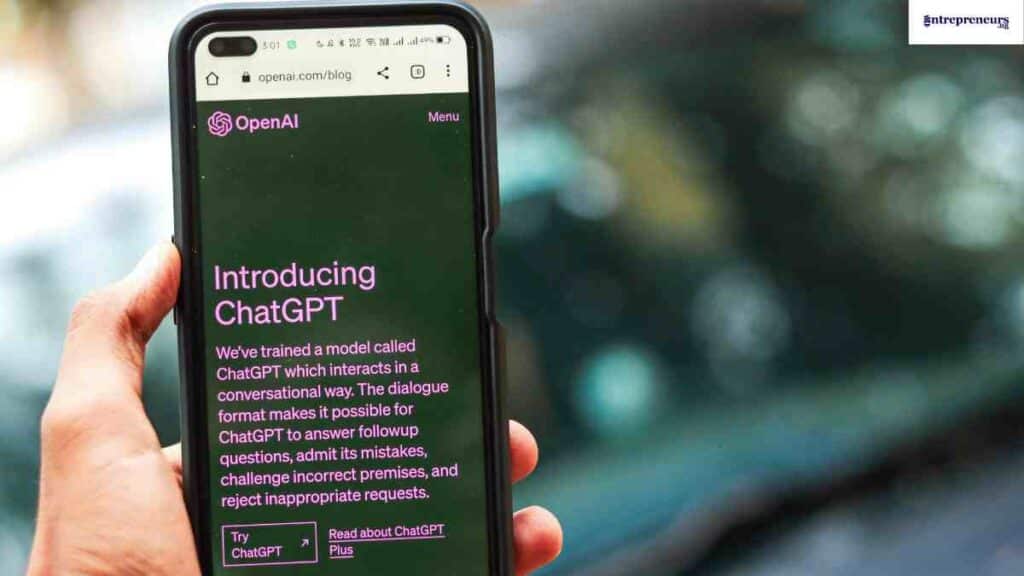
ChatGPT is an artificial intelligence (AI) chatbot developed by OpenAI that can understand and generate human-like text.
It works by analysing prompts and providing responses that help users write content, answer questions, brainstorm ideas, solve problems, conduct research, and complete various tasks more efficiently.
For entrepreneurs, ChatGPT functions like a digital business assistant that is available 24/7.
Whether you need help drafting emails, creating marketing campaigns, researching competitors, developing business strategies, or improving productivity, ChatGPT can help you complete tasks faster and make more informed decisions.
What ChatGPT Can and Cannot Do: Understanding Its Strengths and Limitations
Before exploring the ways entrepreneurs use ChatGPT, it is important to understand what the tool can and cannot do.
While ChatGPT can save time, boost productivity, and support decision-making, it is not a replacement for human expertise.
Knowing its strengths and limitations will help you use it more effectively and avoid costly mistakes.
| What ChatGPT Can Do | What ChatGPT Cannot Do |
|---|---|
| Generate content such as blog posts, emails, social media captions, and marketing copy | Guarantee that all information is accurate or up to date |
| Brainstorm business ideas and suggest solutions to problems | Make business decisions on your behalf |
| Summarise reports, articles, meetings, and research findings | Predict the future or provide certain outcomes |
| Assist with market research and competitor analysis | Replace industry experts, lawyers, accountants, or consultants |
| Create business plans, proposals, and presentations | Access confidential company data unless you provide it |
| Help draft customer service responses and FAQs | Understand context as deeply as a human professional |
| Improve productivity through planning, scheduling, and task organisation | Take responsibility for business results or actions |
| Generate coding assistance and basic technical guidance | Verify facts automatically without human review |
| Translate and simplify complex information | Replace creativity, emotional intelligence, and human judgment. |
| Support learning and skill development across various topics | Operate independently without prompts and direction |
ChatGPT is most valuable when used as a business assistant that enhances human capabilities.
Entrepreneurs who combine AI efficiency with critical thinking, experience, and sound judgment are likely to achieve the best results.

10 Simple Ways Entrepreneurs Use ChatGPT to Save Time, Boost Productivity, and Grow Their Businesses
As artificial intelligence becomes a bigger part of everyday business operations, entrepreneurs are finding practical ways to use ChatGPT beyond simple content creation.
From generating business ideas and conducting market research to improving customer service and automating repetitive tasks, ChatGPT has evolved into a powerful business assistant.
Below are 10 simple yet effective ways entrepreneurs use ChatGPT to work smarter, improve efficiency, and create more growth opportunities.
1. Generating and Validating Business Ideas
Every successful business starts with an idea, but not every idea becomes a viable business.
One of the most valuable ways entrepreneurs use ChatGPT is to brainstorm opportunities, identify market gaps, and evaluate potential business concepts before investing significant time or money.
Instead of relying solely on guesswork, entrepreneurs can use ChatGPT to explore customer problems, emerging trends, and underserved markets across different industries.
How ChatGPT Helps
ChatGPT can act as a brainstorming partner by helping entrepreneurs:
- Generate business ideas based on specific skills or interests
- Identify problems worth solving
- Explore potential target markets
- Analyse strengths and weaknesses of a business concept
- Suggest ways to differentiate from competitors
Practical Applications
| Entrepreneur’s Goal | How ChatGPT Can Help |
|---|---|
| Find a business idea | Generate ideas based on skills, experience, or industry interests |
| Validate a concept | Identify potential customers, challenges, and opportunities |
| Explore new markets | Suggest underserved niches and emerging trends |
| Improve an existing idea | Recommend unique selling points and revenue streams |
Example Prompt
“I want to start an online business in the health and wellness industry. Suggest 10 business ideas with low startup costs and explain the target audience for each.”
Example Scenario
Imagine a graphic designer who wants to start a business but is unsure where to focus.
By using ChatGPT, they can explore opportunities such as design subscriptions, digital products, branding services, online courses, or niche design solutions for specific industries.
This helps narrow down options and identify ideas with stronger market potential.
What to Keep in Mind
While ChatGPT can generate useful ideas and insights, it cannot determine whether a business will succeed.
Entrepreneurs should always validate AI-generated suggestions through market research, customer feedback, and real-world testing before making major business decisions.
| ChatGPT Can Help With | Entrepreneurs Must Still Do |
|---|---|
| Idea generation | Market validation |
| Trend identification | Customer interviews |
| Opportunity analysis | Competitive research |
| Brainstorming solutions | Business execution |
The real value lies not in letting ChatGPT choose a business idea for you, but in using it to explore possibilities faster and make more informed decisions.
2. Conducting Market Research Faster
Market research helps entrepreneurs understand their customers, competitors, and industry trends.
However, gathering and analysing information can be time-consuming, especially for small business owners with limited resources.
ChatGPT can simplify the process by helping entrepreneurs organise information, identify patterns, and generate insights more quickly.
While it should not replace primary research, it can serve as a useful starting point when exploring a new market or business opportunity.
How ChatGPT Helps
ChatGPT can assist entrepreneurs by helping them:
- Understand customer pain points
- Identify target audiences
- Analyse competitors
- Explore industry trends
- Generate customer personas
Practical Applications
| Research Task | How ChatGPT Can Help |
|---|---|
| Customer research | Identify common customer challenges and needs |
| Competitor analysis | Compare competitors’ strengths and weaknesses |
| Industry trends | Highlight emerging developments and opportunities |
| Audience profiling | Create detailed customer personas |
| Survey creation | Draft customer feedback questions |
Example Prompt
“I want to launch a meal delivery service for busy professionals. Identify the target audience, their biggest challenges, and key factors they consider when choosing a meal delivery company.”
Understanding Your Customers
One of the biggest challenges entrepreneurs face is knowing exactly what their customers want.
ChatGPT can help organise customer insights and create profiles that make marketing and product development more focused.
| Customer Insight Area | Questions ChatGPT Can Help Explore |
|---|---|
| Pain Points | What problems are customers trying to solve? |
| Buying Behaviour | What influences purchasing decisions? |
| Preferences | What features or benefits matter most? |
| Demographics | Who is most likely to buy the product or service? |
Example Scenario
Suppose an entrepreneur wants to start an online fitness coaching business. Using ChatGPT, they can explore different customer segments, such as busy professionals, new mothers, or remote workers.
The tool can also suggest common fitness challenges each group faces, helping the entrepreneur create more targeted offers and marketing campaigns.
What to Keep in Mind
ChatGPT can provide useful insights and organise information, but it does not replace direct customer feedback.
Entrepreneurs should combine AI-generated research with surveys, interviews, industry reports, and real-world market data to make informed business decisions.
The entrepreneurs who gain the most value from ChatGPT use it to accelerate research, then validate those insights with actual customers and market evidence.
3. Writing Business Plans and Strategic Documents
Creating a business plan can feel overwhelming, especially for first-time entrepreneurs.
From market analysis and financial projections to operational plans and executive summaries, the process requires significant time and effort.
ChatGPT can help simplify the process by generating drafts, organising ideas, and structuring information into a professional format.
Rather than starting from a blank page, entrepreneurs can use ChatGPT to create a solid first draft and refine it with their own insights and data.
How ChatGPT Helps
ChatGPT can support entrepreneurs in creating:
- Business plans
- Executive summaries
- Investor pitches
- Business proposals
- Strategic growth plans
Practical Applications
| Document Type | How ChatGPT Can Help |
|---|---|
| Business Plan | Draft key sections and organise ideas |
| Executive Summary | Summarise the business concept clearly |
| Investor Pitch | Create persuasive pitch outlines |
| Business Proposal | Structure professional proposals |
| Growth Strategy | Suggest expansion opportunities and objectives |
Example Prompt
“Create a business plan outline for an online tutoring platform targeting university students. Include the executive summary, market analysis, business model, marketing strategy, and revenue projections.”
Key Sections ChatGPT Can Help Draft
| Business Plan Section | Assistance Provided |
|---|---|
| Executive Summary | Condenses the business concept into a compelling overview |
| Market Analysis | Identifies industry trends and customer segments |
| Marketing Strategy | Suggests promotional channels and tactics |
| Operations Plan | Outlines processes and business activities |
| Financial Planning | Provides frameworks for forecasts and budgeting |
Example Scenario
A founder launching an e-commerce business may struggle to present their idea clearly to investors or lenders.
By using ChatGPT, they can quickly create a structured business plan, identify missing sections, and refine their value proposition before seeking funding.
What to Keep in Mind
ChatGPT can help draft and structure business documents, but it cannot generate accurate financial projections or replace professional advice.
Entrepreneurs should always review figures, assumptions, and business strategies carefully before presenting them to investors, partners, or financial institutions.
The most effective approach is to use ChatGPT as a planning assistant that helps organise ideas and improve clarity while ensuring that the final strategy reflects real market conditions and business goals.
4. Creating Content for Marketing and Brand Visibility
Consistently creating quality content is one of the biggest challenges entrepreneurs face.
Between running daily operations and managing customers, finding time to write blog posts, social media updates, email campaigns, and website content can be difficult.
ChatGPT helps entrepreneurs create content faster while maintaining a consistent brand presence.
How ChatGPT Helps
ChatGPT can assist with:
- Blog post ideas and outlines
- Social media content
- Email marketing campaigns
- Website copy
- Video and podcast scripts
Practical Applications
| Content Type | How ChatGPT Can Help |
|---|---|
| Blog Articles | Generate outlines, introductions, and draft content |
| Social Media Posts | Create captions and content calendars |
| Email Campaigns | Draft newsletters and promotional emails |
| Website Content | Write landing pages and product descriptions |
| Video Scripts | Develop scripts for marketing videos |
Example Prompt
“Create a one-month social media content calendar for a small fitness brand targeting busy professionals. Include content ideas, captions, and calls to action.”
Supporting Different Stages of the Content Process
ChatGPT is useful throughout the content creation journey, from idea generation to editing.
| Content Stage | ChatGPT’s Role |
|---|---|
| Planning | Generate content ideas and topics |
| Writing | Draft articles, emails, and posts |
| Editing | Improve clarity and readability |
| Repurposing | Turn one piece of content into multiple formats |
| Optimisation | Suggest headlines and calls to action |
Example Scenario
A small business owner who publishes one blog post per month can use ChatGPT to transform that article into several LinkedIn posts, email newsletters, social media captions, and short video scripts.
This allows them to reach a wider audience without creating every piece of content from scratch.
What to Keep in Mind
While ChatGPT can speed up content creation, entrepreneurs should avoid publishing AI-generated content without reviewing it.
Adding personal experiences, industry expertise, and unique insights helps create content that is more authentic, engaging, and valuable to readers.
The most successful entrepreneurs use ChatGPT to handle the heavy lifting while ensuring the final content reflects their brand voice and expertise.
5. Improving Customer Service and Customer Experience
Providing excellent customer service can help a business stand out in a competitive market.
However, responding to enquiries, handling complaints, and answering repetitive questions can consume valuable time.
ChatGPT helps entrepreneurs streamline customer communication while ensuring customers receive timely and helpful responses.
Although it should not replace human interaction entirely, it can handle many routine support tasks efficiently.
How ChatGPT Helps
Entrepreneurs can use ChatGPT to:
- Draft customer support responses
- Create FAQ pages
- Develop chatbot scripts
- Handle common enquiries
- Improve communication consistency
Practical Applications
| Customer Service Task | How ChatGPT Can Help |
|---|---|
| Customer Enquiries | Draft professional responses quickly |
| FAQ Creation | Generate answers to common questions |
| Complaint Resolution | Suggest polite and empathetic responses |
| Chatbot Development | Create conversation flows and scripts |
| Customer Onboarding | Draft welcome messages and guides |
Example Prompt
“Create professional responses for customers asking about delayed deliveries, refund requests, and product availability.”
Common Customer Service Uses
| Scenario | ChatGPT’s Support |
|---|---|
| New Customer Questions | Draft informative responses |
| Refund Requests | Suggest courteous and clear replies |
| Product Enquiries | Create accurate response templates |
| Service Complaints | Generate empathetic communication |
| Customer Follow-Ups | Draft personalised follow-up messages |
Example Scenario
An online store receives dozens of questions each day about shipping times, returns, and product availability.
Instead of writing every response from scratch, the business owner can use ChatGPT to create response templates that save time while maintaining a professional customer experience.
What to Keep in Mind
ChatGPT works best for routine customer interactions. Complex issues, sensitive complaints, and situations requiring empathy or judgement should still be handled by a human representative.
Customers appreciate speed, but they also value genuine human support when problems arise.
By combining automation with personal attention, entrepreneurs can improve customer satisfaction while reducing the time spent on repetitive support tasks.
6. Supporting Sales and Lead Generation
Sales are the lifeblood of any business, but attracting and converting prospects often requires consistent communication and follow-up.
ChatGPT can help entrepreneurs create persuasive sales materials, nurture leads, and improve outreach efforts without spending hours crafting every message manually.
Used strategically, it can help businesses communicate more effectively throughout the sales process.
How ChatGPT Helps
Entrepreneurs can use ChatGPT to:
- Write sales emails
- Create outreach messages
- Develop sales scripts
- Draft follow-up sequences
- Improve product pitches
Practical Applications
| Sales Activity | How ChatGPT Can Help |
|---|---|
| Cold Outreach | Draft personalised prospecting emails |
| Sales Calls | Create conversation and discovery call scripts |
| Follow-Ups | Generate timely follow-up messages |
| Product Pitches | Refine value propositions and key benefits |
| Lead Nurturing | Create email sequences for prospects |
Example Prompt
“Write a persuasive sales email for a software company targeting small business owners who want to improve productivity and reduce operational costs.”
Common Sales Use Cases
| Stage of the Sales Process | ChatGPT’s Role |
|---|---|
| Prospecting | Generate outreach messages |
| Lead Qualification | Suggest discovery questions |
| Presentation | Improve product explanations |
| Follow-Up | Draft personalised follow-up emails |
| Closing | Create objection-handling responses |
Example Scenario
A business consultant wants to reach potential clients on LinkedIn. Instead of sending generic messages, they can use ChatGPT to create personalised outreach templates tailored to different industries.
This helps improve engagement while reducing the time spent writing individual messages.
What to Keep in Mind
ChatGPT can help improve communication, but successful sales still depend on relationship-building, trust, and a deep understanding of customer needs.
Entrepreneurs should personalise AI-generated messages and avoid sounding robotic or overly scripted.
The best results come when ChatGPT handles the first draft while the entrepreneur adds the human touch that turns prospects into loyal customers.
7. Increasing Productivity and Managing Time More Effectively
Entrepreneurs often juggle multiple responsibilities, from managing operations and serving customers to handling marketing and finances.
As workloads grow, productivity becomes essential. ChatGPT can help entrepreneurs organise tasks, prioritise activities, and manage their time more efficiently.
Rather than replacing productivity systems, it acts as a digital assistant that helps entrepreneurs stay focused and organised.
How ChatGPT Helps
Entrepreneurs can use ChatGPT to:
- Prioritise daily tasks
- Create schedules and workflows
- Summarise meetings and notes
- Organise projects
- Develop productivity plans
Practical Applications
| Productivity Task | How ChatGPT Can Help |
|---|---|
| Daily Planning | Create task lists and schedules |
| Project Management | Break projects into manageable steps |
| Meeting Notes | Summarise discussions and action points |
| Workflow Design | Suggest more efficient processes |
| Goal Setting | Create action plans for business objectives |
Example Prompt
“I have five major business priorities this week, including marketing, customer support, product development, sales, and finance. Create a schedule that helps me manage them efficiently.”
Areas Where ChatGPT Can Save Time
| Business Activity | Potential Support |
|---|---|
| Email Management | Draft and organise responses |
| Meeting Preparation | Create agendas and discussion points |
| Research Tasks | Summarise information quickly |
| Content Planning | Generate content schedules |
| Project Tracking | Organise tasks and deadlines |
Example Scenario
A startup founder spends hours each week switching between different responsibilities.
By using ChatGPT to create weekly plans, summarise meetings, and organise projects, they can spend less time on administration and more time focusing on growth-related activities.
What to Keep in Mind
ChatGPT can help improve productivity, but it cannot manage priorities on its own.
Entrepreneurs still need to decide which activities deserve their attention and ensure they focus on high-impact work rather than simply staying busy.
The most productive entrepreneurs use ChatGPT to reduce administrative workload, allowing them to dedicate more time to strategy, innovation, and business growth.
8. Hiring, Training, and Managing Teams
As a business grows, entrepreneurs often need support from employees, freelancers, or contractors. However, hiring and managing people can be time-consuming.
ChatGPT can simplify many aspects of the process, from creating job descriptions to developing training materials and improving internal communication.
This allows entrepreneurs to spend less time on administrative tasks and more time building high-performing teams.
How ChatGPT Helps
Entrepreneurs can use ChatGPT to:
- Write job descriptions
- Create interview questions
- Develop onboarding materials
- Prepare training guides
- Improve team communication
Practical Applications
| Team Management Task | How ChatGPT Can Help |
|---|---|
| Recruitment | Draft job descriptions and vacancy announcements |
| Interviews | Generate role-specific interview questions |
| Onboarding | Create welcome guides and training materials |
| Team Communication | Draft internal memos and updates |
| Performance Management | Develop evaluation templates and feedback frameworks |
Example Prompt
“Create a job description for a digital marketing specialist, including responsibilities, qualifications, key skills, and performance expectations.”
Supporting the Employee Journey
| Stage | ChatGPT’s Role |
|---|---|
| Hiring | Create recruitment materials |
| Selection | Develop interview questions |
| Onboarding | Draft training and orientation documents |
| Development | Suggest learning resources and training plans |
| Communication | Improve clarity of internal messages |
Example Scenario
A small business owner wants to hire a virtual assistant but has never recruited before.
Using ChatGPT, they can create a professional job description, prepare interview questions, and develop a simple onboarding guide that helps the new hire become productive more quickly.
What to Keep in Mind
ChatGPT can support recruitment and team management, but it cannot assess a candidate’s character, cultural fit, or actual performance.
Human judgment remains essential when making hiring decisions and managing people.
Entrepreneurs who combine AI-assisted administration with strong leadership skills can build more efficient teams while reducing the time spent on routine management tasks.
9. Assisting With Financial Planning and Business Decisions
Financial management is one of the most important responsibilities of an entrepreneur.
While ChatGPT cannot replace accountants or financial advisors, it can help business owners organise financial information, understand key concepts, and make more informed decisions.
By simplifying complex financial topics and providing structured frameworks, ChatGPT can help entrepreneurs approach financial planning with greater confidence.
How ChatGPT Helps
Entrepreneurs can use ChatGPT to:
- Create budgets
- Forecast cash flow
- Analyse expenses
- Understand financial reports
- Explore pricing strategies
Practical Applications
| Financial Task | How ChatGPT Can Help |
|---|---|
| Budgeting | Create budget templates and spending plans |
| Cash Flow Planning | Develop forecasting frameworks |
| Expense Analysis | Identify areas where costs can be reduced |
| Pricing Strategy | Suggest pricing models and approaches |
| Financial Education | Explain financial concepts in simple terms |
Example Prompt
“Help me create a monthly budget for an e-commerce business with expenses for inventory, marketing, software subscriptions, logistics, and staff salaries.”
Areas Where ChatGPT Can Provide Support
| Financial Area | Example Assistance |
|---|---|
| Revenue Planning | Estimate potential income scenarios |
| Cost Management | Identify unnecessary spending |
| Pricing Decisions | Compare different pricing strategies |
| Profitability Analysis | Explain profit margins and business metrics |
| Financial Reporting | Simplify complex financial statements |
Example Scenario
A business owner notices declining profits despite increasing sales. Using ChatGPT, they can organise expenses into categories, analyse spending patterns, and identify areas that may require closer attention.
This provides a clearer picture before consulting an accountant or financial advisor.
What to Keep in Mind
ChatGPT can assist with financial planning, but it should never be the sole basis for major financial decisions.
Financial projections, tax matters, investment decisions, and legal compliance require professional review and accurate business data.
The most effective entrepreneurs use ChatGPT to improve financial understanding and organisation while relying on qualified experts for critical financial advice.
10. Using ChatGPT as a Strategic Thinking Partner
Entrepreneurship often involves making decisions with limited information and tight deadlines.
Whether you are solving a business challenge, evaluating a new opportunity, or planning for growth, having a sounding board can be valuable.
ChatGPT can serve as a strategic thinking partner by helping entrepreneurs explore ideas, assess options, and think through different scenarios.
While it cannot replace experience or business judgment, it can help entrepreneurs approach decisions from different perspectives.
How ChatGPT Helps
Entrepreneurs can use ChatGPT to:
- Brainstorm solutions to business challenges
- Conduct SWOT analyses
- Evaluate growth opportunities
- Explore different business scenarios
- Refine strategic plans
Practical Applications
| Strategic Activity | How ChatGPT Can Help |
|---|---|
| Problem Solving | Suggest potential solutions and alternatives |
| SWOT Analysis | Identify strengths, weaknesses, opportunities, and threats |
| Growth Planning | Explore expansion opportunities and risks |
| Decision-Making | Compare different business options |
| Innovation | Generate fresh ideas and approaches |
Example Prompt
“Act as a business strategist and analyse the advantages, risks, and growth potential of expanding my online clothing business into international markets.”
Strategic Questions ChatGPT Can Help Explore
| Business Question | Example Discussion Areas |
|---|---|
| Should I launch a new product? | Market demand, risks, and positioning |
| Should I hire more staff? | Costs, productivity, and growth implications |
| Should I enter a new market? | Opportunities, competition, and challenges |
| How can I increase revenue? | New products, pricing, and sales channels |
| How can I improve operations? | Efficiency, automation, and resource allocation |
Example Scenario
A business owner wants to expand into a new market but is unsure about the risks involved.
By using ChatGPT, they can explore potential challenges, identify market entry strategies, compare different approaches, and develop a list of questions that require further research before making a decision.
What to Keep in Mind
ChatGPT can provide ideas, frameworks, and alternative perspectives, but it cannot predict outcomes or guarantee success.
Every recommendation should be tested against real-world data, market conditions, and business objectives.
The entrepreneurs who gain the most value from ChatGPT use it as a thinking partner rather than a decision-maker.
It helps them ask better questions, consider more possibilities, and make more informed choices as they grow their businesses.

Common Mistakes Entrepreneurs Make When Using ChatGPT
ChatGPT can be a powerful business tool, but its effectiveness depends on how it is used. Many entrepreneurs either expect too much from the technology or use it without proper oversight.
Understanding these common mistakes can help you get better results while avoiding costly errors.
| Mistake | Potential Risk | Better Approach |
|---|---|---|
| Trusting every response without verification | Inaccurate information may lead to poor decisions | Fact-check important information before using it |
| Using vague prompts | Generic and low-quality outputs | Provide clear instructions and context |
| Sharing sensitive business information | Privacy and security concerns | Avoid entering confidential or proprietary data |
| Publishing AI-generated content without editing | Content may sound generic or contain errors | Review, personalise, and refine all outputs |
| Replacing human judgement with AI | Poor strategic decisions | Use ChatGPT as an assistant, not a decision-maker |
| Ignoring industry expertise | Important nuances may be missed | Combine AI insights with professional knowledge |
| Using outdated or unverified information | Incorrect conclusions and recommendations | Cross-check information with reliable sources |
| Over-automating customer interactions | Reduced customer satisfaction | Maintain a balance between automation and human support |
How to Use ChatGPT More Effectively
The most successful entrepreneurs treat ChatGPT as a tool that enhances their capabilities rather than replaces them.
They provide detailed prompts, verify important information, add their own expertise, and use AI to support decision-making rather than make decisions for them.
| Do | Don’t |
|---|---|
| Use detailed prompts | Use one-line instructions and expect perfect results |
| Review and edit outputs | Copy and publish content immediately |
| Verify facts and figures | Assume every response is accurate |
| Protect sensitive information | Upload confidential business data |
| Combine AI with human expertise | Depend entirely on AI for decisions |
When used thoughtfully, ChatGPT can save time, improve productivity, and support business growth.
However, entrepreneurs who maintain critical thinking and human oversight are the ones most likely to benefit from its full potential.
Best ChatGPT Prompts Every Entrepreneur Should Save
The quality of ChatGPT’s output depends largely on the quality of the prompt.
Entrepreneurs who provide clear instructions, relevant context, and specific objectives often get better results than those who use vague requests.
Keeping a collection of effective prompts can help you save time and get more valuable insights whenever you need support.
Business Planning Prompts
| Goal | Prompt |
|---|---|
| Generate business ideas | “Suggest 10 profitable business ideas based on my skills in [industry or skill].” |
| Validate a business concept | “Analyse this business idea and identify its strengths, weaknesses, opportunities, and risks.” |
| Create a business plan | “Create a business plan outline for a [business type] targeting [target audience].” |
| Explore revenue opportunities | “Suggest five additional revenue streams for my business.” |
Marketing Prompts
| Goal | Prompt |
|---|---|
| Content ideas | “Generate 20 content ideas for a business that sells .” |
| Social media posts | “Create five engaging LinkedIn posts for entrepreneurs interested in [topic].” |
| Email campaigns | “Write a promotional email for customers interested in .” |
| SEO content | “Suggest long-tail keywords and blog topics related to [industry].” |

Sales and Lead Generation Prompts
| Goal | Prompt |
|---|---|
| Cold outreach | “Write a personalised cold email targeting decision-makers in the [industry] sector.” |
| Sales script | “Create a sales call script for selling to small business owners.” |
| Follow-up email | “Write a professional follow-up email for a prospect who has not responded in two weeks.” |
| Handling objections | “List common objections customers may have about and suggest responses.” |
Customer Service Prompts
| Goal | Prompt |
|---|---|
| FAQ creation | “Create a FAQ section for an online business selling .” |
| Complaint response | “Draft a polite response to a customer complaining about a delayed delivery.” |
| Customer onboarding | “Create a welcome message and onboarding guide for new customers.” |
| Customer retention | “Suggest ways to improve customer satisfaction and retention for my business.” |
Productivity and Operations Prompts
| Goal | Prompt |
|---|---|
| Weekly planning | “Create a productive weekly schedule for a founder managing marketing, sales, and operations.” |
| Task prioritisation | “Help me prioritise these tasks based on urgency and business impact.” |
| Meeting summaries | “Summarise these meeting notes into key action points and deadlines.” |
| Workflow improvement | “Identify ways to improve efficiency in this business process.” |
Financial Planning Prompts
| Goal | Prompt |
|---|---|
| Budget creation | “Help me create a monthly budget for a [type of business].” |
| Expense analysis | “Suggest ways to reduce operational costs without affecting quality.” |
| Pricing strategy | “Recommend pricing models for a business selling .” |
| Cash flow planning | “Create a simple cash flow forecast template for a startup business.” |
Strategic Growth Prompts
| Goal | Prompt |
|---|---|
| SWOT analysis | “Conduct a SWOT analysis for my business in the [industry] sector.” |
| Growth strategy | “Suggest practical growth strategies for a business generating [revenue level].” |
| Market expansion | “Analyse the opportunities and risks of expanding into a new market.” |
| Competitive advantage | “Help me identify unique ways to differentiate my business from competitors.” |
Getting Better Results From ChatGPT
The best prompts usually include three elements:
| Element | Example |
|---|---|
| Context | Explain your business, industry, or situation |
| Objective | Clearly state what you want ChatGPT to achieve |
| Specific Instructions | Define the format, tone, audience, or level of detail required |
The more context you provide, the more useful and relevant ChatGPT’s responses are likely to be.
Instead of asking simple questions, treat ChatGPT like a business assistant and provide enough information for it to understand your goals.
The Future of Entrepreneurship in the Age of AI
Artificial intelligence is rapidly changing how businesses operate, compete, and grow. What was once available only to large corporations is now accessible to entrepreneurs, startups, and small businesses worldwide.
As AI tools continue to evolve, entrepreneurs who learn to use them effectively will be better positioned to improve efficiency, make smarter decisions, and uncover new opportunities.
The future is unlikely to belong to businesses that rely entirely on AI or entirely on human effort.
Instead, it will favour entrepreneurs who successfully combine technology with creativity, strategic thinking, and strong leadership.
How AI Is Changing Entrepreneurship
| Trend | Impact on Entrepreneurs |
|---|---|
| AI-powered productivity | More work can be completed with smaller teams |
| Business automation | Repetitive tasks become faster and more efficient |
| Data-driven decision-making | Better insights for planning and growth |
| Personalised customer experiences | Improved engagement and customer satisfaction |
| Lower operational costs | Increased efficiency and profitability |
Opportunities for Entrepreneurs
AI is creating new possibilities across virtually every industry.
Entrepreneurs who embrace these tools early can gain advantages that were previously difficult to achieve without significant resources.
| Opportunity | Potential Benefit |
|---|---|
| Faster business operations | Reduced administrative workload |
| Improved marketing performance | Better targeting and content creation |
| Enhanced customer support | Faster response times and improved service |
| Smarter business planning | Better analysis and decision-making |
| Greater scalability | Ability to grow without proportional increases in costs |
What Successful Entrepreneurs Will Do Differently
| Traditional Approach | AI-Enhanced Approach |
|---|---|
| Spend hours on repetitive tasks | Automate routine processes |
| Rely solely on manual research | Combine AI insights with market data |
| Create content from scratch | Use AI to accelerate content production |
| Make decisions with limited information | Use AI to explore multiple scenarios |
| Scale by hiring more people immediately | Scale efficiently using technology |
Challenges Entrepreneurs Must Prepare For
While AI offers significant opportunities, it also introduces new challenges that businesses cannot ignore.
| Challenge | Recommended Response |
|---|---|
| Information inaccuracies | Verify important facts and data |
| Increased competition | Focus on differentiation and innovation |
| Data privacy concerns | Protect sensitive business information |
| Overreliance on automation | Maintain human oversight and judgement |
| Rapid technological change | Continuously learn and adapt |
The Competitive Advantage of the Future
The entrepreneurs who thrive in the coming years will not necessarily be those with the most advanced technology.
They will be the ones who know how to use technology strategically while maintaining the human qualities that AI cannot replicate, such as creativity, emotional intelligence, leadership, and relationship-building.
AI can provide information, generate ideas, and automate tasks, but entrepreneurs will continue to provide vision, innovation, and direction.
Businesses that successfully combine both strengths will be better equipped to navigate change and achieve sustainable growth.
Looking Ahead
The future of entrepreneurship will be shaped by collaboration between humans and AI. Tools like ChatGPT are already helping entrepreneurs save time, improve productivity, and make better decisions.
As these technologies become more sophisticated, their role in business will only continue to grow.
For entrepreneurs, the question is no longer whether AI will influence business. The real question is how effectively they can use it to create value, serve customers, and build stronger, more competitive businesses.
Conclusion
ChatGPT is no longer just an AI chatbot; it has become a practical business tool that entrepreneurs can use to generate ideas, conduct research, create content, improve customer service, boost productivity, and make better-informed decisions.
While it cannot replace human expertise, creativity, or strategic judgement, it can help business owners work more efficiently and focus on activities that drive growth.
We want to see you succeed, and that’s why we provide valuable business resources to help you every step of the way.
- Join over 23,000 entrepreneurs by signing up for our newsletter and receiving valuable business insights.
- Register your business today with Entrepreneurs.ng’s Business Registration Services.
- Tell Your Brand Story on Entrepreneurs.ng, let’s showcase your brand to our global audience.
- Need help with your marketing strategy? Get a Comprehensive Marketing and Sales Plan here.
- Sign up for our Entrepreneurs Success Blueprint Programme to learn how to start and scale your business in just 30 days.
- Book our one-on-one consulting and speak to an expert about structuring and growing your business.
- Visit our shop for business plan templates and other valuable resources to guide you.
- Get our Employee-Employer Super Bundle NDA templates to legally protect your business and workforce.
- Advertise your business to over a million entrepreneurs through our different advertising packages.

Frequently Asked Questions (FAQs)
Can entrepreneurs use ChatGPT to start a business?
Yes. Entrepreneurs can use ChatGPT to brainstorm business ideas, conduct preliminary market research, create business plans, identify target audiences, and develop go-to-market strategies. However, all ideas should be validated through real-world research before launching.
How can entrepreneurs use ChatGPT to grow a business?
It can help entrepreneurs improve productivity, automate routine tasks, create marketing content, enhance customer service, generate leads, and explore growth opportunities. It allows business owners to focus more on strategy and execution.
Is ChatGPT useful for small businesses?
Absolutely. Small businesses can use ChatGPT to handle tasks such as content creation, email marketing, customer support, business planning, and administrative work without needing a large team.
Can ChatGPT help with market research?
Yes. ChatGPT can help identify customer pain points, analyse competitors, explore industry trends, and develop customer personas. However, entrepreneurs should supplement AI insights with customer interviews, surveys, and industry data.
How do startups use ChatGPT?
Startups commonly use ChatGPT for business planning, product validation, investor pitch preparation, content marketing, customer support, and operational efficiency. It helps founders accomplish more with limited resources.
Can ChatGPT write a business plan?
It can generate business plan drafts, executive summaries, market analyses, and operational frameworks. However, financial projections, business assumptions, and strategic decisions should always be reviewed by the entrepreneur.
How can ChatGPT improve productivity for entrepreneurs?
ChatGPT can assist with task prioritisation, project planning, meeting summaries, scheduling, workflow optimisation, and administrative tasks, helping entrepreneurs save time and stay organised.
Can ChatGPT be used for customer service?
Yes. Businesses use ChatGPT to create FAQ pages, draft customer support responses, generate chatbot scripts, and improve customer communication. Complex issues should still be handled by humans.
Is ChatGPT suitable for entrepreneurs in the United States, United Kingdom, Canada, Australia, and other countries?
Yes. ChatGPT is used by entrepreneurs worldwide. Whether you operate in North America, Europe, Asia, Africa, the Middle East, or Latin America, its applications for business planning, marketing, and productivity remain relevant across markets.
Can entrepreneurs use ChatGPT for digital marketing?
Yes. ChatGPT can help create blog posts, social media content, email campaigns, ad copy, SEO content briefs, video scripts, and content calendars to support marketing efforts.
How accurate is ChatGPT for business advice?
It can provide useful guidance and frameworks, but it is not always accurate. Entrepreneurs should verify facts, statistics, legal information, financial advice, and industry-specific recommendations before acting on them.
Can ChatGPT help entrepreneurs generate sales leads?
Yes. ChatGPT can assist with sales outreach, lead nurturing emails, sales scripts, follow-up messages, and prospecting strategies that support lead generation efforts.
Is ChatGPT free for business use?
ChatGPT offers both free and paid plans. The free version provides access to many useful features, while premium plans offer enhanced capabilities, improved performance, and access to more advanced AI models.
What industries can benefit most from ChatGPT?
Almost every industry can benefit, including e-commerce, consulting, healthcare, education, real estate, technology, finance, hospitality, professional services, and manufacturing. The key is identifying business processes that can be improved with AI assistance.
What are the limitations of ChatGPT for entrepreneurs?
ChatGPT cannot guarantee accuracy, predict business outcomes, replace professional advisors, or make strategic decisions on behalf of entrepreneurs. It should be viewed as a support tool rather than a replacement for human expertise.
Can ChatGPT replace employees in a small business?
ChatGPT can automate certain repetitive tasks, but it cannot replace human creativity, emotional intelligence, leadership, relationship-building, or critical decision-making. Most businesses benefit from using AI to support employees rather than replace them.
How can entrepreneurs get the best results from ChatGPT?
The best results come from providing detailed prompts, sharing relevant context, asking specific questions, fact-checking outputs, and combining AI-generated insights with professional judgement and real-world experience.
Will AI tools like ChatGPT become essential for entrepreneurs in the future?
AI is becoming increasingly important in business operations. Entrepreneurs who learn how to use tools like ChatGPT effectively are likely to gain productivity, efficiency, and competitive advantages as AI adoption continues to grow globally.