I have tried almost every language learning app out there, and while Duolingo is a fantastic place to start, I quickly realised it is not the only option, or even the best one for everyone. There are so many Duolingo alternatives that offer richer lessons, live tutoring, and more immersive practice with native speakers.
The language app market is booming. According to Business of Apps, language learning apps generated over US$1.08 billion in revenue in 2023. Duolingo still leads in downloads and attention, but that does not mean it fits every learner.
Each of us learns differently. While some of us crave conversational language apps, others prefer self-paced language learning or live classes. In this guide, I will show you 10 standout Duolingo competitors that could actually outperform Duolingo for you.
Key Takeaways
- There is no one-size-fits-all. Each Duolingo alternative offers a unique learning approach, from structured lessons to real-time conversation.
- Choosing the right platform depends on your goals, whether that is mastering grammar, speaking fluently, or learning on the go.
- Both free and paid apps now blend AI, gamification, and community features to make language learning more engaging and effective.
- The best results come from consistency. Whichever tool you choose, daily practice matters more than the app itself.

What Is Duolingo?
Duolingo is a freemium language learning app that uses gamification to make studying new languages fun and accessible. Launched in 2011, it offers bite-sized lessons across more than 40 languages and combines reading, writing, listening, and speaking exercises.
Its colourful interface, reward system, and streak-tracking features keep learners motivated while encouraging daily practice. The app follows a freemium model where users can learn for free with ads or upgrade to Duolingo Super for an ad-free experience and added features like offline access and progress tracking.
With over 83 million monthly active users globally, Duolingo remains one of the most popular language learning apps in the world, but it is not without limits.
Duolingo Features at a Glance
Before diving into the best Duolingo alternatives, it helps to understand what makes Duolingo itself so popular. Its blend of gamified learning and smart personalisation keeps millions hooked, but some users may crave more depth, interaction, or live guidance.
Here is a quick look at Duolingo’s core features:
| Feature | Description |
|---|---|
| Freemium Model | Offers free access with ads and an optional paid “Super Duolingo” subscription. |
| Gamified Lessons | Uses levels, badges, and streaks to encourage consistent practice. |
| Short, Bite-Sized Exercises | Lessons are designed to take just a few minutes daily. |
| Speech Recognition | It lets users practise pronunciation using voice input. |
| AI-Driven Personalisation | Adjusts lessons based on user progress and mistakes. |
| Limited Conversation Practice | Minimal real-time or contextual speaking opportunities. |
| Offline Access (Premium) | Available only with a paid subscription. |
Duolingo Pricing Tiers
Duolingo offers flexible plans to suit different learning needs and budgets. Its freemium model makes it one of the most accessible language learning apps, while premium upgrades unlock more advanced and ad-free experiences.
| Plan | Price Range | Key Features |
|---|---|---|
| Free Plan | $0 | Fully free, ad-supported access to all core lessons; limited hearts and no offline mode. |
| Super Duolingo | $12.99/month or $59.99–83.99/year (varies by region) | Removes ads, adds unlimited hearts, offline lessons, and progress tracking. |
| Duolingo Max | $29.99/month or $167–168/year | Adds AI-driven features like Explain My Answer, Roleplay, and Video Call with a virtual tutor. |
| Family Plan | $120/year for Super or $240–300/year for Max | Covers up to six users under one subscription. |
Duolingo’s tiered approach means anyone, from beginners to professionals, can find a plan that fits their pace and goals.
However, many users eventually explore Duolingo alternatives that offer richer conversations, cultural immersion, or live classes for a more holistic language-learning experience.
Top 10 Duolingo Alternatives You Can Explore Today
While Duolingo remains one of the most popular language learning apps worldwide, it is not the only effective way to master a new language.
Different learners thrive under different methods. Some prefer structured grammar lessons, others need real conversations, and many want AI-powered or interactive language learning apps that go beyond gamified repetition.
If you have hit a plateau or simply want to explore tools that better match your learning style, here are 10 of the best Duolingo alternatives worth trying today. From immersive online language tutoring platforms to self-paced conversational apps, these options offer something for every type of learner.
How I Picked and Tested the Apps
Choosing the best Duolingo alternatives was not random. Each app on this list was carefully evaluated using a transparent and practical testing process.
I focused on what real learners care about: usability, engagement, and value for money. Over three weeks, I tested more than 20 language learning apps across different devices, languages, and proficiency levels to identify those that genuinely deliver results.
Here is how I assessed each app:
| Criteria | What I Looked For |
|---|---|
| Ease of Use | Intuitive navigation, clean design, and minimal learning curve. |
| Lesson Quality | Depth, variety, and balance of reading, listening, writing, and speaking tasks. |
| Interactivity | Availability of live tutors, native speaker exchanges, or AI conversations. |
| Gamification & Engagement | Use of rewards, streaks, and progress tracking to motivate learners. |
| AI & Personalisation | Smart algorithms that adapt lessons to individual progress and mistakes. |
| Offline & Accessibility Options | Availability of lessons without internet access and mobile compatibility. |
| Pricing & Value | Comparison of free features, premium upgrades, and family plans. |
| Cultural & Conversational Depth | Inclusion of real-life dialogues, idioms, and cultural context. |
Each app in this guide earned its place by excelling in several of these areas, whether through immersive lessons, AI-driven personalisation, or innovative teaching methods that make language learning stick.
1. Rosetta Stone
Rosetta Stone is one of the pioneers of digital language learning and remains one of the most respected language learning platforms globally.
Founded in 1992, it uses an immersive, context-based teaching method that helps users think and communicate directly in the target language, without relying on translation.
Instead of flashcards or gamified exercises, Rosetta Stone focuses on long-term fluency through real-world visual and auditory associations.
Key Features
- Immersive Learning Approach: Teaches through pictures, audio, and repetition, just like learning your first language.
- TruAccent Speech Recognition: Provides instant feedback on pronunciation accuracy.
- Structured Lessons: Courses follow the Common European Framework of Reference for Languages (CEFR) levels, from beginner to advanced.
- Offline Access: Allows you to download lessons for learning without an internet connection.
- Live Tutoring (Optional): Offers one-on-one or small-group live sessions with native tutors.
- Multi-Device Syncing: Seamlessly switch between desktop, tablet, and mobile devices.
Pricing
Rosetta Stone offers a subscription-based model, with options for both individuals and businesses. The 3-month plan costs around $47.97, while the 12-month plan is priced at approximately $126.
For those committed to long-term learning, the Lifetime Access plan offers the best value, a one-time payment of about $179–199, granting unlimited access to all 25 available languages.
Discounts are frequently offered throughout the year, especially during seasonal promotions and sales events.
Platform availability
Rosetta Stone is available across multiple platforms, including iOS, Android, Windows, and macOS. Learners can also access lessons via the web platform, making it easy to continue learning across devices.
Pros
- Highly structured and academically sound curriculum.
- Excellent pronunciation training through TruAccent technology.
- Supports 25 languages with consistent quality.
- Great for visual and auditory learners.
Cons
- Less focus on casual conversation or cultural context.
- No significant gamification, which may reduce engagement for some users.
- Pricier compared to most Duolingo competitors.
While Duolingo gamifies the learning experience with short, playful lessons, Rosetta Stone takes a more traditional and immersive approach. It is better suited for learners who want to build strong foundational fluency rather than collect streaks and badges.
In summary, Duolingo makes learning fun; Rosetta Stone makes it thorough.
2. Babbel
Babbel is one of the most popular language learning apps for people who prefer structured, goal-oriented lessons. Founded in Germany in 2007, it focuses on helping learners speak confidently through practical conversations and real-world vocabulary.
Unlike many gamified learning apps, Babbel follows a curriculum designed by linguists and language teachers, offering a classroom-like experience in a mobile format.
It is ideal for professionals, travellers, or entrepreneurs who want to gain conversational fluency quickly.
Key Features
- Linguist-Designed Lessons: Lessons are developed by language experts to ensure real-world relevance.
- Grammar and Pronunciation Focus: Integrates contextual grammar explanations with pronunciation practice.
- Speech Recognition: Helps users fine-tune their accent and pronunciation.
- Personalised Review Manager: Tracks mistakes and revisits weak areas automatically.
- Podcasts and Cultural Content: Offers audio lessons and cultural insights to complement learning.
- Sync Across Devices: Switch seamlessly between mobile, tablet, and desktop.
Pricing
Babbel uses a subscription model similar to most language learning platforms. A monthly plan costs around $15.25, while a 3-month subscription is priced at $45.75.
The 6-month plan costs roughly $80.70, and the 12-month plan offers the best value at $107.40. Babbel also provides a lifetime plan for about $299.50, which gives users access to all languages indefinitely.
Discounts and bundles are often available for long-term learners.
Platform availability
Babbel is available on iOS, Android, and web browsers, allowing learners to pick up where they left off on any device. Lessons sync automatically, making it easy to learn at your own pace across platforms.
Pros
- Well-structured lessons based on proven linguistic research.
- Excellent for building grammar and conversational confidence.
- Offers cultural and contextual lessons for deeper understanding.
- Short, focused lessons that fit into a busy schedule.
Cons
- Limited free content, as most lessons require a subscription.
- Fewer supported languages compared to Duolingo (currently around 14).
- Lacks live tutoring or community interaction.
While Duolingo gamifies learning, Babbel delivers more structure and real-world application. It is better suited for learners who want a guided, academically grounded approach rather than a playful, points-based one.
Duolingo excels in keeping beginners engaged, but Babbel helps you speak confidently faster through focused dialogues and grammar integration.
See Also: Gamma AI Review — How I Used Gamma AI To Create Powerful Presentations in Minutes

3. Memrise
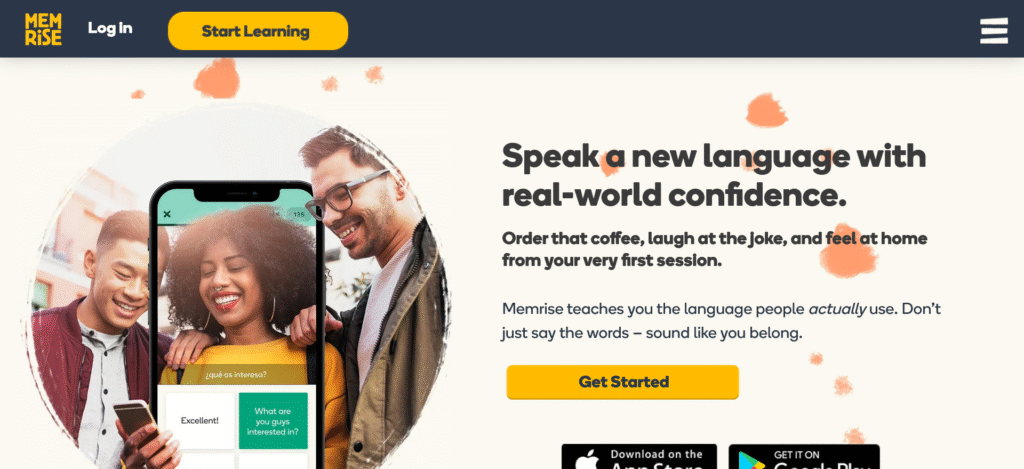
Memrise is a dynamic language learning app designed for learners who want to sound natural when they speak. Founded in 2010, Memrise takes a real-world approach to language learning by combining authentic videos of native speakers with AI-powered learning tools.
The app is known for helping users learn how people actually talk, not just textbook phrases. Its content feels more conversational and culturally rich than most Duolingo competitors, making it ideal for travellers, global entrepreneurs, and anyone aiming for practical communication skills.
Key Features
- Real-Life Video Clips: Features short clips of native speakers using language in everyday contexts.
- Spaced Repetition System (SRS): Uses memory science to help words stick long-term.
- AI-Powered Learning Assistant: Adapts lessons to individual progress and learning style.
- Pronunciation Practice: Lets you record your voice and compare it to native speakers.
- Community-Created Courses: Offers thousands of user-generated courses across diverse topics.
- Offline Mode: Download lessons for learning on the go without internet access.
Pricing
Memrise offers both free and premium plans. The Free Plan includes basic access to video lessons and vocabulary training.
The Pro Plan unlocks full access to all features and languages, priced at around $22.99/month, $89.99/year, or a Lifetime Plan for about $249.98.
The subscription includes all premium features such as AI review sessions, offline learning, and immersive videos.
Platform availability
Memrise is available on iOS, Android, and web browsers, syncing progress across all devices. The mobile app is particularly interactive, making it easy to learn during commutes or short breaks.
Pros
- Real-world videos make learning engaging and culturally authentic.
- Strong focus on listening and speaking comprehension.
- Adaptive AI creates a personalised learning experience.
- Offers thousands of courses, including niche and community-made ones.
Cons
- Limited grammar explanation compared to apps like Babbel.
- The free version has restricted access to premium content.
- The interface can feel busy for first-time users.
While Duolingo focuses on repetition and gamification, Memrise stands out for its authentic immersion. It bridges the gap between theory and real-world application by exposing learners to native accents, slang, and everyday conversations.
In short, Duolingo helps you memorise words while Memrise helps you use them naturally.
See Also: Top 12 Etsy Alternatives for Handmade and Vintage Sellers
4. Busuu
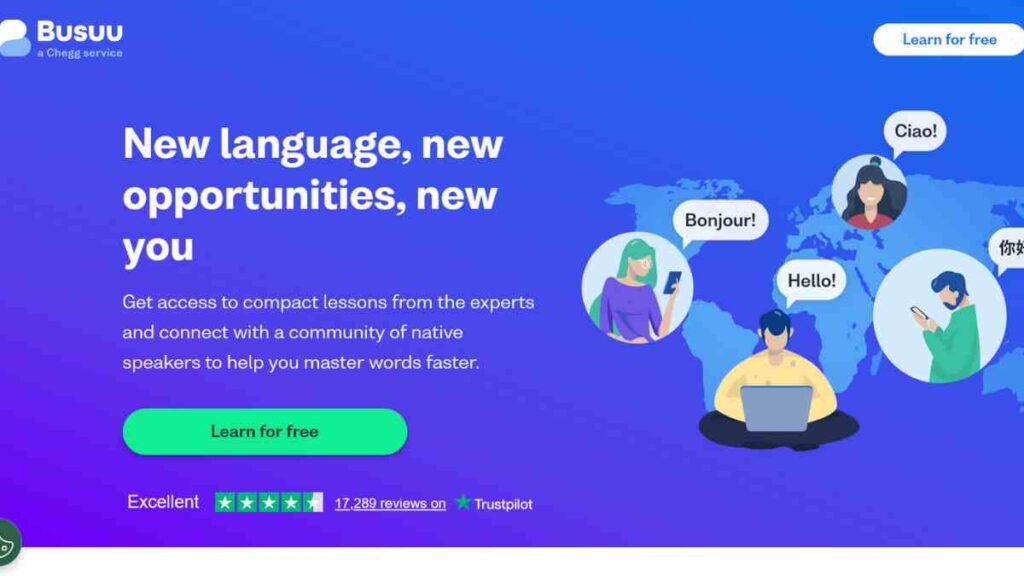
Busuu is one of the most well-rounded language learning platforms, combining structured lessons with social interaction.
Founded in 2008, it offers a blend of AI-personalised study plans and community-based learning where users can practise directly with native speakers.
Unlike many self-paced language learning apps, Busuu encourages real conversation and feedback, making it perfect for learners who want both structure and connection.
Key Features
- Interactive Lessons: Courses follow the CEFR framework (A1–C1) to help users track real progress.
- Native Speaker Feedback: Users can write or speak exercises and receive corrections from fluent speakers.
- AI Study Plans: Personalised daily goals based on learning time and fluency targets.
- Offline Mode: Download lessons and learn without internet access.
- Speech Recognition: Helps improve pronunciation with real-time feedback.
- Community Learning: Connect with over 120 million users for peer support and practice.
Pricing
Busuu uses a freemium model with premium upgrades for advanced features. The Free Plan includes limited access to lessons and vocabulary practice.
The Premium Plan, which unlocks grammar lessons, offline mode, and AI feedback, costs $12.99 per month, the 6-month plan costs $55.99, while the 12-month plan costs $72.99.
Platform availability
Busuu is available on iOS, Android, and web browsers. Lessons sync across devices, making it easy to switch between mobile and desktop. The mobile app is sleek, intuitive, and ideal for short study sessions.
Pros
- Combines AI-driven learning with real human feedback.
- Structured lessons that align with recognised language standards.
- Great for improving writing and speaking through real interactions.
- Certificates are available through the McGraw-Hill Education partnership.
Cons
- Limited free content compared to competitors.
- Fewer interactive games or playful elements than Duolingo.
- Feedback quality can vary depending on native speaker participation.
While Duolingo relies heavily on gamification, Busuu delivers a more interactive and socially driven experience. It is ideal for learners who want authentic practice and measurable progress rather than casual daily drills.
In essence, Duolingo teaches you to recall words; Busuu helps you use them confidently in conversation.
See Also: 15 Best Docker Alternatives for Containers, Virtual Machines, and Dev Workflows
5. Mango Languages
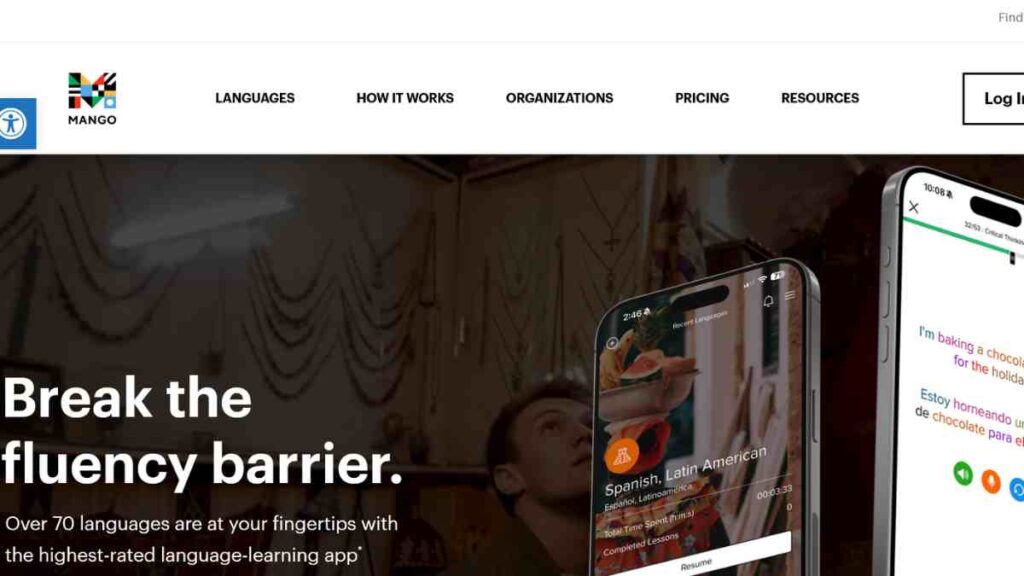
Mango Languages is an innovative language learning app designed to help users communicate naturally and confidently in real-world situations.
Founded in 2007, it is particularly popular among schools, libraries, and businesses for its structured, conversation-driven approach.
The platform goes beyond vocabulary drills, teaching cultural nuances and conversational context, which makes it a strong choice for professionals, global entrepreneurs, and travellers who need language skills for practical communication.
Key Features
- Conversational Focus: Lessons are built around real-life dialogues and cultural context.
- Grammar and Culture Integration: Explains the “why” behind grammar rules and idioms.
- Voice Comparison Tool: It lets learners compare their pronunciation to native speakers.
- Personalised Review System: Reinforces learning through spaced repetition.
- Offline Access: Downloadable lessons for learning on the go.
- Multi-User Accounts: Available through libraries, schools, and corporate subscriptions.
Pricing
Mango Languages offers a free trial for new users, after which learners can subscribe to its premium plans.
The Single-Language Plan costs $11.99/month, while the All-Languages Plan, which includes access to over 70 languages, costs $19.99/month.
Institutional access (for schools, libraries, and businesses) is available through custom pricing packages, often subsidised or free via local libraries.
Platform availability
The platform is available on iOS, Android, and desktop browsers, with lessons syncing seamlessly across all devices. It is optimised for both individual and institutional learning environments, making it one of the most versatile language learning platforms available.
Pros
- Strong emphasis on conversation and cultural understanding.
- Clear and structured lesson progression.
- Affordable pricing for individuals and free access via many libraries.
- Great for business or travel-related language goals.
Cons
- Limited gamification or entertainment elements.
- Smaller community compared to Duolingo competitors like Busuu or HelloTalk.
- Not ideal for advanced learners seeking complex grammar or fluency practice.
While Duolingo focuses on bite-sized gamified learning, Mango Languages provides a more practical, conversational experience.
It is less playful but far more context-rich, helping learners understand not just how to speak, but why phrases are used a certain way. In short, Duolingo teaches the basics while Mango Languages helps you speak like a local.
See Also: Top 15 WordPress Alternatives for Fast, Secure Websites

6. LanguaTalk
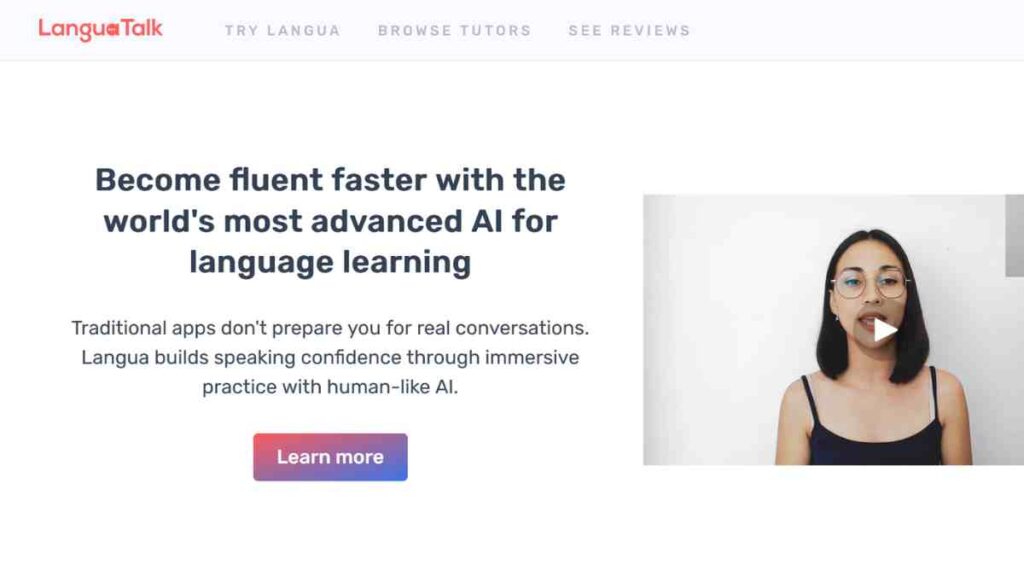
LanguaTalk is a premium online language tutoring platform that connects learners directly with certified tutors for one-on-one video lessons.
Founded in 2020, it has quickly gained traction as one of the best Duolingo alternatives with live classes, offering real human interaction instead of automated, gamified learning.
Each tutor tailors lessons to the learner’s goals, whether that is business communication, exam preparation, or conversational fluency.
Key Features
- 1:1 Live Tutoring: Learn directly with native-speaking tutors via personalised video sessions.
- Customised Lesson Plans: Tutors design lessons around your goals and proficiency level.
- Free Trial Lesson: Try a 30-minute session before committing to a tutor.
- Flexible Scheduling: Book sessions anytime to fit your lifestyle.
- Tutor Matching System: Filter by language, experience, price, and teaching style.
- Video and Audio Materials: Access lesson recordings and resources for revision.
Pricing
LanguaTalk’s pricing depends on the tutor and language. Rates typically range from $15 to $40 per 45-minute session, depending on experience and demand.
There are no subscription fees or commitments; learners pay per session, offering full flexibility. Each tutor also provides a free introductory session, making it easy to find the right match before investing.
Platform availability
LanguaTalk is web-based and optimised for both desktop and mobile browsers. Lessons are delivered through a built-in video platform similar to Zoom or Google Meet, without requiring external software.
Pros
- Personalised, human-led learning experience.
- Flexible pay-per-lesson model with no long-term commitment.
- Ideal for learners focused on fluency, pronunciation, and real conversation.
- Tutors available in 80+ languages, including less common ones.
Cons
- More expensive than most self-paced language learning apps.
- Requires consistent scheduling and active participation.
- No gamification or automated progress tracking like Duolingo.
Unlike Duolingo’s automated exercises, LanguaTalk delivers live, human interaction, the kind of immersive learning that builds real conversational confidence.
It is a step up for serious learners who want personal guidance instead of app-driven repetition. In short, if Duolingo is the warm-up, LanguaTalk is the real conversation practice that follows.
7. Preply
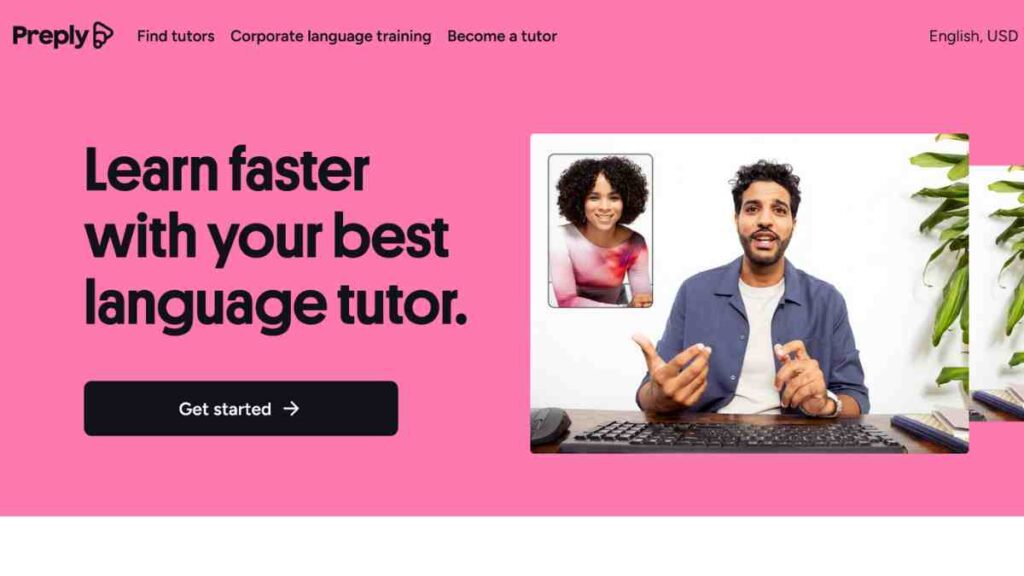
Preply is one of the leading online language tutoring platforms, offering a global marketplace where learners can connect with qualified tutors for live, one-on-one lessons.
Founded in 2012, Preply caters to learners of all levels, from beginners to professionals, and focuses on real conversational fluency.
Its flexibility, tutor diversity, and personalised lesson structure make it a strong Duolingo alternative for those who prefer guided, human-led learning over automated exercises.
Key Features
- 1:1 Live Tutoring: Learn directly from experienced tutors in over 50 languages.
- Personalised Curriculum: Lessons tailored to your goals, such as business communication or travel.
- Flexible Scheduling: Book sessions at your convenience and adjust them anytime.
- Trial Lessons: Try a discounted first session before committing to a tutor.
- Progress Tracking: Built-in dashboard to monitor improvement over time.
- Certified Teachers and Community Tutors: Choose between professional educators or native speakers for casual conversation.
Pricing
Preply uses a flexible pricing model based on the tutor’s experience, language, and location. Rates typically range between $10 and $40 per hour, with trial lessons offered at a lower rate.
Instead of a fixed subscription, Preply uses a pay-as-you-go system, allowing learners to purchase lesson packages (5, 10, or 20 hours) that can be used with the same tutor over time.
Platform availability
Preply operates through its web platform and mobile app (available on iOS and Android). Lessons take place via Preply’s integrated video classroom, meaning there is no need for additional software.
The interface is clean, intuitive, and designed to help learners focus solely on communication.
Pros
- Access to thousands of tutors across dozens of languages.
- Highly flexible scheduling and pricing options.
- Focused on practical conversation and real-world usage.
- Allows learners to choose tutors based on budget and teaching style.
Cons
- The quality of experience can vary depending on the tutor.
- No free version beyond discounted trial lessons.
- Less structured than curriculum-based language learning apps like Babbel or Rosetta Stone.
Where Duolingo offers gamified repetition, Preply delivers personal, goal-driven learning through live human interaction.
It is perfect for learners who want to improve pronunciation, confidence, and conversational fluency, areas where Duolingo’s automated exercises often fall short.
Simply put, Duolingo teaches you what to say, but Preply teaches you how to say it naturally.
8. HelloTalk
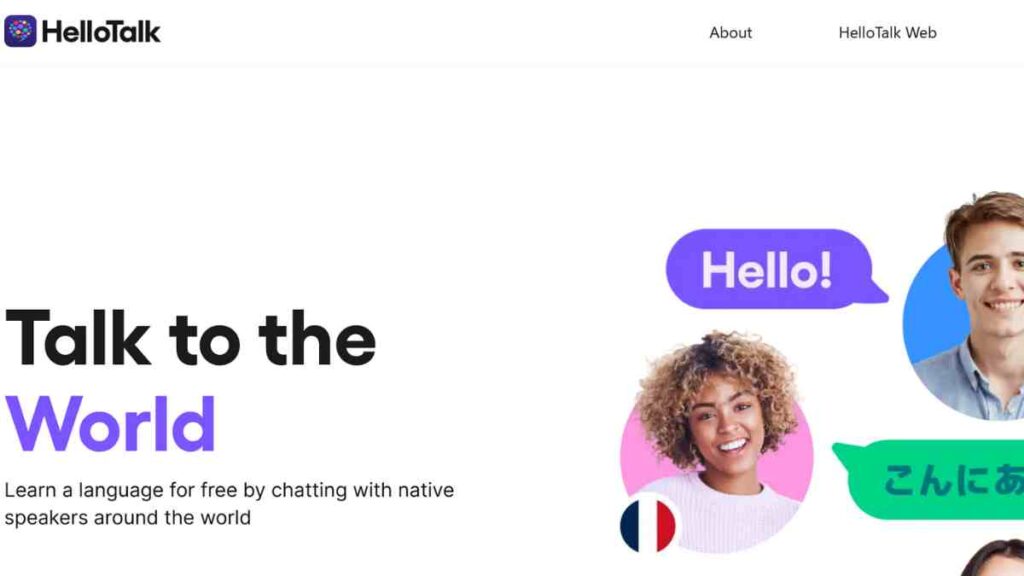
HelloTalk is a unique language learning app that turns social interaction into a learning experience. Launched in 2012, it connects learners with native speakers from around the world for text, voice, and video exchanges.
Instead of formal lessons, HelloTalk focuses on authentic communication, helping users practise grammar, pronunciation, and slang in real time. It is ideal for anyone who believes that the best way to learn a language is to speak it every day.
Key Features
- Native Speaker Chat: Connects you instantly with native speakers for text, voice, and video chats.
- Language Exchange System: Learn your target language while helping others learn yours.
- Voice and Translation Tools: Translate messages, correct grammar, and record voice notes.
- Moments Feed: A social feed where users post updates, ask questions, and share culture.
- AI Grammar Correction: Automatically identifies and fixes mistakes in real-time.
- Club Communities: Join topic-based language groups for collective practice.
Pricing
HelloTalk offers a Free Plan that gives access to its core communication features with ads and usage limits. The HelloTalk VIP Plan starts at around $12.99/month or $79.99/year, offering unlimited translations, ad-free chatting, and enhanced learning tools.
Platform availability
The app is available on iOS and Android, with full cross-device sync. Its intuitive design feels more like a social media platform than a classroom, making language learning effortless and engaging.
Pros
- Real-time interaction with native speakers from around the world.
- Great for improving conversational fluency and cultural understanding.
- Affordable premium options and highly engaging social features.
- Encourages natural, spontaneous communication rather than rote memorisation.
Cons
- Limited structured lessons or grammar instruction.
- The quality of exchanges depends on the responsiveness of other users.
- Occasional distractions from social or non-learning interactions.
While Duolingo uses gamified lessons to build vocabulary, HelloTalk fosters real human communication. It is a social-first alternative, where learning happens through daily conversation, not repetitive drills.
Duolingo is great for beginners, building a foundation. HelloTalk is where that foundation turns into fluency through authentic interaction.
9. Pimsleur

Pimsleur is a long-standing and respected language learning platform that focuses on listening and speaking through an audio-based approach.
Developed by linguist Dr Paul Pimsleur in the 1960s, the method has evolved into one of the most effective self-paced tools for mastering pronunciation and conversational fluency.
Unlike text-heavy or gamified apps, Pimsleur trains your ear and tongue, making it perfect for busy professionals, commuters, and learners who prefer to learn hands-free.
Key Features
- Audio-First Lessons: Focuses on speaking and listening comprehension, not memorisation.
- Gradual Interval Recall: Scientifically structured repetition to strengthen memory retention.
- Hands-Free Learning: Lessons can be played while driving, walking, or multitasking.
- Cultural Insights: It integrates real-life scenarios and etiquette into lessons.
- Reading Lessons: It includes scripts and reading practice once basic speaking skills are developed.
- Voice Coach Tool: It uses AI to assess pronunciation accuracy in real time.
Pricing
Pimsleur offers a 7-day free trial, after which users can subscribe to the premium plans. The Premium Plan starts at around $150.
Platform availability
Available on iOS, Android, and desktop, Pimsleur syncs progress across all devices. Its app is optimised for audio playback, enabling seamless learning even offline, a perfect fit for travellers and multitaskers.
Pros
- Proven, research-backed teaching method focused on speaking and listening.
- Ideal for auditory learners and those who want hands-free study.
- Excellent for mastering pronunciation and real conversational phrases.
- Covers over 50 languages, including less common ones.
Cons
- Minimal visual learning aids or interactive exercises.
- Less appealing to users who enjoy gamification.
- Pricier than most Duolingo competitors, especially for multi-language learning.
While Duolingo builds vocabulary through gamified repetition, Pimsleur takes a more immersive, audio-driven approach that mirrors real-world communication.
It is not flashy, but it is scientifically proven to deliver results. If Duolingo teaches you words, Pimsleur teaches you to speak them naturally and confidently.
10. Lingoda
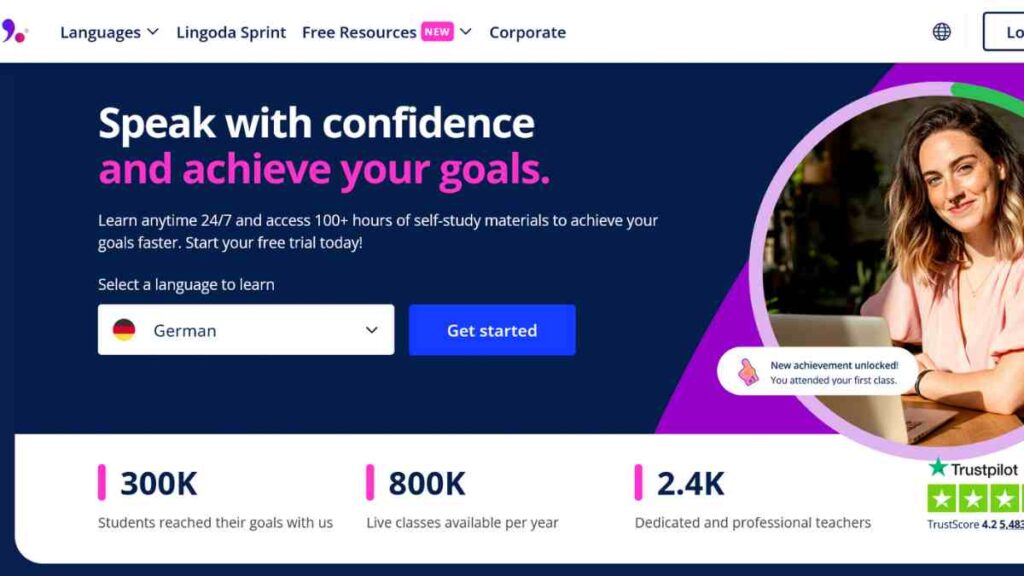
Lingoda is a professional online language tutoring platform that offers structured live classes taught by certified teachers.
Founded in Germany in 2013, it focuses on helping learners gain real fluency through small-group or one-on-one video lessons. Unlike gamified apps, Lingoda follows a curriculum aligned with the Common European Framework of Reference for Languages (CEFR), giving users a classroom-quality experience from home.
It is popular among business professionals and expatriates who need practical, career-oriented language training.
Key Features
- Live Group and Private Classes: Lessons are conducted by qualified native-level teachers.
- Structured Curriculum: CEFR-aligned lessons that progress logically from A1 to C1.
- Flexible Scheduling: Classes available 24/7 across time zones.
- Small Class Sizes: Usually 3–5 students for personalised attention.
- Course Certificates: Official certificates after completing each level.
- Language Sprint Programmes: Intensive learning challenges offering cashback rewards for attendance.
Pricing
Lingoda operates on a subscription model, with pricing based on the number of monthly classes. Plans typically start at $159.99/month for 4 classes, $319.99/month for 12 classes, and up to $799.99/month for 48 classes for private one-on-one classes.
Platforms
Lingoda is available via desktop browsers and mobile apps (iOS and Android). Classes are conducted through Zoom, making it easy to attend from anywhere. The interface is clean and professional, with downloadable materials provided for each lesson.
Pros
- Real-time interaction with certified teachers.
- Structured, measurable progress with CEFR alignment.
- Highly flexible scheduling with round-the-clock class availability.
- Certificates recognised by employers and educational institutions.
Cons
- More expensive than self-paced language learning apps.
- Requires time commitment for best results.
- No free version beyond limited trials.
Where Duolingo offers convenience and gamified self-study, Lingoda provides structured, live learning with professional teachers.
It is the closest thing to a traditional classroom, ideal for learners who crave accountability, live feedback, and tangible progress. If Duolingo is about daily habit-building, Lingoda is about turning that habit into genuine fluency

How to Choose the Right Duolingo Alternative
With so many Duolingo alternatives available, choosing the right one depends on your learning goals, schedule, and preferred style.
Some people thrive in structured, grammar-focused environments, while others learn best through conversation, immersion, or AI-powered language learning tools. The best language learning app for you is not necessarily the most popular, but the one that fits seamlessly into your lifestyle and keeps you motivated to stay consistent.
Here is a quick comparison to help you decide which platform best matches your goals:
| Learning Goal | Best Suited Platform(s) | Why It is a Good Fit |
|---|---|---|
| Learn through structure and grammar | Babbel, Rosetta Stone | Offers guided lessons, grammar explanations, and real-world examples for academic-style learning. |
| Develop conversational fluency | Preply, LanguaTalk, HelloTalk, Lingoda | Focuses on speaking and real-time interaction with native speakers or tutors. |
| Learn on the go (audio-based learning) | Pimsleur, Mango Languages | Ideal for multitaskers. Lessons focus on listening and pronunciation, no screen needed. |
| Build vocabulary through gamified learning | Memrise, Duolingo | Uses repetition, video clips, and game-like exercises to improve retention and motivation. |
| Get real-time feedback from experts | Busuu, Lingoda, LanguaTalk | Combines AI tools and human tutors to evaluate your progress accurately. |
| Budget-friendly or free learning | Duolingo, HelloTalk, Memrise (Free) | Great for casual learners looking for affordable ways to practise daily. |
| AI-enhanced, tech-forward learning | Duolingo Max, Memrise, | Integrates AI, augmented reality, and adaptive algorithms for personalised learning. |
| Cultural immersion and context | Mango Languages, HelloTalk, Busuu | Focuses on culture, idioms, and local expressions for deeper understanding. |
Conclusion
Choosing the right Duolingo alternative comes down to what drives your learning. Is it structure, conversation, or flexibility? Each platform offers something unique, whether it is Rosetta Stone’s discipline, Babbel’s structure, or HelloTalk’s real-world connection.
The best language learning app is the one you will actually use consistently. So, explore, experiment, and find the tool that makes learning a new language both enjoyable and sustainable.
We want to see you succeed, and that’s why we provide valuable business resources to help you every step of the way.
- Join over 23,000 entrepreneurs by signing up for our newsletter and receiving valuable business insights.
- Register your business today with Entrepreneurs.ng’s Business Registration Services.
- Tell Your Brand Story on Entrepreneurs.ng, let’s showcase your brand to our global audience.
- Need help with your marketing strategy? Get a Comprehensive Marketing and Sales Plan here.
- Sign up for our Entrepreneurs Success Blueprint Programme to learn how to start and scale your business in just 30 days.
- Book our one-on-one consulting and speak to an expert about structuring and growing your business.
- Visit our shop for business plan templates and other valuable resources to guide you.
- Get our Employee-Employer Super Bundle NDA templates to legally protect your business and workforce.
- Advertise your business to over a million entrepreneurs through our different advertising packages.

Frequently Asked Questions (FAQs)
What is the best alternative to Duolingo for serious learners?
For learners seeking structure and long-term fluency, Babbel and Rosetta Stone are top choices. Both offer well-organised lessons, in-depth grammar instruction, and progressive learning paths, ideal for those who want more than just vocabulary drills.
Which Duolingo alternative is best for practising with native speakers?
HelloTalk, Preply, and LanguaTalk stand out for real-time communication. They connect you directly with native speakers or certified tutors, making them excellent for improving pronunciation, fluency, and cultural understanding.
Are there any free Duolingo alternatives?
Yes. Memrise (Free Plan), HelloTalk, and Mango Languages (through public libraries) offer free access to quality lessons. While they have optional paid upgrades, their free versions are generous enough for casual learners.
Which language learning app is best for business professionals?
Lingoda and Pimsleur are excellent for professionals. Lingoda provides live, structured classes with certified teachers, while Pimsleur’s audio lessons help improve business communication on the go.
What Duolingo alternative is best for self-paced learning?
If you prefer to learn independently, Pimsleur and Memrise are great options. They let you progress at your own speed, using scientifically backed repetition and practical content.
Do any Duolingo alternatives offer live classes?
Yes, LanguaTalk, Preply, and Lingoda all offer live video classes with professional tutors. These are ideal for learners who need accountability, structured guidance, and interactive speaking practice.
Which app is best for learning pronunciation?
Rosetta Stone and Pimsleur are highly rated for pronunciation training. Rosetta Stone’s TruAccent technology gives instant feedback, while Pimsleur’s audio-based system helps you internalise correct speech patterns naturally.
Are AI-powered language learning tools better than traditional apps?
AI-powered tools like Duolingo Max, Memrise, and Mondly offer adaptive lessons that personalise the experience. They are excellent for efficiency, but combining them with human-led platforms like Preply or Lingoda gives the best of both worlds.