

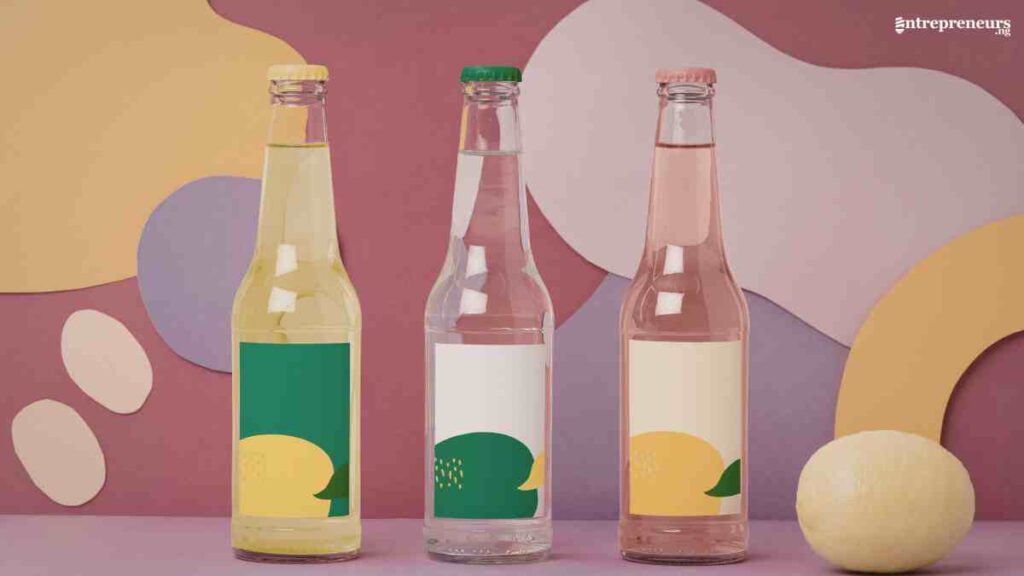
Starting a non alcoholic beverage business is no longer a niche play; it is a fast-growing opportunity driven by health-conscious consumers and changing drinking habits worldwide.
According to Mordor Intelligence, the global non-alcoholic beverages market is projected to grow from $1.22 trillion to $1.29 trillion in 2026, highlighting strong demand for new drink brands that solve real consumer needs.
This guide walks you through how to start a non alcoholic beverage business the right way, from testing profitable ideas in a small kitchen to scaling with a co-packer.
Key Takeaways
- Success in a non alcoholic beverage business starts with solving a real consumer need, not just creating another drink.
- Profitability depends on tight cost control, smart pricing, and choosing the right production model from day one.
- Strong branding, regulatory compliance, and a clear beverage business plan matter as much as the product itself.
- Sustainable growth comes from nailing distribution early and scaling only when demand is proven.

Understanding the Non Alcoholic Beverage Industry
Before investing money, time, or energy into a non alcoholic beverage business, it is important to understand what actually qualifies as “non-alcoholic”, how the market is evolving, and why this industry can be both rewarding and unforgiving.
What Counts as a Non Alcoholic Beverage?
At its core, a non-alcoholic beverage is any drink formulated without intoxicating levels of alcohol. However, the definition goes beyond soft drinks and bottled water.
Key Categories of Non Alcoholic Beverages
| Category | Description | Examples |
|---|---|---|
| Soft Drinks | Carbonated or flavoured drinks, often sweetened | Colas, flavoured sodas |
| Juices & Juice Drinks | Fruit- or vegetable-based beverages | Orange juice, smoothies |
| Functional Beverages | Drinks with added health benefits | Probiotic drinks, vitamin water |
| Ready-to-Drink Tea & Coffee | Pre-packaged tea or coffee beverages | Iced tea, cold brew coffee |
| Energy Drinks | Beverages designed to boost energy | Caffeinated or natural energy drinks |
| Non-Alcoholic Beer & Spirits | Alcohol-free alternatives | Alcohol-free beer, mocktail bases |
| Dairy & Plant-Based Drinks | Milk and milk alternatives | Almond milk, oat milk |
These categories form the foundation for most non alcoholic beverage business ideas, with functional and plant-based drinks currently seeing the fastest growth.
Regulatory Definition of “Non-Alcoholic”
Although the term non-alcoholic appears straightforward, its legal definition varies by market.
In many countries, beverages labelled as non-alcoholic may contain up to 0.5% alcohol by volume (ABV), often to account for trace alcohol created during fermentation.
In contrast, some regions only allow drinks with 0.0% ABV to be marketed as alcohol-free, especially where health and consumer protection rules are stricter.
Beyond alcohol limits, non-alcoholic beverages must comply with food safety standards, approved ingredient lists, and detailed labelling and nutritional disclosure requirements.
For anyone starting a non alcoholic beverage business, understanding beverage business regulations early is critical, as compliance directly affects product formulation, packaging, marketing claims, and whether distributors and retailers will agree to stock your drink.
Market Size, Growth & Consumer Trends
The non alcoholic beverage industry is expanding rapidly as consumer preferences shift away from sugary drinks and alcohol towards healthier, purpose-driven alternatives.
Globally, demand is being fuelled by a stronger focus on wellness, with buyers actively seeking beverages that offer functional benefits such as hydration, energy, digestion, and immunity support rather than empty calories.
At the same time, younger consumers, particularly Gen Z, are redefining drinking habits. They consume less alcohol than previous generations, experiment more with new flavours, and are more willing to support emerging brands that align with their values.
Health awareness, functional demand, and changing consumption behaviour are driving sustained growth across multiple non-alcoholic beverage categories worldwide.
Why the Non Alcoholic Beverage Business Is Attractive and Risky
The non alcoholic beverage industry offers significant upside, but it leaves little room for mistakes. The same factors that make it appealing can also expose founders to serious operational and financial pressure.
| What Attracts Entrepreneurs | The Hidden Risk Behind It |
|---|---|
| High volume potential from daily consumption | Low margins once production, logistics, and retailer markups are applied |
| Repeat purchases driven by habitual drinking | Cash flow pressure due to delayed retailer payments |
| Strong brand loyalty when trust is established | High competition on crowded retail shelves |
| Scalable distribution across retail, online, and hospitality | Distribution barriers that make listings difficult to secure |
| Mass-market appeal across age groups | Regulatory delays that can stall launches and increase costs |
A successful drink brand can scale quickly once distribution is secured.
However, many founders fail not because their product is poor, but because they underestimate the costs, timelines, and operational complexity required to survive long enough to win shelf space and consumer loyalty.

How to Start a Non Alcoholic Beverage Business in 12 Simple Steps
Starting a non alcoholic beverage business does not have to be overwhelming.
When broken down into clear, practical steps, the process becomes far more manageable and easier to execute without costly mistakes.
Below is a simple, end-to-end roadmap you can follow from idea to launch.
| Step | What You Do |
|---|---|
| 1 | Identify a clear beverage idea and target market |
| 2 | Research the market and validate demand |
| 3 | Define your unique value proposition (USP) |
| 4 | Choose your business model (small-scale or manufacturing) |
| 5 | Create a solid beverage business plan |
| 6 | Register your business legally |
| 7 | Understand beverage business regulations |
| 8 | Develop and test your product formulation |
| 9 | Decide on production and sourcing |
| 10 | Build your brand and packaging |
| 11 | Set pricing and prepare for distribution |
| 12 | Launch, market, and refine based on feedback |
Below is a clear explanation of each step.
Step 1: Identify a Clear Beverage Idea and Target Market
Start with a specific problem you are solving. This could be sugar reduction, functional health benefits, convenience, or flavour innovation.
A strong idea is not “a drink everyone will like” but a drink one group will love.
Step 2: Research the Market and Validate Demand
Study competitors, pricing, ingredients, and packaging. Talk to potential customers, run small tastings, or test interest online. This step confirms whether your idea has real demand before you spend serious money.
Step 3: Define Your Unique Value Proposition (USP)
Your USP explains why your drink deserves shelf space. It could be functionality, ingredient quality, taste, price point, or brand story.
Without this, your product will struggle to stand out.
Step 4: Choose Your Business Model
Decide whether you will start small (home-based or pilot batches) or work with co-packers from the start. This choice affects costs, speed, compliance, and scalability.
Step 5: Create a Beverage Business Plan
Your business plan should cover market analysis, product details, production approach, pricing, distribution strategy, and financial projections. It is essential for clarity, funding, and long-term decision-making.
If you need help turning your idea into a clear, investor-ready plan, use our Business Plan Template to map your costs, pricing, and growth strategy with confidence.
Step 6: Register Your Business
Legally register your company in accordance with local laws. This typically includes choosing a business structure, registering a name, and opening a business bank account.
Our business registration service at Entrepreneurs.ng helps you set up legally and correctly from day one.
Step 7: Understand Beverage Business Regulations
Learn the food safety, ingredient approval, labelling, and licensing requirements in your target market. Regulatory compliance affects formulation, packaging, and whether retailers will stock your product.
Step 8: Develop and Test Your Product
Refine your recipe, test shelf life, and ensure consistent quality. This stage may involve working with food technologists or labs to meet safety and stability standards.
Step 9: Decide on Production and Sourcing
Choose where and how your drink will be produced. This includes sourcing ingredients, packaging materials, and selecting manufacturers or co-packers if you are scaling.
Step 10: Build Your Brand and Packaging
Create a strong brand identity, name, and packaging that complies with regulations and appeals to your target audience. Packaging is often the first reason a customer picks up a drink.
Step 11: Set Pricing and Prepare for Distribution
Price your product realistically, factoring in production costs, margins, and retailer markups. Plan how you will sell, whether through direct-to-consumer, retail, hospitality, or a mix.
Step 12: Launch, Market, and Refine
Launch with a clear marketing strategy, gather feedback, and adjust quickly. Early data helps you improve the product, messaging, and distribution before scaling.
If you want extra structure and support at this stage, our Entrepreneurs Success Blueprint Programme (ESBP) helps you move from launch to traction with clear systems, compliance guidance, and practical execution frameworks.
Choosing the Right Non Alcoholic Beverage Business Idea
Choosing the right idea is one of the most important decisions you will make when starting a non alcoholic beverage business.
The category you enter affects your startup costs, regulatory requirements, margins, distribution options, and how competitive your journey will be.
A good idea is not just popular but viable for you to execute.
Popular Non Alcoholic Beverage Business Ideas
The non alcoholic beverage industry spans multiple categories, each with its own opportunities and challenges.
| Category | What It Involves | Key Consideration |
|---|---|---|
| Functional drinks | Beverages with added health benefits | Requires credible ingredient claims |
| Juices & smoothies | Fruit- and vegetable-based drinks | Short shelf life and cold-chain needs |
| RTD tea & coffee | Ready-to-drink beverages | Strong branding and flavour differentiation |
| Energy drinks | Caffeinated or natural energy boosters | High competition and regulatory scrutiny |
| Non-alcoholic beer & spirits | Alcohol-free alternatives | Complex production and compliance |
| Children & family beverages | Low-sugar or nutritious drinks | Strict labelling and safety standards |
While functional drinks and RTD beverages are growing fastest, simpler categories such as juices or family-focused drinks can be easier to launch at a smaller scale.
How to Validate Your Beverage Idea
A good idea on paper means little without evidence of demand. Validation helps you avoid building a product nobody wants.
Market research allows you to understand what already exists, how products are priced, and where gaps may lie. Study competitors, retail shelves, and online reviews to identify unmet needs.
Consumer testing provides direct feedback. This could be informal tastings, surveys, or small pilot sales. Early reactions help you refine flavour, packaging, and positioning before committing significant capital.
Competitive analysis shows how crowded your chosen category is and what it takes to stand out. Pay attention to ingredient lists, brand messaging, and distribution channels used by successful players.
Validation does not need to be expensive, but it must be intentional.
Finding Your Unique Selling Proposition (USP)
Your USP explains why your drink deserves attention in a crowded market. Without it, your product becomes just another option on the shelf.
| USP Angle | How It Differentiates You |
|---|---|
| Ingredients | Cleaner labels, natural or locally sourced inputs |
| Health benefits | Functional outcomes consumers can understand |
| Price positioning | Affordable everyday option or premium niche |
| Branding angle | Story, values, or lifestyle connection |
The strongest beverage brands usually combine two or more of these elements rather than relying on one alone.
Choosing wisely at this stage reduces costs, simplifies compliance, and increases your chances of building a brand that can scale rather than stall.
How Profitable Is a Non Alcoholic Beverage Business?
Profitability in a non alcoholic beverage business depends on how well you understand your costs before you produce your first bottle.
Most founders underestimate both startup and ongoing expenses, which leads to pricing mistakes and cash-flow problems early on.
Complete Startup Cost Breakdown
This table reflects realistic early-stage costs for launching a compliant, retail-ready beverage brand using small-batch production or a co-packer.
| Startup Cost Item | Estimated Cost (USD) |
|---|---|
| Market research & validation | $1,000 – $3,000 |
| Product formulation & testing | $2,000 – $8,000 |
| Business registration & legal setup | $500 – $2,000 |
| Food safety licences & permits | $1,000 – $5,000 |
| Brand identity & packaging design | $2,000 – $7,000 |
| Packaging moulds & initial materials | $3,000 – $10,000 |
| Manufacturing setup / co-packer minimums | $8,000 – $30,000 |
| Quality control & compliance testing | $1,000 – $4,000 |
| Website & basic e-commerce setup | $1,000 – $4,000 |
| Launch marketing & sampling | $2,000 – $10,000 |
| Initial inventory & storage | $2,000 – $8,000 |
| Contingency (10–15%) | $3,000 – $10,000 |
Estimated Total Startup Cost: $26,500 – $101,000
This answers the core founder question: How much capital do you need to start a beverage company? For most serious launches, $40,000–$75,000 is a realistic planning range.
Ongoing Monthly Operating Costs
These are the expenses that determine whether your business survives long enough to become profitable.
| Ongoing Cost Item | Monthly Cost (USD) |
|---|---|
| Ingredients & raw materials | $2,000 – $8,000 |
| Manufacturing / co-packing | $3,000 – $12,000 |
| Packaging replenishment | $1,500 – $5,000 |
| Warehousing & storage | $500 – $2,500 |
| Logistics & distribution | $1,000 – $4,000 |
| Marketing & promotions | $1,500 – $6,000 |
| Staff & contractors | $2,000 – $8,000 |
| Compliance & quality checks | $300 – $1,000 |
| Software & admin | $200 – $800 |
Estimated Monthly Operating Cost: $13,000 – $47,000
Typical Profit Margins by Sales Channel
Margins vary dramatically depending on how you sell.
| Sales Channel | Gross Margin | Key Trade-Off |
|---|---|---|
| Direct-to-consumer (online) | 60–70% | High marketing costs |
| Wholesale | 35–50% | Lower margins, higher volume |
| Retail distribution | 20–40% | Scale-driven, cash-flow pressure |
Retail looks attractive on paper, but distributor fees and retailer markups compress margins quickly.
Breakeven Timeline: What Founders Should Expect
Most non alcoholic beverage businesses do not break even in the first 6–9 months.
A realistic breakeven timeline looks like this:
- Months 1–6: Heavy cash outflow (setup, inventory, launch)
- Months 7–12: Margins stabilise, repeat customers emerge
- Months 12–24: Breakeven becomes achievable with consistent sales and controlled costs
Founders who survive this window usually do so because:
- Pricing was set correctly from day one
- Production scaled gradually
- Cash flow was planned around slow retailer payments
The Profitability Reality Check
A non alcoholic beverage business is profitable only when unit economics work at a small scale. Growth does not fix bad margins, it magnifies them.
The brands that succeed financially treat cost control, pricing discipline, and cash flow management as seriously as flavour and branding.

Legal, Licensing & Regulatory Requirements For a Non Alcoholic Beverage Business
Launching a non alcoholic beverage business without understanding the legal and regulatory landscape is one of the fastest ways to waste time and money.
While exact requirements vary by country, the underlying principle is the same everywhere: regulators want to ensure your drink is safe to consume, accurately labelled, and legally produced before it reaches the public.
Before you explain or apply for anything, it helps to see the full compliance picture at a glance.
Key Licences and Regulatory Approvals at a Glance
| Licence or Approval | What It Covers | Where You Get It |
|---|---|---|
| Business registration | Legal existence of your company | National business registry or corporate affairs authority |
| Food business licence | Permission to produce or sell food and drinks | Local or national food control authority |
| Food safety certification | Hygiene and safety standards compliance | Health department or accredited food safety agency |
| Ingredient approval | Clearance for ingredients and additives | National food regulator |
| Product labelling approval | Accuracy of labels and nutrition facts | Food regulatory authority |
| Manufacturing permit | Approval for production facility | Local health or environmental authority |
| Import or export permit | Cross-border movement of beverages | Customs or trade authority |
Each of these approvals plays a specific role in protecting consumers and ensuring your beverage can legally enter the market.
Business Registration
Business registration is the foundation of compliance. It gives your beverage brand legal standing and allows you to open bank accounts, sign contracts, and apply for additional licences.
Without registration, regulators and distributors will not engage with you, no matter how good your product is.
Food Business Licence
A food business licence confirms that you are authorised to produce or sell consumable products.
Regulators use this licence to assess where your drink is made, how it is stored, and whether your operations meet minimum safety standards.
This approval is mandatory whether you manufacture in-house or outsource production.
Food Safety Certification
Food safety certification focuses on hygiene, handling, and contamination control. Authorities assess your production process, sanitation practices, and staff training to ensure your beverage is safe for consumption. ‘
For many retailers and distributors, this certification is not optional; it is a condition for listing your product.
Ingredient Approval
Every ingredient used in your drink must be permitted under local food laws.
This includes sweeteners, preservatives, flavourings, and functional additives.
Ingredients that are legal in one country may be restricted or banned in another, which is why this step becomes even more critical if you plan to sell internationally.
Product Labelling Approval
Labelling rules govern what you can say on your packaging and how information is presented.
Regulators check alcohol content, nutritional values, allergen warnings, ingredient lists, and health claims. Incorrect labelling can result in product recalls, fines, or outright bans from retail shelves.
Manufacturing Permit
If you produce your beverage yourself, you will need approval for the manufacturing facility.
Regulators assess the location, equipment, waste disposal, and production environment. Even when working with a co-packer, you are still responsible for ensuring the facility is licensed and compliant.
Import and Export Permits
If your beverage crosses borders, import and export permits become necessary.
These approvals ensure your product meets both the exporting and importing countries’ standards. Without them, shipments can be delayed, rejected, or destroyed at the border.
Beverage Product Development & Manufacturing
Product development is where most non alcoholic beverage businesses succeed or fail.
A great idea means nothing if the drink cannot be produced consistently, safely, and at a cost that allows you to make money.
This stage connects creativity with science, regulation, and commercial reality.
Developing Your Drink Formula
Creating a viable beverage formula goes far beyond mixing ingredients until it tastes good. Your drink must be safe, stable, scalable, and compliant from day one.
Working with food scientists or beverage technologists helps translate your concept into a formula that can be produced repeatedly without compromising flavour or safety.
They assist with balancing ingredients, controlling acidity, managing preservatives, and ensuring your drink meets regulatory standards.
For functional beverages, this step is especially important because health-related ingredients must remain effective throughout the product’s shelf life.
Ingredient sourcing is equally critical. Reliable suppliers ensure consistent taste, quality, and pricing as you scale.
Early-stage founders often focus only on flavour, but ingredient availability, minimum order quantities, and cost volatility all affect whether your formula is commercially viable long term.
In-House Production vs Co-Packers
Choosing how your drink will be produced is one of the most strategic decisions you will make.
| Production Model | Advantages | Trade-Offs |
|---|---|---|
| In-house production | Full control over formulation and quality | Higher setup costs and regulatory burden |
| Co-packers | Faster scale and regulatory compliance | Less control and higher minimum orders |
In-house production gives you flexibility and control, which can be useful during early experimentation. However, it requires investment in equipment, facility approvals, and staff training. It also places the full regulatory burden on you.
Co-packers, on the other hand, already operate licensed facilities and can produce at scale. While this reduces compliance stress and speeds up market entry, it usually involves higher minimum order quantities and less room for small adjustments once production begins.
Cost implications vary significantly. In-house production has higher upfront costs but potentially lower per-unit costs at scale, while co-packers reduce initial capital needs but charge more per unit, especially at low volumes.
Quality Control & Shelf Stability
Quality control ensures that every bottle or can tastes the same and is safe to consume. This includes monitoring ingredient consistency, production processes, and packaging integrity.
Shelf stability is just as important. Your beverage must remain safe, appealing, and effective throughout its intended shelf life.
This is influenced by formulation, packaging choice, storage conditions, and distribution methods. Products that fail shelf-life testing can be rejected by retailers or recalled after launch, both of which are costly.
Successful beverage brands invest early in testing, documentation, and process control. Doing so reduces waste, builds trust with distributors, and creates a product that can scale without constant reformulation.
How to Price Your Non Alcoholic Beverage Correctly
Pricing is where many non alcoholic beverage businesses quietly fail. Set your price too low and you struggle to survive; set it too high and you struggle to sell.
The right price balances your costs, your brand position, and what the market is genuinely willing to pay.
Cost-Plus vs Value-Based Pricing
| Pricing Model | How It Works | Best Used When | Key Limitation |
|---|---|---|---|
| Cost-plus pricing | Adds a fixed margin to total cost per unit | You want to avoid losses and keep pricing simple | Ignores customer perception and competitor pricing |
| Value-based pricing | Prices based on what customers believe the drink is worth | You offer functional benefits, premium ingredients, or lifestyle branding | Requires strong branding and clear differentiation |
In practice, most successful beverage brands combine both approaches.
They understand their true costs, then price within a market-acceptable range while reinforcing perceived value through branding, messaging, and consistent quality.
Retail Markups Explained
Retail pricing adds another layer of complexity. When you sell through distributors and retailers, each party takes a margin before the product reaches the customer.
As a general rule, retailers apply markups that can double or even triple your wholesale price. Distributors also take a cut for storage, logistics, and access to shelf space.
This means a drink that costs you $0.80 to produce may need to retail at $2.50–$3.50 to sustain everyone in the chain.
Founders who price without accounting for these markups often discover too late that their margins disappear the moment they enter retail.
Understanding the full pricing ladder early helps you avoid renegotiating or reformulating under pressure.
Pricing for Growth, Not Just Survival
Pricing decisions can quietly determine whether a beverage brand grows or stalls.
Most problems arise when founders drift too far in either direction. Too cheap to sustain the business or too expensive to earn repeat buyers.
| Pricing Mistake | What Happens | How to Avoid It |
|---|---|---|
| Underpricing | Brand feels low-value and margins disappear | Price to cover growth, marketing, and future costs |
| Overpricing | Trial slows and sales velocity drops | Align price with real customer willingness to pay |
| Copying competitors blindly | Misses your true cost and positioning | Use competitor pricing as context, not instruction |
| Premium pricing without execution | Customers reject the value proposition | Match price with packaging, quality, and consistency |
| Static pricing | Margins erode as costs change | Review and adjust pricing regularly |
The most sustainable non alcoholic beverage brands treat pricing as a strategic lever, not a one-off decision.
They test early, refine often, and ensure every price point supports long-term profitability rather than short-term excitement.

Distribution Channels for Non Alcoholic Beverages
Distribution is where a non alcoholic beverage business is truly made or broken.
You can have a great product and strong branding, but without the right channels, and the right timing, growth stalls quickly.
The key is choosing distribution paths that match your stage, margins, and cash flow capacity.
Distribution Channels at a Glance
| Channel | How It Works | Best For | Main Challenge |
|---|---|---|---|
| Direct-to-consumer (DTC) | Selling through your own website or social platforms | Early validation and higher margins | Customer acquisition costs |
| Retail stores & supermarkets | Selling via physical retail outlets | Scale and visibility | Low margins and slow payments |
| Distributors & wholesalers | Third parties handle retail access and logistics | Faster market reach | Less control and added fees |
| Hospitality (HoReCa) | Hotels, restaurants, cafés, bars | Brand credibility and trial | Inconsistent volume |
| Online marketplaces | Third-party e-commerce platforms | Wider reach with less setup | Platform fees and price pressure |
Direct-to-Consumer (DTC)
DTC is often the best starting point for new beverage brands. It allows you to sell directly to customers, collect feedback, control pricing, and keep higher margins.
While marketing costs can be high, DTC gives you valuable data and proof of demand before approaching retailers or distributors.
Retail Stores and Supermarkets
Retail offers visibility and volume, but it comes with trade-offs. Retailers expect consistent supply, competitive pricing, and compliance documentation.
They also apply significant markups and may pay 30–90 days after delivery. This channel works best once your operations, cash flow, and demand are stable.
Distributors and Wholesalers
Distributors act as middlemen between your brand and retailers. They already have relationships and logistics in place, which can speed up expansion.
However, they take a margin and often prioritise high-volume brands. You must prove that your product can move quickly off shelves.
Hospitality (Hotels, Restaurants, Cafés)
Hospitality channels are powerful for brand discovery. Customers try your drink in a trusted setting, which can drive later retail purchases.
However, volumes are often smaller and inconsistent, making this channel better for brand building than predictable revenue.
Online Marketplaces
Online marketplaces give you access to existing customer bases without building your own platform.
They are useful for reach and convenience, but fees, pricing rules, and competition can reduce profitability.
Brands that succeed here manage pricing carefully and treat marketplaces as part of a broader distribution mix.
Choosing the Right Distribution Strategy
Most successful non alcoholic beverage brands do not rely on one channel alone.
They start where risk is lowest, prove demand, then expand into more complex channels. Distribution should support your margins, not destroy them. The right sequence matters as much as the channels themselves.
Marketing & Launch Strategy for a Beverage Startup
A strong launch does not start on launch day.
In the non alcoholic beverage business, marketing is about building anticipation, proving demand, and creating repeat buyers long before you chase scale.
The most successful brands treat launch as a process, not an event.
Pre-Launch: Building Demand Before You Sell
Pre-launch marketing focuses on visibility and validation. At this stage, your goal is not mass awareness but targeted attention from the right audience.
This is when founders test messaging, positioning, and flavour concepts through small tastings, social media content, and early community engagement.
Email waitlists, sampling at local events, and partnerships with gyms, cafés, or wellness spaces help create early advocates.
Feedback gathered here often shapes final packaging, pricing, and even formulation before full production begins. A thoughtful pre-launch reduces risk by ensuring you are not launching blindly.
Launch: Turning Interest into Sales
Launch is where attention must convert into action. Whether you launch online, through hospitality partners, or in select retail locations, clarity matters more than hype.
Your messaging should clearly communicate what the drink is, who it is for, and why it matters. Sampling remains one of the most effective launch tools in the beverage industry because taste drives belief.
Digital marketing supports this by amplifying visibility through social media, short-form video, influencer collaborations, and paid ads targeted at early adopters.
At this stage, consistency is critical. Every touchpoint, from packaging to social posts, should reinforce the same promise.
Influencers, Sampling & Social Proof
Beverage brands grow faster when people see others enjoying the product. Influencers, especially micro-influencers with trusted audiences, help establish credibility without the cost of mass advertising.
Sampling creates immediate trust. When consumers taste a drink and like it, resistance drops. Combining sampling with social proof, reviews, testimonials, user-generated content, accelerates trial and repeat purchases.
The key is authenticity. Forced endorsements rarely convert.
Post-Launch: Measuring, Learning, and Refining
After launch, the real work begins. Sales data, customer feedback, and engagement metrics reveal what is working and what is not.
This is the stage where founders refine pricing, adjust messaging, improve distribution focus, and optimise marketing spend.
Brands that scale successfully do not rush expansion. They stabilise demand, improve margins, and build systems before increasing volume.
The Marketing Reality Check
Marketing does not fix a weak product, but it can amplify a strong one.
In the beverage industry, sustained growth comes from a balanced approach: clear positioning, consistent execution, and a willingness to adapt quickly based on real-world feedback.
A smart launch sets the tone. A disciplined marketing strategy sustains the business.
Common Challenges in the Non Alcoholic Beverage Business and How to Overcome Them
Building a non alcoholic beverage business is rewarding, but it comes with challenges that many founders underestimate.
These obstacles rarely appear all at once; they surface at different stages and can stall growth if not addressed deliberately.
Understanding them early helps you plan smarter and respond faster.
| Challenge | Why It Happens | How to Overcome It |
|---|---|---|
| Low profit margins | High production, packaging, and retail markups | Tight cost control, realistic pricing, and margin-first planning |
| Cash flow pressure | Slow retailer payments and upfront production costs | Start with smaller runs and prioritise faster-paying channels |
| Crowded market | Too many similar products competing for attention | Clear positioning and a strong unique selling proposition |
| Regulatory delays | Complex food safety and labelling requirements | Build compliance into planning and work with experts early |
| Distribution barriers | Limited access to retailers and distributors | Prove demand through DTC and hospitality first |
| Inconsistent quality | Scaling production too quickly | Invest in quality control and standardised processes |
| Weak brand awareness | Limited marketing budgets | Focus on sampling, community building, and targeted digital marketing |
| Overexpansion | Chasing scale before stability | Grow in phases based on data, not excitement |
Most beverage businesses struggle not because the opportunity is flawed, but because execution is rushed.
Founders who anticipate these challenges and address them proactively build brands that last longer, scale more smoothly, and remain financially resilient.
Conclusion
Starting a non alcoholic beverage business is less about chasing trends and more about disciplined execution.
When you understand the market, control your costs, respect regulations, and build distribution step by step, you give your brand the best chance to grow sustainably and profitably.
We want to see you succeed, and that’s why we provide valuable business resources to help you every step of the way.
- Join over 23,000 entrepreneurs by signing up for our newsletter and receiving valuable business insights.
- Register your business today with Entrepreneurs.ng’s Business Registration Services.
- Tell Your Brand Story on Entrepreneurs.ng, let’s showcase your brand to our global audience.
- Need help with your marketing strategy? Get a Comprehensive Marketing and Sales Plan here.
- Sign up for our Entrepreneurs Success Blueprint Programme to learn how to start and scale your business in just 30 days.
- Book our one-on-one consulting and speak to an expert about structuring and growing your business.
- Visit our shop for business plan templates and other valuable resources to guide you.
- Get our Employee-Employer Super Bundle NDA templates to legally protect your business and workforce.
- Advertise your business to over a million entrepreneurs through our different advertising packages.

Frequently Asked Questions (FAQs)
What is a non alcoholic beverage business?
A non alcoholic beverage business produces and sells drinks that contain little to no alcohol, including juices, functional drinks, RTD tea and coffee, energy drinks, and alcohol-free alternatives.
How do I start a non alcoholic beverage business?
You start by validating a beverage idea, creating a beverage business plan, registering the business, meeting regulatory requirements, developing the product, and choosing the right distribution channels.
Is a non alcoholic beverage business profitable?
Yes, a non alcoholic beverage business can be profitable, but margins are often tight early on. Profitability improves with scale, efficient production, and strong distribution.
How much does it cost to start a beverage company?
Startup costs typically range from $5,000 for small pilot launches to $75,000 or more for retail-ready brands, depending on production model, packaging, and compliance needs.
How much capital do you need to start a beverage company?
You need enough capital to cover product development, initial production, marketing, and operating costs for several months before sales become consistent.
Do I need a beverage business plan?
Yes. A beverage business plan helps you understand costs, pricing, regulations, and distribution while also making it easier to raise funding or work with partners.
What are the most popular non alcoholic beverage business ideas?
Popular ideas include functional drinks, juices and smoothies, RTD tea and coffee, energy drinks, non-alcoholic beer and spirits, and children’s beverages.
What licences do I need to start a drink company?
Most regions require business registration, food safety certification, product labelling approval, and a food business licence before you can sell beverages legally.
What are the main beverage business regulations?
Regulations cover alcohol content limits, ingredient approvals, food safety standards, labelling rules, and nutritional disclosures, which vary by country.
Can I start a beverage manufacturing business from home?
In some markets, small-scale production is allowed, but strict food safety rules apply. Many founders eventually move to licensed facilities or co-packers.
Should I use a co-packer or manufacture in-house?
Co-packers reduce regulatory burden and allow faster scaling, while in-house production offers more control but higher setup and compliance costs.
How do I price my non alcoholic beverage?
Pricing should account for production costs, marketing expenses, retailer markups, and customer willingness to pay, often using a mix of cost-plus and value-based pricing.
How do I distribute beverages to retailers?
Retail distribution usually involves pitching to buyers directly or working with distributors who already have retailer relationships and logistics in place.
What is the best marketing strategy for launching a drink brand?
Effective strategies include pre-launch sampling, social media marketing, influencer partnerships, and targeted digital campaigns that encourage trial.
What are the biggest challenges in the non alcoholic beverage business?
Common challenges include low margins, cash flow pressure, regulatory delays, crowded shelves, and scaling too quickly without proven demand.


