

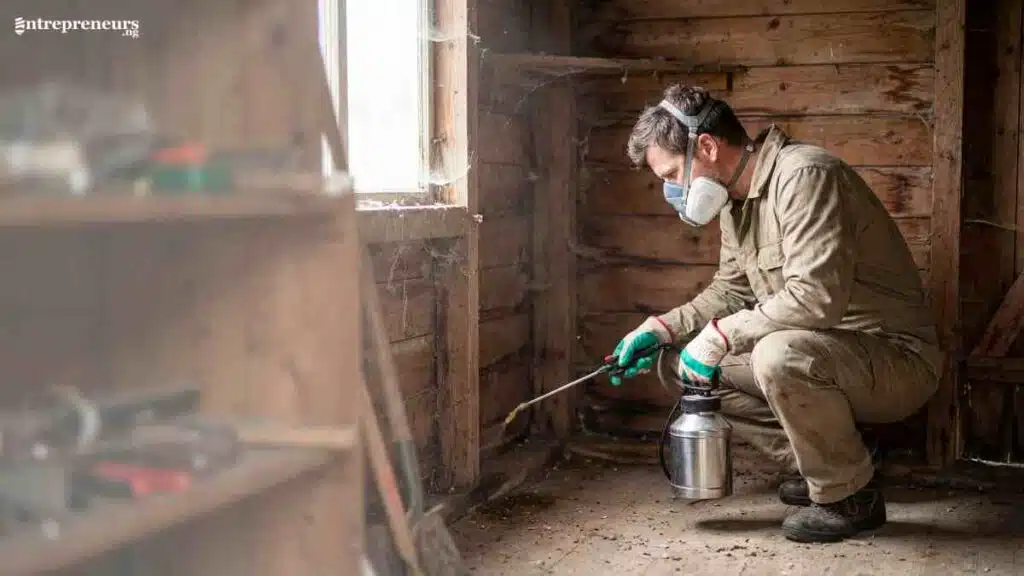
Starting a pest control business can be a practical entry into the home-services industry, especially as demand for pest management continues to rise worldwide.
In fact, the global pest control market was valued at about $22.5 billion in 2022 and is expected to reach $33.55 billion by 2032, reflecting steady industry growth.
This guide explores the steps, costs, and strategies needed to build a pest control business that is both sustainable and scalable.
Key Takeaways
- The pest control business offers strong growth potential due to rising global demand for pest management services.
- Starting a pest control business requires proper licensing, the right equipment, and a clear pest control business plan.
- Profitability depends on choosing the right services, pricing strategically, and securing recurring maintenance contracts.
- Effective pest control business marketing strategies, especially local SEO and referrals, are key to attracting steady customers.

What Is a Pest Control Business?
A pest control business provides professional services that eliminate, manage, and prevent pests that threaten homes, businesses, and public health.
These pests may include insects such as termites, ants, cockroaches, bed bugs, and mosquitoes, as well as rodents and other nuisance wildlife.
The main goal of a pest control company is not only to remove pests but also to prevent future infestations through inspection, treatment, and ongoing maintenance.
Most pest control businesses combine chemical treatments, physical traps, and modern integrated pest management (IPM) techniques to control pest populations safely and effectively.
Depending on their expertise and target market, pest control businesses may specialise in residential services, commercial pest management, wildlife removal, or eco-friendly pest solutions.
Types of Pest Control Businesses
| Type of Pest Control Business | Description | Typical Customers |
|---|---|---|
| Residential Pest Control | Provides pest removal and prevention services for houses and apartments, including termites, ants, bed bugs, and rodents. | Homeowners, landlords, property managers |
| Commercial Pest Control | Focuses on pest management for commercial facilities where hygiene and safety are critical. | Restaurants, hotels, offices, warehouses, hospitals |
| Termite Control Specialists | Specialises in termite inspection, treatment, and prevention systems to protect buildings from structural damage. | Homeowners, real estate companies, construction firms |
| Wildlife Removal Services | Handles larger pests and nuisance animals such as raccoons, bats, squirrels, and birds using humane removal methods. | Homeowners, farms, municipalities |
| Eco-Friendly Pest Control | Uses organic, non-toxic, or environmentally friendly pest treatment methods. | Environmentally conscious homeowners, schools, childcare centres |
| Agricultural Pest Control | Protects crops, livestock areas, and farmland from insects, rodents, and plant pests. | Farmers, agricultural businesses |
| Mosquito and Outdoor Pest Control | Focuses on outdoor pest treatment such as mosquitoes, ticks, and fleas. | Homeowners, resorts, parks, outdoor venues |
Understanding these different types of pest control businesses helps entrepreneurs identify which niche best suits their resources, expertise, and target market when launching a pest control company.
How to Start a Pest Control Business Step-by-Step
Starting a pest control business requires more than simply purchasing equipment and offering extermination services.
To build a sustainable company, entrepreneurs must follow a structured process that includes market research, licensing, proper equipment, and a solid pest control business plan.
Below is a simplified overview of the ten essential steps involved in a pest control business startup.
10 Steps to Start a Pest Control Business at a Glance
| Step | Action | What It Involves |
|---|---|---|
| Step 1 | Conduct Market Research | Analyse demand, competitors, pricing, and pest problems in your target location. |
| Step 2 | Choose Your Pest Control Niche | Decide whether to focus on residential, commercial, termite control, wildlife removal, or eco-friendly pest services. |
| Step 3 | Write a Pest Control Business Plan | Outline your services, target market, pricing strategy, startup costs, and growth plan. |
| Step 4 | Register Your Business | Choose a business structure and legally register your company with the appropriate authorities. |
| Step 5 | Obtain Licences and Certifications | Secure pest control operator licences and chemical handling certifications required in your region. |
| Step 6 | Purchase Equipment and Supplies | Buy sprayers, foggers, bait stations, protective gear, and approved pest control chemicals. |
| Step 7 | Get Business Insurance | Protect your company with liability insurance, workers’ compensation, and vehicle insurance. |
| Step 8 | Set Your Pricing Structure | Determine service pricing based on pest type, treatment complexity, and local market rates. |
| Step 9 | Develop Marketing Strategies | Use local SEO, online advertising, referrals, and partnerships to attract customers. |
| Step 10 | Launch and Build Your Customer Base | Start offering services, build recurring contracts, and deliver excellent customer service to grow your business. |
These steps provide a clear roadmap for anyone wondering how to start a pest control company, helping you move from idea to a fully operational pest control service.
Step 1: Conduct Market Research
Before launching your pest control business, the first step is to understand the market you want to serve.
Market research helps you determine whether there is enough demand for pest control services in your area, identify your competitors, and uncover opportunities to position your business effectively.
Without this step, even a well-funded pest control business startup can struggle to attract customers.
Research also helps you answer important questions such as: Is a pest control business profitable in your location? Who are your ideal customers? What services are competitors offering?
The answers will guide your pricing, service offerings, and pest control business marketing strategies.
Key Areas to Research
| Research Area | What to Analyse |
|---|---|
| Local Demand | Identify common pest problems in your region such as termites, rodents, mosquitoes, or bed bugs. |
| Target Customers | Determine whether you will serve homeowners, property managers, businesses, or farms. |
| Competitor Analysis | Study other pest control companies in your area and review their services, prices, and customer feedback. |
| Pricing Trends | Check the average cost of pest control treatments locally. |
| Regulatory Requirements | Research licensing, certification, and pesticide regulations in your country or region. |
Practical Ways to Conduct Market Research
You do not need expensive tools to gather useful insights. You can start with simple methods such as:
- Searching Google for local pest control companies
- Reading customer reviews to identify common pest complaints
- Checking community forums and neighbourhood groups
- Talking to property managers and homeowners
- Studying pest trends reported by public health agencies
The insights you gather in this stage will shape your pest control business plan, help you choose a profitable niche, and ensure you launch a service that people actually need.
And if you need guidance on validating your idea and building a solid strategy, our Entrepreneurs Success Blueprint Program (ESBP) can help you research your market, refine your business model, and launch with confidence.

Step 2: Choose Your Pest Control Niche
Once you understand the market demand, the next step is to decide what type of pest control services your business will specialise in.
Choosing a niche helps you focus your resources, develop expertise, and position your pest control business startup more effectively in a competitive market.
Choosing the right niche will also shape your pest control business plan, determine the equipment you purchase, and influence your pest control business marketing strategies.
Common Pest Control Niches
| Niche | Description | Why It Can Be Profitable |
|---|---|---|
| Residential Pest Control | Treats pests in homes and apartments such as ants, cockroaches, termites, and rodents. | Large customer base and recurring maintenance services. |
| Commercial Pest Control | Provides pest management for businesses and institutions. | Higher-value contracts and long-term service agreements. |
| Termite Control | Focuses on termite inspections, treatments, and prevention systems. | Termite damage is costly, making this service highly valuable. |
| Rodent Control | Specialises in eliminating rats and mice from buildings. | High demand in urban areas and commercial spaces. |
| Mosquito Control | Targets outdoor pests like mosquitoes and ticks. | Growing demand for outdoor pest management. |
| Eco-Friendly Pest Control | Uses non-toxic or organic pest control methods. | Appeals to environmentally conscious customers. |
| Wildlife Removal | Handles larger nuisance animals such as bats, raccoons, and squirrels. | Less competition and higher service fees. |
How to Choose the Right Niche
When selecting your focus area, consider the following factors:
- Local pest problems: Choose services that address the most common pests in your region.
- Startup costs: Some niches require specialised equipment or chemicals.
- Regulatory requirements: Certain treatments may require additional certifications.
- Competition levels: Look for opportunities where demand is high but competition is limited.
By choosing a clear niche early, you can build a stronger brand, deliver specialised services, and position your pest control business for long-term growth.
Step 3: Write a Pest Control Business Plan
A clear pest control business plan serves as the roadmap for your company. It outlines your services, target customers, startup costs, pricing strategy, and long-term growth goals.
Without a plan, it becomes difficult to manage finances, attract investors, or scale your pest control business startup effectively.
Your business plan does not need to be overly complex, but it should clearly explain how your pest control company will operate and generate revenue.
Key Sections of a Pest Control Business Plan
| Section | What It Includes |
|---|---|
| Business Overview | Description of your pest control business and the services you offer. |
| Market Analysis | Research on local pest problems, target customers, and competitors. |
| Services Offered | The specific pest control treatments you will provide. |
| Marketing Strategy | Your pest control business marketing strategies for attracting customers. |
| Startup Costs | Equipment, licensing, insurance, and marketing expenses. |
| Revenue Model | Pricing structure and expected income from services. |
| Growth Plan | Expansion strategies such as hiring technicians or adding new services. |
A well-prepared business plan not only helps you launch smoothly but also allows you to track progress and make smarter decisions as your pest control business grows.
If you need help turning your idea into a clear, investor-ready plan, use our Business Plan Template to map your costs, pricing, and growth strategy with confidence.
Step 4: Register Your Pest Control Business
To operate legally, you must register your pest control business with the appropriate authorities in your country or region.
Business registration establishes your company as a legal entity and allows you to open business bank accounts, sign contracts, and operate professionally.
Choosing the right business structure is also important because it affects taxes, liability, and how your company is managed.
Key Steps in Registering Your Pest Control Business
| Registration Step | What It Involves |
|---|---|
| Choose a Business Name | Select a unique and professional name for your pest control company. |
| Select a Business Structure | Decide whether to operate as a sole proprietorship, partnership, or limited liability company (LLC). |
| Register the Business | File the necessary documents with the government or business registry. |
| Obtain a Tax Identification Number | Register for tax purposes according to local regulations. |
| Open a Business Bank Account | Separate your business finances from personal finances. |
Registering your business properly also prepares you for obtaining the licences and certifications required to legally operate a pest control company.
Our business registration service at Entrepreneurs.ng helps you set up legally and correctly from day one.
Step 5: Obtain Licences and Certifications
Before you can legally operate a pest control business, you must obtain the required licences and certifications for handling pesticides and performing pest management services.
These regulations exist to ensure pest control companies use chemicals safely and protect public health and the environment.
Licensing requirements vary by country and region, but most governments require pest control operators to complete training and pass certification exams before applying pesticides professionally.
Securing the proper permits early helps your pest control business operate legally and build trust with customers.
Common Licences and Certifications Required
| Requirement | What It Involves |
|---|---|
| Pest Control Operator Licence | Official authorisation to provide pest control services. |
| Pesticide Applicator Certification | Training on the safe handling and application of pest control chemicals. |
| Environmental Safety Compliance | Following regulations on chemical storage, disposal, and usage. |
| Business Permit | Local government approval to operate your company in a specific location. |
| Health and Safety Training | Training on handling hazardous substances and protective procedures. |
Obtaining these licences and certifications not only keeps your business compliant with regulations but also strengthens your credibility when marketing your pest control services to homeowners and businesses.
See Also: What Licenses Do I Need to Start a Pest Control Business in the US? A Complete Guide
Step 6: Purchase Equipment and Supplies
To run a successful pest control business, you need the right tools and chemicals to inspect properties, eliminate pests, and prevent future infestations.
Investing in reliable equipment ensures your team can perform treatments safely, efficiently, and professionally.
The type of equipment you purchase will depend on the services you plan to offer. For example, a company specialising in termite control may need specialised injection tools, while mosquito control businesses may require fogging machines.
Essential Pest Control Equipment
| Equipment | Purpose |
|---|---|
| Sprayers | Used to apply liquid pesticides to affected areas. |
| Foggers | Disperse insecticides in mist form for large areas. |
| Dust Applicators | Apply insecticide dust in cracks, crevices, and wall voids. |
| Bait Stations | Used to attract and eliminate rodents or insects. |
| Protective Gear | Includes gloves, masks, goggles, and coveralls. |
| Inspection Tools | Flashlights, moisture meters, and ladders used during inspections. |
| Chemical Storage Containers | Secure containers for storing pesticides safely. |
In addition to equipment, many pest control companies also invest in a service vehicle to transport tools and supplies to customer locations.
Proper equipment not only improves treatment effectiveness but also enhances the professionalism and credibility of your pest control company.
Step 7: Get Business Insurance
Running a pest control business involves working with chemicals, equipment, and customer properties.
Because of this, insurance is essential for protecting your company from potential risks such as property damage, accidents, or employee injuries.
Proper insurance coverage safeguards your pest control business startup from costly legal claims and financial losses.
It also builds credibility, as many commercial clients will only hire pest control companies that carry valid insurance.
Essential Insurance for a Pest Control Business
| Type of Insurance | What It Covers |
|---|---|
| General Liability Insurance | Covers property damage or injuries caused during pest control services. |
| Workers’ Compensation Insurance | Covers medical expenses and lost wages if employees are injured on the job. |
| Commercial Auto Insurance | Covers vehicles used for transporting equipment and chemicals. |
| Professional Liability Insurance | Covers claims related to service errors or ineffective treatments. |
| Equipment Insurance | Covers damage or loss of pest control tools and equipment. |
Having the right business insurance coverage ensures that your pest control company can operate confidently while protecting both your business and your customers from unforeseen risks.
Step 8: Set Your Pricing Structure
Setting the right pricing is critical to the success of your pest control business. Your prices must cover operating costs while remaining competitive in your local market.
If prices are too low, profitability suffers. If they are too high, potential customers may choose competitors.
A well-planned pricing structure should consider factors such as the type of pest, the severity of infestation, treatment time, chemicals used, and property size.
Common Pest Control Pricing Models
| Pricing Model | Description | When It Works Best |
|---|---|---|
| One-Time Service Fee | Customers pay a single fee for a specific pest treatment. | Suitable for urgent infestations like bed bugs or termites. |
| Monthly Service Plan | Customers pay a monthly fee for regular inspections and treatments. | Ideal for residential pest prevention. |
| Quarterly Service Plan | Pest control treatments are performed every three months. | Common for homes and small businesses. |
| Annual Contract | A yearly service agreement with scheduled inspections and treatments. | Popular with commercial clients. |
| Custom Pricing | Prices vary depending on pest type, infestation level, and property size. | Used for large or complex pest problems. |
Developing clear and competitive pricing not only improves profitability but also makes it easier to communicate value to customers when marketing your pest control services.
Step 9: Develop Marketing Strategies
Even the best pest control business will struggle without a steady flow of customers. That is why strong pest control business marketing strategies are essential from the very beginning.
Effective marketing helps you build brand awareness, generate leads, and convert first-time customers into long-term clients.
Because pest control is a local service, most successful companies focus on local marketing channels that target homeowners and businesses within their service area.
Effective Marketing Strategies for Pest Control Businesses
| Marketing Strategy | What It Involves |
|---|---|
| Local SEO | Optimising your website and business listings so customers find you on Google. |
| Google Business Profile | Creating and optimising your business profile with reviews, photos, and contact details. |
| Referral Programmes | Offering discounts or rewards for customers who refer others. |
| Social Media Marketing | Promoting pest control tips and services on platforms like Facebook and Instagram. |
| Partnerships | Collaborating with real estate agents, property managers, and landlords. |
| Local Advertising | Running ads in community platforms, newspapers, or local online directories. |
With the right marketing approach, even a small pest control business startup can quickly build a strong customer base and grow through referrals and repeat services.
Step 10: Launch and Build Your Customer Base
After completing the previous steps, the final stage is to officially launch your pest control business and begin attracting your first customers.
At this stage, your focus should be on delivering high-quality service, building trust with clients, and creating systems that encourage repeat business.
Many successful pest control companies grow through consistent service and strong customer relationships.
Practical Ways to Build Your First Customer Base
| Strategy | What It Involves |
|---|---|
| Offer Introductory Discounts | Provide special pricing for first-time customers. |
| Request Customer Reviews | Ask satisfied customers to leave reviews on Google and other platforms. |
| Use Referral Incentives | Reward customers who recommend your business to friends and neighbours. |
| Provide Excellent Service | Deliver reliable and professional pest treatments. |
| Promote Maintenance Plans | Offer monthly or quarterly pest control packages. |
Launching your company is only the beginning. With consistent service quality, strong marketing strategies for the pest control business, and a focus on customer satisfaction, your pest control company can grow into a profitable, sustainable business.
If you need personalised guidance at this stage, our Ask an Expert service connects you with experienced advisors who can help you validate your idea and properly structure your business.

Pest Control Business Startup Cost and Profitability Breakdown
Understanding the financial side of a pest control business is essential before launching.
One of the reasons many entrepreneurs are attracted to this industry is that it has relatively low startup costs compared to many other service businesses, yet it offers strong recurring revenue potential.
Startup expenses vary depending on the services you offer, the equipment you purchase, and whether you already own a vehicle.
However, most pest control business startups can begin with a modest investment and scale as the customer base grows.
Estimated Startup Cost Breakdown
| Expense Category | Estimated Cost Range | What It Covers |
|---|---|---|
| Business Registration & Licences | $100 – $1,000 | Business registration, pest control operator licence, and regulatory permits |
| Equipment & Tools | $2,000 – $10,000 | Sprayers, foggers, bait stations, dust applicators, inspection tools |
| Chemicals & Pest Control Supplies | $500 – $2,000 | Pesticides, traps, bait products, and treatment chemicals |
| Vehicle (if needed) | $5,000 – $30,000 | Service vehicle for transporting equipment and technicians |
| Insurance | $500 – $2,000 annually | General liability, vehicle, and workers’ compensation insurance |
| Marketing & Branding | $300 – $2,000 | Website, flyers, business cards, local advertising |
| Safety Equipment | $200 – $800 | Gloves, masks, goggles, protective suits |
| Miscellaneous Costs | $300 – $1,000 | Fuel, administrative tools, software |
Estimated Total Startup Cost:
- Small startup: $3,000 – $8,000
- Standard startup: $10,000 – $25,000
- Larger operation: $30,000+
Many entrepreneurs reduce startup costs by starting as a one-person operation, working from home, and expanding gradually.
Pest Control Business Profitability
A well-managed pest control business can be highly profitable because most services require relatively low material costs while charging premium service fees.
Additionally, many pest control companies generate steady income through maintenance contracts and recurring services.
Average Pest Control Service Pricing
| Service Type | Average Price |
|---|---|
| General pest treatment | $100 – $300 per visit |
| Termite treatment | $500 – $3,000 |
| Bed bug treatment | $300 – $1,500 |
| Rodent removal | $150 – $500 |
| Quarterly pest control plan | $300 – $600 per year |
Example Monthly Revenue Projection
| Metric | Example |
|---|---|
| Average service price | $150 |
| Jobs completed per week | 20 |
| Weekly revenue | $3,000 |
| Monthly revenue | $12,000 |
If operating expenses consume around 40–60% of revenue, the business could generate a monthly profit of $4,800 – $7,200.
Typical Pest Control Business Profit Margins
| Business Stage | Average Profit Margin |
|---|---|
| Startup stage | 10% – 20% |
| Established business | 20% – 35% |
| Large pest control company | 35% – 45% |
Recurring service contracts significantly increase profitability because they provide predictable income without constant marketing costs.
Why Pest Control Businesses Are Profitable
Several factors contribute to strong profit potential:
- Recurring service contracts provide steady revenue.
- Low material costs compared to service fees.
- Consistent demand because pests are an ongoing problem.
- Scalability, allowing businesses to grow by adding technicians and vehicles.
With the right planning, effective pest control business marketing strategies, and reliable service quality, entrepreneurs can build a pest control company that generates stable income and long-term growth.
Marketing Strategies for a Pest Control Business
Starting a pest control business is only the first step; attracting consistent customers is what determines long-term success.
Because pest control is a location-based service, effective marketing focuses on reaching homeowners and businesses within your service area.
The right mix of online visibility, local partnerships, and customer referrals can help a new pest control company grow quickly and build a steady stream of clients.
Below are some of the most effective pest control business marketing strategies that can help your company generate leads and establish a strong local presence.
| Marketing Strategy | What It Involves | Why It Is Effective |
|---|---|---|
| Local SEO | Optimising your website and business listings to appear in local search results. | Helps customers find your pest control services when searching online. |
| Google Business Profile | Creating and maintaining a detailed business profile with reviews, photos, and contact information. | Improves visibility in Google Maps and local search results. |
| Customer Referral Programmes | Offering discounts or rewards when existing customers refer new clients. | Encourages word-of-mouth marketing and builds trust. |
| Social Media Marketing | Sharing pest prevention tips, promotions, and service updates on platforms like Facebook and Instagram. | Increases brand awareness and engages local communities. |
| Partnerships with Property Managers | Collaborating with landlords, real estate agents, and property management companies. | Provides a steady stream of recurring clients. |
| Local Advertising | Advertising through flyers, community boards, local directories, or online ads. | Reaches potential customers within your service area. |
| Educational Content Marketing | Publishing blog posts or videos about pest prevention and control. | Positions your business as a trusted expert and attracts online traffic. |
A combination of these strategies can help even a small pest control business startup build strong brand recognition and attract customers consistently.
Tools and Technology for Modern Pest Control Businesses
Technology is transforming how a pest control business operates. Modern tools help companies manage customers, schedule appointments, track technicians, and deliver faster and more efficient services.
By adopting the right technology early, a pest control business startup can operate more professionally, reduce administrative work, and improve customer satisfaction.
Using digital tools also makes it easier to scale your business as you gain more clients and expand your service areas.
Essential Tools and Technology for Pest Control Businesses
| Tool or Technology | What It Does | Why It Is Important |
|---|---|---|
| Customer Relationship Management (CRM) Software | Stores customer information, service history, and communication records. | Helps manage client relationships and improve customer service. |
| Scheduling and Dispatch Software | Organises technician schedules and service appointments. | Improves efficiency and prevents missed appointments. |
| Route Optimisation Tools | Calculates the most efficient routes for service technicians. | Saves time, reduces fuel costs, and increases daily job capacity. |
| Invoicing and Payment Systems | Allows businesses to send invoices and accept online payments. | Speeds up payments and simplifies financial management. |
| Inspection and Reporting Apps | Enables technicians to document pest inspections and treatment reports digitally. | Improves record-keeping and professionalism. |
| Marketing Automation Tools | Automates email campaigns, promotions, and customer reminders. | Supports effective pest control business marketing strategies. |
| Inventory Management Software | Tracks pesticides, traps, and other supplies. | Prevents shortages and ensures proper chemical management. |
By integrating these tools into daily operations, pest control companies can streamline their workflow, enhance service quality, and position themselves for long-term growth.

How to Get Customers for Your Pest Control Business (Step-by-Step)
Getting your first customers is one of the most important stages of launching a pest control business. Even if you have the right equipment and licences, the business will not grow without a consistent stream of clients.
The key is to combine local visibility, strong pest control business marketing strategies, and excellent service that encourages referrals.
Below is a practical step-by-step process for attracting customers and building a steady client base for your pest control company.
Step 1: Create a Google Business Profile
Set up a Google Business Profile with your business name, services, phone number, and location.
This helps your pest control business appear when people search for pest control services nearby.
Step 2: Build a Simple Website
Create a professional website that explains your services, service areas, and contact information. A website also supports local SEO and builds credibility for your business.
Step 3: Ask for Customer Reviews
After completing each job, ask customers to leave a review online. Positive reviews increase trust and help your pest control company rank higher in local search results.
Step 4: Offer Referral Incentives
Encourage satisfied customers to recommend your services to friends and neighbours. You can offer discounts or small rewards for successful referrals.
Step 5: Use Social Media
Promote your services on platforms like Facebook and Instagram. Share pest prevention tips, before-and-after photos, and special offers to attract attention.
Step 6: Partner with Property Managers
Build relationships with landlords, real estate agents, and property management companies. These partners can provide steady referrals for pest control services.
Step 7: Distribute Flyers in Local Areas
Place flyers or door hangers in neighbourhoods where pest problems are common.
Local marketing helps reach homeowners who may need immediate pest control services.
Step 8: Offer Maintenance Plans
Promote monthly or quarterly pest control plans. These recurring services create steady income and keep customers coming back.
Step 9: Run Local Online Ads
Use Google Ads or Facebook Ads targeting people in your service area who are searching for pest control services.
Step 10: Deliver Excellent Service
Quality service leads to repeat customers and word-of-mouth recommendations. In the pest control industry, reputation is one of the strongest growth drivers.
How to Scale Your Pest Control Business
Growing a pest control business requires moving beyond a one-person operation and building systems that allow the company to handle more customers efficiently.
Scaling involves expanding your services, hiring technicians, improving operations, and strengthening your pest control business marketing strategies.
With the right approach, a small pest control company can grow into a profitable and sustainable service business.
Step 1: Hire and Train Technicians
As customer demand increases, hire trained pest control technicians to handle more service calls.
Proper training ensures consistent service quality and customer satisfaction.
Step 2: Expand Your Service Areas
Gradually extend your services to nearby neighbourhoods, cities, or regions. Expanding your coverage allows you to reach more customers and increase revenue.
Step 3: Introduce Recurring Service Plans
Offer monthly, quarterly, or annual pest control maintenance plans. Recurring contracts provide predictable income and reduce the need for constant customer acquisition.
Step 4: Add Specialised Services
Introduce additional services such as termite treatment, mosquito control, wildlife removal, or eco-friendly pest control.
Specialised services can attract new customers and increase average revenue per job.
Step 5: Invest in Technology
Use scheduling software, CRM tools, and route optimisation systems to manage technicians, track customers, and improve operational efficiency as the business grows.
Step 6: Strengthen Marketing Efforts
Increase your investment in local SEO, paid ads, referral programmes, and partnerships with property managers. Strong marketing helps maintain a steady flow of new customers.
Step 7: Standardise Business Processes
Create clear procedures for inspections, treatments, customer communication, and billing. Standardised systems make it easier to manage multiple technicians and maintain service quality.
Step 8: Build a Strong Brand
Develop a professional brand with consistent uniforms, branded vehicles, and high-quality customer service. A strong brand improves credibility and makes your pest control business easier to recognise in the market.
With these strategies, a growing pest control company can increase its customer base, improve operational efficiency, and build a scalable business capable of long-term success.
Common Mistakes When Starting a Pest Control Business And How to Avoid Them
Starting a pest control business can be profitable, but many new entrepreneurs make avoidable mistakes that slow growth or increase costs.
Most of these problems come from poor planning, weak marketing, or failing to follow industry regulations.
By understanding these common pitfalls early, a pest control business startup can operate more efficiently and build a strong reputation from the beginning.
| Mistake | Why It Is a Problem | How to Avoid It |
|---|---|---|
| Starting Without Proper Licensing | Operating without the required permits can lead to fines or business closure. | Research local pest control regulations and obtain all licences before launching. |
| Skipping a Business Plan | Without a pest control business plan, it becomes difficult to manage finances and growth. | Create a clear plan covering services, pricing, target customers, and marketing. |
| Poor Pricing Strategy | Charging too little reduces profit, while charging too much may scare away customers. | Study competitor pricing and calculate costs before setting service rates. |
| Weak Marketing Efforts | Many new businesses struggle because customers do not know they exist. | Invest in strong pest control business marketing strategies like local SEO and referrals. |
| Buying Too Much Equipment Too Early | Overspending on equipment can strain your startup budget. | Start with essential tools and upgrade as your customer base grows. |
| Ignoring Customer Reviews | Negative reviews can damage your reputation and reduce new customer inquiries. | Provide excellent service and actively request positive reviews from satisfied clients. |
| Poor Safety Practices | Mishandling pesticides can cause health risks and legal problems. | Train staff properly and follow chemical safety guidelines at all times. |
| Trying to Serve Too Many Niches | Offering too many services at the start can dilute focus and expertise. | Begin with a specific niche and expand services gradually. |
Avoiding these mistakes helps new entrepreneurs build a more stable pest control business, improve customer trust, and increase long-term profitability.
Conclusion
Starting a pest control business can be highly profitable with proper planning, licensing, and effective marketing.
By delivering reliable services and building strong customer relationships, entrepreneurs can create a sustainable and growing pest control company.
We want to see you succeed, and that’s why we provide valuable business resources to help you every step of the way.
- Join over 23,000 entrepreneurs by signing up for our newsletter and receiving valuable business insights.
- Register your business today with Entrepreneurs.ng’s Business Registration Services.
- Tell Your Brand Story on Entrepreneurs.ng, let’s showcase your brand to our global audience.
- Need help with your marketing strategy? Get a Comprehensive Marketing and Sales Plan here.
- Sign up for our Entrepreneurs Success Blueprint Programme to learn how to start and scale your business in just 30 days.
- Book our one-on-one consulting and speak to an expert about structuring and growing your business.
- Visit our shop for business plan templates and other valuable resources to guide you.
- Get our Employee-Employer Super Bundle NDA templates to legally protect your business and workforce.
- Advertise your business to over a million entrepreneurs through our different advertising packages.

Frequently Asked Questions (FAQS)
What is a pest control business?
A pest control business provides services that eliminate and prevent pests such as termites, rodents, cockroaches, bed bugs, and mosquitoes from homes and commercial properties.
Is a pest control business profitable?
Yes. A pest control business can be highly profitable because services often require low material costs while generating recurring revenue through maintenance contracts.
How much does it cost to start a pest control business?
Startup costs typically range from $3,000 to $25,000, depending on equipment, licensing, insurance, and whether you already own a service vehicle.
Do you need a licence to start a pest control business?
Yes. Most regions require pest control operators to obtain licences and pesticide applicator certifications before providing pest treatment services.
What equipment is needed for a pest control business?
Common equipment includes sprayers, foggers, dust applicators, bait stations, inspection tools, safety gear, and approved pest control chemicals.
What services can a pest control business offer?
Services may include termite treatment, rodent control, bed bug treatment, cockroach extermination, mosquito control, and wildlife removal.
Can you start a pest control business from home?
Yes. Many entrepreneurs start their pest control business from home and travel to customer locations for service appointments.
How do pest control companies get customers?
Most pest control companies attract customers through local SEO, Google Business listings, referrals, social media marketing, and partnerships with property managers.
How much can a pest control business make?
Revenue varies by location and scale, but small pest control businesses can generate $5,000 to $20,000 per month once they build a stable customer base.
What pests are most profitable to treat?
Termites, bed bugs, and rodents are often the most profitable because treatments can command higher service fees.
How long does it take to start a pest control business?
Depending on licensing requirements and preparation, most pest control businesses can be launched within a few weeks to a few months.
Do pest control businesses require employees?
Not initially. Many entrepreneurs start as solo operators and hire technicians as the business grows.
What qualifications are needed to start a pest control company?
Most regions require pest control training and certification for safe pesticide handling and pest management practices.
How can a pest control business grow?
Businesses grow by expanding service areas, hiring technicians, offering recurring maintenance plans, and strengthening marketing efforts.
What is the biggest challenge in the pest control business?
The most common challenges include acquiring customers in the early stages, managing regulatory compliance, and maintaining consistent service quality.


